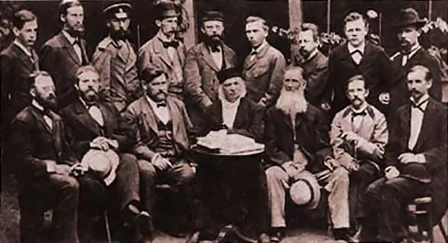
Johannes Hevelius
Lunar topographer, comet discoverer, and brewer of Gdańsk.

via Wikipedia: Timeline of women in science · see source
Johannes Hevelius, also known in German as Hevel, was a prominent figure in the city of Gdańsk, then part of the Polish–Lithuanian Commonwealth, where he served as a councillor and chairman of the city council. His family, of Bohemian origin, were wealthy Lutheran brewing merchants, and Hevelius himself brewed the famous Jopen beer. After studying jurisprudence at Leiden and traveling through England and France, where he met notable scholars, he settled in his hometown. He built a private observatory known as Sternenburg, or "Star Castle," on the roofs of his connected houses, equipping it with instruments including a large Keplerian telescope of his own construction. Hevelius enjoyed the patronage of four consecutive Polish kings; King John II Casimir raised his family to nobility, and King John III Sobieski granted him tax exemptions for his brewing. He became a fellow of the Royal Society in 1664. Despite a devastating fire in 1679 that destroyed his observatory and instruments, he quickly resumed his work. Hevelius is celebrated as the founder of lunar topography for his detailed charting of the Moon’s surface and his discovery of its libration in longitude. He also described ten new constellations, seven of which are still recognized by astronomers, and discovered four comets, proposing they travel in parabolic paths around the Sun. His second wife, Elisabeth Koopmann, supported his work and published his writings after his death.
- field
- Astronomy, municipal administration
- nationality
- Citizen of the Polish–Lithuanian Commonwealth (considered himself civis Orbis Poloniae)
- known_for
- Founder of lunar topography; discovery of four comets; invention of seven still-used constellations; last major astronomer to work without a telescope
Lore & Background
As a young boy he studied Polish in Gądecz. Hevelius was a German-speaking Lutheran of Bohemian origin, the son of wealthy brewing merchants. After secondary school under Peter Crüger, he studied law in Leiden and traveled through England and France, meeting prominent thinkers. He settled in his native Gdańsk in 1634, marrying a neighbor and joining the beer-brewing guild, which he later led. From 1639 onward, his chief interest became astronomy. In 1641 he built an observatory called Sternenburg on the roofs of his connected houses, equipping it with splendid instruments, including a very long Keplerian telescope of his own construction. He served as a town councillor from 1651 and enjoyed the patronage of four consecutive Polish kings. He was elected a fellow of the Royal Society in 1664. Hevelius is considered the last major astronomer to work without a telescope, using only a quadrant and alidade. He devoted four years to charting the Moon, discovered its libration in longitude, and published his results in a 1647 work that earned him the title "founder of lunar topography." He discovered four comets and argued they move in parabolic paths around the Sun. After a fire destroyed his observatory in 1679, he named the constellation Sextans in memory of a lost instrument. His second wife, Elisabeth, supported his work and later published two of his works after his death.
Reader's Guide
Hevelius’s work in astronomy was defined by his meticulous, telescope-free positional measurements, making him the last major astronomer to rely solely on quadrants and alidades. His four-year study of the Moon’s surface, published in a 1647 work, established him as the founder of lunar topography; he also discovered the Moon’s libration in longitude. He observed sunspots over several years and discovered four comets, arguing from these that comets travel around the Sun on parabolic paths. Hevelius described a complex halo event seen across his city in 1661. His private rooftop observatory, known as Sternenburg, was equipped with instruments including a very long Keplerian telescope of his own construction. After a devastating fire in 1679 destroyed his observatory, instruments, and books, he quickly rebuilt enough to observe a great comet later that year, and he created the constellation Sextans to commemorate the lost instrument. He also described ten new constellations, seven of which remain in use. His second wife, Elisabeth, assisted his work and published two of his texts after his death, and she is recognized as the first female astronomer. Hevelius was a fellow of the Royal Society and enjoyed the patronage of four consecutive Polish kings.
Did You Know?
- Hevelius brewed the famous Jopen beer, which gave its name to Jopengasse/Jopejska Street in Gdańsk.
- His second wife, Elisabeth Koopmann, is considered the first female astronomer and published two of his works after his death.
More in Astronomers And Cosmologists 1-24
Spotted an error? Know more?
This is a living reference — every entry is fact-audited, and reader corrections feed straight into our audit queue. Suggest an edit · See this site's audit record