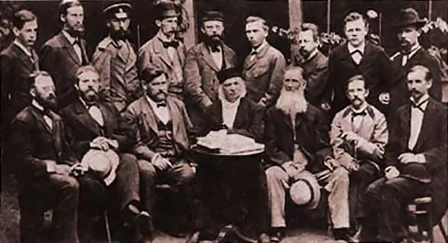
Anders Celsius
Swedish astronomer who proposed the centigrade temperature scale.

Anders Celsius (1701–1744) was a Swedish astronomer, physicist, and mathematician. Born in Uppsala to a family deeply rooted in science—his father was an astronomy professor, his uncle a botanist, and his grandfathers a mathematician and an astronomer—Celsius studied at Uppsala University, where he later became a professor of astronomy in 1730. He published a method for calculating the distance from Earth to the Sun and conducted pioneering research on the aurora borealis. Working with an assistant, he was the first to propose a link between the northern lights and changes in Earth’s magnetic field, observing that larger compass needle deflections coincided with stronger auroral activity. He also compiled a collection of 316 aurora observations made between 1716 and 1732.
Celsius traveled extensively through Germany, Italy, and France in the early 1730s, visiting major European observatories. In Paris, he advocated for measuring an arc of the meridian in Lapland, and in 1736 he joined a French-led expedition to do so. The expedition’s results, compared with a similar one near the equator, confirmed Isaac Newton’s theory that Earth is flattened at the poles. This work earned Celsius respect and helped secure funding to build a new observatory in Uppsala, which he founded in 1741 and equipped with modern instruments from his travels. He also made astronomical observations, publishing catalogs of star magnitudes using his own photometric system.
In 1742, Celsius proposed a temperature scale to the Royal Society of Sciences in Uppsala, setting 0 as the boiling point of water and 100 as the freezing point. After his death, the scale was reversed by Carl Linnaeus. Celsius also conducted geographical measurements for a Swedish map and noted that much of Scandinavia was slowly rising, though he incorrectly attributed this to water evaporation. He served as secretary of the Royal Society of Sciences from 1725 until his death from tuberculosis in 1744, and he helped found the Royal Swedish Academy of Sciences, suggesting its name.
- field
- Astronomy, physics, mathematics
- nationality
- Swedish
- known_for
- Proposing the centigrade (Celsius) temperature scale
Lore & Background
Anders Celsius was a Swedish astronomer, physicist, and mathematician who served as a professor of astronomy at Uppsala University. He founded the Uppsala Astronomical Observatory in 1741, equipping it with modern instruments acquired during his travels to major observatories in Germany, Italy, and France. Celsius participated in a French Academy of Sciences expedition to Lapland to measure a degree of latitude, which helped confirm that the Earth is flattened at the poles. He studied auroral phenomena with his assistant Olof Hiorter and was the first to suggest a link between the aurora borealis and changes in Earth’s magnetic field, observing that larger compass needle deflections corresponded with stronger auroral activity. Celsius also published a collection of 316 aurora observations and produced catalogues of star magnitudes for about 300 stars using his own photometric system. In 1742, he proposed the centigrade temperature scale, with 0 representing the boiling point of water and 100 the freezing point; after his death, the scale was reversed by Carl Linnaeus. He conducted geographical measurements for the Swedish General map and noted that much of Scandinavia is slowly rising above sea level, though he incorrectly attributed this to water evaporation. Celsius served as secretary of the Royal Society of Sciences in Uppsala and was a founding member of the Royal Swedish Academy of Sciences.
Reader's Guide
Anders Celsius’s career encompassed significant contributions to astronomy, geophysics, and scientific measurement. He was an early proponent of the connection between the aurora borealis and Earth’s magnetic field, observing that stronger compass needle deflections coincided with more intense auroral activity, a pioneering insight into geomagnetism. He compiled a substantial catalog of 316 auroral observations from 1716 to 1732. Celsius also participated in a major French-led expedition to Lapland to measure a degree of latitude, which helped confirm Isaac Newton’s theory that the Earth is flattened at the poles. This work elevated his standing in Sweden and enabled him to secure funding for the Uppsala Astronomical Observatory, which he founded in 1741, equipping it with modern instruments from his European travels. He produced careful magnitude measurements for about 300 stars using his own photometric system. In geophysics, Celsius was among the first to note the gradual rising of much of Scandinavia above sea level, though he incorrectly attributed this to water evaporation. His most enduring legacy is the centigrade temperature scale, proposed in 1742, which originally set 0 as the boiling point of water and 100 as the freezing point; it was inverted after his death. Beyond his research, Celsius served as secretary of the Royal Society of Sciences in Uppsala and helped establish the Royal Swedish Academy of Sciences, even proposing its name. His work fundamentally advanced observational astronomy, the understanding of Earth’s magnetic field and shape, and the standardization of temperature measurement.
Did You Know?
- He was the first to suggest a connection between the aurora borealis and changes in Earth's magnetic field.
Frequently Asked Questions
Who is Anders Celsius?
Anders Celsius was a Swedish scholar who worked across astronomy, physics, and mathematics during the early 18th century. He is perhaps best remembered for designing the temperature scale that now carries his name.
What is Anders Celsius most famous for?
He is credited with proposing the centigrade temperature scale, which divided the range between the freezing and boiling points of water into 100 equal parts. That scale was later renamed "Celsius" in his honor.
What academic positions did Anders Celsius hold?
He served as a professor of astronomy at Uppsala University in Sweden. He also established the Uppsala Astronomical Observatory, which became a key center for Swedish astronomical research.
Why is the Celsius temperature scale named after him?
Although he originally proposed the scale in reverse (with 100 degrees at freezing and 0 at boiling), his idea of a 100-degree interval between those two reference points became the foundation of the modern scale. The name "Celsius" was later adopted to credit him as its originator.
More in Astronomers And Cosmologists 1-24
Spotted an error? Know more?
This is a living reference — every entry is fact-audited, and reader corrections feed straight into our audit queue. Suggest an edit · See this site's audit record