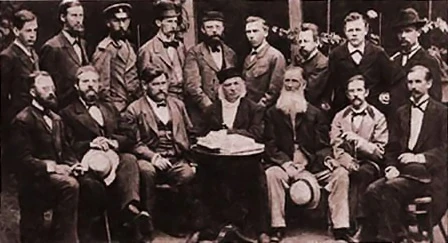
Riccardo Giacconi
Italian-American astrophysicist who pioneered X-ray astronomy.

Riccardo Giacconi, an Italian-American astrophysicist, is credited with establishing the field of X-ray astronomy. Born in Genoa, he earned his degree from the University of Milan before moving to the United States in 1956 on a Fulbright Fellowship to work with a physics professor at Indiana University. Because X-rays from space are blocked by Earth’s atmosphere, Giacconi focused on developing space-based instruments. His work progressed from detectors launched on rockets in the late 1950s and early 1960s to Uhuru, the first satellite dedicated to X-ray astronomy, in the 1970s. He later led the Einstein Observatory, the first space telescope capable of fully imaging X-rays, and contributed to the Chandra X-ray Observatory, launched in 1999 and still operating. Giacconi also applied his expertise beyond X-ray astronomy, serving as the first permanent director of the Space Telescope Science Institute, which manages the Hubble Space Telescope, from 1981 to 1993. He then became Director General of the European Southern Observatory from 1993 to 1999, overseeing the construction of the Very Large Telescope, and later served as President of Associated Universities, Inc. from 1999 to 2004, managing the early years of the ALMA array. For his pioneering work leading to the discovery of cosmic X-ray sources, he shared the 2002 Nobel Prize in Physics. At Johns Hopkins University, he was a professor of physics and astronomy from 1982 to 1997 and a research professor from 1998 until his death in 2018. In the 2000s, he was the principal investigator for the Chandra Deep Field-South project. Giacconi died on December 9, 2018.
- field
- Astrophysics
- nationality
- Italian-American
- known_for
- Foundations of X-ray astronomy
Verified Timeline
Lore & Background
Riccardo Giacconi was an Italian-American astrophysicist whose work established the field of X-ray astronomy. Born in Genoa, Italy, he earned his Laurea from the University of Milan's Physics Department. A Fulbright Fellowship brought him to the United States in 1956 to collaborate with physicist R. W. Thompson at Indiana University. Because X-ray radiation from space is blocked by Earth's atmosphere, Giacconi focused on developing space-based instrumentation. His early efforts involved rocket-borne detectors in the late 1950s and early 1960s, which led to Uhuru, the first satellite dedicated to X-ray astronomy, launched in the 1970s. He continued with the Einstein Observatory in 1978, the first fully imaging X-ray telescope in space, and later contributed to the Chandra X-ray Observatory, launched in 1999 and still operating. Beyond X-ray astronomy, he served as the first permanent director of the Space Telescope Science Institute from 1981 to 1993, overseeing the Hubble Space Telescope's science operations. He then became Director General of the European Southern Observatory from 1993 to 1999, supervising the construction of the Very Large Telescope, and later President of Associated Universities, Inc. from 1999 to 2004, managing the early years of the ALMA array. Giacconi held professorships in physics and astronomy at Johns Hopkins University from 1982 to 1997 and remained a research professor there until his death in 2018. He was awarded the Nobel Prize in Physics in 2002 for pioneering contributions leading to the discovery of cosmic X-ray sources.
Reader's Guide
Giacconi’s foundational work in X-ray astronomy addressed the fundamental problem that cosmic X-rays are blocked by Earth’s atmosphere, necessitating space-based instruments. He began by developing rocket-borne detectors in the late 1950s and early 1960s, then led the creation of Uhuru, the first orbiting satellite dedicated to X-ray astronomy, in the 1970s. This was followed by the Einstein Observatory in 1978, the first fully imaging X-ray telescope in space, and later the Chandra X-ray Observatory, launched in 1999 and still operational. His expertise extended beyond X-ray astronomy: he served as the first permanent director of the Space Telescope Science Institute, overseeing science operations for the Hubble Space Telescope, then as Director General of the European Southern Observatory, where he supervised construction of the Very Large Telescope, and later as President of Associated Universities, Inc., managing the early years of the ALMA array. Giacconi’s Nobel Prize in Physics recognized his pioneering contributions that led to the discovery of cosmic X-ray sources. At Johns Hopkins University, he held professorships in physics and astronomy and later served as principal investigator for the Chandra Deep Field-South project. His work fundamentally opened a high-energy window on the universe, revealing previously invisible phenomena and establishing the technical and institutional foundations for modern X-ray astronomy.
Frequently Asked Questions
Who is Riccardo Giacconi?
Riccardo Giacconi was an Italian-American astrophysicist best remembered for establishing X-ray astronomy as a legitimate scientific discipline. He spent much of his career as a professor at Johns Hopkins University and was honored with the Nobel Prize in Physics for his pioneering work.
What is Riccardo Giacconi most famous for?
He is credited with laying the groundwork for X-ray astronomy, demonstrating that the sky emits high-energy X-ray radiation from sources like Cygnus X-1. His early balloon-borne and satellite-based observations opened an entirely new window into the universe.
What major scientific award did Riccardo Giacconi receive?
He was awarded the Nobel Prize in Physics in recognition of his decisive contributions to astrophysics, particularly his discovery of cosmic X-ray sources. The prize formally acknowledged that X-ray observations had transformed how scientists understand the cosmos.
Where did Riccardo Giacconi teach and conduct research?
He held a professorship at Johns Hopkins University in Baltimore, Maryland, where he led research programs in high-energy astrophysics. His work there helped shape the field for decades and inspired generations of X-ray astronomers.
More in Astronomers And Astrophysicists 1-24
Spotted an error? Know more?
This is a living reference — every entry is fact-audited, and reader corrections feed straight into our audit queue. Suggest an edit · See this site's audit record