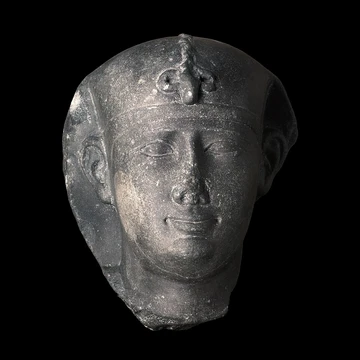
Ramesses III
Last powerful pharaoh of the New Kingdom, defeated the Sea Peoples.

Ramesses III, whose full royal name was Usermaatre Meryamun, was the second king of Egypt’s Twentieth Dynasty. He is generally regarded as the last New Kingdom pharaoh who held real power. His reign, which some place from late March 1185 to mid-April 1154 BC, was marked by a steady decline in Egypt’s political and economic strength, driven by repeated invasions and internal money troubles that had also troubled earlier rulers. This downturn extended into Egypt’s cultural life as well.
Though his defensive tactics slowed the empire’s fall, they left the military weaker for his successors. Ramesses III has been called a “warrior Pharaoh” because of his effective military planning. In the Battle of Djahy and the Battle of the Delta, his forces crushed the Sea Peoples—invaders who had wrecked other civilizations. This saved Egypt from collapse during the Late Bronze Age, when many other empires fell, but the invasions still did lasting damage.
He built one of the largest mortuary temples in western Thebes, now known as Medinet Habu. Ramesses III was killed in the Harem conspiracy, plotted by his secondary wife Tiye and her eldest son Pentawere. This murder triggered a succession crisis that sped up Egypt’s decline. His son Ramesses IV succeeded him, though several other sons would later rule.
His two main names are written as wsr-mꜢʿt-rʿ–mry-ỉmn rʿ-ms-s–ḥḳꜢ-ỉwnw, usually given as Usermaatre-Meryamun Rameses-Heqaiunu. This means “The Ma’at of Ra is strong, Beloved of Amun, Born of Ra, Ruler of Heliopolis.”
Ramesses III was not closely related to Ramesses I or Ramesses II. He was the son of Setnakhte and Tiy-Merenese, who wrote her name in a cartouche. Setnakhte’s origins are unknown. He took the throne during a time of crisis and unrest, likely from Twosret, and was probably a distant descendant of Ramesses II through a separate family line from Seti II, Siptah, and Twosret.
His reign is thought to have lasted from March 1185 to April 1154 BC, based on an accession date of I Shemu day 26 and a death on Year 32 III Shemu day 15. Some scholars give a reign of 31 years, 1 month, and 19 days, with alternative dates of 1187–1156 BC. An account of his coronation at Medinet Habu says four doves were sent to the four corners of the horizon to confirm that the living Horus, Ramesses III, still held his throne and that the order of Maat prevailed in the cosmos and society.
During his long rule, set against the chaos of the Late Bronze Age collapse, Egypt faced foreign invaders like the Sea Peoples and Libyans, along with growing economic troubles and internal strife that would eventually bring down the Twentieth Dynasty. In his eighth year, the Sea Peoples—including the Peleset, Denyen, Shardana, Meshwesh of the sea, and Tjekker—attacked Egypt by land and sea. Ramesses III beat them in two battles. First, he defeated them on land at the Battle of Djahy, on Egypt’s eastern frontier in what is now southern Lebanon. Then came the Battle of the Delta, where he lured the Sea Peoples’ ships into the Nile mouth and ambushed them with his own fleet. Though Egyptians were not known as strong sailors, they fought fiercely. Ramesses placed ranks of archers along the shores, who fired constant volleys at enemy ships trying to land. The Egyptian navy then attacked with grappling hooks to pull the enemy vessels close, and in the brutal hand-to-hand fighting that followed, the Sea Peoples were crushed. The Harris Papyrus says: “As for those who reached my frontier, their seed is not, their heart and their soul are finished forever and ever. As for those who came forward together on the seas, the full flame was in front of them at the Nile mouths, while a stockade of lances surrounded them on the shore, prostrated on the beach, slain, and made into heaps from head to tail.”
Ramesses III settled the surviving Sea Peoples as subjects in southern Canaan. Their presence there may have helped form new states like Philistia after Egypt’s empire in Asia collapsed. During his reign, Egyptian influence in the Levant is still recorded as far as Byblos, and he may have campaigned further north into Syria. Inscriptions of his name have been found in southern Jordan and northern Saudi Arabia, suggesting he led an army through that area. He also fought two major campaigns against Libyan tribes in Egypt’s Western Delta, in his fifth and eleventh years. By the early 12th century, Egypt claimed authority over Cyrenaican tribes, and at one point a ruler chosen by Egypt briefly governed the combined Meshwesh, Libu, and Soped tribes. In April 2025, Jordan’s Ministry of Tourism announced the discovery of a hieroglyphic inscription with Ramesses III’s royal cartouche in the Wadi Rum Reserve in southern Jordan, which the team said provides tangible evidence of a military or commercial campaign, proving his influence in the southern Levant and Arabian Peninsula.
The heavy cost of these battles slowly drained Egypt’s treasury and helped weaken its empire in Asia. The severity of these difficulties is stressed by the economic turmoil that followed.
- Reign
- c. 1185–1154 BC (disputed: some scholars date 1187–1156 BC)
- Dynasty
- Twentieth Dynasty
- Known for
- Defeating the Sea Peoples; constructing Medinet Habu; last powerful New Kingdom
- Assassination
- 1155 BC in the Harem conspiracy
Lore & Background
Ramesses III was the son of Setnakhte and Tiy-Merenese, who wrote her name in a cartouche. Setnakhte's origin is unknown; he seized the throne during a time of crisis and political unrest likely from Twosret, and was presumably a minor descendant of Ramesses II through a separate family line. Ramesses III is believed to have reigned from March 1185 to April 1154 BC, based on his accession date of I Shemu day 26 and his death on Year 32 III Shemu day 15. Some scholars estimate a reign of 31 years, 1 month and 19 days. In Year 8 of his reign, the Sea Peoples—including Peleset, Denyen, Shardana, Meshwesh of the sea, and Tjekker—invaded Egypt by land and sea. Ramesses III defeated them in two great battles: first on land at the Battle of Djahy on Egypt's easternmost frontier in Djahy or modern-day southern Lebanon, and then at the Battle of the Delta, where he enticed the Sea Peoples into the mouth of the Nile and ambushed them with archers and grappling hooks. The Harris Papyrus states: 'As for those who reached my frontier, their seed is not, their heart and their soul are finished forever and ever.' He also fought invading Libyan tribesmen in two major campaigns in Egypt's Western Delta in his Year 5 and Year 11. The heavy cost of these battles slowly exhausted Egypt's treasury. The first known labour strike in recorded history occurred during Year 29 of his reign, when food rations for the royal tomb-builders at Deir el-Medina could not be provisioned. Something in the air (possibly the Hekla 3 eruption) prevented much sunlight and arrested global tree growth for almost two full decades until 1140 BC, substantially increasing grain prices under later reigns. Ramesses III constructed one of the largest mortuary temples of western Thebes, now called Medinet Habu, which was enclosed by massive fortifications—no temple in the heart of Egypt prior to his reign had ever needed such protection. He was assassinated in the Harem conspiracy led by his secondary wife Tiye and her eldest son Pentawere. The conspiracy was discovered through papyrus trial transcripts; 38 people were sentenced to death, and some condemned were given the option of committing suicide. Ramesses III died in his 32nd year before the summaries of the sentences were composed. He was succeeded by his son and designated successor Ramesses IV.
Reader's Guide
Ramesses III is the last pharaoh of the New Kingdom to have wielded substantial power. His reign is defined by defensive wars against the Sea Peoples and Libyan tribesmen, which slowed Egypt's decline but exhausted the treasury and weakened the military for his successors. The construction of Medinet Habu—one of the largest mortuary temples, heavily fortified—reflects the insecurity of the era. The first recorded labour strike in Year 29, caused by food ration shortages, and a volcanic cooling event (possibly Hekla 3) that raised grain prices, show the economic turmoil. His assassination in the Harem conspiracy, led by Queen Tiye and her son Pentawere, triggered a succession crisis that further accelerated Egypt's decline. Ramesses IV succeeded him, though many of his other sons would rule later.
Did You Know?
- Ramesses III's reign saw the first recorded labour strike in history, in Year 29, when food rations for the royal tomb-builders at Deir el-Medina could not be provisioned.
- The Harris Papyrus records that after the Battle of the Delta, the Sea Peoples' 'seed is not, their heart and their soul are finished forever and ever.'
- Ramesses III was assassinated in the Harem conspiracy, led by his secondary wife Tiye and her son Pentawere; 38 people were sentenced to death.
- His mortuary temple at Medinet Habu was so heavily fortified that no temple in the heart of Egypt before his reign had ever needed such protection.
- In April 2025, a hieroglyphic inscription bearing Ramesses III's royal cartouche was discovered in the Wadi Rum Reserve in southern Jordan, proving his influence in the southern Levant and Arabian Peninsula.
More in Ancient Egyptian Pharaohs 1-18
Spotted an error? Know more?
This is a living reference — every entry is fact-audited, and reader corrections feed straight into our audit queue. Suggest an edit · See this site's audit record