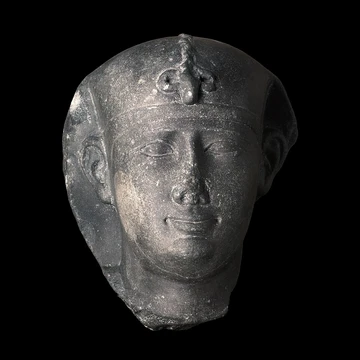
Necho II
Egyptian pharaoh who killed Josiah and sent Phoenicians around Africa.

Necho II, also known as Nekau, Neku, Nechoh, or Nikuu, was a pharaoh of Egypt’s 26th Dynasty, ruling from Sais between 610 and 595 BC. He oversaw various building works across his kingdom. The Greek writer Herodotus claimed that Necho once dispatched a Phoenician crew that took three years to sail from the Red Sea around Africa, through the Strait of Gibraltar, and back to Egypt. His son Psammetichus II may have later erased Necho’s name from monuments after taking the throne.
Necho had a major impact on the Neo-Assyrian Empire, the Neo-Babylonian Empire, and the Kingdom of Judah. He was responsible for the death of King Josiah of Judah and replaced Josiah’s chosen successor with a ruler of his own choosing. A later military campaign aimed at Asian conquest was meant to stop the Babylonians from expanding westward and to block their trade route across the Euphrates. That effort failed when the Babylonians launched a surprise attack, defeating the Egyptians and eventually driving them out of Syria.
According to Egyptologist Donald B. Redford, Necho was “a man of action from the start, and endowed with an imagination perhaps beyond that of his contemporaries,” but he had “the misfortune to foster the impression of being a failure.”
Necho was the son of Psammetichus I and his Great Royal Wife Mehtenweskhet. His royal name, Wahem-Ib-Re, means “Carrying out the Heart (i.e., Wish) of Re.” When he became king, he faced chaos from Cimmerian and Scythian raids that had ravaged western Asia and helped the Babylonians destroy the Assyrian Empire. What remained of Assyria was a small force under a general named Ashur-uballit II, holding out at Harran. Necho tried to help them right after his coronation, but the force he sent was too small, and the combined armies had to retreat west across the Euphrates.
In the spring of 609 BC, Necho personally led a large army, mostly mercenaries, along the coastal Via Maris into Syria, supported by his Mediterranean fleet. At Megiddo, he fought and killed the Judean king Josiah. Herodotus also describes this campaign, noting that Necho fought a pitched battle at Magdolos against the Syrians, conquered them, and took the city of Cadytis (Kadesh). He then joined Ashur-uballit, crossed the Euphrates—the first pharaoh to do so since Thutmose III—and besieged Harran. The siege failed, and Necho retreated to northern Syria. Ashur-uballit then disappeared from history, and the Babylonians conquered Assyria.
Leaving a large force behind, Necho returned to Egypt. On the way, he found that the Judeans had chosen Jehoahaz to succeed Josiah. Necho deposed Jehoahaz, replaced him with Jehoiakim, and took Jehoahaz back to Egypt as a prisoner, where he died.
In 609 BC, the Babylonian king Nabopolassar captured Kumukh, cutting off the Egyptian army at Carchemish. Necho retook Kumukh after a four-month siege and executed the Babylonian garrison. Nabopolassar gathered another army but fell ill and returned to Babylon in 605 BC. In 606 BC, the Egyptians attacked the leaderless Babylonians, who fled. Nabopolassar then gave command to his son Nebuchadnezzar II, who decisively defeated the Egyptians at Carchemish in 605 BC and chased the survivors to Hamath. Necho’s hopes of restoring Egypt’s empire in the Middle East were crushed as Nebuchadnezzar took Egyptian territory from the Euphrates to the Brook of Egypt and down to Judea. Despite years of Babylonian pacification campaigns, Necho could not recover his lost lands. When Ashkalon rebelled, Egypt sent no help, and barely repelled a Babylonian attack on its eastern border in 601 BC. After that success, Necho captured Gaza while pursuing the enemy. In his remaining years, he focused on building alliances with the Carians and Greeks.
During his Syrian campaign, Necho began but never finished a major project: cutting a navigable canal from the Pelusiac branch of the Nile to the Red Sea. This canal was the earliest forerunner of the Suez Canal.
- died
- 595 BC
- field
- Monarchy, military, construction
- nationality
- Egyptian
- known_for
- Killing King Josiah of Judah; commissioning a Phoenician circumnavigation of Afr
Lore & Background
Necho II was the son of Psammetichus I by his Great Royal Wife Mehtenweskhet. His prenomen Wahem-Ib-Re means 'Carrying out [the] Heart (i.e., Wish) [of] Re.' Upon his ascension, he faced chaos from Cimmerian and Scythian raids that had helped the Babylonians shatter the Assyrian Empire. He attempted to assist the remnant Assyrian general Ashur-uballit II at Harran, but his initial force was too small. In spring 609 BC, he personally led a large army via the coast route Via Maris into Syria, supported by his Mediterranean fleet. At Megiddo he engaged the Judean king Josiah and had him killed. Herodotus reports that Necho engaged in a pitched battle at Magdolos with the Syrians, conquered them, and took Cadytis (Kadesh), a great city of Syria. He became one of the pharaohs to cross the Euphrates since Thutmose III—others like Ramesses II had done so as well—but failed to capture Harran. On his return, he deposed Josiah's successor Jehoahaz and replaced him with Jehoiakim, bringing Jehoahaz back to Egypt as his prisoner. In his second campaign, Necho aimed to contain the westward advance of the Neo-Babylonian Empire. In 609 BC, King Nabopolassar captured Kumukh, cutting off the Egyptian army at Carchemish. Necho retook Kumukh after a four-month siege and executed the Babylonian garrison. In 605 BC, however, the Babylonians under Nebuchadnezzar II decisively defeated the Egyptians at the Battle of Carchemish, pursuing survivors to Hamath. Necho's dream of restoring the Egyptian Empire was destroyed as Nebuchadnezzar conquered territory from the Euphrates to the Brook of Egypt. Necho repelled a Babylonian attack in 601 BC and captured Gaza while pursuing the enemy. He turned to forging relationships with Carians and Greeks. Necho initiated but never completed a navigable canal from the Pelusiac branch of the Nile to the Red Sea, the earliest precursor of the Suez Canal. He founded the city of Per-Temu Tjeku at Tell el-Maskhuta. He formed an Egyptian navy by recruiting Ionian Greeks and constructed warships, including triremes. He commissioned a Phoenician expedition that reportedly sailed from the Red Sea around Africa back to the mouth of the Nile in three years, stopping each Autumn to sow seeds. Herodotus states with disbelief that the Phoenicians saw the sun on their right-hand side, suggesting they were south of the Equator.
Reader's Guide
Necho II's significance lies in his ambitious but ultimately failed attempt to restore Egyptian influence in the Near East during the decline of the Assyrian Empire and the rise of the Neo-Babylonian Empire. His military campaigns, while initially successful in killing Josiah and capturing territory, ended with the decisive Babylonian victory at Carchemish in 605 BC, which shattered his dream of a restored Egyptian empire. His legacy also includes pioneering maritime and engineering projects: the construction of a canal linking the Nile to the Red Sea (a precursor to the Suez Canal) and the commissioning of a Phoenician expedition that may have been the first circumnavigation of Africa. The Egyptologist Donald B. Redford described Necho as 'a man of action from the start, and endowed with an imagination perhaps beyond that of his contemporaries, [who] had the misfortune to foster the impression of being a failure.' His son Psammetichus II may have removed Necho's name from monuments, though some scholars such as Roberto Gozzoli express doubt that this actually happened. Necho's reign marks a transitional period where Egyptian power gave way to Babylonian dominance.
Did You Know?
- Necho II was the first pharaoh to cross the Euphrates River since Thutmose III.
- According to Herodotus, the Phoenician sailors commissioned by Necho reported seeing the sun on their right-hand side, which would only happen south of the Equator.
- Necho II initiated but never completed a navigable canal from the Pelusiac branch of the Nile to the Red Sea, the earliest precursor of the Suez Canal.
- The Egyptologist Donald B. Redford described Necho II as 'a man of action from the start, and endowed with an imagination perhaps beyond that of his contemporaries.'
- Necho II formed an Egyptian navy by recruiting displaced Ionian Greeks, an unprecedented act since most Egyptians traditionally harbored a distaste for the sea.
More in Ancient Egyptian Pharaohs 1-18
Spotted an error? Know more?
This is a living reference — every entry is fact-audited, and reader corrections feed straight into our audit queue. Suggest an edit · See this site's audit record