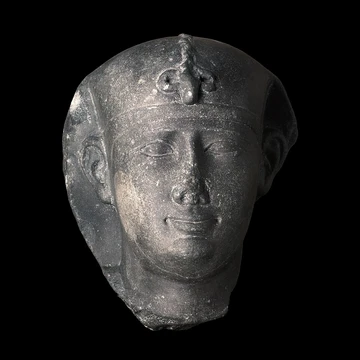
Mentuhotep II
Sixth ruler of the 11th Dynasty who reunified Egypt.

Mentuhotep II, whose name means "Mentu is satisfied" and who also went by Nebhepetre ("The Lord of the rudder is Ra"), was a king of ancient Egypt and the sixth ruler of the 11th Dynasty. He is known for reuniting Egypt after the chaotic First Intermediate Period, making him the first pharaoh of the Middle Kingdom. According to the Turin King List, he ruled for 51 years. He took the throne after his father, Intef III, and was later succeeded by his son, Mentuhotep III.
Mentuhotep II became pharaoh in Thebes, a city in Upper Egypt, during the First Intermediate Period, when Egypt was divided. The rival 10th Dynasty, based in Herakleopolis, controlled Lower Egypt. In the fourteenth year of his reign, the Herakleopolitan kings violated the sacred royal cemetery at Abydos in Upper Egypt. In response, Mentuhotep II sent his armies north to conquer Lower Egypt. Building on the campaigns of his father, he succeeded in unifying the country, likely just before his 39th year on the throne. To mark this achievement, he changed his titulary to Sematawy, meaning "He who unifies the two lands."
After unification, Mentuhotep II restructured Egypt’s government. To reverse the decentralization that had led to the Old Kingdom’s collapse and defined the First Intermediate Period, he centralized power in Thebes by reducing the authority of nomarchs. He also created new government positions filled by loyal Theban men, giving him greater control. Officials from the capital regularly traveled the country to oversee regional leaders.
Mentuhotep II was buried at the Theban necropolis of Deir el-Bahari. His mortuary temple was one of his most ambitious projects, featuring architectural and religious innovations. It included terraces and covered walkways around the central structure and was the first mortuary temple to identify the pharaoh with the god Osiris. This temple later inspired those of Hatshepsut and Thutmose III of the 18th Dynasty. Some depictions of Mentuhotep II suggest he may have suffered from elephantiasis, which caused swollen legs.
**Family**
Mentuhotep II was the son of Intef III and Iah, who may also have been Intef III’s sister. This is shown on the stele of an official named Henenu, which identifies Mentuhotep II by his first Horus name. Iah held the title "King's mother." The parentage is also indirectly confirmed by a relief at Shatt er-Rigal. Some scholars, such as Wildung and Lobban, have suggested Mentuhotep II had Nubian origins, pointing to iconography that shows him with pronounced Nubian facial features. Crawford noted that the 11th Dynasty rulers were based in southern Upper Egypt and had close ties with Nubia.
**Consorts**
Mentuhotep II had several wives, many of whom were buried with him or near his mortuary temple.
Tem may have been his chief wife, bearing titles like "King's wife" and "Great one of the hetes-sceptre of the two Lords." She gave him two children, including Mentuhotep III, and was also called "King's mother." She likely died after her husband and was buried by her son in Mentuhotep’s temple. Her tomb was discovered in 1859 by Lord Dufferin and fully excavated in 1968 by Dieter Arnold.
Neferu II, called "The beautiful," was titled "King's wife" and "King's wife, his beloved." She may have been Mentuhotep II’s sister, as she also held titles like "Eldest king daughter of his body" and "hereditary princess." She was buried in tomb TT319 at Deir el-Bahri.
Kawit was a secondary wife, titled "King's wife, his beloved" and "King's embellishment." She was a priestess of Hathor and may have been Nubian. Her sarcophagus was uncovered in 1907 under the terrace of Mentuhotep’s temple.
Henhenet, Ashayet, Kemsit, and Sadeh were also secondary wives, each bearing the title "King's wife, his beloved" and "Unique embellishment of the King." They were priestesses of Hathor and were buried in individual pits under the temple terrace. An alternative theory suggests Henhenet may have been a wife of Intef III and possibly the mother of Neferu II; she might have died in childbirth. The interior decoration of Ashayet’s coffin included images of her household with racial markers, showing her with black skin and her three female scribes with yellow skin. Kemsit is also depicted with black skin in a painting, suggesting the artists were commissioned to show the Nubian origin of these queens.
**Children with Tem**
Mentuhotep III (died c. 1997 BC)
**Possible children**
Mayet, a five-year-old girl buried with Mentuhotep II’s secondary wives, was likely his daughter.
**Reign**
Mentuhotep II is considered the first ruler of the Middle Kingdom. The Turin Canon credits him with a 51-year reign. Many Egyptologists have long studied two rock reliefs showing Mentuhotep II.
- died
- c. 2009 BC
- field
- Ancient Egyptian King
- known_for
- Reuniting Egypt, ending the First Intermediate Period, first pharaoh of the Midd
Verified Timeline
Lore & Background
Mentuhotep II ascended Egypt's throne in the Upper Egyptian city of Thebes during the First Intermediate Period. Egypt was not unified during this time, and the 10th Dynasty, rival to Mentuhotep's 11th, ruled Lower Egypt from Herakleopolis. After the Herakleopolitan kings desecrated the sacred ancient royal necropolis of Abydos in Upper Egypt in the fourteenth year of Mentuhotep's reign, Pharaoh Mentuhotep II dispatched his armies north to conquer Lower Egypt. Continuing his father Intef III's conquests, Mentuhotep succeeded in unifying his country, probably shortly before his 39th year on the throne. Following and in recognition of the unification, in regnal year 39, he changed his titulary to Sematawy (Ancient Egyptian: Smȝ-tȝ.w(j), meaning 'He who unifies the two lands'). Following the unification, Mentuhotep II reformed Egypt's government. To reverse the decentralization of power, which contributed to the collapse of the Old Kingdom and marked the First Intermediate Period, he centralized the state in Thebes by stripping from nomarchs some of their power. Mentuhotep II also created new governmental posts whose occupants were Theban men loyal to him, giving the pharaoh more control over his country. Officials from the capital travelled the country regularly to control regional leaders. Mentuhotep II was buried at the Theban necropolis of Deir el-Bahari. His mortuary temple was one of Mentuhotep II's most ambitious building-projects, and included several architectural and religious innovations. For example, it included terraces and covered walkways around the central structure, and it is closely associated with the god Osiris and funerary cult, though there is no widely accepted evidence that it was the first mortuary temple to identify the pharaoh with Osiris. His temple inspired several later temples, such as those of Hatshepsut and Thutmose III of the Eighteenth Dynasty. Some depictions of Mentuhotep II show swollen legs, but this is more commonly interpreted as a stylistic or symbolic feature rather than evidence of a medical condition like elephantiasis.
Reader's Guide
Mentuhotep II's significance lies in his role as the pharaoh who reunified Egypt after the First Intermediate Period, ending a period of political fragmentation and establishing the Middle Kingdom. His reign of 51 years, as recorded in the Turin King List, allowed him to consolidate power and implement administrative reforms that centralized the state in Thebes, reversing the decentralization that had contributed to the Old Kingdom's collapse. By stripping nomarchs of some power and appointing loyal Theban officials, he strengthened royal control. His mortuary temple at Deir el-Bahari was architecturally innovative, featuring terraces and covered walkways, and was the first to identify the pharaoh with Osiris, influencing later temples of the Eighteenth Dynasty. The reunification, likely achieved shortly before his 39th regnal year, was marked by a change in his titulary to Sematawy ('He who unifies the two lands'). His legacy as the first ruler of the Middle Kingdom is underscored by his divine status among subjects, which persisted into the late 12th Dynasty. Scholarly debate about his possible Nubian origin based on iconography, and that some of his wives may have been Nubian, reflecting the Theban dynasty's southern ties.
Did You Know?
- Mentuhotep II changed his titulary to Sematawy, meaning 'He who unifies the two lands,' in his 39th regnal year after reunifying Egypt.
- His mortuary temple at Deir el-Bahari is closely associated with Osiris and funerary cult, though it is not widely accepted as the first to identify the pharaoh with the god.
- Some depictions of Mentuhotep II show swollen legs, but these are more commonly interpreted as a stylistic or symbolic feature, not as evidence of elephantiasis.
- The Turin King List credits him with a reign of 51 years.
- Scholars like Wildung and Lobban have argued that Egyptian iconography represented Mentuhotep II with pronounced Nubian facial features.
The Unification of a Fractured Land
When Mentuhotep II took the throne in Thebes, Egypt was anything but a single nation. The First Intermediate Period had left the country split, with the rival 10th Dynasty holding Lower Egypt from Herakleopolis while his 11th Dynasty governed from Upper Egypt. For the first fourteen years of his reign, this division persisted. Then, in his fourteenth regnal year, the Herakleopolitan kings committed an act of profound sacrilege: they desecrated the sacred royal necropolis at Abydos. This provocation gave Mentuhotep II both the cause and the impetus to march his armies north. Building upon the conquests his father Intef III had already begun, he steadily pressed his campaign through Lower Egypt. By the thirty-ninth year of his rule, the country was once again whole. In recognition of this achievement, he adopted the new titulary Sematawy, meaning 'He who unifies the two lands.' The Turin King List records his total reign at fifty-one years, making him the architect who closed the First Intermediate Period and opened the Middle Kingdom.
Rebuilding the State from Thebes
After the dust of conquest settled, Mentuhotep II turned his attention to the structural problems that had allowed Egypt to fracture in the first place. The decentralization of authority among regional governors, or nomarchs, had been a key factor in the Old Kingdom's collapse and the chaos that followed. Determined to prevent a repeat, he systematically stripped these provincial leaders of the autonomous powers they had accumulated over generations. In their place, he established new governmental positions and filled them with men from Thebes who owed their authority directly to the throne. Rather than trusting local loyalty, he instituted a system in which officials dispatched from the capital made regular tours across the country, keeping regional leaders under constant observation and check. This re-centralization anchored the state firmly in Thebes and gave the pharaoh a degree of direct administrative control over his realm that had not existed since the Old Kingdom. It was, in essence, a new constitutional framework for a reunified Egypt.
The Temple That Shaped a Dynasty
Among Mentuhotep II's most enduring contributions to Egyptian civilization is his mortuary temple at Deir el-Bahari, a project he undertook as one of his most ambitious building endeavors. The structure introduced several innovations that would echo through millennia of later architecture. Its design featured terraced levels and covered walkways encircling a central edifice, a layout that broke from earlier conventions. Perhaps most significantly, it was the first known mortuary temple to explicitly identify the deceased pharaoh with the god Osiris, a theological statement that elevated the king's afterlife role in a new way. The temple's influence did not end with its builder. Centuries later, the great temples of Hatshepsut and Thutmose III during the Eighteenth Dynasty drew clear inspiration from its terraced form and spatial logic. Even in his depictions, Mentuhotep II presents an enigmatic figure: some artistic representations suggest he suffered from elephantiasis, a condition that left his legs visibly swollen, adding a layer of human vulnerability to an otherwise monumental legacy.
A Theban Court and Nubian Roots
Mentuhotep II's personal world was shaped by both dynastic duty and a complex web of familial and ethnic ties. He was the son of Intef III and his wife Iah, who may have been his sister as well, a relationship confirmed by the stele of the official Henenu. His harem was extensive, with numerous wives interred in or near his mortuary complex. His chief wife, Tem, bore the title of 'King's beloved' and was the mother of his successor Mentuhotep III. Other consorts included Neferu II, who may have been his own sister, and the secondary wives Kawit, Henhenet, Ashayet, Kemsit, and Sadeh, several of whom served as priestesses of Hathor. Notably, some of these queens were depicted with dark skin tones, and scholars such as Wildung and Lobban have pointed to Nubian facial features in the way Egyptian artists rendered his likeness. Crawford further observed that the 11th Dynasty's Theban base placed them in close proximity to Nubia, suggesting deep ethnic interconnections. A young girl named Mayet, buried among the secondary wives, may have been one of his daughters.
More in Ancient Egyptian Pharaohs 1-18
Spotted an error? Know more?
This is a living reference — every entry is fact-audited, and reader corrections feed straight into our audit queue. Suggest an edit · See this site's audit record