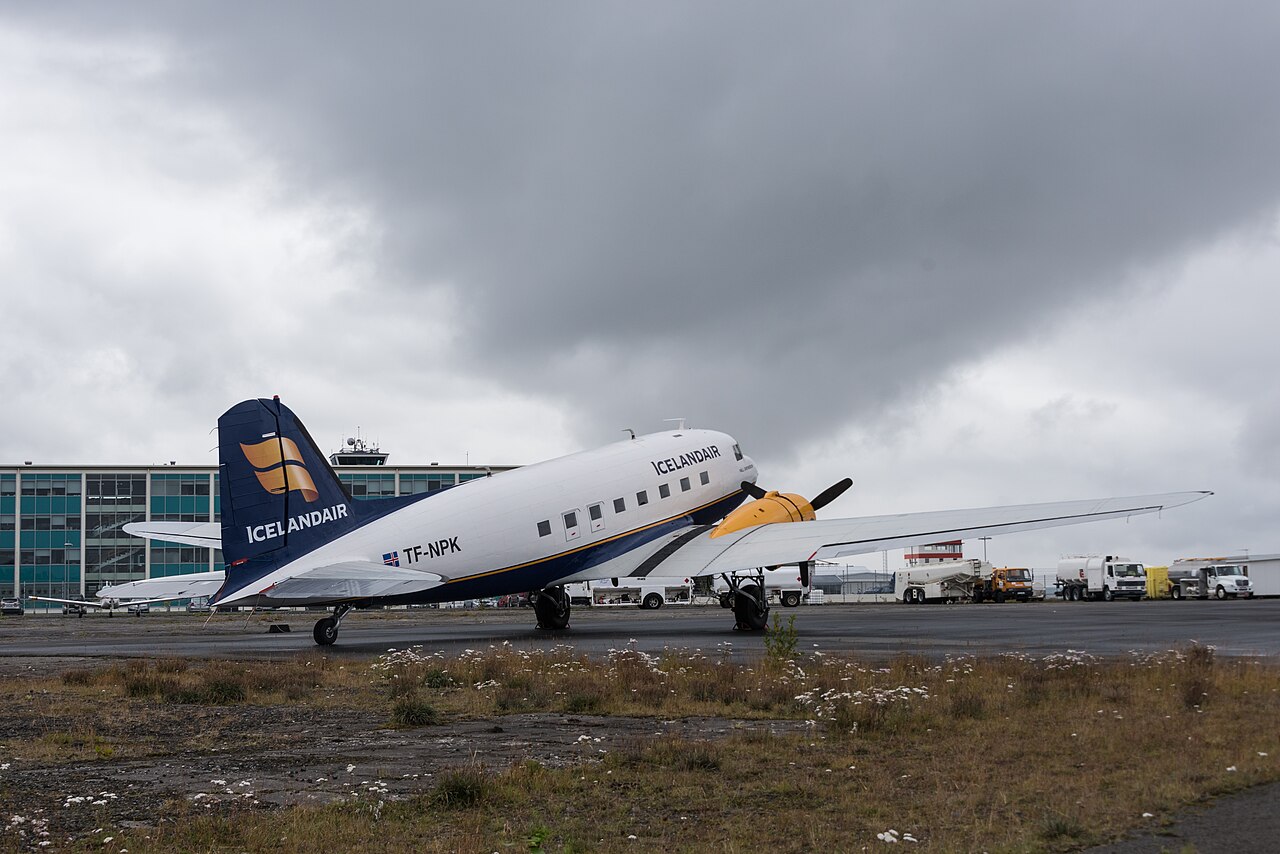
Douglas DC-3
A propeller-driven airliner that transformed air travel.

Maksym Kozlenko · CC BY-SA 4.0
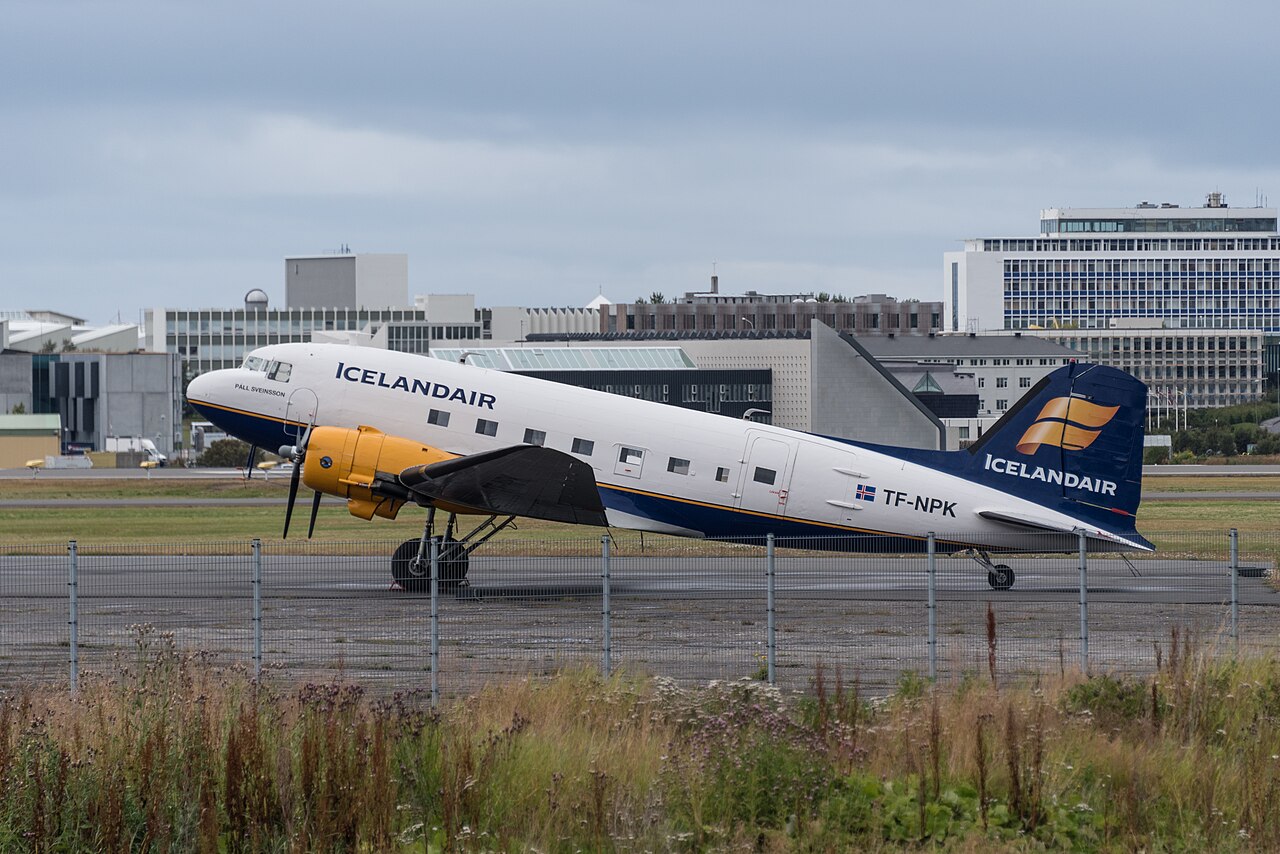
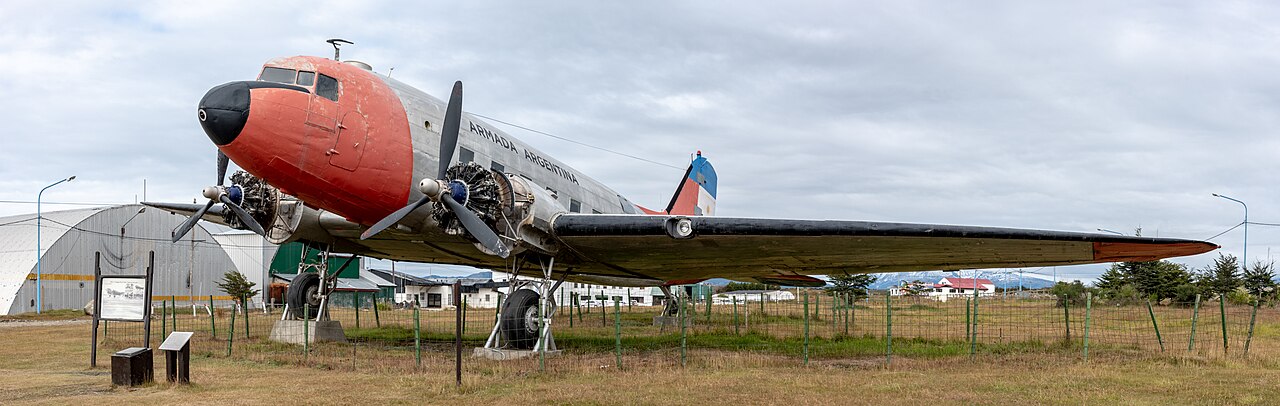
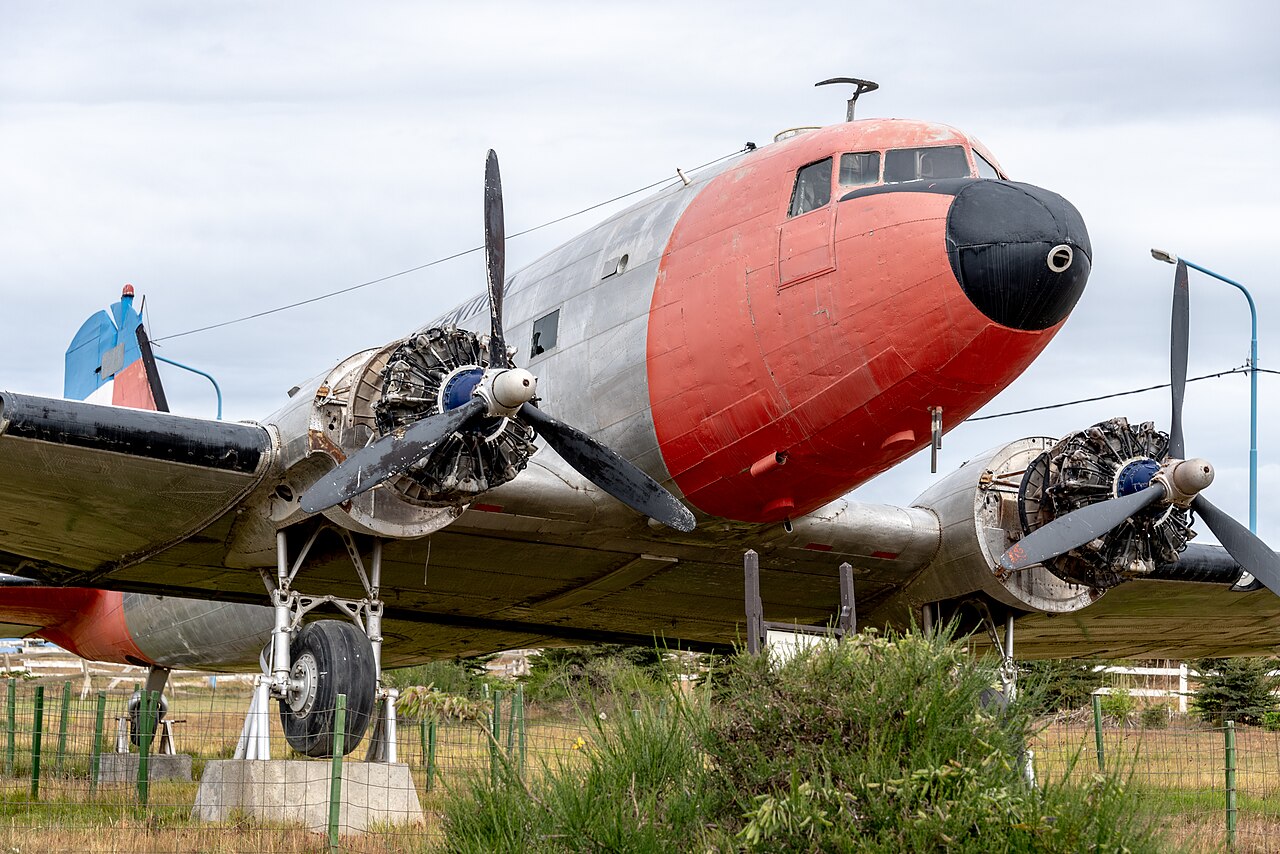
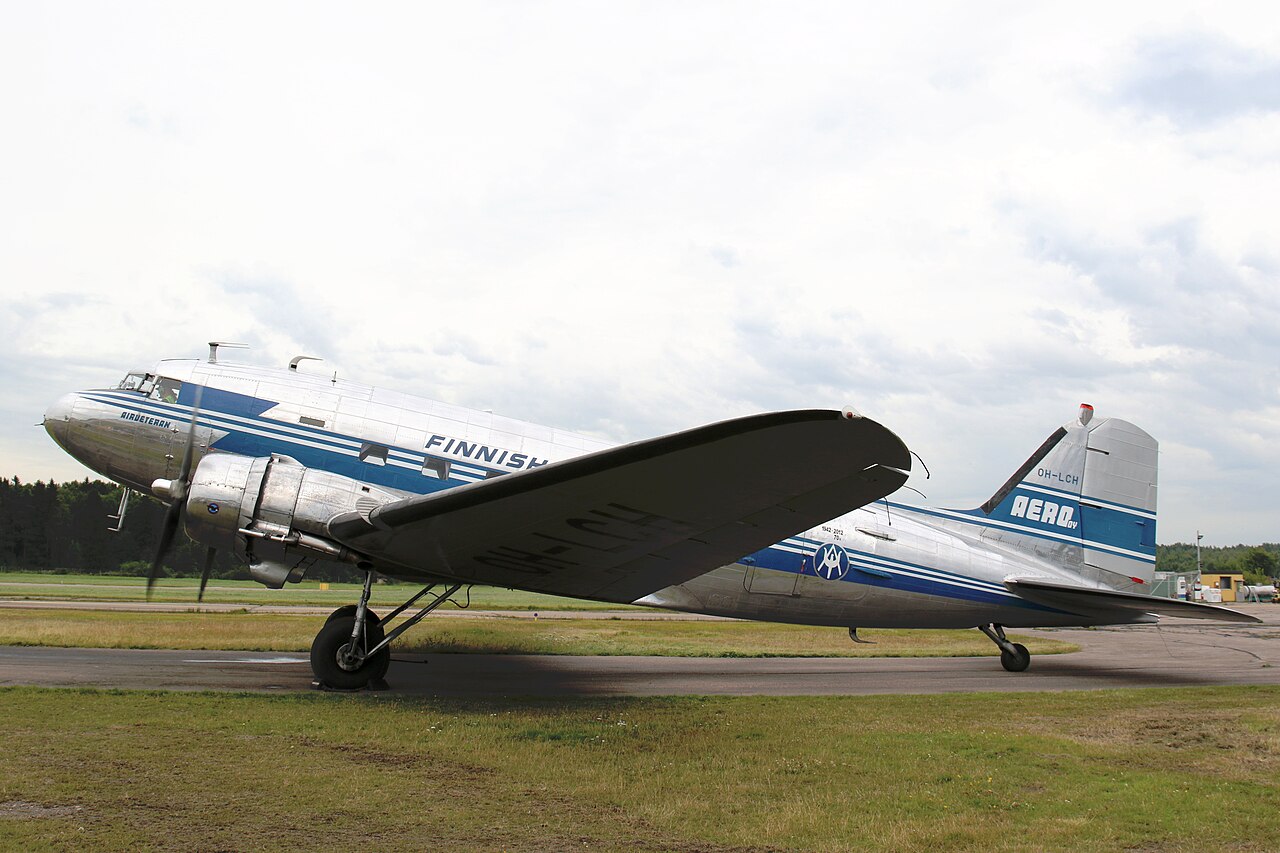
The Douglas DC-3 is a twin-engine, propeller-driven airliner built by the Douglas Aircraft Company. It transformed the airline industry from the 1930s through World War II. It was developed as a larger, improved sleeper version of the DC-2, offering 14 berths. This low-wing metal monoplane has conventional landing gear and is powered by two radial piston engines producing 1,000 to 1,200 horsepower. Early civilian DC-3s used Wright R-1820 Cyclone engines, while later models typically used Pratt & Whitney R-1830 Twin Wasps. The aircraft cruises at 207 mph, carries 21 to 32 passengers or 6,000 pounds of cargo, and has a range of 1,500 miles. It can operate from short runways.
Compared to earlier aircraft, the DC-3 was faster, more reliable, had better range, and offered greater passenger comfort. Before World War II, it opened many new air travel routes. It could cross the United States from New York to Los Angeles in 18 hours with just three stops. It was among the first airliners able to make a profit carrying only passengers, without needing mail subsidies. In 1939, at its peak, about 90% of all airline flights worldwide were flown by a DC-3 or one of its variants.
After the war, the market was flooded with surplus military transports, and the DC-3 became less competitive due to its smaller size and slower speed compared to newer aircraft like the DC-4 and Convair 240. It was made obsolete on major routes but remained useful on less demanding ones. Civilian DC-3 production ended in 1943, with 607 built. Including military versions—such as the C-47 Skytrain (called the Dakota by the British RAF) and aircraft built under license in the Soviet Union and Japan—total production exceeded 16,000. Many continued in niche roles; an estimated 2,000 DC-3s and military derivatives were still flying in 2013, more than 300 in 2017, and about 150 as of 2023.
The "DC" stands for Douglas Commercial. The DC-3 was the result of a development effort that began after Transcontinental and Western Airlines asked Donald Douglas to design a competitor to the Boeing 247, which United Airlines had exclusive access to. Douglas first produced the DC-1 in 1933 and the DC-2 in 1934. The DC-2 was successful but had room for improvement. The DC-3 came about after a long phone call from American Airlines CEO C. R. Smith, who convinced a reluctant Douglas to build a sleeper aircraft based on the DC-2 to replace American's Curtiss Condor II biplanes. The DC-2's cabin was too narrow for side-by-side berths, so Douglas agreed only after Smith committed to buying 20 aircraft. Chief engineer Arthur E. Raymond led the design team over two years. The prototype, called the Douglas Sleeper Transport (DST), first flew on December 17, 1935, with test pilot Carl Cover at the controls. Its cabin was 92 inches wide. A 21-seat version without sleeping berths was designated the DC-3. No prototype was built for the DC-3; the first one followed seven DSTs off the production line for American Airlines.
The DC-3 and DST made air travel popular in the United States. Eastbound transcontinental flights took about 15 hours with three refueling stops, while westbound trips took 17.5 hours. A few years earlier, such a trip required short hops in slower aircraft during the day, combined with overnight train travel. Several radial engines were offered. Early civilian models used either the Wright R-1820 Cyclone or the Pratt & Whitney R-1830 Twin Wasp, but the Twin Wasp was chosen for most military versions and many converted DC-3s. Five Super DC-3s with Pratt & Whitney R-2000 Twin Wasps were built in the late 1940s, three of which entered airline service.
Total production, including all military variants, was 16,079. More than 400 remained in commercial service in 1998. Production consisted of 607 civilian variants; 10,048 C-47 and C-53 derivatives built in California and Oklahoma; 4,937 built under license in the Soviet Union as the Lisunov Li-2; and 487 built in Japan by Showa and Nakajima as the L2D Type 0 transport. Production of DSTs ended in mid-1941, and civilian DC-3 production ended in early 1943, though many aircraft ordered by airlines during that period were pressed into military service. Military versions were produced until the end of the war in 1945. A larger, more powerful Super DC-3 was launched in 1949 to positive reviews, but the civilian market was flooded with surplus C-47s, and only five Super DC-3s were built. Three were delivered for commercial use; the prototype served the US Navy as the YC-129, alongside 100 R4Ds upgraded to Super DC-3 specifications.
- First flight
- December 17, 1935
- Manufacturer
- Douglas Aircraft Company
- Type
- Propeller-driven airliner
- Engines
- Two radial piston engines, 1,000–1,200 hp
- Capacity
- 21 to 32 passengers or 6,000 lb (2,700 kg) of cargo
- Range
- 1,500 mi (2,400 km)
Lore & Background
The DC-3 was developed as a larger, improved, 14-bed sleeper version of the Douglas DC-2. It resulted from a marathon telephone call from American Airlines CEO C. R. Smith to Donald Douglas, persuading him to design a sleeper aircraft based on the DC-2. The prototype Douglas Sleeper Transport (DST) first flew on December 17, 1935, with Douglas chief test pilot Carl Cover at the controls. Its cabin was 92 inches wide, and a version with 21 seats instead of sleeping berths was given the designation DC-3. The DC-3 is a low-wing metal monoplane with conventional landing gear, powered by two radial piston engines. Before World War II, it pioneered many air travel routes and could cross the continental United States from New York to Los Angeles in 18 hours with only three stops.
Reader's Guide
The Douglas DC-3 had many exceptional qualities compared to previous aircraft: it was fast, had good range, was more reliable, and carried passengers in greater comfort. It popularized air travel in the United States, allowing eastbound transcontinental flights in about 15 hours with three refueling stops, a dramatic improvement over earlier multi-day journeys. After World War II, the airliner market was flooded with surplus transport aircraft, and the DC-3 was no longer competitive on main routes, being smaller and slower than newer types like the Douglas DC-4 and Convair 240. However, the design proved adaptable and remained useful on less commercially demanding routes. Many DC-3s were later converted to turboprop engines, such as the Basler BT-67, and the type continues to serve in niche roles into the 21st century.
Did You Know?
- The DC-3 was one of the first airliners that could profitably carry only passengers without relying on mail subsidies.
- A DC-3 with a DC-2 wing, nicknamed the 'DC-2½', was flown to safety after its original wing was destroyed by bombing.
A Name Reborn and a Coast-to-Coast Ambition
In 1945, Pan American World Airways briefly requested an aircraft designated DC-7, envisioned as a civilian version of the Douglas C-74 Globemaster military transport. That order was quickly canceled, and the name sat dormant for nearly a decade. American Airlines resurrected the designation with a very specific brief: an airliner capable of crossing the United States coast to coast non-stop within roughly eight hours, a limit imposed by Civil Air Regulations on how long a domestic crew could fly in any twenty-four-hour window. Douglas Aircraft Company was initially hesitant to commit to the project. That reluctance dissolved when American president C. R. Smith placed an order for twenty-five aircraft at a combined price of forty million dollars, effectively underwriting the entire development cost. The resulting design reused the wing span of the DC-4 and DC-6 while stretching the fuselage forty inches beyond the DC-6B. The prototype took to the air in May 1953, and American received its first delivery in November of that year, launching the nation's first non-stop east-coast-to-west-coast scheduled service and compelling rival Trans World Airlines to answer with its Super Constellation fleet.
Stretching the Range: From DC-7B to the Seven Seas
The original DC-7 offered only a modest range improvement over its DC-6 predecessor, a limitation that left European carriers largely uninterested. Douglas addressed this in two stages. The DC-7B, with slightly higher gross weight and power, offered optional saddle fuel tanks mounted in the rear of the engine nacelles, each holding two hundred twenty US gallons. The nacelle tanks became standard equipment. A second forty-inch fuselage plug ahead of the wing brought total length to one hundred twelve feet three inches, giving European and transpolar operators the range they needed.
The Engine That Divided the Fleet
The DC-6 had earned a reputation for straightforward engineering and dependable service, largely thanks to Pratt & Whitney's Double Wasp engines. That choice proved consequential. The Duplex-Cyclone carried its own set of reliability problems, and the pressure of tight national schedules forced crews to run the engines at high power settings, which in turn caused overheating and failure of the power recovery turbines. Inflight engine failures became common enough to divert numerous flights. Airlines operating both types typically retired the newer DC-7s first once jet aircraft began arriving, and some carriers grounded their DC-7s after barely five years, while DC-6s continued flying and traded more easily on the secondhand market. One notable exception came from Riddle Airlines, later Airlift International, whose executive Morten Beyer recalled that the carrier learned to operate the DC-7 reliably by treating the Wright engine gently, a practice he noted Swissair also employed, rather than pushing the powerplant to its limits in the speed competition that plagued many passenger operators.
The Last Piston Airliner and a Brief Afterlife
Built between 1953 and 1958, the DC-7 occupied a narrow historical window: it was developed just after the de Havilland Comet, the world's earliest jet airliner, entered service, and only a few years before Douglas's own jet-powered DC-8 first flew in 1958. It stands as the last major piston-engine passenger aircraft the company produced. The DC-7C outsold its rival, the Lockheed L-1649A Starliner, which entered service a year later, but the arrival of the Boeing 707 and the DC-8 in 1958 and 1960 abruptly ended new orders. To extend the airframes' useful lives, Douglas began converting DC-7s and DC-7Cs into DC-7F Speedfreighters starting in 1959, fitting them with large forward and rear cargo doors and removing some cabin windows; a handful of aircraft were also adapted for fire-fighting. A stark contrast to its more famous predecessors, the DC-7 has left no survivors in service as of 2020, whereas the DC-3 and DC-6 continue to fly. Production totals stood at one hundred five DC-7s and one hundred twelve DC-7Bs, with new-aircraft prices ranging from roughly eight hundred twenty-three thousand dollars for the base model to over one million three hundred thousand for the late-production DC-7C.
Common Misconceptions (Editorial)
1. Some people think the DC-3 was originally designed as a passenger-only aircraft. In fact, it was developed as a 14-bed sleeper version of the DC-2, and the passenger-only variant was designated the DC-3 after the sleeper version. 2. It is commonly believed the DC-3 made its first flight in 1936 or later. The first flight actually occurred on December 17, 1935, with chief test pilot Carl Cover at the controls.
Why It Matters (Editorial)
The DC-3 matters because it fundamentally reshaped commercial aviation, proving that airlines could be profitable by carrying passengers alone rather than depending on mail subsidies. Its durability and performance also made it a workhorse in World War II, and its longevity—still flying in some roles today—speaks to an engineering success that endures as a symbol of aviation's golden age.
Gallery
Frequently Asked Questions
What is the Douglas DC-3?
It is a twin-engine propeller-driven airliner built by the Douglas Aircraft Company, with its maiden flight on December 17, 1935. It is widely considered one of the most transformative commercial aircraft ever put into service.
How did the DC-3 change the airline industry?
Before the DC-3, most carriers relied heavily on government mail subsidies just to break even. It was among the first airliners that could carry only passengers and still turn a profit, fundamentally reshaping commercial aviation from the 1930s through World War II.
Who built the DC-3 and when did it first fly?
The Douglas Aircraft Company manufactured the DC-3, and it made its first flight on December 17, 1935. It quickly became the backbone of short- and medium-haul commercial routes for the following decade.
Why is the DC-3 so important in aviation history?
It proved that passenger-only air travel could be commercially viable without mail subsidies, establishing the business model that modern airlines still follow. Its influence spanned the 1930s through World War II, cementing its place as one of the most consequential airliners ever designed.
More in Airliners 1-20
Spotted an error? Know more?
This is a living reference — every entry is fact-audited, and reader corrections feed straight into our audit queue. Suggest an edit · See this site's audit record