Boeing 707
First widespread jetliner, credited with beginning the Jet Age.

JQ OFFICIAL · CC BY-SA 4.0
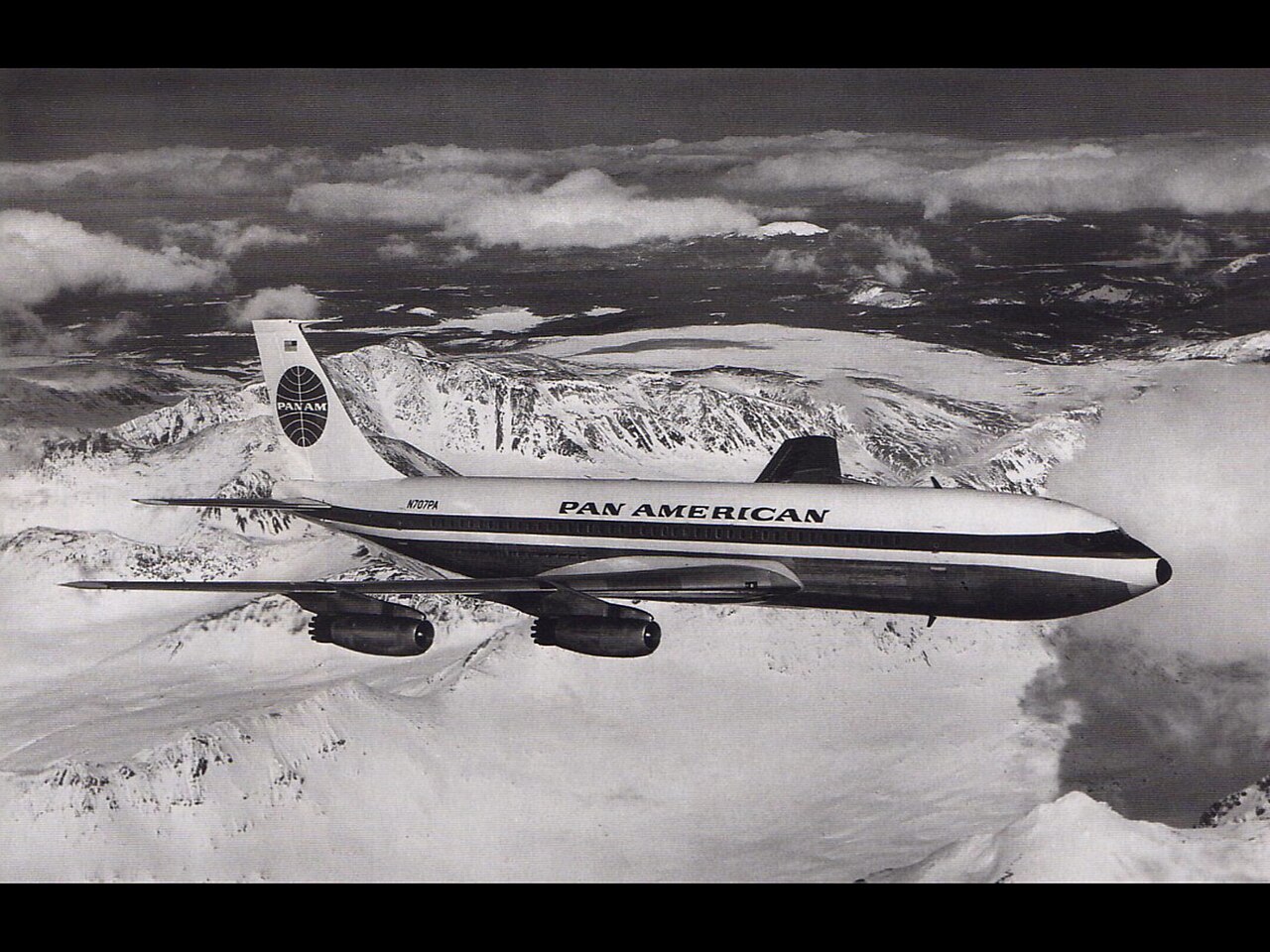
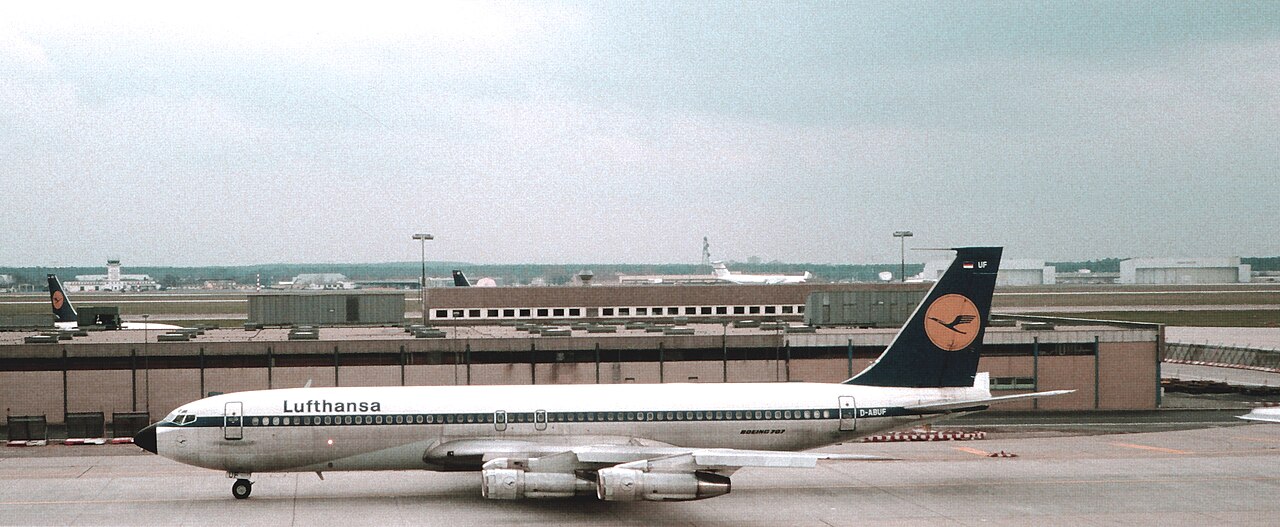
The Boeing 707 was the first jetliner built by Boeing Commercial Airplanes, an early American long-range narrow-body design. It is widely credited with launching the Jet Age, not because it was the first commercial jet to enter service, but because it was the first to achieve widespread use. Pan American World Airways, the launch customer, began regular passenger flights on October 26, 1958.
The 707 originated from the Boeing 367-80 prototype, known as the Dash 80. Boeing had struggled in the commercial market after World War II, losing money on its 377 Stratocruiser while Douglas and Lockheed dominated. The company saw an opportunity to design a jet transport that could serve both military and civilian roles, particularly as an aerial tanker for the U.S. Air Force’s new jet fighters and bombers. The Dash 80 first flew on July 15, 1954, less than two years after the project began. Boeing chose the model number 707 to distinguish its new jets from earlier propeller aircraft, which used 300-series numbers; marketing felt 707 sounded more appealing than 700.
The initial production version, the 707-120, first flew on December 20, 1957, and received FAA certification on September 18, 1958. It was 145 feet long and powered by Pratt & Whitney JT3C turbojet engines. The fuselage was widened during development to 148 inches, allowing six-abreast economy seating—a cross-section later retained in the Boeing 720, 727, and 737. This width was a response to customer demand and competition from Douglas, whose DC-8 had a 147-inch fuselage.
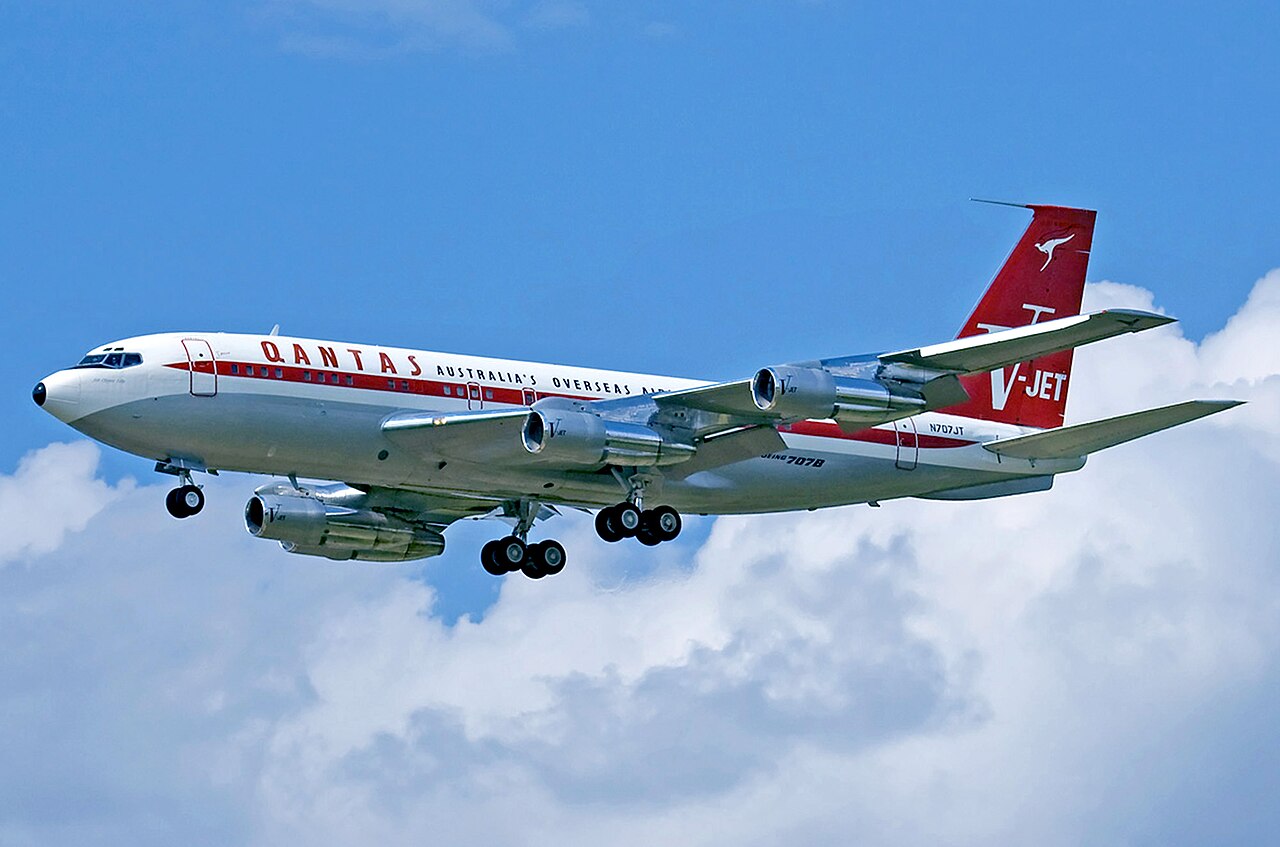
The 707 was a swept-wing quadjet with podded engines. Variants were produced until 1979. The shortened, long-range 707-138 and the more powerful 707-220 entered service in 1959. The longer-range, heavier 707-300/400 series featured larger wings and an 8-foot stretch, with the 707-320 (powered by JT4A turbojets) entering service in 1959 and the 707-420 (using Rolls-Royce Conway turbofans) in 1960. That same year, a lighter, short-range version was introduced as the Boeing 720. Quieter, more fuel-efficient Pratt & Whitney JT3D turbofans powered the 707-120B (debuting in 1961) and the 707-320B (1962). The 707-120B typically carried 137 passengers in two classes over 3,600 nautical miles, or up to 174 in a single class. The 707-320/420 could fly 141 passengers 3,750 nautical miles, while the 707-320B reached 5,000 nautical miles. A convertible passenger-freighter model, the 707-320C, entered service in 1963, and many passenger 707s were later converted to freighters. Military derivatives included the E-3 Sentry airborne reconnaissance aircraft and the C-137 Stratoliner VIP transport. In total, 856 Boeing 707s and 154 Boeing 720s were produced and delivered.
- First flight
- December 20, 1957
- Introduction
- October 26, 1958 (Pan Am)
- Manufacturer
- Boeing Commercial Airplanes
- Type
- Long-range narrow-body airliner
- Engines
- Pratt & Whitney JT3C turbojet (initial); later JT3D turbofan
Lore & Background
During and after World War II, Boeing was known for its military aircraft. The company had produced innovative bombers, but its commercial aircraft were not as successful as those from Douglas. As Douglas and Lockheed dominated the postwar air transport boom, demand for Boeing's 377 Stratocruiser faded with only 56 examples sold. That venture netted the company a $15 million loss. During 1949 and 1950, Boeing embarked on studies for a new jet transport and saw advantages with a design aimed at both military and civilian markets. Aerial refueling was becoming standard, with over 800 KC-97 Stratofreighters on order; Boeing's new design would win military orders. The project was enabled by the Pratt & Whitney JT3C turbojet engine, the civilian version of the J57. Less than two years elapsed from project launch in 1952 to rollout on May 14, 1954, with the first Dash 80 flying on July 15, 1954. Answering customers' demands, Boeing widened the fuselage to 148 inches to allow six-abreast seating. The 707-320C convertible passenger-freighter model entered service in 1963. Military derivatives include the E-3 Sentry and C-137 Stratoliner.
Reader's Guide
The Boeing 707 is often credited with beginning the Jet Age, as it was the first commercial jetliner to achieve widespread use. It dominated passenger air transport in the 1960s and remained common through the 1970s on domestic, transcontinental, and transatlantic flights, as well as in cargo and military applications. The 707 established Boeing as a dominant airliner manufacturer with its 7x7 series. The 707's development was driven by competition with Douglas Aircraft, which had launched the DC-8. The aircraft's design evolved through multiple variants, with turbofan engines (JT3D) improving fuel efficiency and range. The 707-320B series enabled nonstop westbound flights from Europe to the West Coast of the United States and from the US to Japan. Traces of the 707 are still found in the 737, which uses a modified version of the 707's fuselage and the same external nose and cockpit configurations.
Did You Know?
- The Boeing 707 was the first jetliner developed and produced by Boeing Commercial Airplanes.
- The 707-320C convertible passenger-freighter model entered service in 1963.
From Bomber Builder to Jet Pioneer
Boeing entered the jet age as a company whose reputation rested almost entirely on military hardware. From the B-17 and B-29 through the B-47 and B-52, the company had delivered important bombers, yet its commercial offerings lagged badly behind Douglas and Lockheed. The 377 Stratocruiser, once a promising airliner, saw its demand evaporate by the late 1940s, leaving Boeing with a fifteen-million-dollar loss and only fifty-six aircraft sold. That commercial stumble set the stage for a bold pivot. In 1952, Boeing launched a dual-purpose transport and tanker program, recognizing that aerial refueling was becoming standard for the USAF's new jet fleets. The civilian 707 that followed was far from guaranteed to succeed, since nearly all of Boeing's revenue at the time still came from defense contracts.
Defining the Jet Age
Although the 707 was not technically the first commercial jet in regular service, it was the first to achieve truly widespread adoption, and that distinction is why it is so often credited with launching the Jet Age. Pan Am, as the launch customer, opened scheduled 707 service on October 26, 1958, and the aircraft quickly became the backbone of passenger air transport throughout the 1960s. It remained a common sight on domestic, transcontinental, and transatlantic routes well into the 1970s, and its influence extended into cargo operations and military roles. The 707's success cemented Boeing's position as a leading airliner manufacturer and gave birth to the celebrated 7x7 family of narrow-body jets.
A Family of Variants
The 707-300/400 series followed with larger wings and an eight-foot stretch over the original, offering greater range and payload. The 707-320, powered by JT4A turbojets, entered service in 1959, while the 707-420 with Rolls-Royce Conway turbofans appeared in 1960. A convertible passenger-freighter, the 707-320C, entered service in 1963.
Beyond the Passenger Cabin
The 707's influence reached well beyond the passenger seat. Military applications proved equally significant: the E-3 Sentry airborne reconnaissance platform and the C-137 Stratoliner VIP transport both derive from the 707 airframe. The 707-320C, introduced in 1963, was designed as a convertible passenger-freighter, and many passenger 707s were later reconfigured into freighter roles, extending their operational lives well past their original passenger careers.
Common Misconceptions (Editorial)
Some people believe the Boeing 707 was the world’s first commercial jetliner in service. In fact, the facts note that “although it was not the first commercial jetliner in service, the 707 was the first to be widespread.” Another common misconception is that the 707 was an immediate commercial success for Boeing; however, the facts show that Boeing’s earlier commercial aircraft, the 377 Stratocruiser, was not successful and netted the company a $15 million loss, and the 707 project was partly driven by military orders.
Why It Matters (Editorial)
The Boeing 707 matters because it didn’t just enter the market—it democratized jet travel, making high-speed long-distance flights accessible on a global scale. Its design and engineering also bridged military and civilian aviation, proving that a single airframe could serve both strategic refueling and commercial passenger needs, a legacy still seen in modern derivatives like the E-3 Sentry.
Gallery


Frequently Asked Questions
Was the Boeing 707 the first jet airliner in the world?
No—other jetliners such as the de Havilland Comet and Tupolev Tu-104 were already flying commercially before the 707. However, the 707 was the first to achieve broad, mainstream adoption, which is why it is widely credited with ushering in the Jet Age.
Why is the Boeing 707 considered so important in aviation history?
Because it was the first jetliner to become truly widespread across global airlines, it fundamentally reshaped commercial air travel and is generally credited with launching the Jet Age. Its success also proved Boeing's jet program and set the template for future narrow-body designs.
More in Airliners 1-20
Spotted an error? Know more?
This is a living reference — every entry is fact-audited, and reader corrections feed straight into our audit queue. Suggest an edit · See this site's audit record