
Boeing 777
World's largest twinjet and most-built wide-body airliner.

Lewisair · CC0
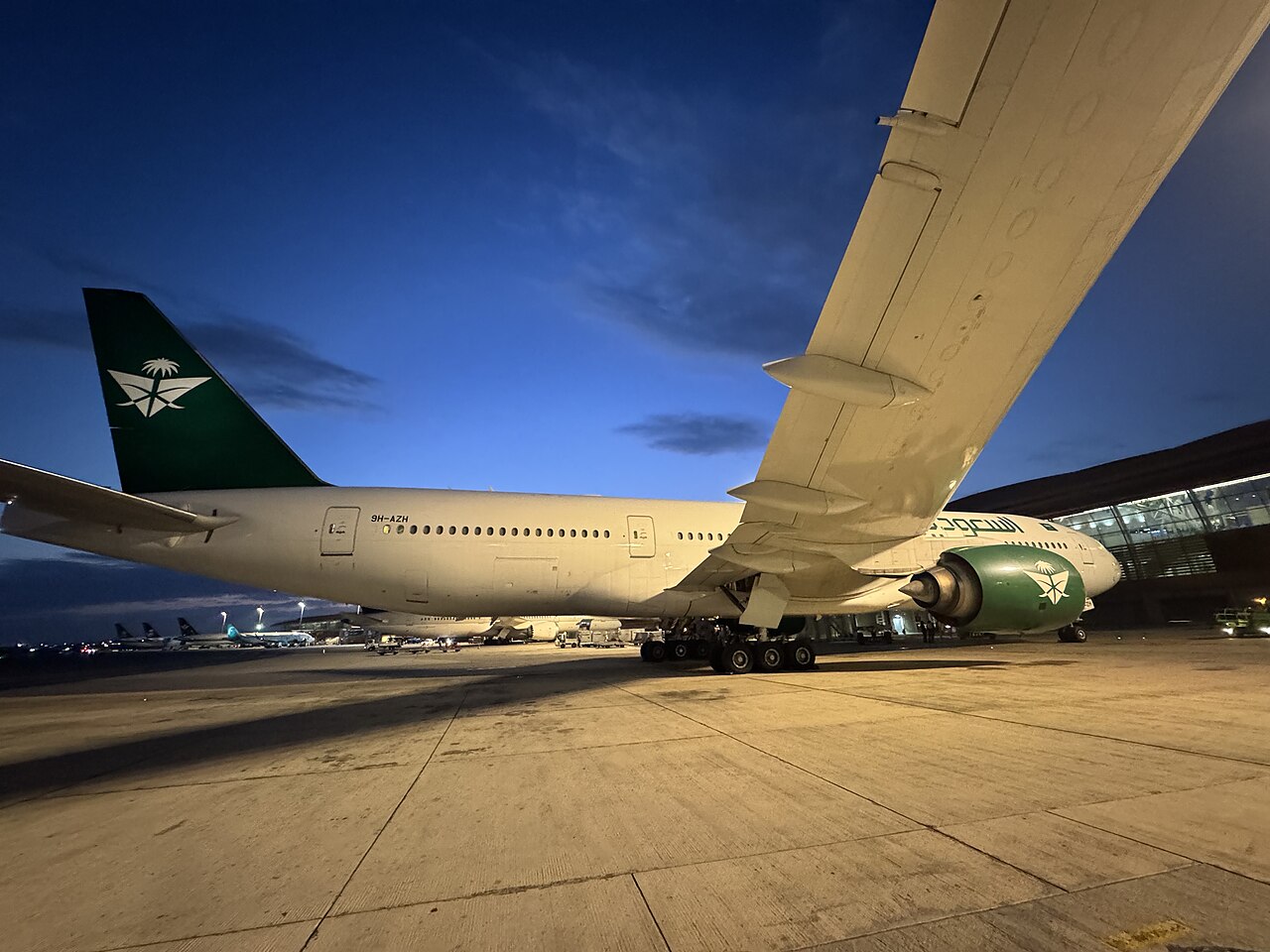
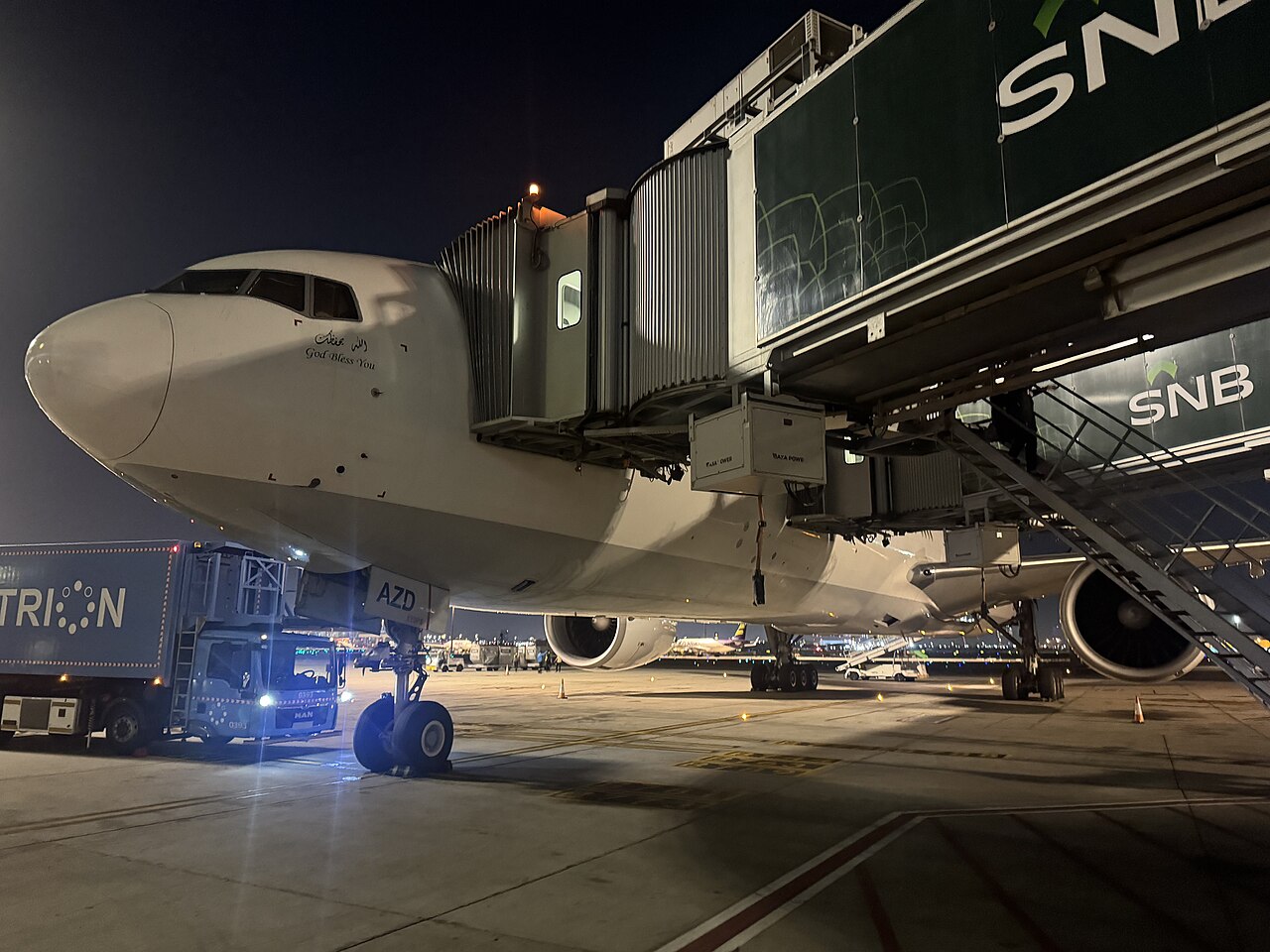
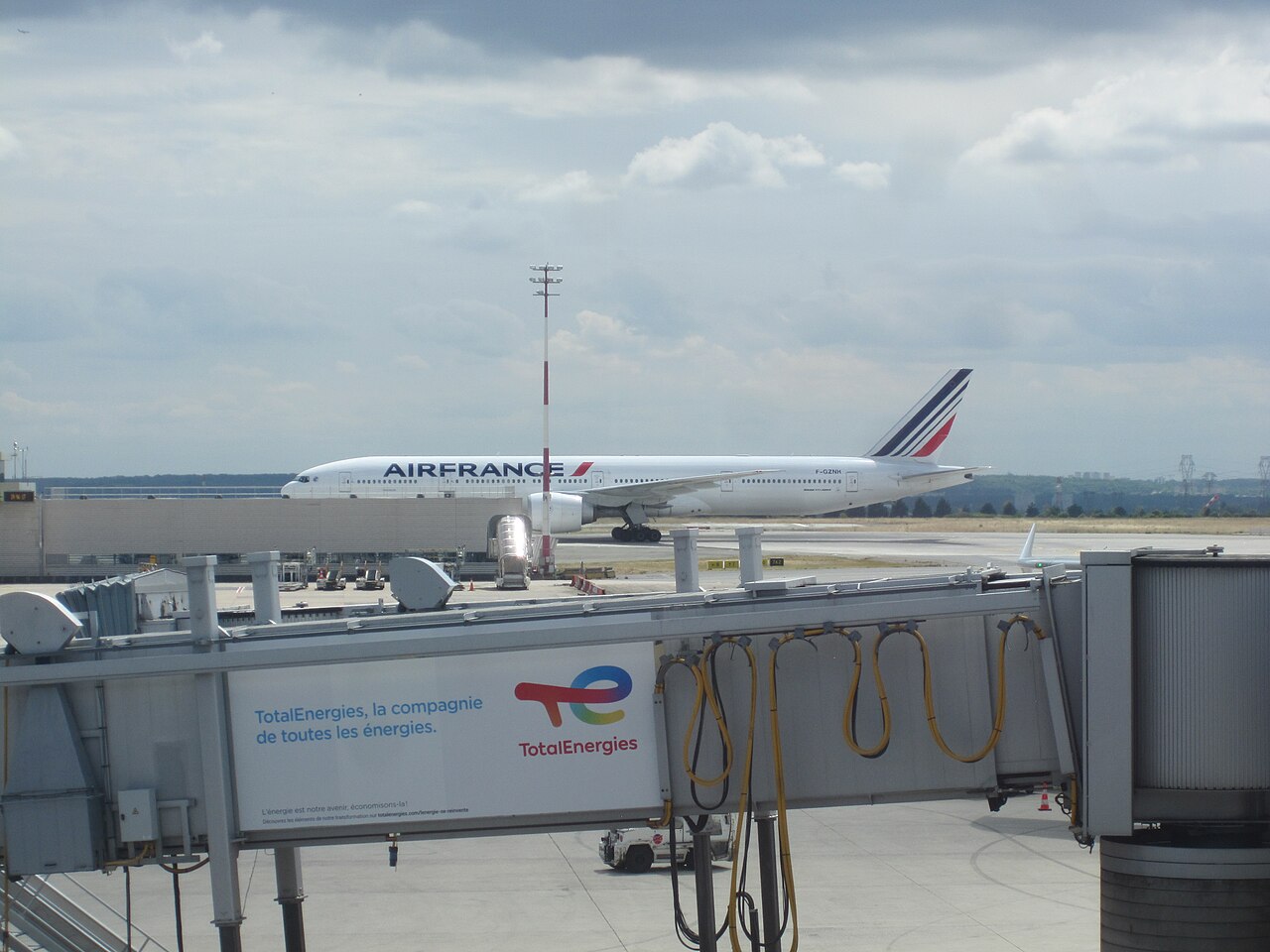
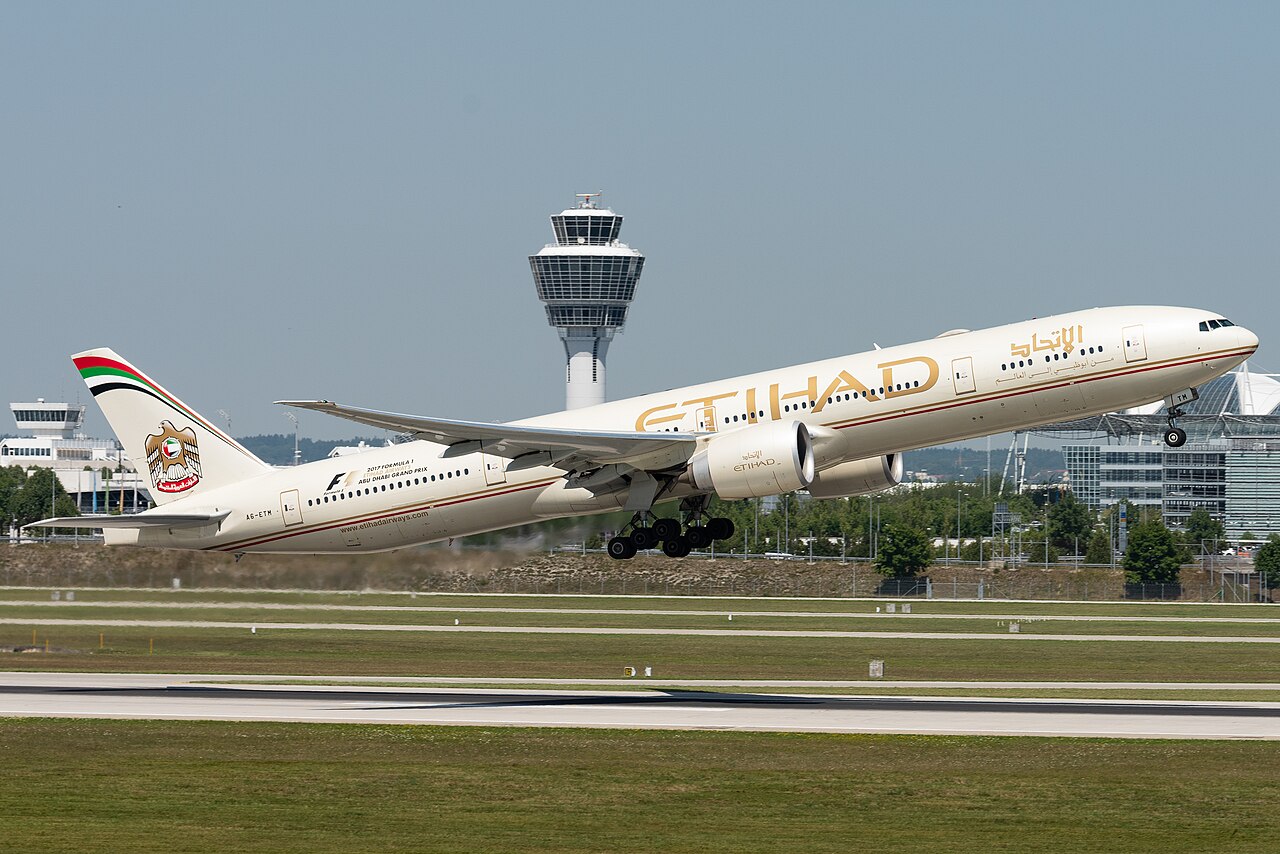
The Boeing 777, nicknamed the Triple Seven, is a long-range wide-body airliner built by Boeing Commercial Airplanes. It holds the titles of the largest twinjet ever built and the most-produced wide-body airliner. The aircraft was created to fill the gap in Boeing’s lineup between the twin-engine 767 and the four-engine 747, while also replacing older trijets like the DC-10 and L-1011. Eight major airlines helped shape its design, and the program officially began in October 1990 when United Airlines placed the first order. The prototype was revealed in April 1994 and took its first flight two months later, entering service with United in June 1995. Longer-range versions were announced in 2000 and first delivered in 2004. More than 2,300 orders have been placed by over 70 operators worldwide.
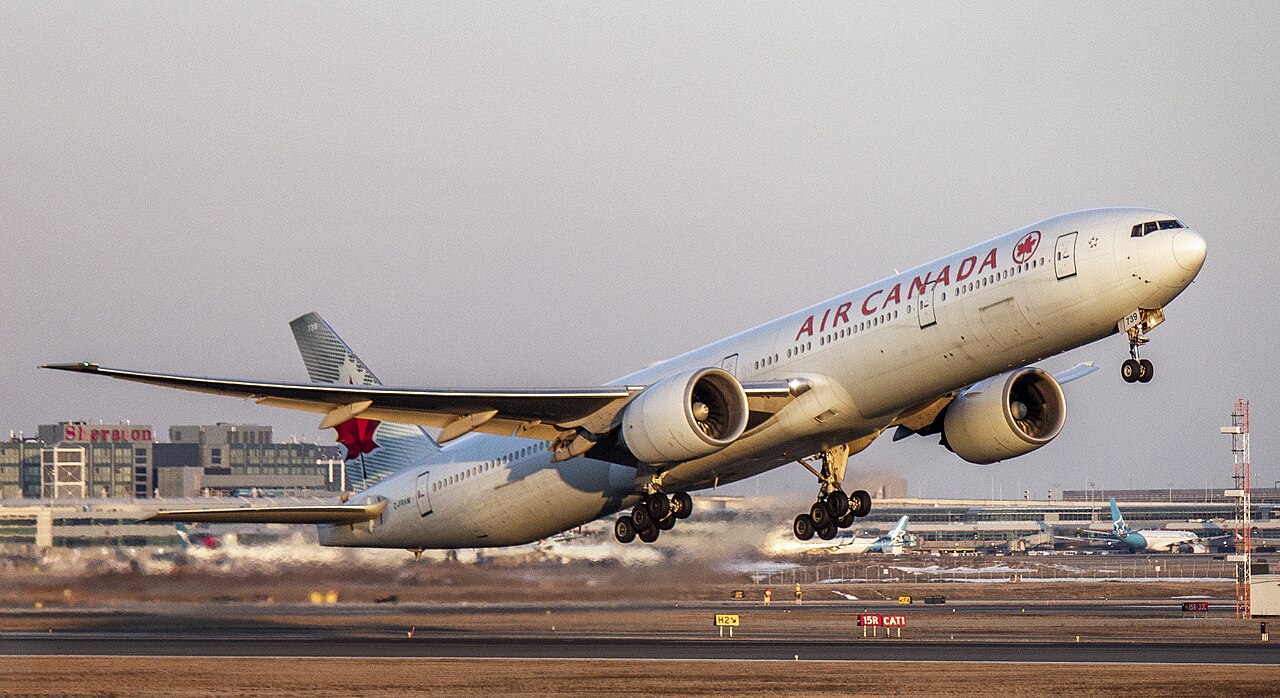
The cabin can seat 301 to 368 passengers in a typical three-class layout, with ten seats across in each row, and it flies between 5,240 and 8,555 nautical miles. Its distinctive features include large turbofan engines, raked wingtips, six wheels on each main landing gear, a fully circular fuselage, and a blade-shaped tail cone. It was Boeing’s first airliner with fly-by-wire controls and carbon composite tailplanes.
The original 777, known as the Classic, came in two lengths: the 777-200 and the longer 777-300, which added 33.25 feet. The -200ER extended range arrived in 1997, and the -300 followed in 1998. These models had a maximum takeoff weight between 545,000 and 660,000 pounds and used GE90, Pratt & Whitney PW4000, or Rolls-Royce Trent 800 engines. The second generation included the 777-300ER (2004), 777-200LR (2006), and 777F freighter (2009), all with higher takeoff weights and exclusive GE90 engines. In November 2013, Boeing announced the third-generation 777X, which includes the 777-8, 777-9, and 777-8F, featuring composite wings with folding tips and GE9X engines, with first deliveries expected in 2027.
As of 2018, Emirates operated the largest fleet with 163 aircraft. By July 2026, over 60 customers had ordered 2,494 777s, with 1,792 delivered, making it the best-selling wide-body. The 777-300ER is the most popular variant, with 833 delivered. It initially competed with the Airbus A340 and McDonnell Douglas MD-11, and since 2015, mainly with the Airbus A350. First-generation 777-200s are being replaced by the 787 Dreamliner. As of May 2024, the 777 has been in 31 accidents and incidents, resulting in eight total hull losses and 542 fatalities, including three on the ground.
Development began in the early 1970s as wide-body airliners like the 747, DC-10, and L-1011 entered service. In 1978, Boeing proposed the 757, 767, and a trijet “777” to compete with the DC-10 and L-1011. The 757 and 767 succeeded thanks to ETOPS rules that allowed twinjets to fly long ocean routes, but the trijet was dropped. Boeing then had a gap between the 767-300ER and 747-400. By the late 1980s, with DC-10s and L-1011s nearing retirement, Boeing offered an enlarged 767 called the 767-X, but airlines wanted a wider fuselage and lower costs. In 1988, Boeing decided on a clean-sheet twinjet design, the 777, and began offering it to airlines in December 1989. Alan Mulally led the engineering and later became the program’s vice-president and general manager.
- Manufacturer
- Boeing Commercial Airplanes
- Nationality
- American
- Type
- Long-range wide-body twinjet airliner
- Variants
- 777-200, 777-200ER, 777-300, 777-300ER, 777-200LR, 777F, 777X (777-8, 777-9, 777-8F)
- Engines
- General Electric GE90, Pratt & Whitney PW4000, Rolls-Royce Trent 800 (first generation); GE90 exclusively (second generation); GE9X (third generation)
Lore & Background
The 777 was developed in consultation with eight major airlines—All Nippon Airways, American Airlines, British Airways, Cathay Pacific, Delta Air Lines, Japan Airlines, Qantas, and United Airlines—known as the 'Working Together' group. The aircraft was the first commercial airliner developed entirely using computer-aided design (CAD) via CATIA software, allowing virtual assembly to reduce rework.
Reader's Guide
It bridged a gap in Boeing's product line between the 767 and 747, replacing aging DC-10 and L-1011 trijets. The 777 pioneered fly-by-wire controls and carbon composite tailplanes for Boeing, and its second-generation variants (777-300ER, 777-200LR, 777F) became market leaders, with the 777-300ER being the best-selling variant at 833 delivered. The aircraft initially competed with the Airbus A340 and McDonnell Douglas MD-11, and later with the Airbus A350. First-generation 777-200 variants are to be supplanted by the Boeing 787 Dreamliner.
Did You Know?
- The 777 was the first Boeing airliner to use fly-by-wire controls and carbon composite structure in the tailplanes.
Design & Engineering Innovation
The 777X represents a substantial evolution from its predecessor, weaving together several breakthrough technologies into a single long-range, wide-body airframe. The program also borrows technologies from the Boeing 787 Dreamliner, including a wider cabin and greater seating capacity.
Program Launch & Market Positioning
Boeing subsequently dropped the "X" suffix from the variant names at the 2015 Dubai Airshow while retaining the 777X program name.
Development Challenges & Timeline
The 777X program has been defined as much by its schedule as by its engineering. Boeing initially targeted entry into service by 2019, and by August 2015 the -9 firm configuration was locked in with assembly of the initial aircraft planned for 2017. The 777-9 finally lifted off for its first flight on January 25, 2020. In May 2026, the company plans a first-of-model test flight using Lufthansa's 777X passenger configuration. The development effort was distributed across Charleston, Huntsville, Long Beach, Philadelphia, and St. Louis in the United States, as well as Moscow, Russia. Total development cost was expected to exceed five billion dollars, with at least two billion dollars allocated specifically to the carbon-composite wing, underscoring the financial stakes behind each milestone.
Production & Manufacturing Infrastructure
Boeing committed to building dedicated manufacturing capacity to support 777X production. Louis, slated for completion in 2016, equipped with six autoclaves to produce wing and empennage parts starting in 2017. The existing 787 "surge" line at Everett was planned for conversion into a 777X early production line by the end of 2015, with the very first 777X to be assembled on that line. Final assembly of all aircraft takes place at the Boeing Everett Factory. The scale of this infrastructure investment reflects the program's overall development budget, which was projected to exceed five billion dollars, with the carbon-composite wing alone accounting for at least two billion of that total.
Common Misconceptions (Editorial)
Some people believe the Boeing 777 was developed entirely in-house by Boeing without direct airline input. In fact, it was created in consultation with eight major airlines—including All Nippon Airways, American Airlines, and United Airlines—through the "Working Together" group. Another common misconception is that the 777 was the first commercial airliner to use any computer-aided design, but it was actually the first developed entirely using CAD (via CATIA software), which allowed virtual assembly to reduce rework.
Why It Matters (Editorial)
The Boeing 777 endures as a milestone in aviation engineering—it is the world's largest twinjet and the most-built wide-body airliner, proving that twin-engine efficiency could safely power long-haul routes. Its development also marked a turning point in aerospace design, being the first commercial airliner fully realized through computer-aided design, which set new standards for precision and collaboration.
Gallery
Frequently Asked Questions
What is the Boeing 777?
The Boeing 777 is an American long-range wide-body twinjet airliner produced by Boeing Commercial Airplanes. It holds the distinction of being the world's largest twin-engine jet and the most-produced wide-body aircraft to date.
Why is it nicknamed the "Triple Seven"?
The nickname simply comes from the three identical digits in its model number, 777. Pilots, cabin crews, and aviation enthusiasts use "Triple Seven" as a quick spoken shorthand to set it apart from other Boeing types.
What variants of the 777 family exist?
The current lineup spans the 777-200, -200ER, -300, -300ER, and -200LR passenger models along with the 777F freighter. The next-generation 777X series—comprising the 777-8, 777-9, and 777-8F—represents the latest stretch of the family.
Why was the 777 developed in the first place?
Boeing designed it to occupy the slot between the 767 and the 747 in its product range. It was also meant to give airlines a modern twinjet alternative to the aging DC-10 and L-1011 trijets still flying in commercial fleets.
More in Airliners 1-20
Spotted an error? Know more?
This is a living reference — every entry is fact-audited, and reader corrections feed straight into our audit queue. Suggest an edit · See this site's audit record