Boeing 787 Dreamliner
American wide-body airliner with composite airframe and improved efficiency.

Adam Moreira (AEMoreira042281) · CC BY-SA 4.0
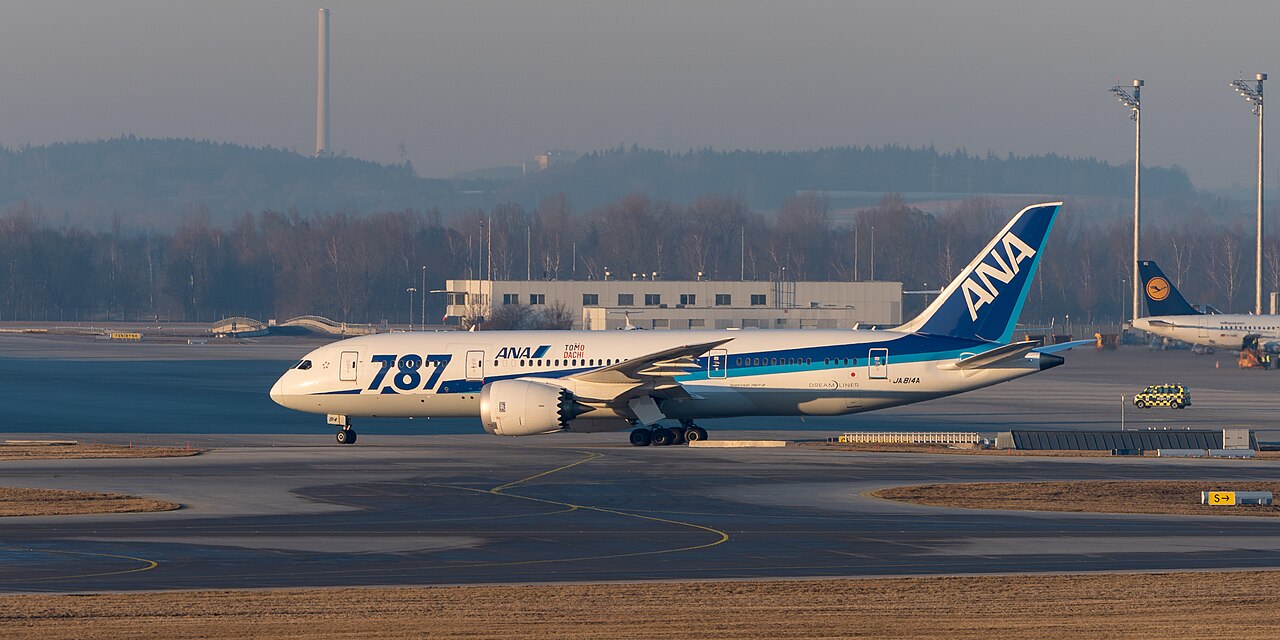
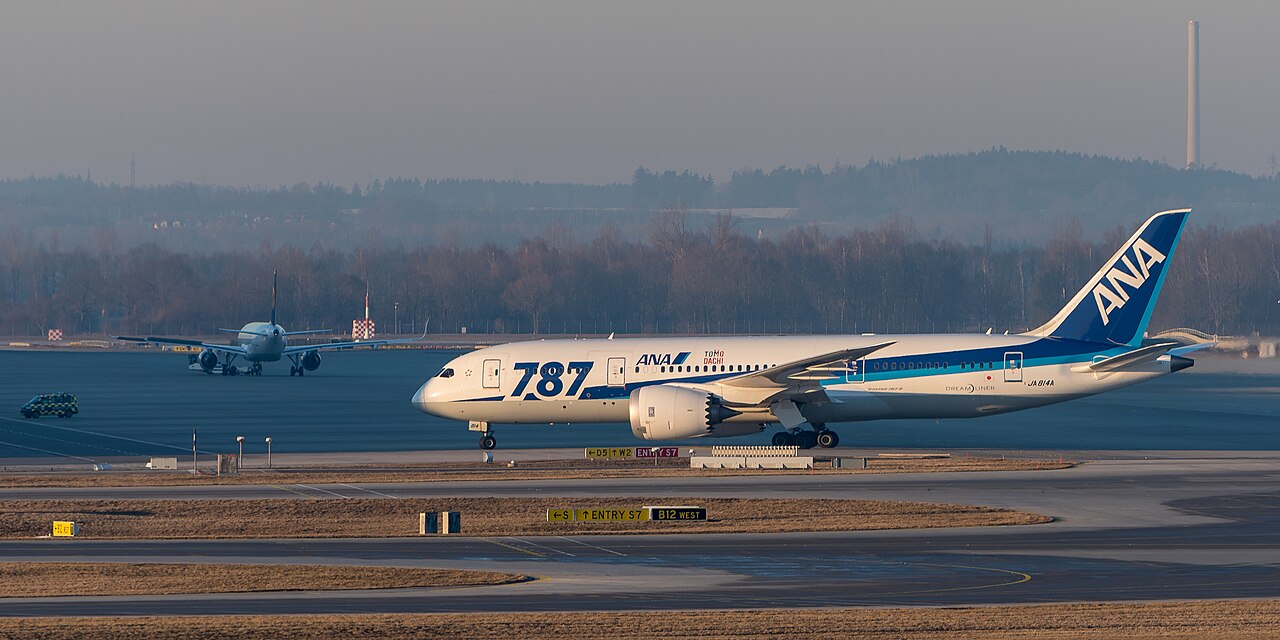
The Boeing 787 Dreamliner, also called the Boeing 787, is a wide-body jet built by Boeing Commercial Airplanes. It was first announced on January 29, 2003, as the 7E7, with a strong emphasis on fuel efficiency. The program officially began on April 26, 2004, after All Nippon Airways (ANA) placed an order for 50 aircraft, with an initial target for service entry in 2008. A prototype without major operating systems was shown on July 8, 2007, but multiple delays pushed the first flight to December 15, 2009. The 787-8 received type certification in August 2011, was delivered to ANA the following month, and entered commercial service in October 2011.
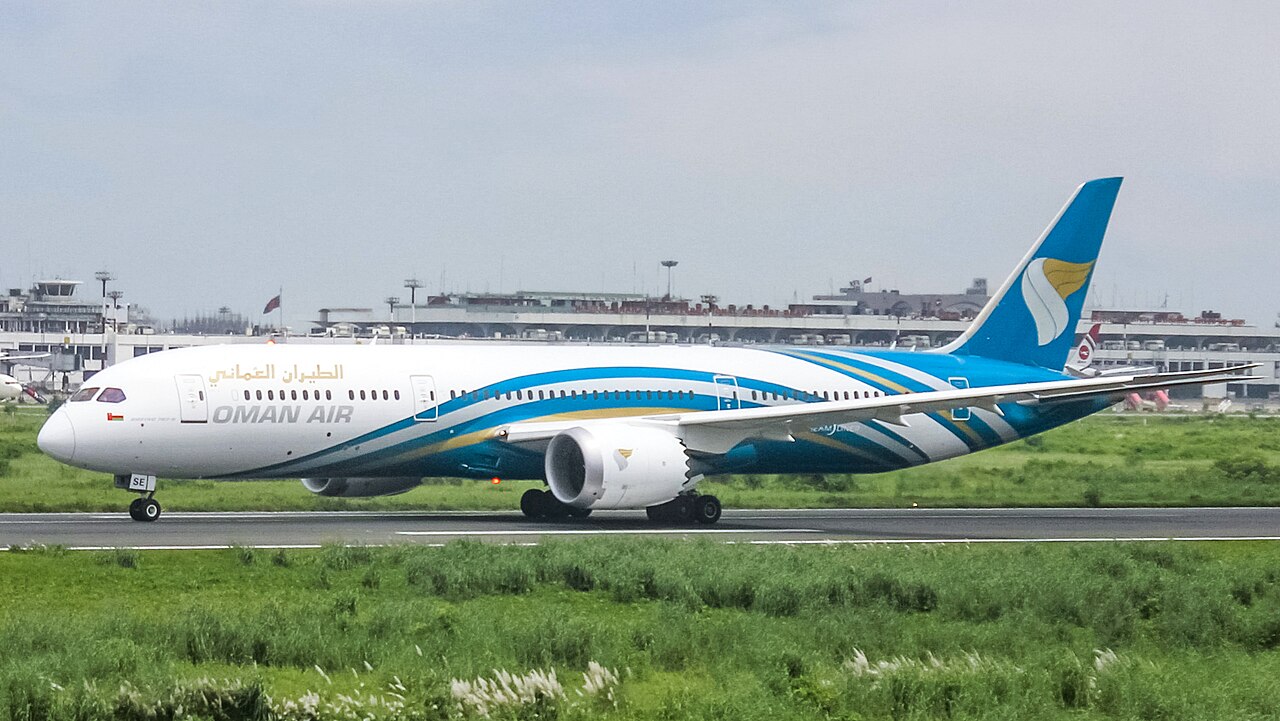
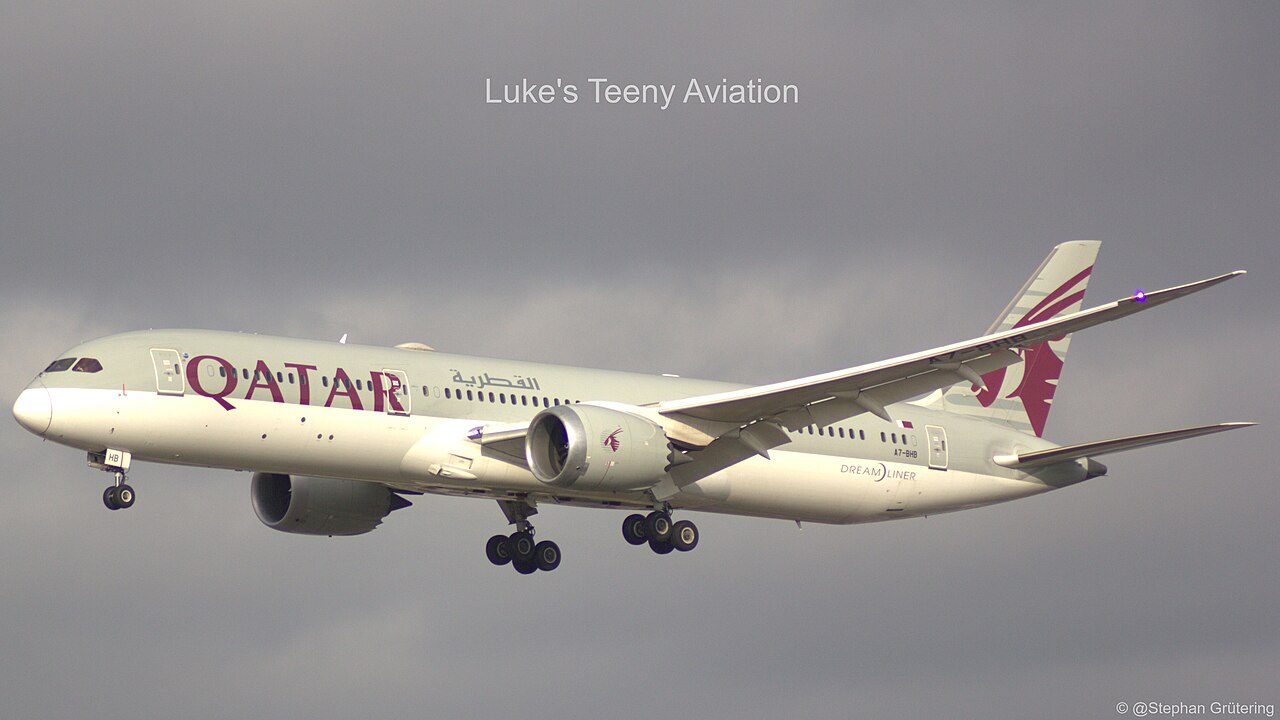
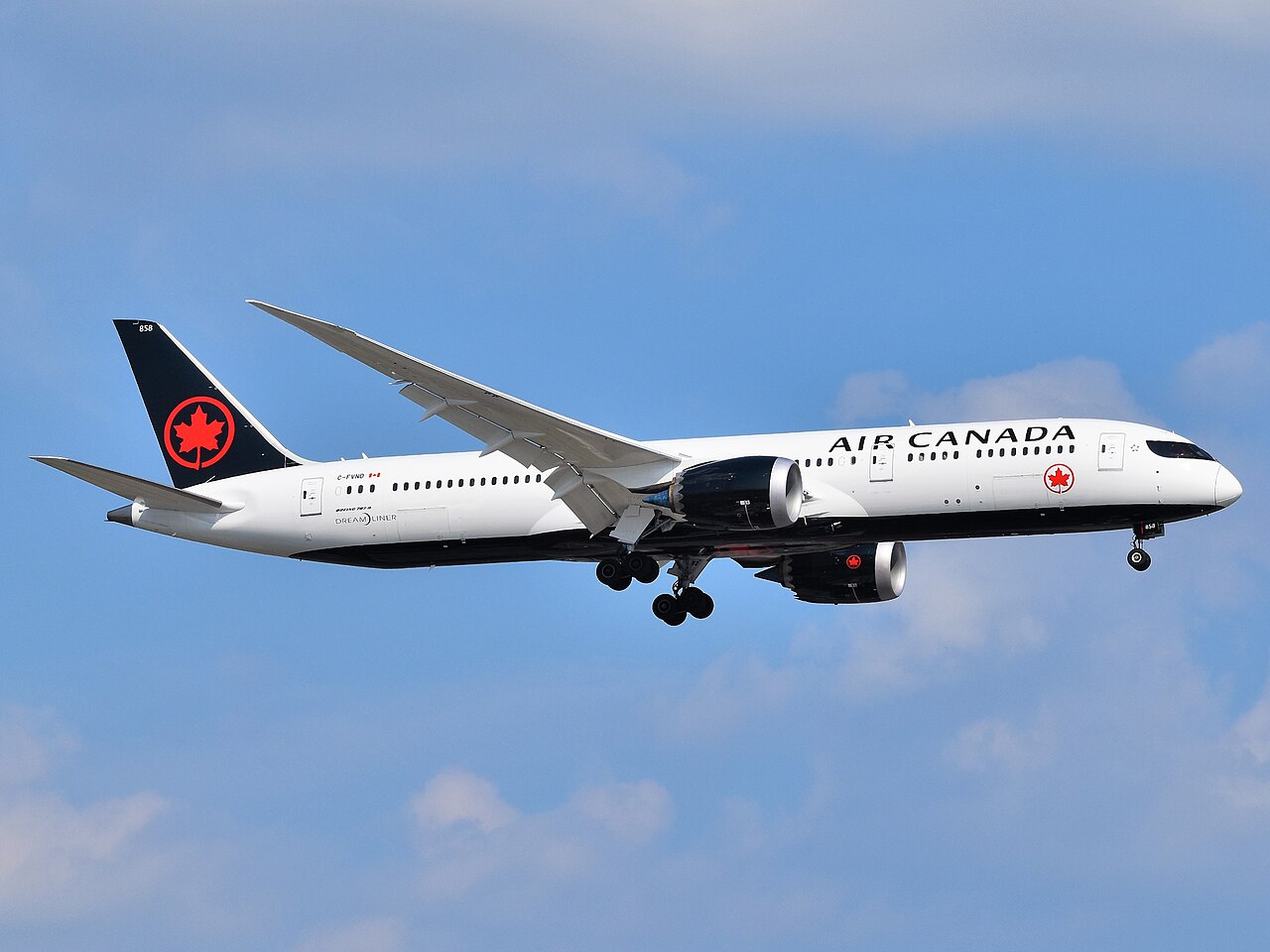
Boeing aimed for the 787 to use 20% less fuel than similar planes like the Boeing 767. It can carry between 200 and 300 passengers on point-to-point routes up to 8,500 nautical miles (15,700 km; 9,800 mi), moving away from the traditional hub-and-spoke model. The twinjet uses General Electric GEnx or Rolls-Royce Trent 1000 high-bypass turbofan engines. It is the first airliner with a mostly composite airframe and relies more on electrical systems than previous models. Externally, it features a four-window cockpit, raked wingtips, and chevrons on the engine nacelles to reduce noise. More than earlier Boeing aircraft, its development and production depend on subcontractors worldwide. Final assembly moved to the Boeing South Carolina factory in March 2021; before that, it was done at the Boeing Everett Factory in Washington state.
The initial 787-8 is 186 feet (57 m) long, typically seats 248 passengers, and has a range of 7,305 nautical miles (13,529 km; 8,406 mi) with a maximum takeoff weight (MTOW) of 502,500 lb (227.9 t). Later variants have a higher MTOW of 560,000 lb (250 t). The stretched 787-9, at 206 feet (63 m), can fly 7,565 nautical miles (14,010 km; 8,706 mi) with 296 passengers; it entered service with ANA on August 7, 2014. The further stretched 787-10, 224 feet (68 m) long, seats 336 and has a range of 6,330 nautical miles (11,720 km; 7,280 mi); it began service with Singapore Airlines on April 3, 2018.
Early operations faced problems with the aircraft's lithium-ion batteries, including fires. In January 2013, the U.S. FAA grounded all 787s until a revised battery design was approved in April 2013. Starting in 2019, significant quality control issues led to a production slowdown and, from January 2021 to August 2022, an almost complete halt in deliveries. The first fatal crash and hull loss occurred on June 12, 2025, with Air India Flight 171. A preliminary report on July 12 from the Indian Aircraft Accident Investigation Bureau did not recommend any actions for Boeing or 787 operators. Boeing has spent $32 billion on the program; estimates for the number of sales needed to break even range from 1,300 to 2,000. As of July 2026, the 787 program has received 2,453 orders and made 1,299 deliveries.
**Development**
In the late 1990s, slowing sales of the 767 and 747-400 led Boeing to consider replacements. Two proposals emerged: the 747X, which would have lengthened the 747-400 and improved efficiency, and the Sonic Cruiser, designed for speeds around Mach 0.98 while burning fuel at the same rate as the 767. Interest in the 747X was weak; several major U.S. airlines, including Continental, showed early enthusiasm for the Sonic Cruiser, though concerns about operating costs arose. The 9/11 attacks and rising oil prices shifted airline priorities toward efficiency over speed. The worst-hit airlines, mostly in the United States, were seen as the Sonic Cruiser's main customers, so the project was canceled on December 20, 2002. On January 29, 2003, Boeing announced the 7E7, which would use Sonic Cruiser technology in a more conventional design. The focus on a smaller midsize twinjet instead of a large 747-sized plane reflected a move from hub-and-spoke to point-to-point travel, based on focus group analysis.
Randy Baseler, a Boeing vice-president of marketing, noted that airport congestion comes from many regional jets and small single-aisle planes flying to destinations where a 550-seat Airbus A380 would be too large. He argued that making these smaller planes 20% larger and using point-to-point routes could reduce the number of such departures and avoid hubs.
In 2003, James McNerney, then a new Boeing board member, supported the idea of a new aircraft to regain market share from Airbus. (He became CEO in 2005.) The board, including CEO Harry Stonecipher and John McDonnell, gave an ultimatum: develop the plane for less than 40% of the 777's development cost from 13 years earlier, and build each plane for less than 60% of the 777's unit costs in 2003. They approved a development budget of about $7 billion, with Boeing management saying they would require subcontractors to cover most costs. Alan Mulally, Boeing Commercial Airplanes president and former 777 program manager, contrasted the approval process with that of the 777, stating that in the past the board would negotiate a budget, but now they set a fixed amount and told the team, "Here's the budget for this airplane, and we'll be taking this piece of it off the top, and you get what's left; don't fuck up."
- Manufacturer
- Boeing Commercial Airplanes
- Nationality
- American
- Known for
- First airliner with an airframe primarily made of composite materials
Lore & Background
The 7E7 was announced on January 29, 2003, emphasizing efficiency over speed. The program was launched on April 26, 2004, with All Nippon Airways as the launch customer. It features a four-window cockpit, raked wingtips, and noise-reducing chevrons on its engine nacelles. Development and production rely on subcontractors around the world more than previous Boeing aircraft.
Reader's Guide
The Boeing 787 Dreamliner represents a significant shift in commercial aviation, emphasizing fuel efficiency and point-to-point travel over the traditional hub-and-spoke model. Its use of composite materials for the airframe and advanced electrical systems set new standards for airliner design. The 787's development involved extensive global subcontracting, reflecting a change in Boeing's manufacturing approach. Boeing has spent $32 billion on the program, with estimates for breakeven varying between 1,300 and 2,000 sales. The 787's impact on airline economics and route planning has been substantial, enabling airlines to serve long-haul routes with smaller aircraft and opening new city pairs that were not economically viable with larger planes.
Did You Know?
- The 787 is the first airliner with an airframe primarily made of composite materials.
- The program was launched on April 26, 2004, with an order for 50 aircraft from All Nippon Airways.
- Boeing has spent $32 billion on the 787 program.
From Sonic Cruiser to Conventional Twinjet
The 787's story begins in a moment of corporate uncertainty. In the late 1990s, Boeing watched sales of its 767 and 747-400 slow, prompting the company to sketch two replacement concepts: a stretched 747X and a near-supersonic Sonic Cruiser promising Mach 0.98 speeds at 767-level fuel burn. Initial enthusiasm from carriers like Continental Airlines gave the Sonic Cruiser momentum, but the September 11 attacks and surging oil prices reshaped airline priorities almost overnight. Efficiency trumped speed, and the very airlines most likely to buy the Sonic Cruiser were the ones most wounded by the new economic reality. Just weeks later, on January 29, 2003, the company unveiled the 7E7—a conventional midsize twinjet that repurposed Sonic Cruiser technology while embracing the point-to-point routing model that was replacing the old hub-and-spoke paradigm. The shift was both a technical and philosophical one: fewer, larger aircraft flying direct routes rather than feeding passengers through congested hubs.
A Composite Revolution in the Airframe
The 787 marked a watershed in commercial aviation materials. It became the first airliner whose airframe is built primarily from composite materials, a departure from the aluminum-dominant construction that had defined jetliners for decades. This choice was inseparable from Boeing's launch promise of cutting fuel burn by roughly 20 percent relative to predecessors like the 767. The aircraft also leans heavily on electrical systems, reducing the need for traditional hydraulic and pneumatic plumbing. Visually, the jet is unmistakable: a four-window cockpit, raked wingtips, and serrated chevrons along the engine nacelles that tame jet noise. Production itself was a global undertaking, relying on subcontractors worldwide more heavily than any prior Boeing program.
Three Stretched Variants, One Family
Boeing rolled out the 787 in three progressively longer variants, each tailored to different route economics. Singapore Airlines took delivery of the first 787-10 in April 2018. Together, the trio spans the 200-to-300-passenger point-to-point corridor that Boeing identified as the 787's core market, offering airlines a flexible ladder of capacity and range without jumping to a full wide-body like the 777.
A Costly Road to Maturity
The 787's journey from rollout to stable production was far from smooth. The financial stakes are enormous: Boeing has poured $32 billion into the program, and analysts estimate 1,300 to 2,000 sales are needed to break even.
Common Misconceptions (Editorial)
Some people mistakenly believe the Boeing 787 was designed for speed; in fact, it was announced on January 29, 2003, with an emphasis on efficiency over speed. Another common error is thinking the program launched with a different launch customer, but the facts confirm it was launched on April 26, 2004, with All Nippon Airways ordering 50 aircraft.
Why It Matters (Editorial)
The Boeing 787 Dreamliner matters because it revolutionized commercial aviation by introducing a composite-material airframe and shifting airline strategy toward point-to-point routes, offering greater fuel efficiency and new possibilities for nonstop travel. Its global production network also underscores how modern aerospace manufacturing depends on international collaboration, making the 787 a symbol of both innovation and interdependence in the 21st-century economy.
Gallery
Frequently Asked Questions
What is the Boeing 787 Dreamliner?
The 787 is an American wide-body passenger jet produced by Boeing Commercial Airplanes, originally unveiled in early 2003 under the working name 7E7. It was designed with a strong emphasis on fuel efficiency and long-haul point-to-point flying.
What is the Boeing 787 Dreamliner known for?
It holds the distinction of being the first commercial airliner whose airframe is built primarily out of composite materials rather than conventional aluminum. That structural choice was central to the aircraft's overall efficiency goals.
Why was the Boeing 787 Dreamliner developed?
Boeing created the 787 to address a growing industry shift away from traditional hub-and-spoke networks toward direct point-to-point routes. The design prioritized lower operating costs and improved fuel burn for those longer nonstop flights.
Who was the launch customer for the Boeing 787 Dreamliner?
All Nippon Airways (ANA) placed the program's initial order of fifty aircraft when the project was officially launched on April 26, 2004. That commitment gave Boeing the green light to move forward with full-scale development.
More in Airliners 1-20
Spotted an error? Know more?
This is a living reference — every entry is fact-audited, and reader corrections feed straight into our audit queue. Suggest an edit · See this site's audit record