Ys (series)
Long-running action RPG series following the travels of Adol Christin.

Ys is a Japanese action role-playing series from Nihon Falcom. It was created by designer and programmer Masaya Hashimoto and writer Tomoyoshi Miyazaki, launching with *Ys I* on the NEC PC-8801 in June 1987. The first game is regarded in both contemporary and retrospective accounts as a key early step forward for the Japanese action RPG, noted for its straightforward real-time combat and brisk pace.
The franchise is among the longest-running in video games to follow a single protagonist through a consistent storyline. Most entries are framed as reconstructions of the travel journals of Adol Christin, a red-haired adventurer who, according to the series’ narrative, wrote accounts of over a hundred journeys in his lifetime. Each game typically covers one of those trips and can be played on its own, though recurring characters, civilizations, artifacts, and historical threads link the installments.
The games are recognized for real-time combat, fast movement, large boss fights, and a strong musical score. The combat system has undergone several overhauls. Early titles used a collision-based system where Adol attacks by running into enemies at an angle; later groups introduced manual sword swings and jumping, three-character parties with instant swapping, and two-character combination combat.
The series has remained active for nearly four decades, appearing on Japanese PCs, home consoles, handhelds, Windows, mobile devices, and cloud platforms. The most recent release is *Ys X: Nordics*, an action RPG that first launched for PlayStation 4, PlayStation 5, and Nintendo Switch in Japan in September 2023, and internationally in 2024.
**Common elements**
**Framing and chronology** Most numbered games follow Adol Christin, who leaves his home village at 16 and begins his first major adventure at 17. The stories are presented as later adaptations of journals he wrote during his life. Falcom states that Adol left over a hundred such records, which lets the company depict his adventures out of internal chronological order.
The numbered titles are not arranged strictly by timeline. *Ys X: Nordics*, the tenth numbered game, occurs shortly after *Ys II*, while *Ys VIII: Lacrimosa of Dana* takes place before *Ys VI: The Ark of Napishtim*. Falcom chooses settings based on the story and gameplay concept in development rather than advanci
- First release
- Ys I (June 1987, NEC PC-8801)
- Developer
- Nihon Falcom
- Creators
- Masaya Hashimoto (designer/programmer), Tomoyoshi Miyazaki (scenario writer)
- Genre
- Action role-playing
- Protagonist
- Adol Christin
- Latest release
- Ys X: Nordics (September 2023 in Japan, 2024 internationally)
Lore & Background
The series is one of the longest running video game franchises featuring a single protagonist in a consistent game canon. Most games are presented as reconstructions of the travel journals of Adol Christin, a red-haired adventurer who is said within the series' framing narrative to have recorded more than one hundred journeys during his lifetime. Individual installments generally follow one of those journeys and can be understood independently, although recurring characters, civilizations, artifacts, and historical events connect the games. The numbered titles are not arranged entirely in chronological order; for example, Ys X: Nordics takes place shortly after Ys II, while Ys VIII: Lacrimosa of Dana occurs before Ys VI: The Ark of Napishtim.
Reader's Guide
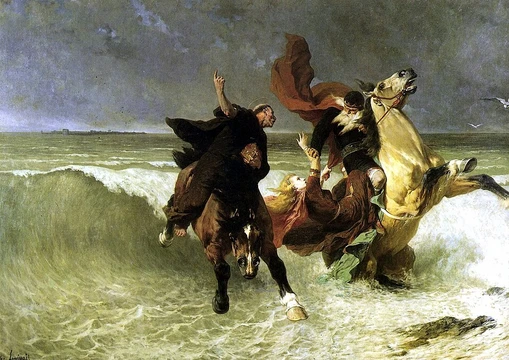
The Ys series has remained active across nearly four decades and has appeared on Japanese personal computers, home consoles, handheld systems, Windows, mobile devices, and cloud-gaming services. Its gameplay has been redesigned several times, from the contact-based 'bump combat' of the first two games to manual sword attacks and jumping in Ys III, three-character parties with instantaneous switching in Ys Seven, and two-character combination combat in later entries. The series is known for real-time combat, rapid movement, large boss encounters, and prominent music. Falcom selects settings according to the story and gameplay concept under development rather than advancing continuously through Adol's life, allowing each game to begin with Adol meeting a new group of people and conclude with his departure from them. The name of the series comes from Ys, the vanished civilization at the center of the first two games, inspired by the Breton legend of a submerged city.
Did You Know?
- Ys I and Ys II use a contact-based system commonly called 'bump combat', where the player damages enemies by moving Adol into them at an offset angle.
- Ys Origin is set approximately 700 years before Ys I and does not depict one of Adol's journeys; it instead follows events in the ancient kingdom of Ys involving the twin goddesses.
- Adol is generally portrayed as a silent or minimally voiced protagonist during ordinary dialogue, with his personality expressed through his actions and the player's interpretation.
- The series' latest release is Ys X: Proud Nordics, first released for the Nintendo Switch 2 in Japan in July 2025 and internationally for Switch 2, PlayStation 5, and Windows in February 2026.
A Bold Departure in Gameplay
Ys III broke from the top-down perspective that defined its predecessors, adopting a side-scrolling camera and platformer mechanics that drew clear parallels to Zelda II: The Adventure of Link. This shift was not merely cosmetic; the series' signature auto-attack was stripped away, forcing players to manually trigger Adol's strikes with a button press. Beyond these changes, however, the underlying systems remained faithful to the franchise. Statistics, equipment shops, experience progression, and magic all carried over from Ys I and II, with only minor cosmetic tweaks such as spells being represented by rings rather than wand icons and the magic point resource being relabeled Ring Power. Neither the protagonist nor enemies gained temporary invincibility frames. This entry also marked a significant personnel milestone: it was the final Ys title to feature the creative contributions of Masaya Hashimoto and Tomoyoshi Miyazaki, who departed Nihon Falcom shortly after to co-found the studio Quintet.
The Story of the Four Statues
Set three years after the events of Ys I and II, the narrative follows Adol Christin and his companion Dogi as they return to Redmont, Dogi's hometown, only to discover the village under threat from the forces of Valestein Castle. Adol's quest to rescue the mayor and retrieve a mysterious statue sets him on a path to collect four ancient artifacts that once sealed Galbalan, a powerful demon who had ruled the province of Felghana in antiquity. Along the way, Adol encounters a web of relationships: Elena, a local friend; her brother Chester, who initially attacks him in a pit; and Lord MacGuire, the king of Felghana, who is ultimately revealed to be repentant rather than purely villainous. The climax unfolds on Galbalan's island fortress, where Adol defeats the demon, only to learn that Chester—descended from the original hero who sealed Galbalan—sacrifices himself to sink the island and re-seal it forever. The story closes with a quiet, bittersweet farewell as Elena confesses her love for Adol to Dogi before running to wave goodbye to the departing adventurers.
A Rich Musical Heritage
The original Ys III soundtrack was composed entirely by Mieko Ishikawa, while the X68000 edition expanded the score with additional pieces by Masaaki Kawai, who also re-arranged Ishikawa's existing compositions for that version. Falcom went on to produce an impressive catalog of dedicated music releases for the title. The 1989 original soundtrack CD captured the PC-8801 score alongside three X68000 tracks, while a Super Arrange Version that same year featured work by Hiroyuki Nanba and Atsushi Yokozeki. In 1990, the J.D.K. Special release delivered the complete X68000 soundtrack plus four rock arrangements by Falcom's J.D.K. Band, and the Perfect Collection Ys III offered a two-disc set with arrangements by Ryo Yonemitsu, Yoshio Tsuru, and Kanji Saito, the second disc exploring the score in various musical styles. To mark the 2005 remake, Falcom released the Ys Premium Music CD Box in Felghana, a comprehensive boxed set gathering nearly every Ys III composition ever produced.
A Long and Evolving Release History
Originally launched in 1989 for the PC-8801 and PC-9801 under the title Wanderers from Ys, the game quickly expanded to MSX2 and X68000 platforms. By 1991, console ports appeared for the TurboGrafx-CD, Famicom, Super NES, and Sega Genesis, with all but the Famicom edition receiving international distribution. A PlayStation 2 remaster followed in 2005 under Taito's banner, and that same year a full remake, Ys: The Oath in Felghana, arrived for Windows. The game's legacy continued into the modern era: in 2022, BEEP re-released the X68000 version in Japan on physical floppy disks, and in 2024, D4 Enterprise brought the PC-8801 edition to the Nintendo Switch globally through Eggconsole emulation software. Looking ahead, BEEP plans a 2026 compilation called Ys Legacy Collection ~Ys I&II&III For X68000 Z~ bundling the X68000 versions of all three games on an SD card, while D4 Enterprise aims to release a Windows collection encompassing the PC-8801, PC-9801, X68000, and MSX2 versions in 2026.
Frequently Asked Questions
What is Ys (series)?
Ys is a long-running Japanese action RPG franchise developed by Nihon Falcom. It debuted in 1987 on the NEC PC-8801 and has since become one of the most enduring single-protagonist series in gaming.
Who created Ys (series)?
The series was built by designer-programmer Masaya Hashimoto alongside scenario writer Tomoyoshi Miyazaki. Their collaboration on the original 1987 title set the foundation for everything that followed.
What makes Ys (series) stand out in the RPG genre?
It pioneered a fast-paced, real-time combat loop that moved away from turn-based systems, and it has maintained that brisk action style across decades of entries. Its focus on a single traveling hero through a continuous narrative arc is also rare among long-running franchises.
Who is the main character in Ys (series)?
Adol Christin is the recurring protagonist, a wandering swordsman whose adventures form the spine of nearly every entry. The games are typically presented as reconstructions of his personal travel journals.
What is the most recent Ys (series) game?
Ys X: Nordics arrived in Japan in September 2023 and came to international audiences in 2024. It continues Adol's story and extends a franchise that has been releasing new titles since 1987.
More in Ys 1-18
Spotted an error? Know more?
This is a living reference — every entry is fact-audited, and reader corrections feed straight into our audit queue. Suggest an edit · See this site's audit record