
Atomic bombings of Hiroshima and Nagasaki
First and only nuclear attacks in war, ending World War II.
Last updated

Government Printing Office · Public domain
The Pacific War between Japan and the Allies was in its fourth year by 1945, and most Japanese units fought fiercely, making an Allied victory costly.[1]
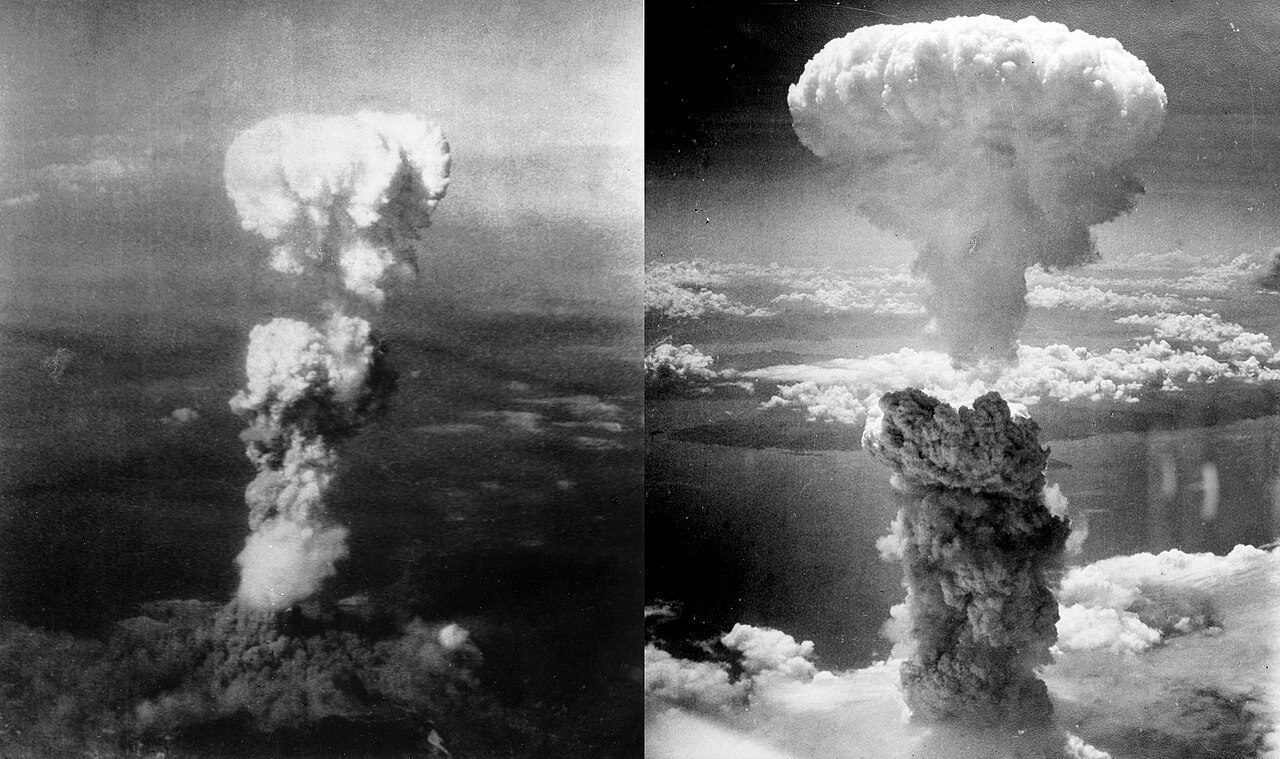
What happened
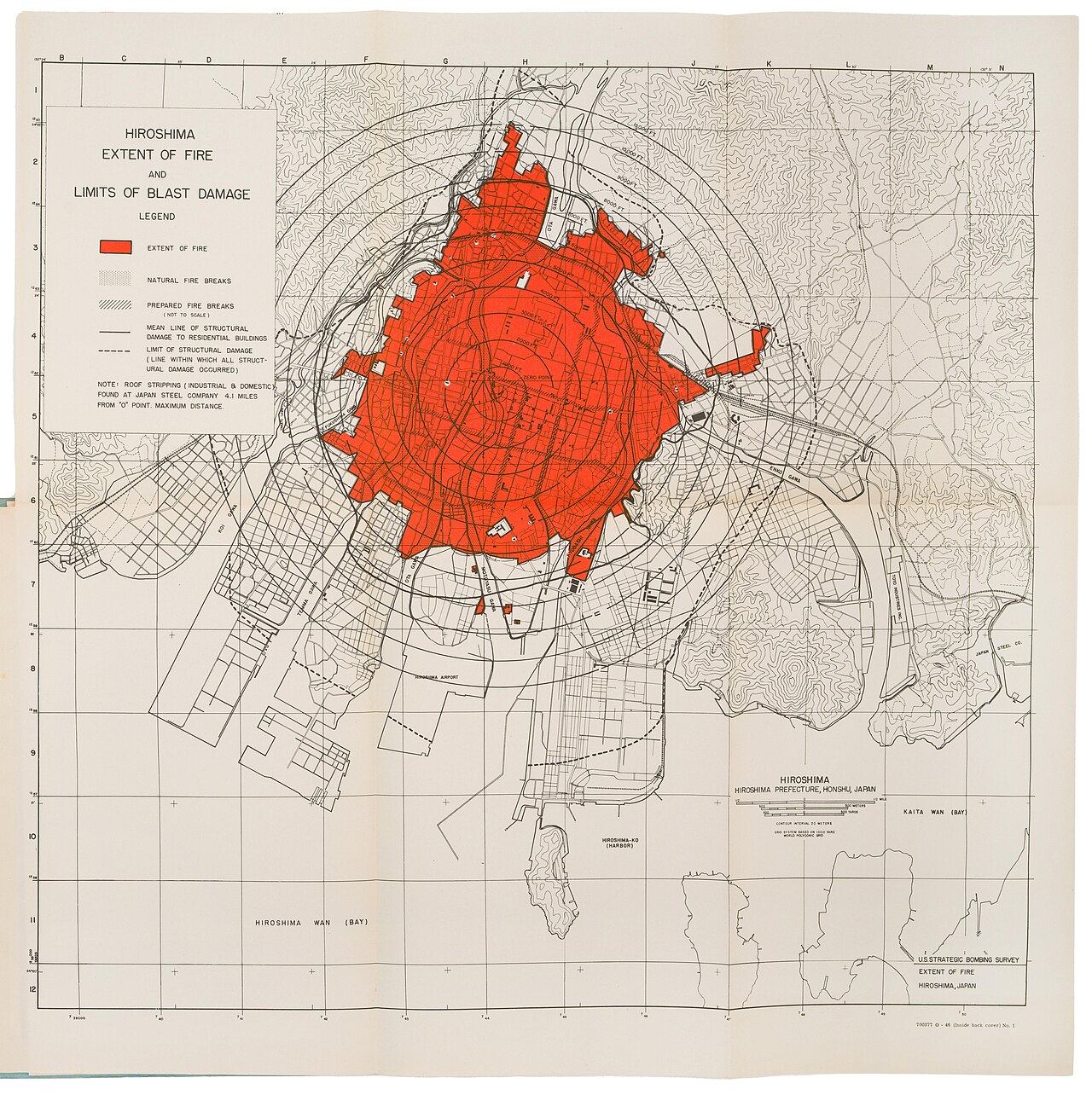
The Target Committee nominated Hiroshima, Kokura, Yokohama, Niigata, and Kyoto as potential targets.[2][3] The Interim Committee decided the bomb should be used against Japan at the earliest opportunity without special warning.[4] The 509th Composite Group, commanded by Colonel Paul Tibbets, trained at Wendover Army Air Field and deployed to Tinian.[5][6] Two bomb types were developed: a gun-type weapon using uranium-235, called Little Boy, and an implosion-type weapon using plutonium-239, called Fat Man.[7]
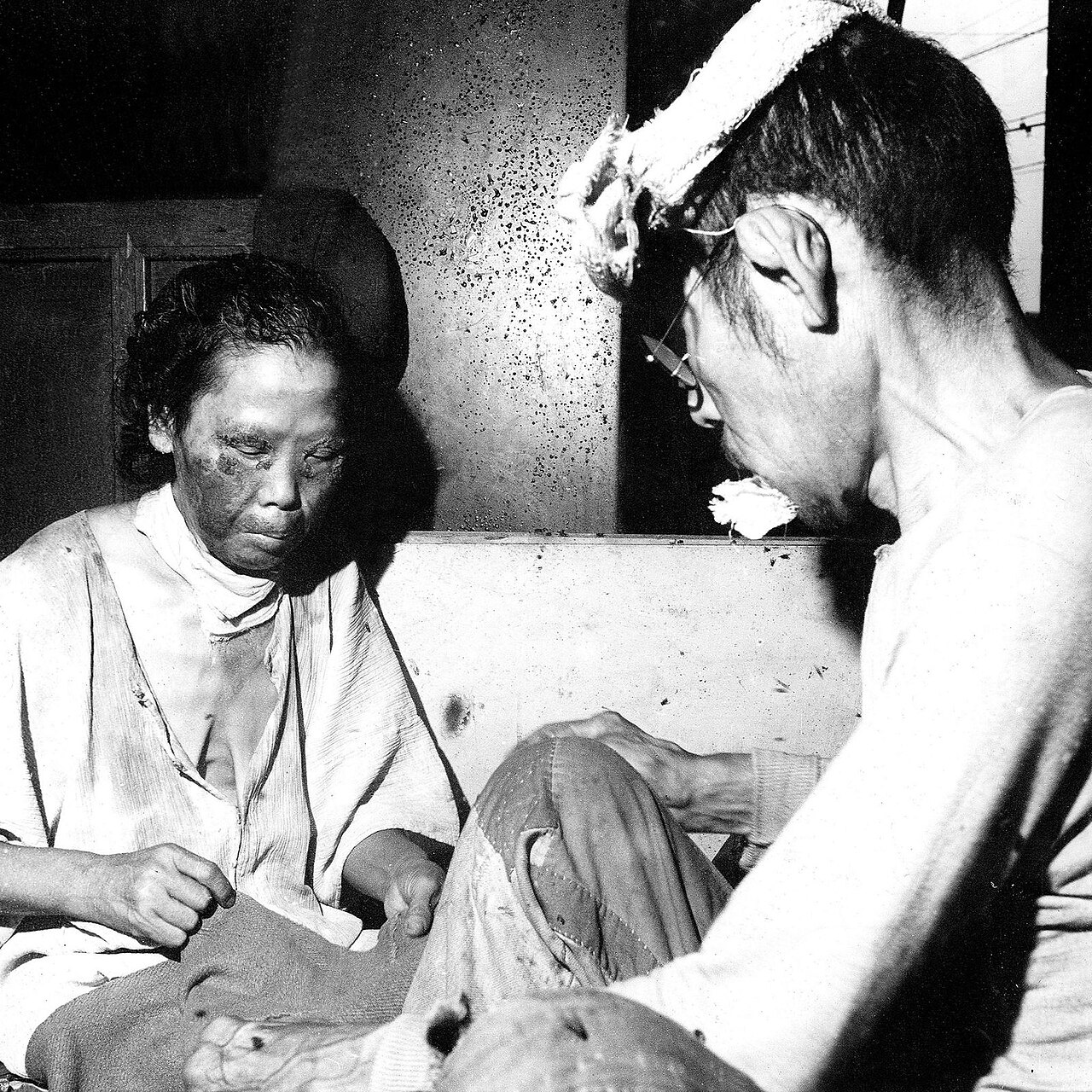
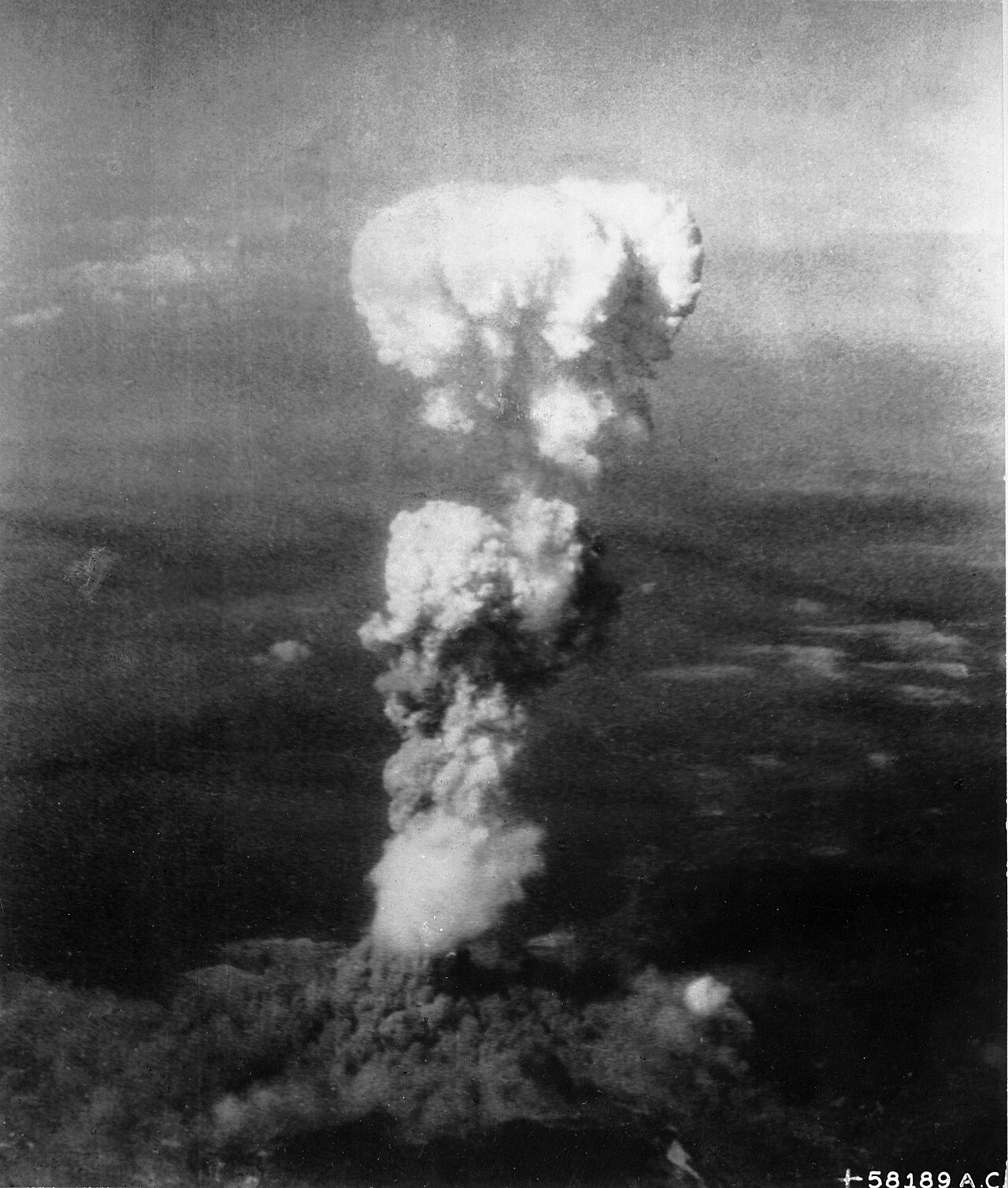
The first bombing was codenamed Operation Centerboard I and the second, Operation Centerboard II.[8]
What the cited sources add
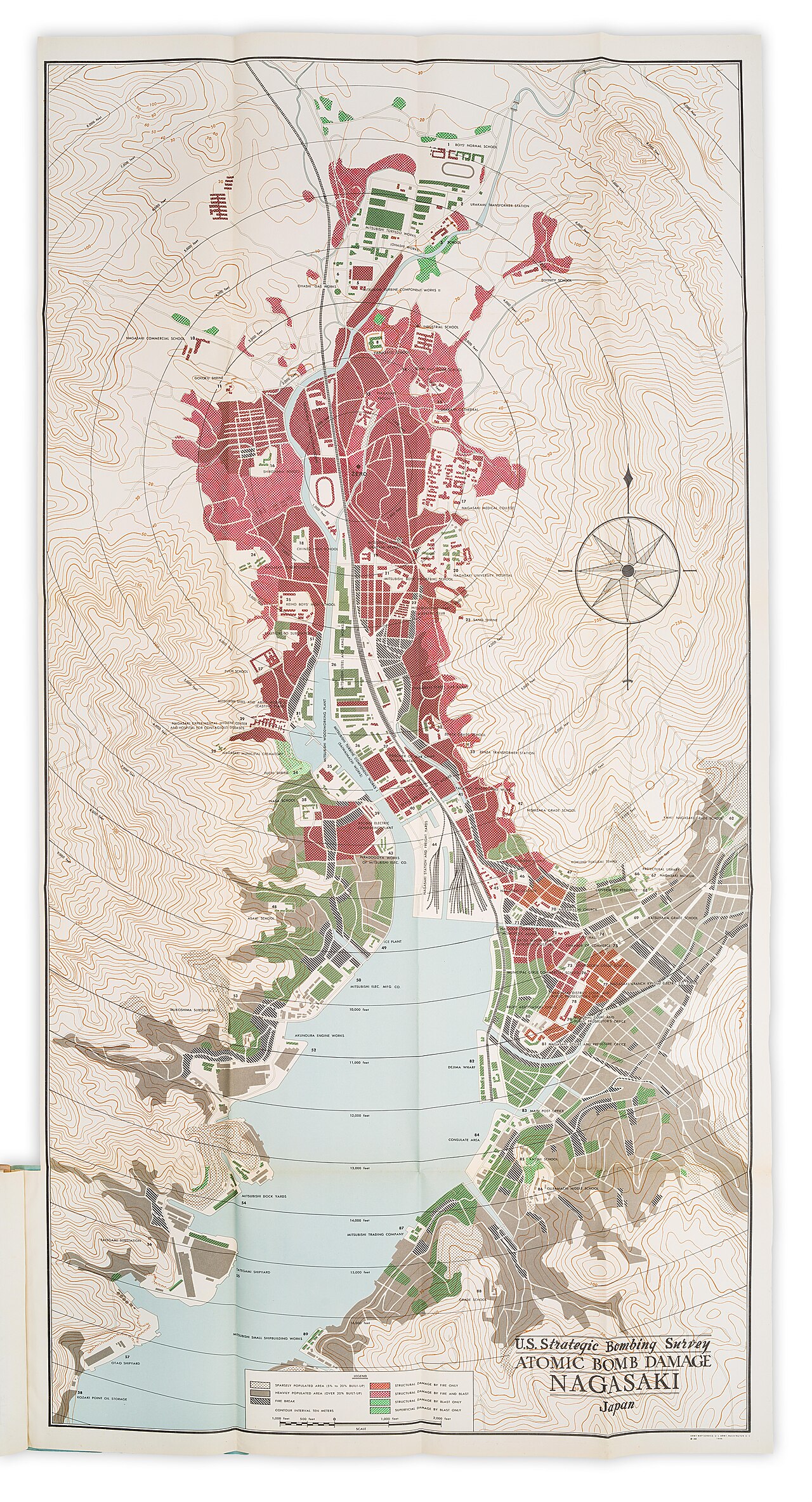
The committee agreed that the Emperor's palace in Tokyo had the greatest fame but the least strategic value.[3] The minutes also specify that the initial use should target a small military objective within a larger area to avoid the bomb being lost due to bad placement.[3]
References
- Wikipedia, "Atomic bombings of Hiroshima and Nagasaki" (CC BY-SA 4.0), which cites: Asada, "Culture Shock and Japanese-American Relations: Historical Essays", University of Missouri Press, June 2007, p. 228 (original not read by us) en.wikipedia.org
- Wikipedia, "Atomic bombings of Hiroshima and Nagasaki" (CC BY-SA 4.0), which cites: "Atomic Bomb: Decision – Target Committee, May 10–11, 1945" (we also read that source) en.wikipedia.org
- "Atomic Bomb: Decision – Target Committee, May 10–11, 1945". facts only, no text reused. dannen.com
- Wikipedia, "Atomic bombings of Hiroshima and Nagasaki" (CC BY-SA 4.0), which cites: Frank 1999, p. 340; "The Nagasaki atomic bomb damage records, Part 2 Section 1 Chapter 1: Period leading up to the atomic bombing", Nagasaki National Peace Memorial Hall for the Atomic Bomb Victims (original not read by us) en.wikipedia.org
- Wikipedia, "Atomic bombings of Hiroshima and Nagasaki" (CC BY-SA 4.0), which cites: "Factsheets: 509th Operational Group", Air Force Historical Studies Office (original not read by us) en.wikipedia.org
- Wikipedia, "Atomic bombings of Hiroshima and Nagasaki" (CC BY-SA 4.0), which cites: "History of 509th Composite Group – 313th Bombardment Wing – Twentieth Air Force – Activation to 15 August 1945", 509th Composite Group, 1945, p. 8–9; Tibbets 1998, p. 163, 167–168; "Minutes of 3rd Target Committee Meeting 28 May 1945", National Archives; "The Nagasaki atomic bomb damage records, Part 2 Section 1 Chapter 1: Period leading up to the atomic bombing", Nagasaki National Peace Memorial Hall for the Atomic Bomb Victims (original not read by us) en.wikipedia.org
- Wikipedia, "Atomic bombings of Hiroshima and Nagasaki" (CC BY-SA 4.0), which cites: Jones 1985, p. 7; Jones 1985, p. 7 (original not read by us) en.wikipedia.org
- Wikipedia, "Atomic bombings of Hiroshima and Nagasaki" (CC BY-SA 4.0), which cites: Alex, "The Luck of Kokura", Restricted Data (original not read by us) en.wikipedia.org
Each numbered sentence above was checked against the source it cites before publication. Sentences citing Wikipedia adapt text from the English Wikipedia article Atomic bombings of Hiroshima and Nagasaki (contributors), used under CC BY-SA 4.0; this entry is available under the same licence. Other sources were used for facts only; no text or images are copied from them.
More in World War Ii And Its Aftermath
Sources
Compiled from Wikipedia and the sources listed below. Text from Wikipedia is available under CC BY-SA 4.0; this entry is adapted from it.
- Wikipedia: Atomic bombings of Hiroshima and Nagasaki (CC BY-SA 4.0).
Spotted an error? Know more?
Reader corrections go straight into our review queue. Suggest an edit · How this site is sourced