Aradia
Messianic witch figure from Tuscan folklore and Neopagan revival.

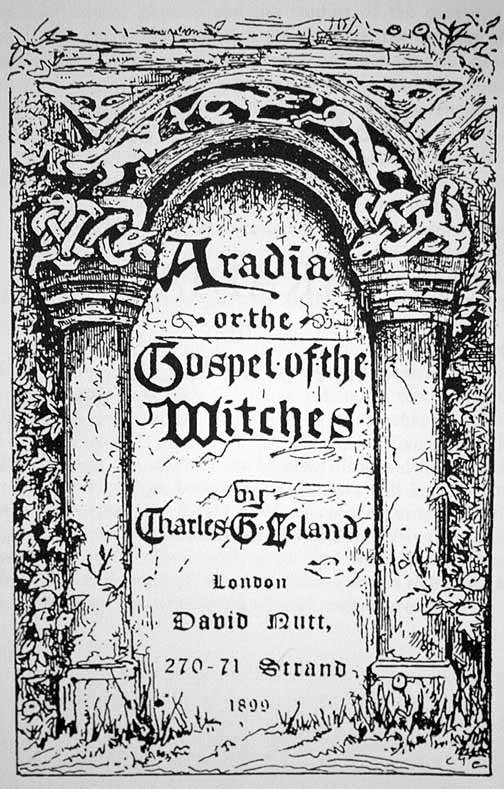
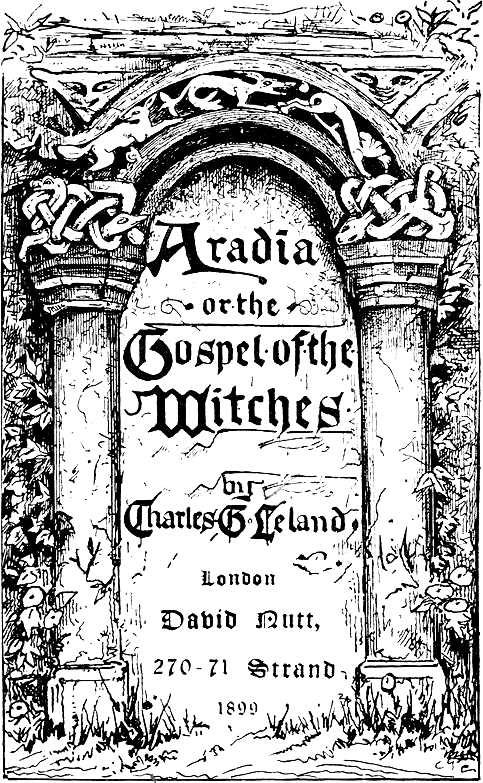
Illustrator unknown. Book by Charles Godfrey Leland. Scan by en:User:Fuzzypeg . · Public domain
Aradia is a principal figure in Charles Godfrey Leland's 1899 work *Aradia, or the Gospel of the Witches*, which he claimed was a genuine religious text of Tuscan pagan witches—a claim disputed by other folklorists and historians. Since the publication of Leland's Gospel, Aradia has become arguably one of the central figures of the modern pagan witchcraft revival, appearing in various forms of Neopaganism including Wicca and Stregheria as an actual deity.
- Field
- Folklore, Neopaganism
- Nationality
- Italian (folkloric figure)
- Known for
- Central figure in Leland's *Aradia, or the Gospel of the Witches*; messianic witch who taught sorcery for liberation from oppression; deity in Wicca and Stregheria
Lore & Background
In Leland's Gospel, Aradia is portrayed as a messiah sent to Earth to teach peasants sorcery as an instrument to liberate themselves from powerful and oppressive social institutions and classes, specifically the Roman Catholic Church and upper class landholders. The text begins with Aradia's birth to Diana and Lucifer, described as 'the god of the Sun and of the Moon, the god of Light (Splendour), who was so proud of his beauty, and who for his pride was driven from Paradise.' Diana instructs Aradia to go to earth to be a teacher unto women and men who would study witchcraft, and Aradia promises her students freedom from slavery.
Folklorist Sabina Magliocco theorized that prior to Leland's work, Aradia was originally a supernatural figure in Italian folklore, later merged with other folkloric figures such as a Rejusta of Sardinia. The Romanian historian Mircea Eliade noted that Arada, along with Irodiada, was a name used for a Romanian folkloric Queen of the Fairies, whom he believed was a 'metamorphosis of Diana.' Leland equated Aradia with Herodias, speculating that Herodias might derive from an ancient goddess, while treating Lilith as a separate figure associated with Diana. Leland also claimed that the worship of Herodias and Diana by witches was condemned by a Church Council at Ancyra as early as 314 CE.
Reader's Guide
Aradia's significance lies in her role as a bridge between medieval folklore and modern Neopaganism. Leland's *Aradia, or the Gospel of the Witches*—though its authenticity as a genuine Tuscan witch text is disputed—became a foundational source for the modern witchcraft revival. The figure of Aradia has been incorporated into Wicca as a name for the Great Goddess or Moon Goddess, and portions of Leland's text influenced the Gardnerian Book of Shadows, especially the Charge of the Goddess. In Stregheria, introduced by Raven Grimassi, Aradia is a central figure; Grimassi claims she was a historical person named Aradia di Toscana who led Diana-worshipping witches in 14th-century Tuscany. The figure has also inspired contemporary movements such as the #WeAreAradia campaign, which encourages witches to embody collective empowerment. Aradia's legacy endures as a symbol of resistance against oppression and as a key mythological figure in the Neopagan pantheon.
Did You Know?
- Leland's *Aradia, or the Gospel of the Witches* was published in 1899 and claimed to be a genuine religious text of Tuscan witches, a claim disputed by other folklorists and historians.
- Raven Grimassi, founder of Stregheria, claims Aradia was a historical figure named Aradia di Toscana who led Diana-worshipping witches in 14th-century Tuscany.
- In 2017, the #WeAreAradia campaign was launched to encourage witches to embody Aradia's spirit of collective empowerment.
The Liberator of Leland's Gospel
In Charles Godfrey Leland's 1899 publication, Aradia occupies the role of a divine emissary dispatched to the mortal world with a singular revolutionary purpose. Born to Diana and Lucifer—described as a proud solar-lunar god cast from Paradise for his vanity—she is commanded to descend and instruct both men and women in the arts of witchcraft. Her mission is explicitly political: to arm the peasantry with sorcery as a weapon against the Roman Catholic Church and the wealthy landholding class that oppressed them. She pledges her followers total emancipation from servitude. Even after returning to Diana's celestial sphere, Aradia retains active power over the material world, as seen in Leland's spellwork where practitioners invoke her to perform magic on their behalf. The text also includes a chapter on the sabbat, which Leland framed as a reliable outline of the doctrines and rites practiced at these gatherings—rites he characterized as driven as much by social rebellion as by personal desire. Leland further speculated that these traditions traced back to ancient Etruscan mythology.
Roots in Italian and Romanian Folklore
Long before Leland's book, a figure bearing names like Aradia, Arada, or Araja threaded through Italian popular belief. The Italian rendering of Herodias—Erodiade—originally referred to the wife of Herod Antipas, who in Early Medieval Christianity was condemned to wander the sky eternally for her role in John the Baptist's death, permitted rest only in treetops between midnight and dawn. By the High Middle Ages, this wandering spirit had become entangled with Diana's retinue of nymphs, forming a host of night-flying spirits across the Italian countryside, also called Minerva or Noctiluca. The canon Episcopi, attributed to Regino of Prüm around 906, records women who believed they flew nightly to meet Diana; Burchard of Worms' later version (c. 1012) explicitly added the name Herodias. In Sardinia, two beings—s'Araja dimoniu and s'Araja justa—appear in folklore, the latter identified by Sabina Magliocco as the antecedent of the witch-like sa Rejusta. Across the border, Romanian tradition knew Arada or Irodiada as a Queen of the Fairies, patroness of the secretive calusari dancers, a role Mircea Eliade interpreted as a transformation of Diana.
Scholarly Controversy and the Authenticity Question
Leland's central claim—that a Tuscan woman named Maddalena had handed him a genuine religious text used by a secret circle of pagan witches—has never survived serious academic scrutiny. Historians like Ronald Hutton have openly challenged the veracity of this provenance, and scholars broadly regard the Gospel as a composite of Leland's own creative choices woven together with genuine folkloric material. The book's identification of Aradia with Herodias, and Leland's further leap equating Herodias with Lilith, has drawn particular scrutiny. Hutton argues this conflation was likely inspired by Jules Michelet's work on Satanism and witchcraft rather than by independent Italian sources. Magliocco, while more open to a genuine connection between the Italian Erodiade, the night-assembly legends, and the Aradia figure, still treats the text as a layered construction. The result is a figure whose authenticity remains perpetually contested: part recovered tradition, part Victorian imagination, and part deliberate mythmaking in service of a political narrative about witchcraft as resistance.
Aradia in the Modern Pagan Revival
Since the late nineteenth century, Aradia has evolved from a disputed literary character into what commentators describe as arguably one of the central deities of the modern pagan witchcraft revival. She appears as an actual worshipped figure across multiple Neopagan traditions, including Wicca and the Wiccan-inspired path of Stregheria. Raven Grimassi, who founded Stregheria, goes further than most scholars: he asserts that Aradia was a real historical person, Aradia di Toscana, who in the fourteenth century led a community of Diana-worshipping witches in Tuscany. This claim transforms her from a folkloric composite into a concrete historical leader, though it remains unverified by independent records. In Wiccan liturgy and ritual, her name is invoked as a divine presence, and the spellwork preserved in Leland's text—particularly the invocations calling upon Diana to send her daughter Aradia to perform magic—continues to inform contemporary practice. What began as a contested passage in a Victorian folklorist's book has thus become a living theological anchor for modern practitioners who experience her not as a literary invention but as a real spiritual force.
Gallery
Frequently Asked Questions
Who is Aradia?
Aradia is a messianic witch figure from Tuscan folklore, depicted as the leader and teacher of a persecuted community of sorcerers. She serves as the central divine character in Charles Godfrey Leland's 1899 book, where she is portrayed as a liberator who empowers her followers through the arts of magic.
What are Aradia's powers and role in the text?
In Leland's Gospel, Aradia functions as a divine instructor who imparts knowledge of sorcery, herbalism, and spiritual ritual to her followers. She is cast as a protective, guiding force for a community of witches being targeted by religious authorities, and her authority is presented as sacred and ancestral.
What is 'Aradia, or the Gospel of the Witches'?
It is a 1899 volume by American folklorist Charles Godfrey Leland, in which he presented a collection of Italian witch-lore material and claimed it was a genuine religious scripture of Tuscan pagan witches. The text's authenticity has been heavily debated, with many scholars viewing it as Leland's literary construction rather than a recovered ancient document.
How did Aradia become a deity in modern witchcraft?
After Leland's book gained a following, Aradia was adopted as an active goddess figure within Neopagan traditions such as Wicca and the Italian-rooted Stregheria path. In these modern religious contexts she is venerated as a divine mother and patron of witchcraft, a role that extends well beyond her original literary function.
Is Aradia a real historical figure or purely fictional?
No independent historical record confirms Aradia as an actual person, and most folklorists and historians dispute Leland's assertion that the Gospel was a genuine ancient text. She is best understood as a folkloric and literary creation who has since been elevated to the status of a living deity within modern pagan belief.
More in Witchcraft in folklore and mythology 1-24
Spotted an error? Know more?
Reader corrections go straight into our review queue. Suggest an edit · How this site is sourced