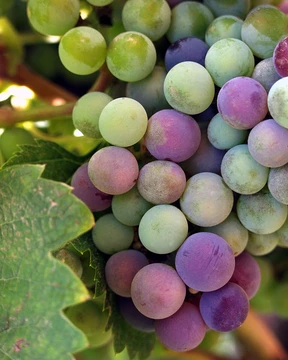
Grape treading
Traditional winemaking method now mostly a recreational festival activity.
Grape treading, or grape-stomping, is a traditional winemaking technique used for maceration. Instead of using a wine press or other machinery, barefoot participants repeatedly trample grapes in vats to extract their juice and kickstart fermentation. Once common throughout winemaking history, the practice has largely been replaced by industrial methods and now mainly appears as a recreational or competitive activity at cultural festivals.
One of the oldest known depictions of grape treading is a 3rd-century AD Roman sarcophagus, which shows a group of Erotes harvesting and stomping grapes during a rural festival called Vindemia. Today, many wineries host grape-stomping contests to draw visitors. The activity has also appeared in popular culture, such as the 1974 Mel Tillis song "Stomp Them Grapes," the *I Love Lucy* episode "Lucy's Italian Movie," and the children's book *The Littlest Grape Stomper* by Alan Madison. In the novel *The Secret of Santa Vittoria* and its film adaptation—set in an Italian wine town during WWII—a grape-treading scene plays a key role in the townspeople’s conflict with German occupiers.
Harvest experience tours, sometimes called "harvest internships" or "crush camps," let visitors take part in grape harvesting and crushing firsthand. These programs are typically offered during the harvest season, which varies by region and grape type. They provide a fun, educational look behind the scenes at a working winery.
- Earliest extant visual representation
- Roman Empire sarcophagus from the 3rd century AD
- Depicted festival
- Vindemia, a rural festival
- Notable song
- "Stomp Them Grapes" by Mel Tillis (1974)
- Notable tv episode
- I Love Lucy episode "Lucy's Italian Movie"
- Notable children's book
- The Littlest Grape Stomper by Alan Madison
- Notable novel and film
- The Secret of Santa Vittoria
Lore & Background
One of the earliest extant visual representations of grape treading appears on a Roman Empire sarcophagus from the 3rd century AD, which depicts an idealized pastoral scene with a group of Erotes harvesting and stomping grapes at Vindemia, a rural festival. Many contemporary wineries hold grape-stomping contests to attract visitors. The practice is also the subject of many depictions in contemporary media, including the 1974 Mel Tillis song "Stomp Them Grapes", the I Love Lucy episode "Lucy's Italian Movie", and The Littlest Grape Stomper, a children's book by Alan Madison. The novel The Secret of Santa Vittoria and the film based on it, taking place in a wine-producing Italian town during WWII, include a grape treading scene which has a major role in the battle of wits between the townspeople and their German occupiers.
Reader's Guide
Grape treading is notable as a traditional method that has largely been replaced by industrial wine presses and mechanized crushing. Its survival as a recreational and competitive activity at cultural festivals reflects a broader interest in heritage winemaking practices. Harvest experience tours, also known as harvest internships or crush camps, allow visitors to participate in grape harvesting and crushing firsthand, including treading. These tours are usually offered during the grape harvesting season, which varies by region and grape type. They provide a fun and educational way to learn about the winemaking process and see behind the scenes at a working winery. The practice continues to be celebrated at events such as the 3rd Annual Wine Festival in Artsakh and traditional grape harvest festivals in Spain, as well as at the Historic Sonoma Valley Grape Stomp in Sonoma, California. Its legacy is also preserved in popular culture, from the I Love Lucy episode to the Mel Tillis song, ensuring that the image of barefoot participants stomping grapes remains familiar even as the method itself becomes rare in commercial production.
Did You Know?
- One of the earliest visual depictions of grape treading appears on a Roman sarcophagus from the 3rd century AD.
- The practice is featured in the I Love Lucy episode 'Lucy's Italian Movie'.
- Mel Tillis released a song titled 'Stomp Them Grapes' in 1974.
- The novel and film 'The Secret of Santa Vittoria' include a grape treading scene central to the plot.
More in Winemaking 1-24
Spotted an error? Know more?
Reader corrections go straight into our review queue. Suggest an edit · How this site is sourced