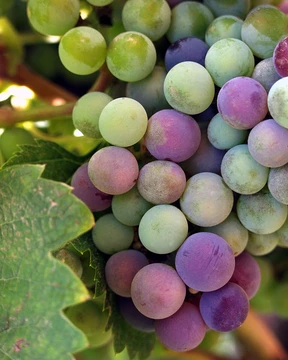
Acetic acid bacteria
Gram-negative bacteria that oxidize ethanol to produce acetic acid.
Acetic acid bacteria (AAB) are a group of Gram-negative, rod-shaped, obligate aerobes that oxidize sugars or ethanol to produce acetic acid during fermentation. They are ubiquitous in nature, airborne, and actively present in environments where ethanol is formed as a product of sugar fermentation, such as in nectar of flowers, damaged fruit, fresh apple cider, and unpasteurized beer. These bacteria grow as a surface film due to their aerobic nature and active motility, and are commonly propagated by vectors such as fruit flies or vinegar eels.
- Genera count
- 10 genera in the family Acetobacteraceae
- Ph optimum
- 5.4–6.3
- Acid tolerance
- grow well below pH 5.0
- Cell shape
- rod-shaped
- Oxygen requirement
- obligate aerobes
Lore & Background
Acetic acid bacteria consist of 10 genera within the family Acetobacteraceae. They are airborne and ubiquitous, found in environments where ethanol is produced from sugar fermentation, such as nectar of flowers, damaged fruit, fresh apple cider, and unpasteurized beer. In these liquids, they form a surface film due to their aerobic nature and motility. Fruit flies and vinegar eels are common vectors for their propagation. The growth of Acetobacter in wine can be suppressed through effective sanitation, complete exclusion of air during storage, and the use of moderate amounts of sulfur dioxide as a preservative.
Reader's Guide
Acetic acid bacteria are notable for their role in vinegar production, which occurs when they act on alcoholic beverages such as wine through oxidative fermentation. Their oxidation mechanism is exploited in biotechnology to produce compounds including l-ascorbic acid, dihydroxyacetone, gluconic acid, and cellulose. Some genera, such as Acetobacter, can oxidize ethanol fully to carbon dioxide and water using Krebs cycle enzymes, while others, such as Gluconobacter, lack a full set of these enzymes and do not oxidize ethanol. Acetobacter xylinum is capable of synthesizing cellulose, a process normally restricted to plants. These bacteria are also used as biocatalysts for eco-friendly fermentation processes as an alternative to chemical synthesis. Their acid tolerance allows them to grow well below pH 5.0, though their optimal pH range is 5.4–6.3.
Did You Know?
- Acetic acid bacteria are obligate aerobes and grow as a surface film on liquids.
- Acetobacter xylinum can synthesize cellulose, a process normally done only by plants.
- Some genera, such as Gluconobacter, do not oxidize ethanol because they lack a full set of Krebs cycle enzymes.
Ecology and Natural Distribution
Acetic acid bacteria are a diverse group of Gram-negative, rod-shaped microorganisms organized into ten genera within the family Acetobacteraceae. As obligate aerobes, they require oxygen to carry out their metabolic work, a trait that shapes where and how they are found in the natural world. These organisms are airborne and remarkably ubiquitous, thriving wherever ethanol is generated through the fermentation of sugars. They can be isolated from the nectar of flowers, from damaged and overripe fruit, and from liquid products such as fresh apple cider and unpasteurized beer that has not undergone filter sterilization. In these liquid habitats, their aerobic lifestyle combined with active motility causes them to form a visible surface film at the air-liquid interface. Their spread is often aided by small organisms; fruit flies and vinegar eels are considered common vectors that carry the bacteria from one ethanol-rich environment to another, effectively propagating them across ecosystems.
Metabolic Versatility and Biochemical Distinctions
The core metabolic function of acetic acid bacteria is the oxidation of sugars or ethanol, yielding acetic acid as the principal product through a process known as oxidative fermentation. However, the biochemical pathways available to different genera vary significantly. Members of the genus Acetobacter possess a complete set of Krebs cycle enzymes, enabling them to fully oxidize ethanol all the way to carbon dioxide and water. In contrast, genera such as Gluconobacter lack a full complement of these enzymes and therefore cannot carry out complete ethanol oxidation. Because their metabolism generates acid, these bacteria are naturally acid-tolerant and grow well at pH values below 5.0, with an optimal growth range of roughly 5.4 to 6.3. One particularly striking capability belongs to Acetobacter xylinum, which can synthesize cellulose, a feat normally associated exclusively with plants. This metabolic diversity across the ten genera makes the group far more than a simple vinegar producer.
Industrial and Biotechnological Applications
Beyond their ancient role in turning wine into vinegar, acetic acid bacteria have become indispensable tools in modern biotechnology. Their oxidation mechanism is deliberately exploited in the biotechnological industry to manufacture a range of valuable compounds, including l-ascorbic acid, dihydroxyacetone, gluconic acid, and cellulose. Several species are employed in the food and chemical industries for the production of specific products. In a broader context, these bacteria serve as biocatalysts for the industrial synthesis of various compounds, offering an eco-friendly fermentation-based alternative to conventional chemical synthesis routes. This positions them at the intersection of sustainable manufacturing and traditional food processing. The ability to harness their natural oxidative pathways for targeted product formation represents a significant advantage over purely synthetic approaches, reducing the environmental footprint of chemical production while leveraging biology's own precision.
Practical Control in Food and Beverage Production
While acetic acid bacteria are prized for vinegar production, their presence in other fermented beverages is often unwelcome. In wine, their growth can be effectively suppressed through a combination of practical measures: rigorous sanitation of equipment and facilities, complete exclusion of air during storage, which exploits their obligate aerobic nature, and the addition of moderate amounts of sulfur dioxide as a preservative. In beer, the risk is highest in unpasteurized batches that have not been filter sterilized, where the bacteria can establish themselves as a surface film. The natural vectors, fruit flies and vinegar eels, can introduce these organisms into production environments, making hygiene and air management critical. Understanding their metabolic requirements, their surface-film growth habit, and their dependence on oxygen allows producers to design storage and processing protocols that keep these bacteria in check while preserving the intended character of the beverage.
Frequently Asked Questions
What are Acetic acid bacteria?
Acetic acid bacteria are a family of small, rod-shaped, Gram-negative microorganisms that strictly require oxygen to survive. They span roughly ten genera within the family Acetobacteraceae. In the winemaking world, they are best known as the microbes that turn ethanol into acetic acid.
What role do Acetic acid bacteria play in winemaking?
They drive acetification, the process that oxidizes the ethanol in wine into acetic acid and produces the sharp vinegar-like off-flavor. Because they are obligate aerobes, they typically colonize the headspace or surface of the liquid where oxygen is available, forming a visible film. This makes them the primary biological cause of vinegar spoilage in a winery.
How do Acetic acid bacteria end up in a wine?
They are airborne and ubiquitous, so they can drift into any open vessel during fermentation or aging. Common carriers include fruit flies, vinegar eels, and other tiny organisms that shuttle the bacteria between ethanol-rich environments. Damaged fruit, unpasteurized cider, and even flower nectar can all serve as entry points.
What conditions do Acetic acid bacteria need to thrive?
They prefer a slightly acidic to near-neutral pH, with an optimum around 5.4 to 6.3, though they can still grow below pH 5.0. Oxygen is non-negotiable since they are obligate aerobes, and their active motility drives them to migrate toward the air-liquid interface where they form a surface biofilm. This is why they are rarely a problem in fully sealed, anaerobic tanks.
Why are Acetic acid bacteria considered a major threat to winemakers?
They are the biological engine behind vinegar spoilage, and once established in a barrel or tank they can rapidly raise total acidity and destroy the wine's balance. Because they are so widespread in nature and easily transported by tiny organisms, complete prevention is extremely difficult. This makes rigorous hygiene, oxygen management, and sulfur dioxide dosing critical in any serious winery.
More in Winemaking 1-24
Spotted an error? Know more?
Reader corrections go straight into our review queue. Suggest an edit · How this site is sourced