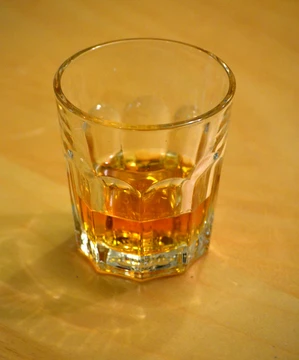
Rye whiskey
Rye whiskey: a spirit of two nations, rooted in ancient grain and American tradition.
Last updated
Rye whiskey encompasses two distinct categories: American rye whiskey and Canadian whisky. In the United States, legal definitions require that rye whiskey be produced from a mash containing at least 51 percent rye grain, with the remainder typically consisting of corn and malted barley, though some versions use one hundred percent rye. It is distilled to a maximum of 160 proof (80% alcohol by volume) and aged in new, charred oak barrels, entering the barrel at no more than 125 proof. If aged for a minimum of two years and unblended with other spirits, it may be labeled "straight rye whiskey."
History
The grain rye itself originated in the Euphrates valley roughly ten thousand years ago, spreading to Poland, Germany, and the Baltic region, where it was used for bread, beer, vodka, and korn. Dutch and German settlers brought rye to the New World during the seventeenth and eighteenth centuries, with English settlers later appreciating its hardiness. Historically, rye whiskey flourished in the northeastern United States, particularly Pennsylvania, New York, and Maryland, due to cold climates and acidic soils.
Pittsburgh became the center of production in the late 1700s and early 1800s; by 1808, farmers in Allegheny County were selling half a barrel for every person in the country. By the 1880s, the Moore and Sinnott distillery in Monongahela, Pennsylvania, was the largest producer, with a capacity of thirty thousand barrels annually. In 1886, rye whiskey was made in seventeen states.
Production largely vanished after Prohibition and struggled to recover due to high costs. A few brands like Old Overholt survived, though by the late 1960s, former Pennsylvania brands were mostly distilled in Kentucky. The early twenty-first century saw a revival, with numerous brands produced by major companies such as Campari Group, Diageo, Heaven Hill, Suntory Global Spirits, and The Sazerac Company, alongside smaller distillers.
MGP of Indiana serves as a major distiller for many marketed brands. Brown-Forman released limited editions of Jack Daniel's rye, and a reconstructed distillery at George Washington's Mount Vernon produces a rye similar to his original, which once averaged eleven thousand gallons annually. In 2023, Maryland named rye whiskey its official liquor, and in 2026, Pennsylvania introduced legislation to do the same.
Quick Facts
- Type
- Distilled spirit
- Origin
- United States and Canada
- Primary grain
- Rye (at least 51% for American straight rye)
- Legal designation
- American rye whiskey; Canadian rye whisky
- Key production regions
- Pennsylvania, Maryland, Kentucky (US); Canada
- Historical peak
- Late 1700s–early 1800s in Pittsburgh; 1880s in Monongahela, Pennsylvania
Facts from the source article.
Lore & Background
As a grain, rye originated in the Euphrates valley (present day Syria and Iraq) about 10,000 years ago. It gradually migrated into Poland, Germany and the Baltic region, where it was used to make bread, beer, vodka and korn. During the 17th and 18th centuries, it made its way across the Atlantic to the New World via the first Dutch and German settlers, with English settlers later liking the grain for its versatility and vigor. Due to its cold climate and acidic soil, rye whiskey was historically prevalent in the northeastern states, especially Pennsylvania, New York and Maryland.
Pittsburgh was the center of rye whiskey production in the late 1700s and early 1800s. By 1808, Allegheny County, Pennsylvania farmers were selling half a barrel for each man, woman and child in the country. By the 1880s, Joseph F. Sinnott's distillery, Moore and Sinnott, located in Monongahela, Pennsylvania, was the largest producer of rye whiskey, with a capacity of 30,000 barrels a year. In 1886, rye whiskey was produced in 17 states.
Rye whiskey largely disappeared after Prohibition and struggled to reemerge afterward due to expensive production costs. A few brands, such as Old Overholt, survived, although by the late 1960s former Pennsylvania brands like Old Overholt were being distilled mostly in Kentucky. In the early 21st century, an expanding number of rye whiskey brands are produced by Campari Group (Wild Turkey Rye), Diageo (George Dickel Rye and Bulleit Rye), Heaven Hill (Pikesville Rye and Rittenhouse Rye), Suntory Global Spirits (Old Overholt and Jim Beam Rye), The Sazerac Company (Col. E. H. Taylor, Sazerac Rye, and Thomas H. Handy), and various smaller companies. A particularly large producer is MGP of Indiana (formerly known as Lawrenceburg Distillers Indiana), which is a distiller for many brands that are marketed by others (including some of the large companies previously listed).
Rye whiskey has been undergoing a small but growing revival in the US. Since the beginning of the 21st century, more producers have been experimenting with rye whiskey, and several now market aged rye whiskey. For example, Brown-Forman began production of a Jack Daniel's rye whiskey and released unaged and lightly aged versions as limited editions. A reconstructed distillery at Mount Vernon (the estate of George Washington) sells a rye that is similar to the whiskey Washington made.
From the Euphrates to the Alleghenies
From there it slowly spread westward into Poland, Germany, and the Baltic region, where communities wove it into bread, beer, vodka, and korn. The grain crossed the Atlantic during the 17th and 18th centuries, carried first by Dutch and German settlers to the New World. English colonists soon came to value its adaptability and hardiness.
The northeastern United States—particularly Pennsylvania, New York, and Maryland—proved especially well suited to rye cultivation, thanks to cooler temperatures and acidic soils. Pittsburgh became the epicenter of rye whiskey production in the late 1700s and early 1800s. By the 1880s, Joseph F.
The Law and the Three Historic Styles
Under U.S. law, rye whiskey must be distilled from a mash containing at least 51 percent rye grain, with the remainder typically corn and malted barley, though some producers go to 100 percent rye. Historically, American straight rye split into three regional styles.
Pennsylvania-style, or "Old Monongahela," used up to 95 percent rye in a mix of malted and unmalted grain, was fermented as a sweet mash, run through a three-chamber still, and aged in heated warehouses. Maryland-style ran 65 to 70 percent rye with 30 to 35 percent corn, yielded a sweeter profile, and at times had fruit juice added for extra sweetness. Kentucky-style sat just above the legal floor at 51 to 55 percent rye, producing a character closer to a high-rye bourbon.
Prohibition's Wreckage and the Modern Resurgence
Prohibition dealt a near-fatal blow to American rye whiskey. When production resumed, the spirit struggled to reclaim its former prominence, hampered by expensive manufacturing costs. A handful of brands, including Old Overholt, managed to survive, though by the late 1960s even those former Pennsylvania labels were being distilled primarily in Kentucky.
The historic regional distinctions—Pennsylvania, Maryland, Kentucky—largely faded as distilleries shuttered. The 21st century has brought a modest but steady renaissance. Campari Group, Diageo, Heaven Hill, Suntory Global Spirits, and Sazerac Company all now market rye expressions, while MGP of Indiana serves as a contract distiller for numerous brands.
Spice, Sweetness, and the Cocktail Bar
Rye grain imparts what many drinkers describe as a spicy or fruity character, setting it apart from bourbon, which draws its sweetness from a minimum of 51 percent corn and tends toward a fuller, rounder body. This distinction matters enormously behind the bar. Classic cocktails—the Manhattan, the Old Fashioned, the whiskey sour—were originally built on rye. As bourbon's popularity spread well beyond the American South, bartenders increasingly swapped it into these recipes, and the drier, less sweet character that rye imparts was gradually overshadowed.
All other factors being equal, a cocktail made with rye will taste noticeably drier than one made with bourbon. The more rye in a mash bill, the spicier the resulting whiskey tends to be, a principle that still guides modern producers experimenting with different grain ratios. The 21st-century revival has seen distillers consciously reference the old Pennsylvania, Maryland, and Kentucky styles, though the Maryland style in particular remains something of a puzzle—once among America's most widely consumed whiskeys, its defining characteristics were lost to history, and modern makers sometimes must reverse-engineer the profile from old promotional language rather than a fixed recipe.
Common Misconceptions (Editorial)
One common misconception is that all rye whiskey must taste strongly of rye grain, but Canadian rye whisky may contain no rye at all and still be labeled as such for historical reasons. Another is that rye whiskey is exclusively a Canadian product; in fact, American rye whiskey is legally defined and has deep historical roots in the northeastern United States. Some also assume rye whiskey is always spicier and less sweet than bourbon, which is true for American rye whiskey but not necessarily for blended Canadian rye whisky.
Why It Matters (Editorial)
Rye whiskey endures as a testament to the adaptability of distilling traditions—born from the challenge of growing crops in cold, acidic soils, it became a defining spirit of early American frontier life. Its dual identity in the U.S. and Canada also reflects how cultural heritage can shape a product’s definition and labeling long after its original ingredients or methods have changed.
Reader's Guide
In the United States, rye whiskey is, by law, made from a mash of at least 51 percent rye. (The other ingredients in the mash are usually corn and malted barley.) However, rye whiskey can be made of one hundred percent rye in some cases. It is distilled to no more than 160 U.S. proof (80% abv) and aged in charred, new oak barrels. The whiskey must be put in the barrels at no more than 125 proof (62.5% abv).
Canadian rye whisky
Rye whiskey that has been aged for at least two years and has not been blended with other spirits may be further designated as straight, as in 'straight rye whiskey'. American straight rye whiskey has historically been subdivided into regional styles: Pennsylvania-style (also called Monongahela rye or 'Old Monongahela') traditionally made with a very high percentage of rye in its mash bill, upwards of 95%, and generally spicier; Maryland-style historically contained 65-70% rye and 30-35% corn in the mash bill, and generally had a sweeter flavor; Kentucky-style is characterized by an even sweeter profile, with a mash bill normally 51-55% rye. Canadian whisky is often referred to as 'rye whisky' because historically much of the content was from rye. There is no requirement for rye to be used to make Canadian whisky, and the labels 'Canadian whisky', 'Canadian rye whisky' and 'Rye whisky' are all legally permitted, regardless of the actual composition, provided the whiskies 'possess the aroma, taste and character generally attributed to Canadian whisky'.
In modern practice, most Canadian whiskies are blended to achieve this character, primarily consisting of a high-proof base whisky typically made from corn or wheat and aged in used barrels combined with a small amount of flavoring whisky made from a rye mash and distilled to a lower proof. Canadian whisky must be aged in wooden barrels that are not larger than 700 L for at least three years, and the barrels do not have to be new oak or charred. Scotch whisky distillers were using rye as a mash ingredient for grain whisky in the 18th century. By the 2020s, tariffs on biogas producers had led to an increase in availability of the grain, leading modern distilleries to begin experimenting with the new raw material.
Frequently Asked Questions
What is rye whiskey?
Rye whiskey is a distilled spirit defined by its use of rye grain as the primary ingredient, existing in two major styles: American rye (legally required to contain at least 51% rye) and Canadian rye (a blended product that carries the name largely for historical tradition). It is produced in the United States and Canada and has been a cornerstone of the whiskey world since the colonial era.
Where did rye whiskey originate?
Rye whiskey's roots lie in the northeastern United States, especially Pennsylvania, New York, and Maryland. Its earliest peak of production came in Pittsburgh during the late 1700s and early 1800s, followed by a second surge in Monongahela, Pennsylvania, in the 1880s.
How does rye taste compared to bourbon?
While both are American-style whiskeys, rye generally presents a spicier, drier, and more assertive flavor profile. It lacks the pronounced sweetness and vanilla notes that corn-forward bourbon is known for, giving it a sharper, more complex edge.
More in World of Whisky
Sources
Compiled from Wikipedia and the sources listed below. Text from Wikipedia is available under CC BY-SA 4.0; this entry is adapted from it.
- Wikipedia: Rye whiskey (CC BY-SA 4.0).
Spotted an error? Know more?
Reader corrections go straight into our review queue. Suggest an edit · How this site is sourced