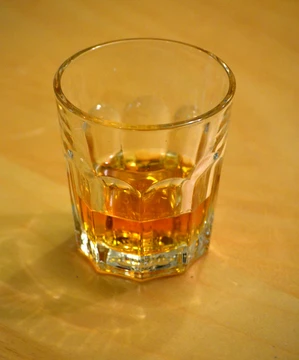
Lagavulin
Islay single malt known for slow distillation and peated character.
Last updated
Lagavulin is an Islay single malt Scotch whisky distillery situated in the village of Lagavulin on the southern coast of the island of Islay, Scotland. The name derives from the Scottish Gaelic Lag a' Mhuilinn, meaning "hollow of the mill." The distillery is owned by Diageo, a London-based multinational beverage alcohol company, and was formerly part of the now-defunct Classic Malts range. Its flagship expression is a 16-year-old single malt bottled at 43% ABV, alongside a Distiller's Edition finished in Pedro Ximénez Sherry casks, a regular 12-year-old cask strength release, and various older and rarer bottlings.
History
The distillery officially dates from 1816, when John Johnston and Archibald Campbell Brooks built two distilleries on the site; one became Lagavulin, absorbing the other. Illicit distillation had occurred there since at least 1742. Johnston ran the distillery until 1835, when Alexander Graham took over, installing his son Walter as distiller. Walter moved to Laphroaig in 1848, and his brother John Crawford Graham assumed control.
In 1849, improvements extended the buildings and added new roads. John Crawford Graham later partnered with James Logan Mackie, and by 1856 Mackie was in charge. Peter Mackie joined his uncle’s firm in 1878, and in the mid-1880s they formed Mackie & Co. to market Lagavulin. Legal disputes with neighbor Laphroaig arose after Mackie leased that distillery and attempted to replicate its style, but the different water and peat prevented success.
Peter Mackie became sole partner in 1889, and in 1895 the businesses merged as Mackie & Co (Distillers), blending White Horse whisky using Lagavulin. The White Horse brand earned a Royal Warrant from King Edward VII in 1908. The distillery was sold to Peter Mackie in the early 1920s, then acquired by Buchanan Dewar Ltd in 1923, which joined the Distillers Company in 1925. Guinness bought Distillers Company in 1986, and Guinness merged with Grand Metropolitan to form Diageo in 1997.
Accolades
Lagavulin is noted for its slow distillation and pear-shaped pot stills, with two wash stills and two spirit stills. The 16-year expression has received high ratings, including consecutive double gold medals at the San Francisco World Spirits Competition from 2005 to 2008 and gold medals thereafter, as well as a 90–95 point score from Wine Enthusiast Magazine.
Lore & Background
Lagavulin is a single malt Scotch whisky produced on the southern coast of Islay, Scotland, in the village that shares its name. The name derives from the Scottish Gaelic Lag a' Mhuilinn, meaning "hollow of the mill." The distillery is owned by Diageo and was formerly part of the now-defunct Classic Malts range. Its standard bottling is a 16-year-old expression at 43% ABV, alongside a Distiller's Edition finished in Pedro Ximénez Sherry casks, a 12-year-old cask strength version, and various older or rarer releases. The distillery officially dates to 1816, when John Johnston and Archibald Campbell Brooks built two distilleries on the site; one became Lagavulin, absorbing the other.
After Johnston’s tenure, Alexander Graham took over, installing his son Walter as distiller. Walter moved to Laphroaig in 1848, and his brother John Crawford Graham assumed control, later partnering with James Logan Mackie. By 1856, Mackie was in charge.
In the 1880s, Peter Mackie joined his uncle’s firm, forming Mackie & Co. to market Lagavulin. Legal disputes with neighbor Laphroaig arose after Mackie leased that distillery; he reportedly tried to replicate Laphroaig’s style, but differing water and peat prevented success. Mackie became sole partner in 1889, and in 1895 the business merged as Mackie & Co (Distillers), blending White Horse whisky using Lagavulin.
The distillery was sold to Mackie in the early 1920s, then acquired by Buchanan Dewar Ltd in 1923, joining Distillers Company in 1925. Production features slow distillation and pear-shaped pot stills, with two wash stills and two spirit stills. The whisky has won numerous awards, including consecutive double gold medals at the San Francisco World Spirits Competition from 2005 to 2008. Culturally, it is famously the drink of Ron Swanson in Parks and Recreation, leading to an Offerman edition, and appears in The West Wing, Glass Onion, Titans, and other works.
Common Misconceptions (Editorial)
- Despite its association with the fictional character Ron Swanson, the distillery is not owned or named after any celebrity; it is owned by Diageo and its name derives from the Scottish Gaelic for "hollow of the mill."
- The standard Lagavulin bottling is not a 12-year-old; it is a 16-year-old single malt bottled at 43% ABV.
Why It Matters (Editorial)
Lagavulin endures not only as a benchmark of heavily peated Islay whisky but also as a cultural icon, thanks to its prominent role as Ron Swanson’s drink of choice in Parks and Recreation. Its slow distillation and distinctive pear-shaped pot stills produce a smoky, complex character that has made it a favorite among connoisseurs and casual fans alike, proving that tradition and pop culture can age together remarkably well.
Reader's Guide
Lagavulin's significance lies in its long history of legal and illicit distillation on Islay, its role in the development of the White Horse blended whisky brand, and its enduring reputation for a heavily peated, slow-distilled single malt. The distillery's 16-year-old expression has consistently earned high scores at international spirits competitions, including four consecutive double gold medals at the San Francisco World Spirits Competition between 2005 and 2008, and continued gold medals thereafter. Wine Enthusiast Magazine rated it in the 90–95 point interval in 2004, and spirits ratings aggregator proof66.com classifies it in its highest performance category. Culturally, Lagavulin gained widespread recognition as the drink of choice for Ron Swanson, a character on NBC's Parks and Recreation, leading to actor Nick Offerman appearing in commercials and a special Offerman edition being issued.
The distillery also appeared in the show's sixth-season premiere. Other cultural references include appearances in The West Wing, Glass Onion: A Knives Out Mystery, Titans, Martin Walker's Bruno, Chief of Police novels, The Girl Who Kicked the Hornets' Nest, The Expanse, and the video game Slay the Spire, where an elite enemy is named Lagavulin. The distillery's production method—using pear-shaped pot stills with a slow distillation speed—contributes to its distinctive character.
More in World of Whisky
Sources
Compiled from Wikipedia and the sources listed below. Text from Wikipedia is available under CC BY-SA 4.0; this entry is adapted from it.
- Wikipedia: Lagavulin distillery (CC BY-SA 4.0).
Spotted an error? Know more?
Reader corrections go straight into our review queue. Suggest an edit · How this site is sourced