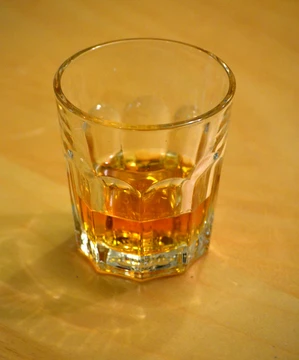
The angels' share
Evaporative loss of alcohol and water from aging barrels.
Last updated
The angels' share is the portion of wine or distilled spirits lost to evaporation during barrel aging. As a barrel lets in small amounts of oxygen, water or alcohol evaporates, and this loss is known by the traditional term 'angels' share.' The term is used in the context of maturing beverages such as wine, cognac, armagnac, sherry, port, whiskey, beer, arrack, and sake. The process relies on the barrel itself, a hollow cylindrical container with a bulging center, traditionally made of wooden staves bound by hoops. Modern wooden barrels for such maturing are crafted from various oaks, including English oak, white oak, American white oak, mizunara oak, and Oregon oak.
The cooper, a craftsperson who makes these barrels, assembles staves that are thicker and larger for bigger casks, a more difficult task. Historically, barrels were used not only for beverages but also for storing commodities like gunpowder, meat, fish, paint, honey, nails, and tallow. In ancient times, the Greek geographer Strabo recorded that wooden pithoi were lined with pitch to prevent leakage and preserve wine.
The Romans used empty barrels to construct pontoon bridges and even hurled burning barrels of tar from catapults during sieges. In medieval and early modern Northern Europe, wooden casks were the primary container for wet and dry cargoes on ships, carrying foodstuffs such as fish, beer, honey, butter, apples, raisins, nuts, malt, beans, peas, grain, barley, and oats, as well as gunpowder, iron, tar, coals, potash, lime, vinegar, and candles. Different production centers applied various volumetric standards to casks, sometimes enforced by municipal seals or, as in the Hanseatic town of Rostock, by the number of dressed herring packed inside. Today, barrels are also made of aluminum, stainless steel, and plastic, but the traditional wooden cask remains central to the aging process that produces the angels' share.
Quick Facts
- Field
- Beverage aging and cooperage
- Related beverages
- Wine
- cognac
- armagnac
- sherry
- port
- whiskey
- beer
- arrack
- sake
- Key factor
- Oxygen enters a barrel when water or alcohol is lost due to evaporation
Facts from the source article.
Lore & Background
The angels' share is the portion of wine or spirit lost to evaporation during barrel aging. This phenomenon occurs because wooden barrels, traditionally made from staves of English oak, white oak, American white oak, mizunara oak, or Oregon oak, are not completely airtight. As a liquid matures inside a hollow cylindrical container with a bulging center, small amounts of oxygen enter the barrel through the wood.
This oxygen ingress is facilitated by the loss of water or alcohol through evaporation, which is the angels' share itself. The rate and composition of this loss depend on the surrounding humidity. In an environment with 100% relative humidity, very little water evaporates, so the majority of the lost volume is alcohol—a useful effect for wines with very high proof.
To prevent significant oxidation from the incoming oxygen, most beverages are regularly topped up from other barrels. However, certain wines, such as vin jaune and sherry, are deliberately not topped up, allowing a controlled oxidative aging process. The practice of aging in barrels has ancient roots; Roman coopers were independent tradesmen who passed their skills to their sons, and the Greek geographer Strabo recorded that wooden pithoi were lined with pitch to stop leakage and preserve wine.
Common Misconceptions (Editorial)
- A common misconception is that the angels' share only refers to alcohol evaporation. In fact, the term covers the loss of both water and alcohol during barrel aging, as both can evaporate depending on environmental conditions.
- Another misconception is that all barrels are topped up to prevent loss. While most beverages are topped up from other barrels to avoid significant oxidation, some like vin jaune and sherry are intentionally left untapped.
Why It Matters (Editorial)
The angels' share is a poetic reminder that even the most carefully crafted products are subject to natural forces beyond human control. Understanding this evaporation process matters not only for its romantic appeal but also for the practical impact on flavor concentration, proof, and the final character of aged spirits and wines—linking craftsmanship directly to chemistry and climate.
Reader's Guide
The concept of the angels' share is significant in the production of aged beverages, as it represents both a loss of volume and a means of introducing oxygen that influences flavor. The evaporation rate depends on humidity: in high humidity, more alcohol than water evaporates, which can be used to reduce alcohol content. The term is traditional and reflects the historical practice of barrel aging, which dates back at least to Roman times when wooden pithoi (barrels) were lined with pitch to stop leakage and preserve wine.
Today, barrels are made of various oaks, including English oak, white oak, American white oak, mizunara oak, and Oregon oak. The angels' share is a natural consequence of the porous nature of wood, which allows for micro-oxygenation and the development of compounds such as vanillin and wood tannins. The loss is accepted as part of the aging process, and the term has become a romanticized part of beverage lore.
Frequently Asked Questions
What is The angels' share in whisky?
The angels' share is the traditional name for the alcohol and water that evaporate out of a wooden barrel while spirits are maturing. It represents the unavoidable volume loss a cask suffers over time in the warehouse.
How does The angels' share actually work?
As water and alcohol molecules escape through the porous staves of the barrel, small amounts of oxygen simultaneously seep in to replace them. This constant exchange of evaporation and oxidation is the engine behind the maturation process.
Which beverages are subject to The angels' share?
The term applies to any drink aged in wooden casks, including wine, cognac, armagnac, sherry, port, whiskey, beer, arrack, and sake. It is a concept rooted in the broader fields of beverage aging and cooperage rather than whisky alone.
More in World of Whisky
Sources
Compiled from Wikipedia and the sources listed below. Text from Wikipedia is available under CC BY-SA 4.0; this entry is adapted from it.
- Wikipedia: Barrel (CC BY-SA 4.0).
Spotted an error? Know more?
Reader corrections go straight into our review queue. Suggest an edit · How this site is sourced