Nigerian Civil War
A war of secession, starvation, and global television.
Last updated

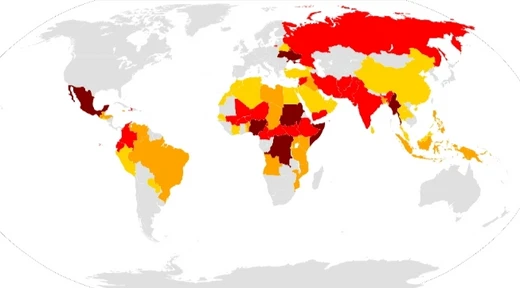
Clyde H. Mapping · CC BY-SA 4.0
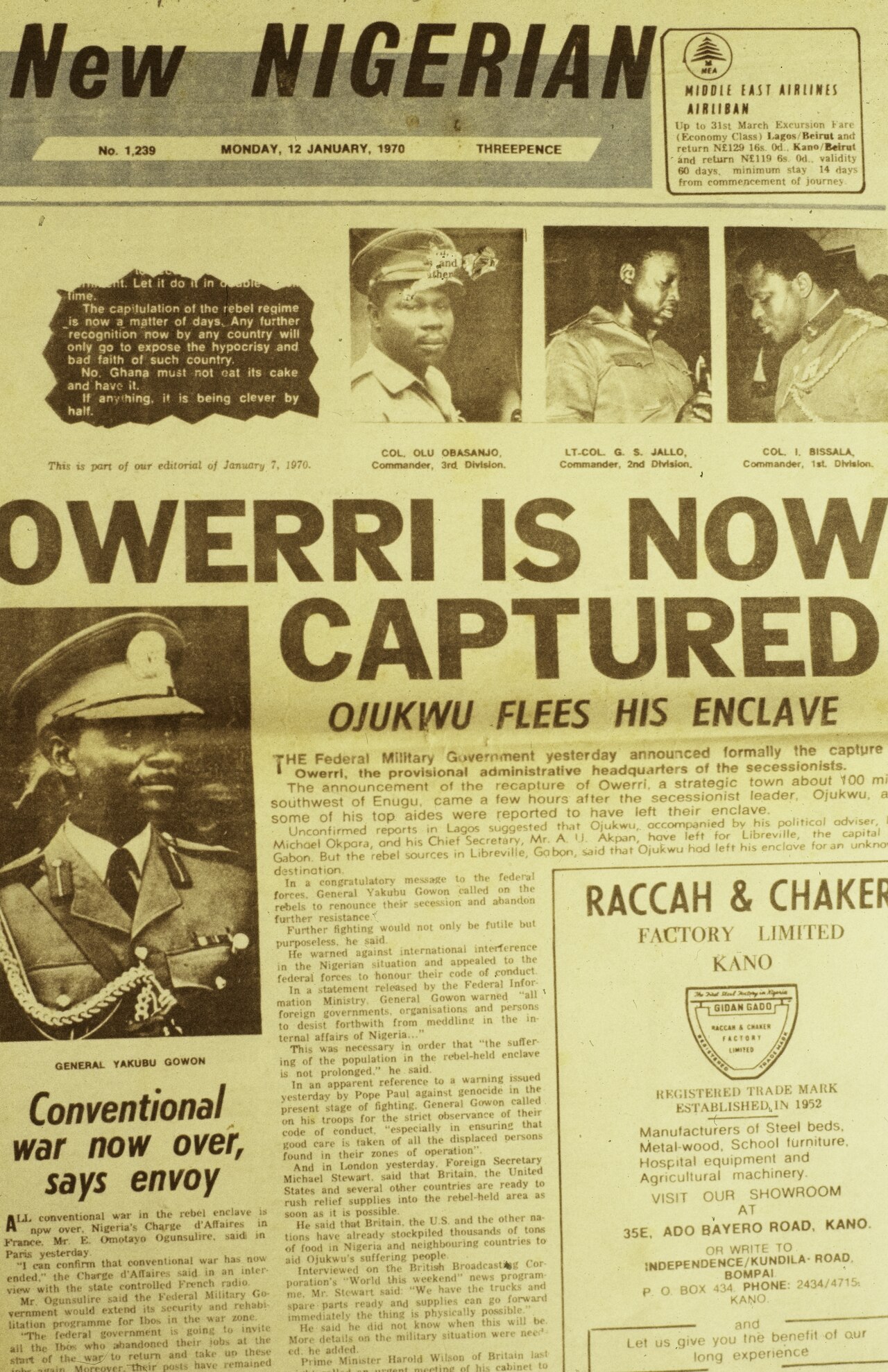
The Nigerian Civil War was fought from 6 July 1967 to 15 January 1970 between Nigeria and the secessionist Republic of Biafra.[1] Military deaths in the war totaled about 100,000, and starvation killed between half a million and two million Biafran civilians.[2]
Life and work
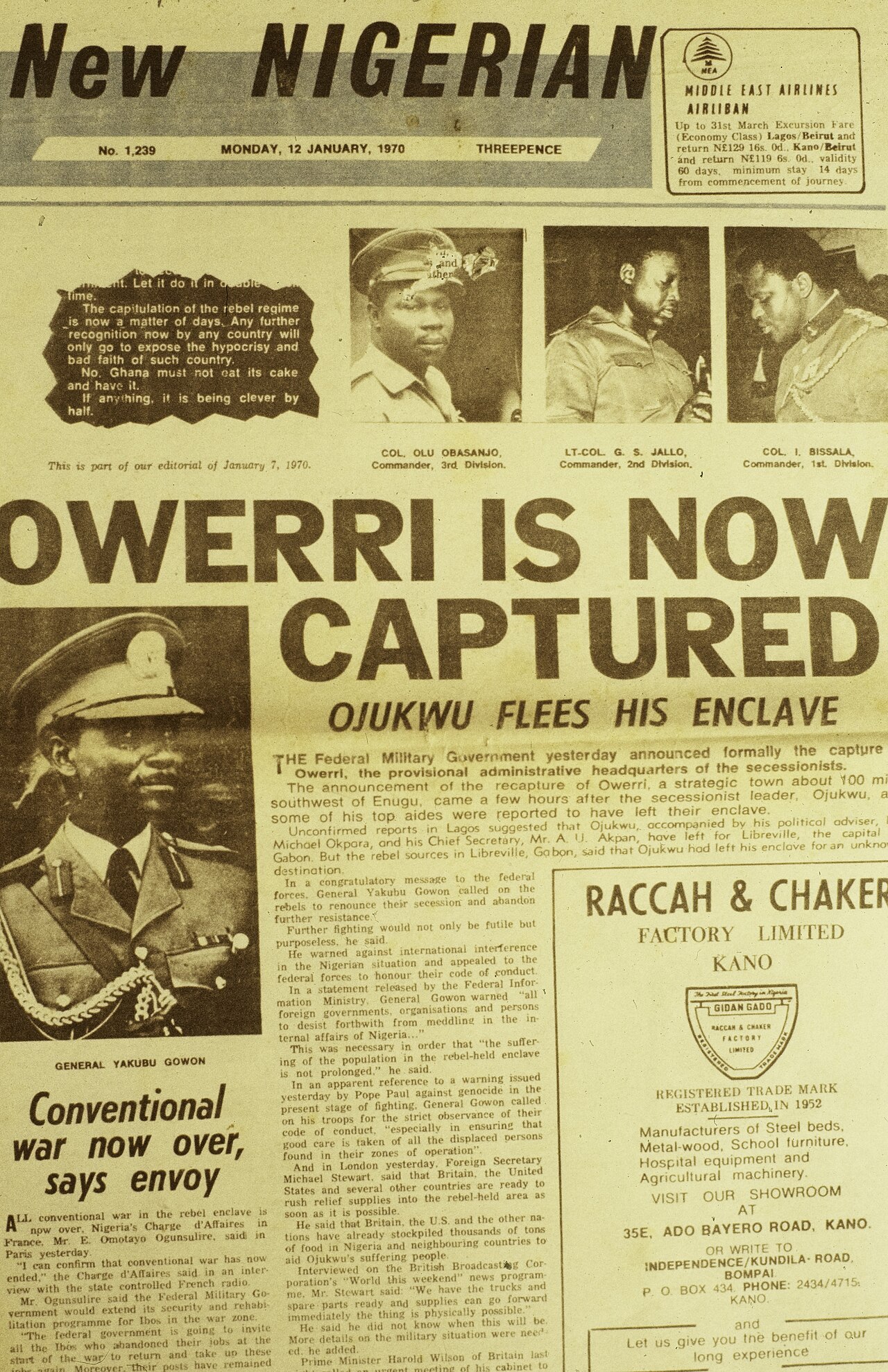
The leadership of the Eastern Region concluded that the Nigerian federal government could not guarantee their security, leading to Biafra's declaration of independence.[3] A deliberate blockade led to mass starvation of Biafran civilians during the ensuing stalemate.[2] The war was one of the first in history to be televised globally, with images of starving Biafran children saturating Western media in mid-1968.[4] The United States maintained a policy of neutrality, considering Nigeria "a responsibility of Britain".[5][6]
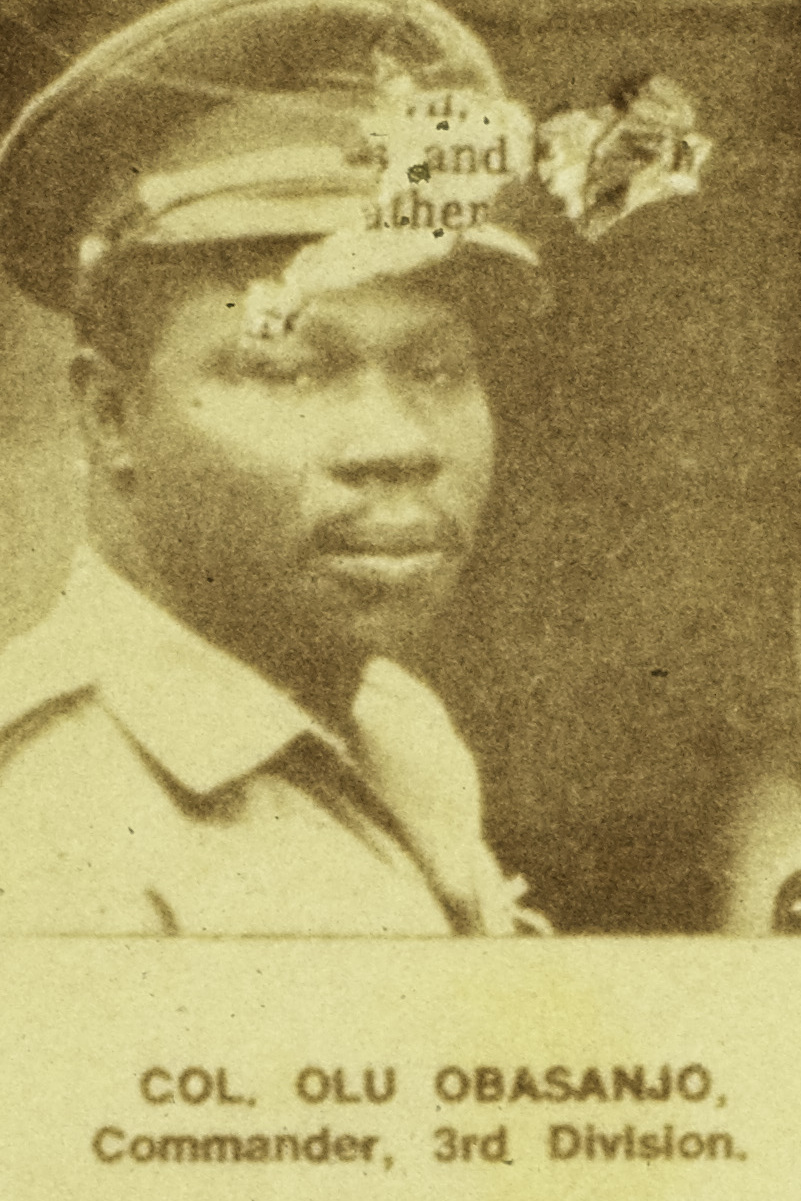
The war highlighted challenges within pan-Africanism and led to political marginalization of the Igbo people.[7] Nigerian forces encircled Biafra within twelve months, seizing Port Harcourt and oil facilities on the coast.[2] Starving Biafrans became a famous international cause, which greatly boosted the financing and prominence of global NGOs.[6]
What the cited sources add
The US State Department's "Foreign Relations of the United States" account states that US policy was based on recognizing that the East was not totally at fault and on encouraging FMG moderation.[5] The same source notes that the US was careful not to give all-out vocal support to the FMG, though it sympathized with Nigerian unity.[5] That memorandum also states that the Yoruba were the first group in Nigeria to become significantly modernized, providing the first African civil servants and professionals.[8] The Indigenous People of Biafra USA source notes that Nigeria's first official census after independence began data collection in 1962.[9]
The same source states that the Nigerian military is suspected of playing partisan roles in sectarian disturbances.[9]
References
- Wikipedia, "Nigerian Civil War" (CC BY-SA 4.0), which cites: "Nigeria – Independent Nigeria", Encyclopedia Britannica (original not read by us) en.wikipedia.org
- Wikipedia, "Nigerian Civil War" (CC BY-SA 4.0), which cites: Jacobs, "The Brutality of Nations", Alfred A. Knopf, 1987; "ICE Case Studies: The Biafran War", American University: ICE Case Studies, November 1997 (we also read that source) en.wikipedia.org
- Wikipedia, "Nigerian Civil War" (CC BY-SA 4.0), which cites: Plotnicov, "An Early Nigerian Civil Disturbance: The 1945 Hausa-Igbo Riot in Jos", The Journal of Modern African Studies, 1971, p. 297–305; Daly, "A Nation on Paper: Making a State in the Republic of Biafra", Comparative Studies in Society and History, October 2020, p. 869–870, 886 (we also read that source) en.wikipedia.org
- Wikipedia, "Nigerian Civil War" (CC BY-SA 4.0), which cites: Daly, "A History of the Republic of Biafra: Law, Crime, and the Nigerian Civil War", Cambridge University Press, 2020 (original not read by us) en.wikipedia.org
- "Foreign Relations of the United States, 1964–1968", Office of the Historian, US State Department. facts only, no text reused. history.state.gov
- Wikipedia, "Nigerian Civil War" (CC BY-SA 4.0), which cites: Wyss, "Neo-Imperial Cold War? Biafra's Franco-African Arms Triangle", The Journal of African History, 2024, p. 47–65; Luepke, "The 'Other Side' of the Nigeria-Biafra War: A Transnational History", Bangor University, 2018, p. 2; "Foreign Relations of the United States, 1964–1968", Office of the Historian, US State Department; Luepke, "The 'Other Side' of the Nigeria-Biafra War: A Transnational History", Bangor University, 2018, p. 104 (we also read that source) en.wikipedia.org
- Wikipedia, "Nigerian Civil War" (CC BY-SA 4.0), which cites: Ayittey, "The United States of Africa: A Revisit", The Annals of the American Academy of Political and Social Science, November 2010, p. 86–102; Ugwueze, "Biafra War Documentaries: Explaining Continual Resurgence of Secessionist Agitations in the South-East, Nigeria", Civil Wars, 3 April 2021, p. 207–233; Onuoha, "The politics of 'hope' and 'despair': Generational dimensions to Igbo nationalism in post-civil war Nigeria", African Sociological Review / Revue Africainende Sociologie, 2014, p. 2–26 (original not read by us) en.wikipedia.org
- "The particularity of the problem with Nigeria @ 59", TheCable, 1 October 2019. facts only, no text reused. thecable.ng
- "NIGERIA: BRITAIN'S CREATION HANDED OVER TO THE FULANI", Indigenous People of Biafra USA. facts only, no text reused. ipobinusa.org
Each numbered sentence above was checked against the source it cites before publication. Sentences citing Wikipedia adapt text from the English Wikipedia article Nigerian Civil War (contributors), used under CC BY-SA 4.0; this entry is available under the same licence. Other sources were used for facts only; no text or images are copied from them.
More in Wars & Conflicts
Sources
Compiled from Wikipedia and the sources listed below. Text from Wikipedia is available under CC BY-SA 4.0; this entry is adapted from it.
- Wikipedia: Nigerian Civil War (CC BY-SA 4.0).
Spotted an error? Know more?
Reader corrections go straight into our review queue. Suggest an edit · How this site is sourced