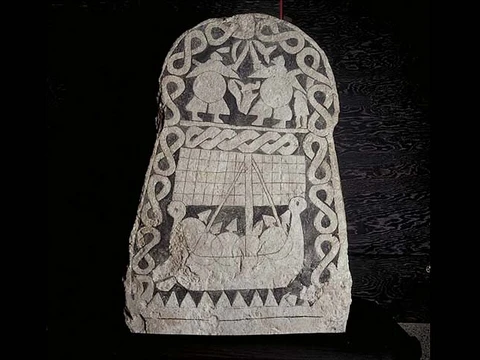
The Great Heathen Army

Unlike earlier Viking raids on monasteries and centers of wealth, this force was much larger and aimed to conquer and occupy the four kingdoms of East Anglia, Northumbria, Mercia and Wessex. The name is derived from the Anglo-Saxon Chronicle, which described it as a 'mycel hæþen here' (great heathen army). The campaign of invasion and conquest lasted 14 years, and surviving sources give no firm indication of its numbers, though it was described as among the largest forces of its kind.
The army was a coalition of Scandinavian warriors who invaded England in 865. It was led by three of the five sons of the semi-legendary Ragnar Lodbrok: Halfdan Ragnarsson, Ivar the Boneless, and Ubba. The invaders first landed in East Anglia, where King Edmund provided them with horses in exchange for peace. They wintered at Thetford in 865–866 before marching north to capture York in November 866, a site originally founded as the Roman fortress of Eboracum and later revived as the Anglo-Saxon trading port of Eoforwic. In 867, the army marched into Mercia and wintered at Nottingham, where the Mercians agreed to terms. The army then returned to York for the winter of 868–869. In 869, they conquered East Anglia and killed its king, wintering again at Thetford. In 871, the Vikings moved into Wessex, where Alfred the Great paid them to leave. They overwintered in London in 871–872, then moved to York to gather reinforcements. After campaigning in northeastern Mercia, they wintered at Torksey on the Trent. The following season, they subdued much of Mercia; King Burgred fled overseas, and Ceolwulf, described in the Chronicle as "a foolish king's thegn," was installed in his place. The army wintered at Repton, after which it divided: one group settled in Northumbria, while another turned to invade Wessex. By 878, only Wessex remained unconquered. In May of that year, Alfred defeated the Vikings at the Battle of Edington, leading to a treaty that allowed the Vikings to control much of northern and eastern England, a region later known as the Danelaw, formalized in the Treaty of Alfred and Guthrum. The Anglo-Saxon Chronicle does not mention the invasion's cause, but the *Tale of Ragnar's Sons* claims it was to avenge Ragnar Lodbrok's death at the hands of King Ælla of Northumbria, who reportedly had him thrown into a pit of venomous snakes.
- leaders
- Halfdan Ragnarsson, Ivar the Boneless, Ubba
- origin
- Scandinavia (likely Denmark, Norway, Sweden, and Ireland)
- known_for
- Invasion and conquest of Anglo-Saxon kingdoms; establishment of the Danelaw
Quick Facts
- Conflict
- Great Heathen Army
- Part Of
- the Viking invasions of England
- Date
- 865–878
- Location
- England
- Result
- Treaty of Alfred and Guthrum / Creation of the Danelaw
- Combatant1
- Vikings / Danes / Norwegians / Swedes
- Combatant2
- Anglo-Saxon kingdoms: / Wessex / Northumbria / Mercia / East Anglia
- Commander1
- Halfdan Ragnarsson / Ivar the Boneless / Ubba / Guthrum the Old / Bagsecg
- Commander2
- Æthelwulf of Wessex / Æthelred of Wessex / Alfred the Great / Ælla of Northumbria / Osberht of Northumbria / Burgred of Mercia / Edmund of East Anglia
- Strength1
- Unknown
Facts from the source article.
Lore & Background
In 871, the Vikings moved on to Wessex, where Alfred the Great paid them to leave. The following campaigning season the army first moved to York, where it gathered reinforcements. This force campaigned in northeastern Mercia, after which it spent the winter at Torksey. The following season it subdued much of Mercia; King Burgred fled overseas and Ceolwulf was imposed in his place. The army spent the following winter at Repton, after which it seems to have divided: one group returned to Northumbria to settle, while another turned to invade Wessex. By this time, only Wessex had not been conquered.
Reader's Guide
The Great Heathen Army marks a pivotal shift in Viking activity in England, from seasonal raiding to sustained conquest and settlement. Its campaign of 14 years resulted in the near-total subjugation of the Anglo-Saxon kingdoms, leaving only Wessex unconquered. The army's composition—drawing from Denmark, Norway, Sweden, and Ireland—reflects the pan-Scandinavian nature of the enterprise. The Anglo-Saxon Chronicle does not mention the reason for the invasion, but the Tale of Ragnar's Sons claims it was to avenge the death of Ragnar Lodbrok, executed by King Ælla of Northumbria. The army's legacy includes the establishment of the Danelaw, a region of Scandinavian law and custom in northern and eastern England, formalized in the Treaty of Alfred and Guthrum. Historians debate the army's size, with estimates ranging from as few as 1,000 men to many thousands, reflecting the uncertainty of surviving sources. The army's campaigns reshaped the political landscape of Anglo-Saxon England and set the stage for the eventual unification of England under the House of Wessex.
Did You Know?
- The name 'Great Heathen Army' comes from the Anglo-Saxon Chronicle, which used the Old English term 'mycel hæþen here'.
- The army was led by three sons of the semi-legendary Ragnar Lodbrok: Halfdan Ragnarsson, Ivar the Boneless, and Ubba.
- The army initially landed in East Anglia, where King Edmund provided them with horses in return for peace.
Common Misconceptions (Editorial)
A common misconception is that the "Great Heathen Army" was a single, unified force that fought continuously for 14 years. In fact, the surviving sources indicate the army divided after wintering at Repton, with one group returning to Northumbria to settle and another turning to invade Wessex. Another misconception is that this Viking force was solely from Denmark; while Scandinavia was its origin, the facts note it likely included fighters from Norway, Sweden, and Ireland. Finally, some may assume the name was a modern invention, but it is directly derived from the contemporary Anglo-Saxon Chronicle's term "mycel hæþen here."
Why It Matters (Editorial)
The Great Heathen Army represents a pivotal shift from hit-and-run Viking raids to sustained campaigns of conquest that reshaped the political map of early medieval England. Its legacy endures because the eventual establishment of the Danelaw under leaders like Ivar the Boneless directly influenced English language, law, and culture, making this not just a story of invasion but of foundational change.
Frequently Asked Questions
Who led The Great Heathen Army?
The principal leaders of the force were Halfdan Ragnarsson, Ivar the Boneless, and Ubba, all of Scandinavian origin. Their exact numbers and full composition remain uncertain, as surviving sources never give a definitive headcount.
What was The Great Heathen Army's goal?
Unlike earlier Viking raids that targeted monasteries and wealthy centers for quick plunder, this army aimed to conquer and hold territory across the four Anglo-Saxon kingdoms of East Anglia, Northumbria, Mercia, and Wessex. Its ultimate legacy was the establishment of the Danelaw, the region of England placed under Danish legal and political control.
Why is The Great Heathen Army important to Viking Age history?
It marked a decisive shift from opportunistic coastal raiding to large-scale territorial conquest in England. The political and cultural changes it produced, especially the Danelaw, reshaped the English kingdoms and set the stage for the later unification under Alfred and his successors.
More in The Viking Age 1-21
Spotted an error? Know more?
This is a living reference — every entry is fact-audited, and reader corrections feed straight into our audit queue. Suggest an edit · See this site's audit record