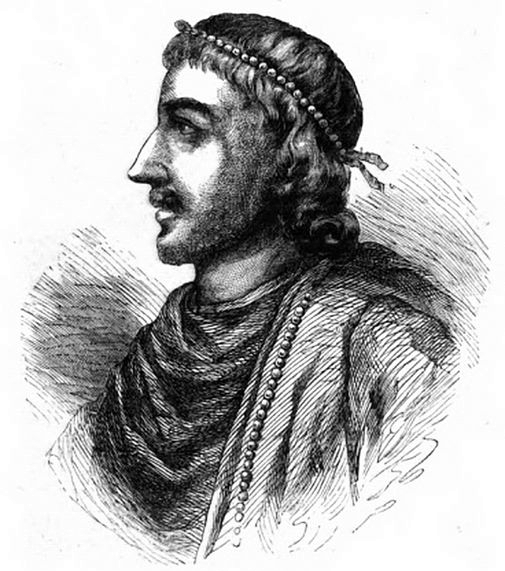
Cnut the Great
King of England, Denmark, and Norway; ruler of the North Sea Empire.

William Robert Shepherd · Public domain
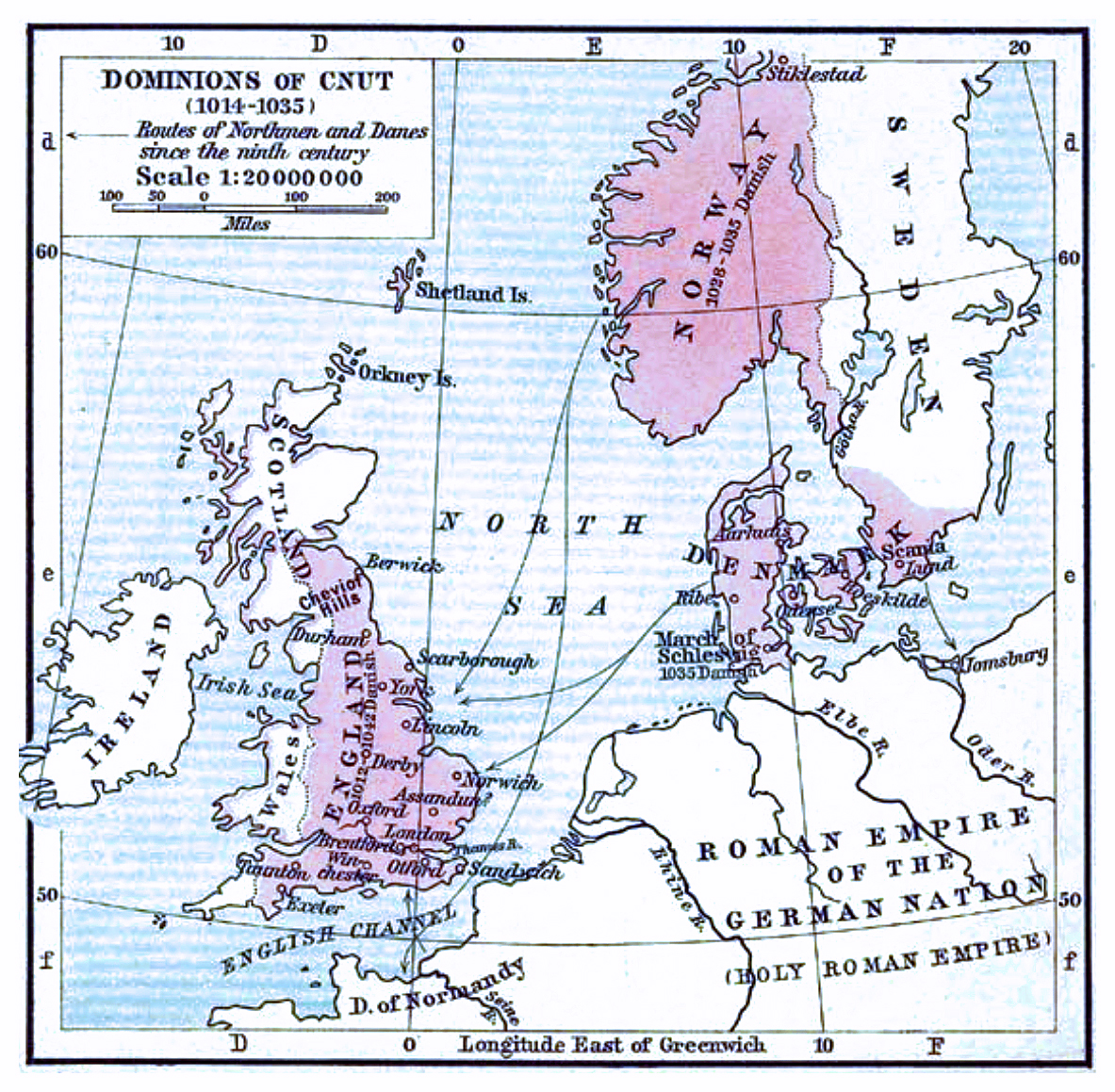
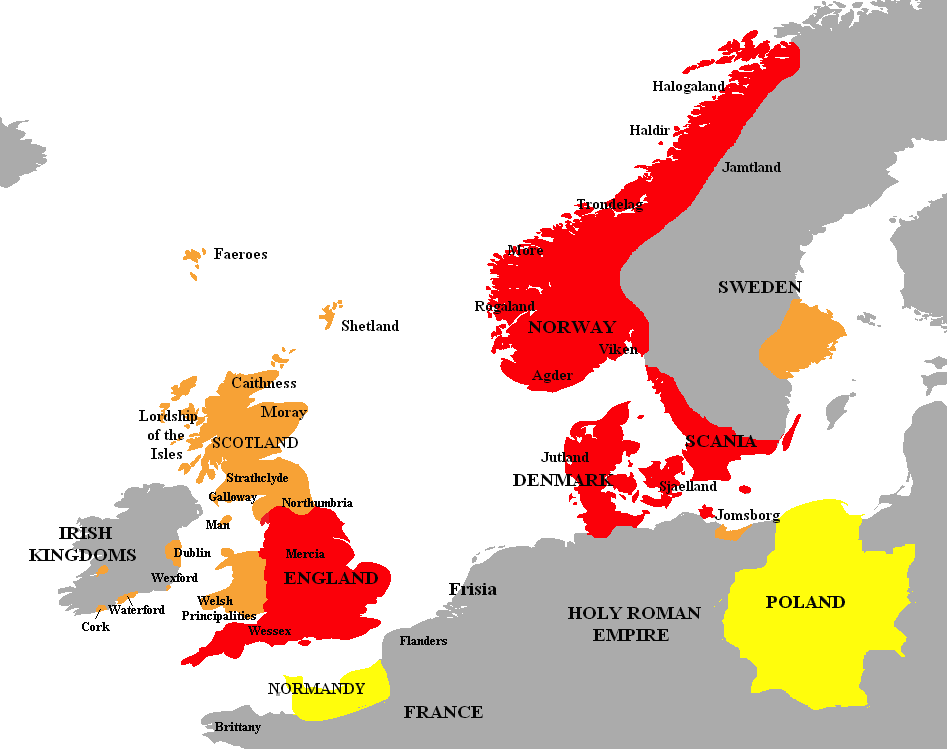
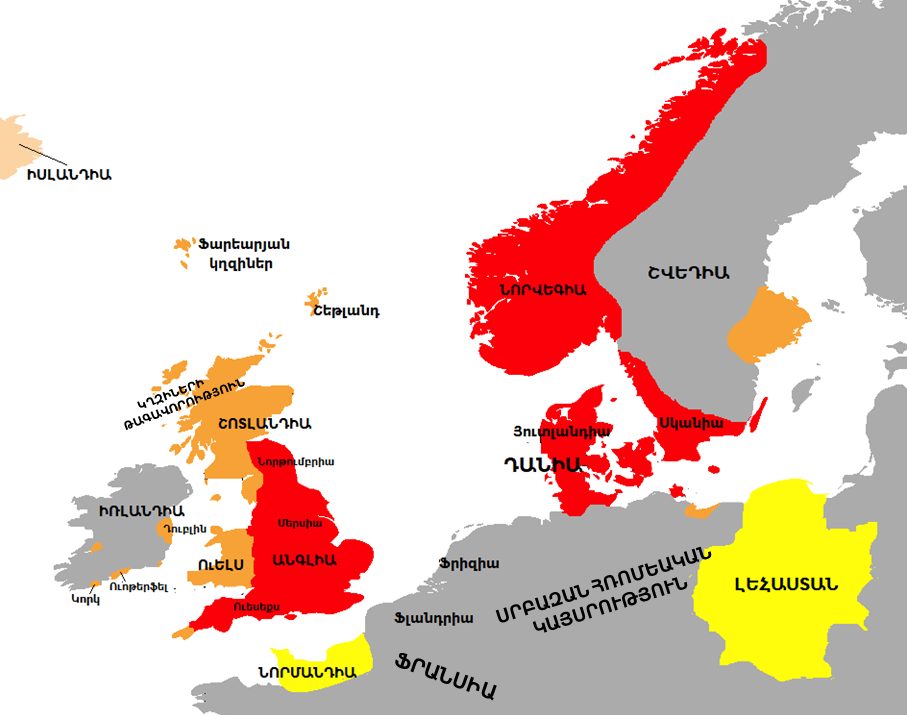
Cnut (c. 995 – 12 November 1035), often called Canute or Cnut the Great, was a Danish prince who became King of England in 1016, King of Denmark in 1018, and King of Norway in 1028. Historians refer to the three kingdoms he united as the North Sea Empire. He is best remembered in popular culture for the legend of King Canute and the tide. Cnut was the son of Swein Forkbeard, placing him in a line of Scandinavian rulers who helped unify Denmark. His exact birthplace and birth date are unknown. The Danish royal house traces back to the semi-legendary Harthacnut I in the early 10th century, followed by Gorm the Old, then Harald Bluetooth—Cnut’s grandfather—who was king during Denmark’s Christianization and one of the first Scandinavian kings to accept Christianity. The identity of Cnut’s mother is uncertain and contradictory across sources. Norse sagas, particularly Snorri Sturluson’s *Heimskringla*, name her Gunhild, a daughter of Burislav, king of the Wends (West Slavic Obotrite or Wendish territories). These accounts say she bore Cnut and later died, after which Swein married Sigrid the Haughty. Continental sources add confusion: the *Encomium Emmae Reginae* calls Cnut’s mother a daughter of Mieszko I of Poland (sometimes reconstructed as Świętosława), while Thietmar of Merseburg’s *Chronicon* mentions an unnamed daughter of Mieszko I who married Swein and became mother to his sons. Adam of Bremen equates Cnut’s mother with the former Queen of Sweden, but modern historians consider this an error. Mainstream scholarship views the figure as semi-legendary or a composite of diplomatic alliances. Many historians assume Swein had at least two wives: an earlier Wendish consort who was Cnut’s mother, and a later one identified as Sigrid the Haughty. Cnut’s brother Harald is described as the younger in the *Encomium Emmae*. Some hints of Cnut’s childhood appear in the 13th-century Icelandic *Flateyjarbók*, which says he was trained in soldiery by Thorkell the Tall, brother to Sigvaldi, Jarl of Jomsborg, and the Jomsvikings at their stronghold on Wollin, off Pomerania. His birth date remains unknown, but a *Knútsdrápa* by the skald Óttarr svarti states Cnut was “of no great age” when he first went to war, possibly during Swein Forkbeard’s invasion of England in 1003–04 after the St. Brice’s Day massacre of Danes in 1002. If so, his birth might be near 990 or even 980. If the poem refers to Swein’s conquest of England in 1013–14, his birth could be nearer 1000. As a Danish prince, Cnut won the English throne in 1016 after centuries of Viking activity in northwestern Europe. His accession to the Danish throne in 1018 united England and Denmark. He sought to maintain this power by uniting Danes and English through shared wealth and customs. After a decade of conflict in Scandinavia, he claimed the Norwegian crown in Trondheim in 1028. In 1031, Malcolm II of Scotland submitted to him, though Anglo-Norse influence over Scotland was weak and did not last beyond Cnut’s death. Dominion over England gave the Danes a key link to the maritime zone between Great Britain and Ireland, where Cnut—like his father—had strong interests and influence among the Norse–Gaels. Control of England’s dioceses and the continental Diocese of Denmark, claimed by the Holy Roman Empire’s Archdiocese of Hamburg-Bremen, brought him great prestige among Christendom’s magnates. He gained concessions, including one on the price of the pallium for his bishops (who still had to travel to obtain it) and on tolls his people paid on the way to Rome. After his 1026 victory over Norway and Sweden, and returning from Rome where he attended the Holy Roman Emperor’s coronation, Cnut called himself “King of all England and Denmark and the Norwegians and of some of the Swedes” in a letter to his subjects.
- born
- c. 995, place unknown
- died
- 12 November 1035
- field
- Monarchy
- nationality
- Danish
- known_for
- King of England, Denmark, and Norway; ruler of the North Sea Empire
Lore & Background
Cnut was the son of Swein Forkbeard, though neither the place nor date of his birth are known. His mother's identity is uncertain and subject to significant contradictions between sources; Norse sagas name her Gunhild, while continental sources suggest a daughter of Mieszko I of Poland. Cnut was likely part of his father's invasion of England in 1013. After Swein's death in 1014, Cnut was elected king by the Vikings and Danelaw, but the English nobility recalled Æthelred, forcing Cnut to flee to Denmark. He later assembled a large fleet and conquered England in 1016. He sought to unite Danes and English under cultural bonds of wealth and custom.
Reader's Guide
Cnut's significance lies in his creation of the North Sea Empire, a short-lived but powerful union of England, Denmark, and Norway. His dominion of England gave the Danes an important link to the maritime zone between Great Britain and Ireland, where he wielded much influence among the Norse–Gaels. His possession of England's dioceses and the continental Diocese of Denmark was a source of great prestige and leverage among the magnates of Christendom, gaining concessions on the price of the pallium of his bishops and on tolls his people paid on the way to Rome. Medieval historian Norman Cantor called him 'the most effective king in Anglo-Saxon history'. His legacy is also preserved in the legend of King Canute and the tide, though the article does not describe the legend's content.
Did You Know?
- Cnut's mother is uncertain; Norse sagas name her Gunhild, while continental sources suggest a daughter of Mieszko I of Poland.
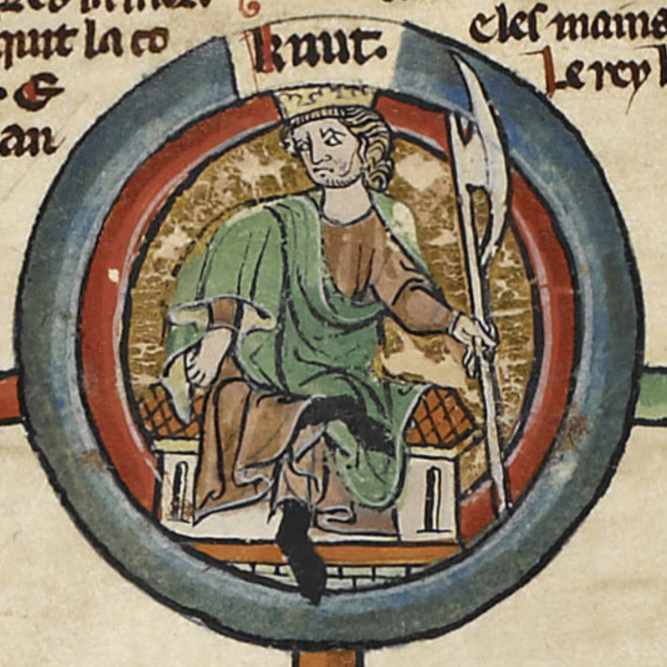
- Cnut was described in the 13th-century Knýtlinga saga as exceptionally tall and strong, with a thin, hooked nose and fair complexion.
Common Misconceptions (Editorial)
A common misconception is that King Canute believed he could command the tide, based on the well-known legend. In fact, the facts on record state he is "popularly invoked in the context of the legend," not that he genuinely attempted it, and the legend is typically interpreted as a demonstration of his humility. Another misconception is that Cnut was Norwegian; the facts confirm his nationality as Danish and that he was the son of Swein Forkbeard of Denmark.
Why It Matters (Editorial)
Cnut the Great endures as a rare figure who united England, Denmark, and Norway into a single North Sea Empire, demonstrating the fluidity of early medieval power across borders. His legacy also reminds us how historical memory can be shaped by legend rather than fact, as the tale of Canute and the tide overshadows his real political achievements and the cultural blending he promoted between Danes and English.
Gallery
Frequently Asked Questions
Who is Cnut the Great?
Cnut (c. 995–1035) was a Danish-born Scandinavian king who simultaneously held the crowns of England, Denmark, and Norway. He is one of the most prominent rulers of the late Viking Age.
What is the North Sea Empire?
The North Sea Empire is the historical term for the union of England, Denmark, and Norway under Cnut's single rule between 1016 and his death in 1035. It represents the largest political entity ever held by a Scandinavian monarch.
What is the legend of King Canute and the tide?
The well-known story shows Cnut ordering the sea to halt, only for the waves to keep coming, as a demonstration that even kings have limits. Most historians treat it as a later moral anecdote about the boundaries of power rather than a literal event.
How does Cnut the Great's story end?
Cnut died on 12 November 1035, ending his roughly two-decade hold over three kingdoms. His passing broke apart the North Sea Empire, as the thrones of England, Denmark, and Norway drifted to different successors.
Why is Cnut the Great important in Viking Age history?
Cnut proved that Scandinavian leaders could build a lasting multi-kingdom state instead of relying solely on raiding. His reign marked a key shift from the era of Viking seafaring attacks toward structured, dynastic governance across northern Europe.
More in The Viking Age 1-21
Spotted an error? Know more?
This is a living reference — every entry is fact-audited, and reader corrections feed straight into our audit queue. Suggest an edit · See this site's audit record