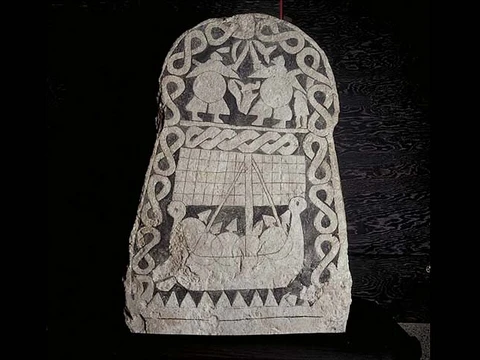
Ragnar Lodbrok
Legendary Viking hero and king of Sweden and Denmark.

via Wikipedia: Ragnar Lodbrok · see source
Ragnar Lodbrok (Old Norse: *Ragnarr loðbrók*, meaning "Ragnar hairy-breeches") is a legendary Viking hero and a king of both Sweden and Denmark. He appears in Old Norse poetry from the Viking Age, Icelandic sagas, and chronicles written not long after his time. Traditional stories say he led many raids against the British Isles and the Carolingian Empire during the 9th century.
In the Icelandic sagas—such as the *Tale of Ragnar Lodbrok*, the *Tale of Ragnar's Sons*, *Heimskringla*, the *Hervarar saga*, and the *Sögubrot*—Ragnar is the son of Sigurd Ring, a legendary king of Sweden. Sigurd Ring’s father is given as Randver, who in the *Hervarar saga* is a Danish king married to Åsa, daughter of King Harald of the Red Moustache of Norway. Other sources say Randver was the son of Ráðbarðr, king of Garðaríki, and a grandson of the legendary king Ivar Vidfamne through Ivar’s daughter Aud (also called Alfhild). After Ivar Vidfamne’s death, Aud’s eldest son by the Danish king Hrœrekr Ringslinger, Harald, took all his grandfather’s lands and became known as Harald Wartooth. Harald’s nephew Sigurd Ring became chief king of Sweden after Randver’s death (or of Denmark, according to the *Hervarar saga*), likely as Harald’s subking. Sigurd and Harald fought the Battle of Brávellir in Östergötland, where Harald and many of his men died. Sigurd then ruled Sweden and Denmark (sometimes identified with a historical Danish king Sigfred who ruled from about 770 until before 804). With Princess Alfhild of Álfheimr, Sigurd had a son, Ragnar Lodbrok, who succeeded him. Harald Wartooth’s son, Eysteinn Beli, ruled Sweden for a time after Sigurd until Ragnar’s sons and Aslaug killed him.
The legendary sagas focus more on Ragnar’s marriages than his battles. In the *Saga of Ragnar Lothbrok*, Ragnar is described as big, handsome, and wise, good to his men but cruel to his enemies. His first recorded act is raising an army and a fleet, becoming a great warrior, and slaying a dragon in Götaland. The *Sögubrot* says he was the biggest and fairest of men, resembling his mother. He first killed a giant snake guarding the home of the Geatish jarl Herrauð’s daughter Thora Borgarhjort, winning her as his wife. The protective clothes he wore against the serpent earned him the nickname Lodbrok. His sons with Thora were Erik and Agnar. After Thora died, he found Kráka, a beautiful and wise woman living with poor peasants in Norway, and married her. Their sons were Ivar the Boneless, Björn Ironside, Hvitserk, Ragnvald, and Sigurd Snake-in-the-Eye. Kráka was later revealed to be Aslaug, the secret daughter of the hero Sigurd Fafnesbane. When his sons became famous warriors, Ragnar, wanting to outdo them, decided to conquer England with only two ships. He was defeated by superior Northumbrian forces and thrown into a snake pit to die. The *Saga of Ragnar Lodbrok*, *Tale of Ragnar's Sons*, and *Heimskringla* all say the Great Heathen Army that invaded England around 866 was led by Ragnar’s sons to avenge his death at the hands of King Ælla of Northumbria.
Danish sources give a different picture. The *Chronicon Roskildense* (c. 1138) mentions Lodbrok as the father of the cruel Norse king Ywar and his brothers Inguar, Ubbi, Byorn, and Ulf, who rule the northern peoples. They ask Danish petty kings for help attacking the Franks. Ywar attacks Britain, but not for revenge as in the Icelandic sagas. The chronicle of Sven Aggesen (c. 1190) is the first Danish text to use the full name Regnerus Lothbrogh. His son Sigurd invades Denmark, kills its king, marries the king’s daughter, and takes the throne. Their son is Knut, ancestor of later Danish kings. Neither source calls Ragnar a Danish ruler. Saxo Grammaticus, in his *Gesta Danorum* (c. 1200), is the first to do so. He mixes Norse legend with Danish history from Adam of Bremen (c. 1075). In Saxo’s version, Ragnar’s father Sigurd Ring is a Norwegian prince married to a Danish princess, distinct from the victor of Brávellir (who lived about thirteen generations earlier). Sigurd Ring and his cousin Ring (identified with Sigfred and Anulo, who died in 812) are both killed in battle, after which Ragnar becomes king of Denmark (Saxo identifies him with Ragnfred, who died in 814). His first act is defeating the Swedish king Frö, who had killed Ragnar’s grandfather. He is helped by the shield-maiden Ladgerda (Lagertha), whom he forces to marry him after killing a bear and a great hound. With her, he has a son, Fridleif, and two daughters. Ragnar later repudiates her.
- nationality
- Swedish and Danish
Lore & Background
According to Icelandic sagas, Ragnar was the son of Sigurd Ring, the legendary king of the Swedes. He first killed a giant snake guarding the abode of the Geatish jarl Herrauð's daughter Thora Borgarhjort, winning her as his wife. The unusual protective clothes he wore earned him the nickname Lodbrok. After Thora died, he discovered Kráka, a woman of outstanding beauty and wisdom living with a poor peasant couple in Norway, and married her. This marriage resulted in the sons Ivar the Boneless, Björn Ironside, Hvitserk, Ragnvald, and Sigurd Snake-in-the-Eye. Kráka was later revealed to actually be Aslaug, a secret daughter of the renowned hero Sigurd Fafnesbane. As the sons grew up to become renowned warriors, Ragnar, not wishing to be outdone, resolved to conquer England with merely two ships. He was, however, defeated by superior Northumbrian forces and was thrown into a snake pit to die. The Saga of Ragnar Lodbrok, Tale of Ragnar's Sons, and Heimskringla all tell of the Great Heathen Army that invaded England at around 866, led by the sons of Ragnar Lodbrok to wreak revenge against King Ælla of Northumbria who is told to have captured and executed Ragnar. Danish sources, including Saxo Grammaticus's Gesta Danorum (c. 1200), present a different account. There, Ragnar's father Sigurd Ring is a Norwegian prince married to a Danish princess, and different from the victor of Brávellir. Sigurd Ring and his cousin and rival Ring are both killed in battle, whereupon Ragnar is elevated to the Danish kingship. His first deed is the defeat of the Swedish king Frö, who has killed Ragnar's grandfather. Ragnar is assisted in this by a ferocious shield-maiden named Ladgerda (Lagertha), whom Ragnar forces to marry him after killing a bear and a great hound to win her hand. Ragnar later repudiates his marriage to Ladgerda and marries Thora Borgarhjort, a daughter of the Swedish king Herrauðr, after killing two venomous giant snakes that guard Thora's residence. Saxo describes numerous Viking expeditions across Europe, including against the Bjarmians and Finns in the Arctic north, and a final invasion of England where Ragnar is captured and thrown to his death in the snake pit.
Reader's Guide
Ragnar Lodbrok's significance lies in his role as a central figure in both Norse legend and early medieval historiography. The Icelandic sagas portray him as a heroic king whose exploits and dramatic death inspired the Great Heathen Army's invasion of England, a historical event that reshaped Anglo-Saxon politics. Danish chroniclers, particularly Saxo Grammaticus, used Ragnar to connect legendary Viking heroes with the lineage of later Danish kings, blending myth with recorded history. His legacy endures through the stories of his sons—Ivar the Boneless, Björn Ironside, and others—who appear as historical figures in the 9th-century Viking campaigns. The conflicting accounts in Icelandic and Danish sources highlight how Ragnar's legend was adapted to serve different cultural and dynastic purposes, making him a symbol of Viking martial prowess and a bridge between myth and history. His name remains synonymous with the Viking Age's blend of raiding, exploration, and saga tradition.
Did You Know?
- Ragnar's nickname 'Lodbrok' (hairy-breeches) came from the unusual protective clothes he wore when killing a giant snake to win his first wife, Thora Borgarhjort.
- According to the Icelandic sagas, Ragnar invaded England with only two ships and was thrown into a snake pit to die by King Ælla of Northumbria.
- The Great Heathen Army that invaded England around 866 was led by Ragnar's sons to avenge his death, according to the Saga of Ragnar Lodbrok, Tale of Ragnar's Sons, and Heimskringla.
- Saxo Grammaticus's Gesta Danorum (c. 1200) is the first source to identify Ragnar as a Danish king, blending Norse legend with data from Adam of Bremen's chronicle.
- Ragnar's father Sigurd Ring is sometimes identified with a Danish king Sigfred who ruled from about 770 until his death prior to 804.
Royal Bloodlines and the Legend of His Birth
Ragnar Lodbrok's legendary origins weave through a tangled web of Scandinavian royal families. According to the Icelandic sagas, his father was Sigurd Ring, the legendary king of the Swedes. When Sigurd Ring's parentage is given in a saga, his father is identified as Randver, who in Hervarar saga is called a king of Denmark whose wife was Åsa, the daughter of King Harald of the Red Moustache from Norway. According to Sögubrot and the Lay of Hyndla, Randver was the son of Ráðbarðr the king of Garðaríki. The accounts further tell that Randver was a grandson of the legendary Scandinavian king Ivar Vidfamne by his daughter Aud (whom the Hervarar saga calls Alfhild). After the death of King Ivar Vidfamne, Aud's eldest son by the Danish king Hrœrekr Ringslinger, Harald, conquered all of his grandfather's territory and became known as Harald Wartooth. Harald's nephew Sigurd Ring became the chief king of Sweden after Randver's death (Denmark according to the Hervarar saga), presumably as the subking of Harald. Sigurd and Harald fought the Battle of the Brávellir (Bråvalla) on the plains of Östergötland, where Harald and many of his men died. Sigurd then ruled Sweden and Denmark (being sometimes identified with a Danish king Sigfred who ruled from about 770 until his death prior to 804). He sired a son with the princess Alfhild of the petty kingdom of Álfheimr, Ragnar Lodbrok, who succeeded him.
Serpents, Dragons, and the Deeds That Forged a Name
Ragnar's epithet Lodbrok, meaning hairy breeches, originated from the unusual protective clothes he wore when attacking a giant serpent that guarded the abode of the Geatish jarl Herrauð's daughter Thora Borgarhjort, thereby winning her as his wife. His sons with Thora were Erik and Agnar. In Saxo Grammaticus's Gesta Danorum, the serpent-killing is doubled: Ragnar must kill two venomous giant snakes that guard Thora's residence to claim her. Beyond serpents, the Saga of Ragnar Lodbrok recounts him assembling an army, a fleet of ships, becoming a great warrior and slaying a dragon in the Norse lands of Götaland. Saxo's version adds another martial trial: Ragnar must kill a bear and a great hound to win the hand of the shield-maiden Ladgerda, whom he then forces to marry him. These feats of raw physical courage, confronting serpents, dragons, bears, and hounds, define Ragnar's legendary identity as a man whose strength and fearlessness set him apart from ordinary warriors.
The Two-Ship Gambit and Death Among Snakes
The most dramatic episode in Ragnar's legendary biography is his final campaign. According to the Icelandic sagas, as his sons, Ivar the Boneless, Björn Ironside, Hvitserk, Ragnvald, and Sigurd Snake-in-the-Eye, grew into renowned warriors, Ragnar, unwilling to be outshone by his own offspring, resolved to conquer England with merely two ships. The attempt ended in disaster: superior Northumbrian forces defeated him, and he was thrown into a snake pit to die. King Ælla of Northumbria is named as the captor and executioner. This death became the catalyst for one of the most significant events in early medieval history: the Great Heathen Army that invaded England at around 866, led by Ragnar's sons to wreak revenge against King Ælla. The Danish Chronicon Roskildense (c. 1138) presents a slightly different picture, noting that his son Ywar successfully attacks the kingdoms of Britain, though not as an act of revenge as in the Icelandic sagas. The image of Ragnar dying among writhing snakes, mirroring the serpent he once killed to win his first wife, gives the legend a powerful circular symmetry.
A Figure Shaped by Three Centuries of Storytelling
Ragnar Lodbrok exists not as a single historical figure but as a character assembled from sources spanning roughly three centuries. The earliest references appear in Old Norse poetry of the Viking Age and near-contemporary chronicles. The Icelandic fornaldarsǫgur, including the Saga of Ragnar Lodbrok, Tale of Ragnar's Sons, Heimskringla, and Sögubrot, emphasize his marriages and personal virtues over warfare, describing him as 'the biggest and fairest of men that human eyes have seen, and he was like his mother in appearance and took after her kin.' Danish sources tell a different story: the Chronicon Roskildense, written around 1138, mentions him only as a father of the utterly cruel Norse King Ywar and his brothers. Sven Aggesen, composing near 1190, is the first Danish text that mentions the full name, Regnerus Lothbrogh. It is Saxo Grammaticus, writing around 1200, who first elevates Ragnar to Danish kingship, blending Norse legend with data from Adam of Bremen's chronicle. Each tradition reshapes Ragnar to serve its own narrative, making him simultaneously a Swedish heir, a Danish conqueror, and a pan-Scandinavian hero.
Common Misconceptions (Editorial)
1. Ragnar Lodbrok is often assumed to be a purely legendary figure with no historical basis, but the facts indicate he is known from both near-contemporary chronicles and Old Norse poetry, not exclusively later sagas. 2. Some believe Ragnar invaded England with a large fleet, but according to the Icelandic sagas, he attempted to conquer England with merely two ships.
Why It Matters (Editorial)
Ragnar Lodbrok endures as a symbol of Viking ambition and the tension between legend and history, illustrating how heroic narratives can shape cultural memory. His story matters because it bridges Norse mythology and early medieval chronicles, offering insight into how the Viking Age was remembered and mythologized by later generations.
Gallery
Frequently Asked Questions
Who is Ragnar Lodbrok?
Ragnar Lodbrok is a legendary Danish king and Viking hero of the 9th century, celebrated in Norse tradition for his sweeping military campaigns across Europe.
What does the nickname 'Lodbrok' actually mean?
The Old Norse epithet 'loðbrók' translates to 'hairy-breeches,' a colorful moniker that became inseparable from Ragnar's name in the sagas and poetry.
Where do we hear about Ragnar Lodbrok?
His exploits are preserved in Old Norse poetry, Icelandic sagas, and near-contemporary chronicles, though historians still debate how much of the tale is grounded in real events versus later embellishment.
Which targets did Ragnar Lodbrok raid?
According to the traditional accounts, he launched repeated attacks on both the British Isles and the Carolingian Empire throughout the 9th century.
Why does Ragnar Lodbrok matter in Viking-age legend?
He has become one of the most emblematic figures of Norse heroic culture, representing the archetypal fearless Danish king whose daring raids shaped how later saga writers imagined the Viking era.
More in The Viking Age 1-21
Spotted an error? Know more?
This is a living reference — every entry is fact-audited, and reader corrections feed straight into our audit queue. Suggest an edit · See this site's audit record