Shenandoah
Shenandoah: far more than a national park.
Last updated
Where it is
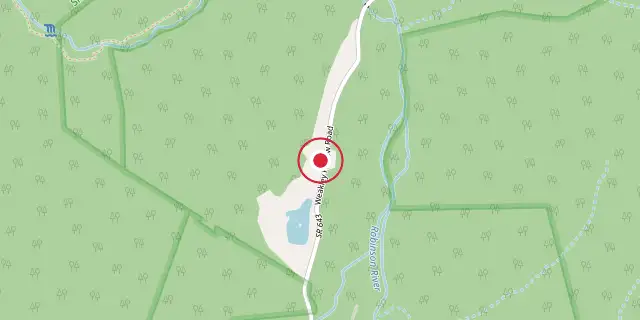
Coordinates: 38°31′59″N 78°21′00″W (38.5330, -78.3500) · Open in OpenStreetMap
Coordinates and connected clubs: the infobox of Wikipedia: Shenandoah National Park (CC BY-SA 4.0). Map: drawn by Codexery from OpenStreetMap tiles.
The park was pieced together from over 3,000 individual tracts of land purchased or condemned by Virginia and given to the federal government in the 1930s.[1] Backcountry and wilderness camping within the park covers an area of 196,000 acres.[2]
Last updated 2026-09-30 from the source article.
Geography and history
Bedrock includes Grenville-age granitic basement rocks and metamorphosed Neoproterozoic sedimentary and volcanic rocks.[3] In May 1926, Congress authorized the NPS to acquire land to form Shenandoah National Park, but required that no federal funds be used for acquisition.[4] Rocks in the park that are older than one billion years are among Virginia's most ancient.[3] At Compton Peak, visitors can see columns of metamorphosed basalt that belong to the Catoctin Formation.[3]
During the late Paleozoic Alleghanian orogeny, the park's rocks experienced folding, faulting, and metamorphism.[5] In 1901, Virginia congressman Henry D. Flood introduced a bill to create a national park in the Appalachian mountains, but it did not pass.[4] December 26, 1935, marked the official establishment of Shenandoah National Park, and President Franklin Delano Roosevelt held its formal opening on July 3, 1936.[6]
What the cited sources add
The National Park Service account notes that in the 1930s the park was assembled from over 3,000 individual tracts, with the only exception being Nicholson Hollow where some log structures were spared.[1] After decades as a "natural" park, Shenandoah now employs cultural resource professionals and conducted the Survey of Rural Mountain Settlement, recording 88 sites between 1995 and 1998.[1] A descendant organization called the Children of Shenandoah agitated for the removal of questionable interpretive displays.[1] Sociologist Mandel Sherman and journalist Thomas Henry in their 1933 work Hollow Folk claimed the hollows had existed "without contact with law or government" since the eighteenth century.[1]
In 1932, residents owned properties varying from one to 470 acres, living in frame and log houses ranging from a spacious three-story home to single-story log homes.[1] As of 1932, 40 individuals in six households resided in Corbin Hollow, 29 of whom were children and grandchildren of Finnell Corbin, who purchased land there in 1894.[1] The park's increased attention to cultural resources happened at the same time as pressure from the Children of Shenandoah, which led to the removal of displays that were considered questionable.[7]
References
- "The Displaced - Shenandoah National Park (U.S. National Park Service)", www.nps.gov. facts only, no text reused. nps.gov
- Wikipedia, "Shenandoah National Park" (CC BY-SA 4.0), which cites: "The Leave No Trace Seven Principles - Leave No Trace", lnt.org (original not read by us) en.wikipedia.org
- Wikipedia, "Shenandoah National Park" (CC BY-SA 4.0), which cites: Callan Bentley, "Compton Peak: superb columnar jointing", Callan Bentley's blog Mountain Beltway on American Geophysical Union Blogosphere, November 14, 2011 (we also read that source) en.wikipedia.org
- Wikipedia, "Shenandoah National Park" (CC BY-SA 4.0), which cites: "Foundation Document Shenandoah National Park", National Park Service, 2015, p. 4 (original not read by us) en.wikipedia.org
- Wikipedia, "Shenandoah National Park" (CC BY-SA 4.0), which cites: Hatcher, "Tracking Lower-to-Mid-to-Upper Crustal Deformation Processes through Time and Space through Three Paleozoic Orogenies in the Southern Appalachians Using Dated Metamorphic Assemblages and Faults", Geological Soc; "Google Earth Multimedia", wm.edu; "Geological Evolution of Virginia and the Mid-Atlantic Region", jmu.edu (original not read by us) en.wikipedia.org
- Wikipedia, "Shenandoah National Park" (CC BY-SA 4.0), which cites: Heinemann, Harry Byrd pp. 174–175 (original not read by us) en.wikipedia.org
- Wikipedia, "Shenandoah National Park" (CC BY-SA 4.0), which cites: "The Displaced - Shenandoah National Park (U.S. National Park Service)", www.nps.gov (we also read that source) en.wikipedia.org
Each numbered sentence above was checked against the source it cites before publication. Sentences citing Wikipedia adapt text from the English Wikipedia article Shenandoah National Park (contributors), used under CC BY-SA 4.0; this entry is available under the same licence. Other sources were used for facts only; no text or images are copied from them.
More in US National Parks
Sources
Compiled from Wikipedia and the sources listed below. Text from Wikipedia is available under CC BY-SA 4.0; this entry is adapted from it.
- Wikipedia: Shenandoah National Park (CC BY-SA 4.0).
Spotted an error? Know more?
Reader corrections go straight into our review queue. Suggest an edit · How this site is sourced