Glacier
A persistent body of natural ice that moves under its own weight.
Last updated

Vyacheslav Argenberg · CC BY 4.0
Where it is
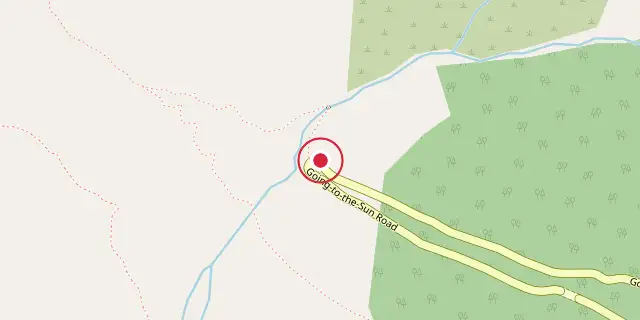
Coordinates: 48°45′18″N 113°48′00″W (48.7550, -113.8000) · Open in OpenStreetMap
Coordinates and connected clubs: the infobox of Wikipedia: Glacier National Park (U.S.) (CC BY-SA 4.0). Map: drawn by Codexery from OpenStreetMap tiles.
It encompasses over 1.013 million acres and includes parts of two mountain ranges, more than 130 named lakes, and over 1,000 plant species.[1] Situated along the Canada–United States border in northwestern Montana, Glacier National Park is a U.S. national park.[1] The "Crown of the Continent Ecosystem" is a protected area spanning 16,000 square miles, and the park serves as its central feature.[1]
Geography and history
In 1895, Chief White Calf of the Blackfeet authorized the sale of about 800,000 acres of mountain area to the U.S. government for $1.5 million.[2] The park was designated a national park in 1910 under the influence of the Boone and Crockett Club, George Bird Grinnell, and Great Northern president Louis W. Hill.[3] The 53-mile Going-to-the-Sun Road, completed in 1932, bisects the park and crosses the Continental Divide at Logan Pass.[4] The Lewis Overthrust, a geological feature, formed 170 million years ago when ancient rock strata were pushed eastward over younger layers, initiating the creation of the park's mountains.[5]
By 2010, only 25 active glaciers remained in the park, a decline from an estimated 150 glaciers larger than 25 acres that were present in the mid-19th century.[5] If current climate trends continue, scientists project that all active glaciers could vanish by 2030.[5]
What the cited sources add
Spence's paper also states that the U.S. government's position was that the former rights ceased to exist when the area became a National Park, as the Court of Claims confirmed in 1935.[6][7] The National Park Service's fire history account states that before Glacier's designation in 1910, Indigenous people stewarded this land since time immemorial, including through the use of fire.[8] That account also notes that 120,000 acres burned in Glacier, largely in the North Fork and southern part of the park.[8] Myrna Hall and Daniel B. Fagre's 2003 paper in BioScience modeled climate-induced glacier change in Glacier National Park from 1850 to 2100.[9]
According to Mark David Spence's 1996 paper in Environmental History, the forest reserve designation confirmed the Blackfeet's traditional usage rights, yet the national park's enabling legislation fails to reference those guarantees.[6][7]
References
- Wikipedia, "Glacier National Park (U.S.)" (CC BY-SA 4.0), which cites: "Welcome to the Crown of the Continent Ecosystem", Crown of the Continent Ecosystem Education Consortium (original not read by us) en.wikipedia.org
- Wikipedia, "Glacier National Park (U.S.)" (CC BY-SA 4.0), which cites: Grinnell, "Blackfoot Lodge Tales", Charles Scribner's Sons, 2004; Spence, "Dispossessing the Wilderness", Oxford University Press, 1999, p. 80; Weber, "The Blackfeet Nation is opening its own national park", High Country News – Know the West, April 23, 2019; Ashby, "Blackfeet Agreement of 1895 and Glacier National Park", University of Montana, 1985 (we also read that source) en.wikipedia.org
- Wikipedia, "Glacier National Park (U.S.)" (CC BY-SA 4.0), which cites: Grinnell, "History of the Boone and Crockett Club", Forest and Stream Publishing Co., 1910, p. 9 (original not read by us) en.wikipedia.org
- Wikipedia, "Glacier National Park (U.S.)" (CC BY-SA 4.0), which cites: Guthrie, "Going-To-The-Sun Road: Glacier National Park's Highway to the Sky", Farcountry Press, 2006, p. 8; "Getting Around", Glacier National Park (U.S. National Park Service), January 16, 2020 (original not read by us) en.wikipedia.org
- Wikipedia, "Glacier National Park (U.S.)" (CC BY-SA 4.0), which cites: Brown, "2 more glaciers gone from Glacier National Park", Huffington Post, April 7, 2010; "Glaciers / Glacial Features", National Park Service, October 6, 2014 (original not read by us) en.wikipedia.org
- Mark David Spence, "Crown of the Continent, Backbone of the World: The American Wilderness Ideal and Blackfeet Exclusion from Glacier National Park", Environmental History (1996), doi:10.2307/3985155. OpenAlex metadata CC0; paper not read. doi.org
- Wikipedia, "Glacier National Park (U.S.)" (CC BY-SA 4.0), which cites: Spence, "Crown of the Continent, Backbone of the World", Environmental History, July 1996, p. 40–41 (we also read that source) en.wikipedia.org
- "Fire History – Glacier National Park", U.S. National Park Service. facts only, no text reused. nps.gov
- Myrna Hall, "Modeled Climate-Induced Glacier Change in Glacier National Park, 1850–2100", BioScience (2003), doi:10.1641/0006-3568(2003)053[0131:mcigci]2.0.co;2. OpenAlex metadata CC0; paper not read. doi.org
Each numbered sentence above was checked against the source it cites before publication. Sentences citing Wikipedia adapt text from the English Wikipedia article Glacier National Park (U.S.) (contributors), used under CC BY-SA 4.0; this entry is available under the same licence. Other sources were used for facts only; no text or images are copied from them.
More in US National Parks
Sources
Compiled from Wikipedia and the sources listed below. Text from Wikipedia is available under CC BY-SA 4.0; this entry is adapted from it.
- Wikipedia: Glacier National Park (U.S.) (CC BY-SA 4.0).
Spotted an error? Know more?
Reader corrections go straight into our review queue. Suggest an edit · How this site is sourced