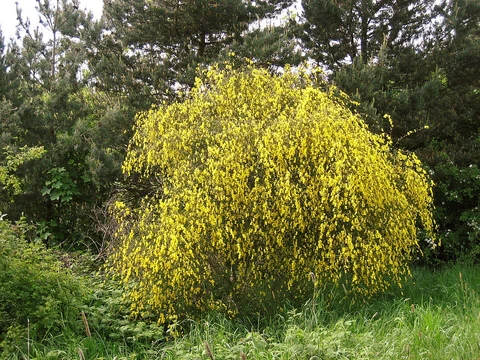
Juglandaceae
A family of trees including walnuts, pecans, and hickories.

The walnut family, Juglandaceae, is a group of flowering plants that includes trees and, less often, shrubs. They belong to the order Fagales. These plants are naturally found across the Americas, Eurasia, and Southeast Asia. The family contains roughly 63 species spread across nine or ten genera. Among them are the well-known nut trees grown for commerce: walnuts (Juglans), pecans (Carya illinoinensis), and hickories (Carya). The Persian walnut, Juglans regia, ranks as a leading nut crop worldwide. Besides nuts, walnut, hickory, and gaulin trees provide valuable timber, while pecan wood is prized as fuel for cooking. In recent years, scientists have examined the genetic ties among different members of this family more closely. Plants in the walnut family are trees—rarely large shrubs—with leaves that give off a pleasant scent. The leaves usually grow alternately along the stem, though in *Alfaroa* and *Oreomunnea* they are opposite. These leaves are pinnately compound or ternate, typically stretching 20 to 100 centimeters long. The trees rely on wind for pollination, and both male and female flowers often appear in catkins. Most members are monoecious, but some are dioecious. The fruits are frequently mistaken for drupes, but they are actually accessory fruits. This is because the outer covering is technically an involucre, not part of the carpel, making the fruit a drupe-like nut rather than a true drupe. Ecology *Climate change* As the climate shifts, members of Juglandaceae are expected to change where they grow. Models of species distribution indicate that, in Europe, *Juglans regia* will move northward to find suitable conditions. Different climate scenarios were tested, showing that more severe temperature changes will cause greater range shifts. This expansion could push the species beyond its native territory, potentially making it invasive. Some walnut family members have been observed forming partnerships with both ectomycorrhizal and arbuscular mycorrhizal fungi. The roles of these dual mycorrhizal relationships are still under study, but they may offer ecological benefits. Within Juglandaceae, this area remains an active research topic. *Biogeography* Juglandaceae are spread from the temperate zones of North America, Europe, and Asia into the tropical regions of Asia and parts of Central and South America.
Quick Facts
- Taxon
- Juglandaceae
- Type Genus
- Juglans
- Type Genus Authority
- L.
Facts from the source article.
Lore & Background
Members of the walnut family are trees (rarely large shrubs) with aromatic leaves that are usually alternate, but opposite in Alfaroa and Oreomunnea. The leaves are pinnately compound or ternate, and usually 20–100 cm long. The trees are wind-pollinated, and both the male and female flowers are usually arranged in catkins. Members of this family are often monoecious, but can be dioecious. The fruits of the Juglandaceae are often confused with drupes but are accessory fruit because the outer covering of the fruit is technically an involucre and thus not morphologically part of the carpel; this means it cannot be a drupe but is instead a drupe-like nut.
Members of Juglandaceae have been projected to experience a range shift as the climate changes. Species distribution models show that in Europe, *Juglans regia* is expected to shift northward in response to warming temperatures. However, claims that recent molecular studies identified *Engelhardia anminiana* and *Engelhardia borneensis* as new species are not supported by widely recognized botanical literature and appear to be unfounded.
Reader's Guide
The Juglandaceae family holds significant economic and ecological importance. Commercially, it includes major nut crops such as walnuts (Juglans) and pecans (Carya illinoinensis), with the Persian walnut (Juglans regia) being one of the world's leading nut crops. The United States produces the most pecans, followed by Mexico, while China produces the majority of the world's walnuts, followed by the United States. Beyond food, the family provides valuable timber: walnut wood is prized for its rich dark brown color and used for cabinets and furniture; hickory wood is known for its flexibility and shock resistance, historically used by American pioneers for cabin building and for sporting equipment such as bows, ax handles, skis, and lacrosse sticks. Pecan wood is also valued as cooking fuel. Ecologically, the family's seeds are dispersed by rodents (mostly squirrels) and members of the crow family, with squirrels burying nuts for winter and forgetting them, aiding dispersal. Some members, particularly the Black walnut (Juglans nigara), produce juglone, a toxic compound that hinders the growth of surrounding plants, though the kernel of the nut is edible. Recent molecular studies have clarified relationships within the family, with evidence of whole genome duplication in an ancestral species and the discovery of two new species within Engelhardia.
Did You Know?
- The fruits of Juglandaceae are accessory fruits, not drupes, because the outer covering is an involucre.
- Black walnut (Juglans nigara) produces juglone, a toxic chemical that hinders the growth of surrounding plants.
- Sap from hickory trees (Carya) was collected by Native Americans to be used as a sweetener.
- Recent molecular studies have identified two new species within Engelhardia: Engelhardia anminiana and Engelhardia borneensis.
More in Trees & Shrubs 1-24
Spotted an error? Know more?
Reader corrections go straight into our review queue. Suggest an edit · How this site is sourced