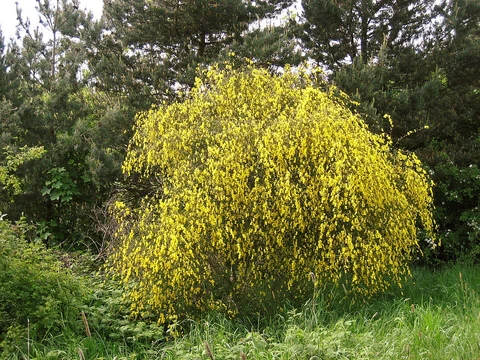
Ficus
A pantropical genus of figs with unique pollination and cultural importance.

Ficus is a genus of about 850 species of woody trees, shrubs, vines, epiphytes, and hemiepiphytes in the family Moraceae, collectively known as fig trees or figs. Native throughout the tropics with a few species extending into the semi-warm temperate zone, figs are grown for their fruits, and many species are cultivated for fruit or as ornamentals, including the common fig (F. carica), sycamore fig (F. sycomorus), weeping fig (F. benjamina), rubber fig (F. elastica), and numerous others. Figs are of considerable cultural importance throughout the tropics, both as objects of worship and for their many practical uses, and are extremely important food resources for wildlife.
Quick Facts
- Taxon
- Ficus (plant)
- Type Species
- Ficus carica
- Type Species Authority
- L.
Facts from the source article.
Lore & Background
Ficus species are characterized by their unique syconium, an urn-shaped inflorescence that encloses numerous tiny flowers. These flowers develop into multiple ovaries on the inner surface, so the fig fruit is essentially a fleshy stem containing many small, coalescing flowers. Pollination is highly specialized, relying on wasps of the family Agaonidae. Common vegetative traits of figs include a white to yellowish latex and paired stipules or stipular scars on the twigs; however, triveined leaves are not universal among Ficus and are not unique to this genus.
Figs are keystone species in many tropical forest ecosystems, providing key fruit resources for frugivores including fruit bats, capuchin monkeys, langurs, gibbons, mangabeys, and many birds such as Asian barbets, pigeons, hornbills, fig-parrots, and bulbuls. Many Lepidoptera caterpillars feed on fig leaves, and the sweet potato whitefly is frequently found as a pest on figs grown as potted plants.
The unique fig pollination system involves tiny, highly specific fig wasps that enter via the ostiole to both pollinate and lay their own eggs. Each species of fig is pollinated by one or a few specialised wasp species. According to meta-analysis of molecular data for 119 fig species, 35% have multiple pollinator wasp species. Molecular techniques have revealed multiple genetically distinct, cryptic wasp species, suggesting that neither the number of symbionts nor their evolutionary relationships are necessarily fixed ecologically.
Reader's Guide
Ficus is a genus of about 850 species of woody plants in the family Moraceae, native throughout the tropics and into semi-warm temperate zones. Figs are grown for their fruits, though only the common fig (F. carica) and sycamore fig (F. sycomorus) are cultivated to any extent, with common fig being the type species and by far the most important. The fruit of most other species are edible but usually of only local economic importance or eaten as bushfood. Figs are extremely important food resources for wildlife and are of considerable cultural importance throughout the tropics, both as objects of worship and for their many practical uses. Fig species are characterized by their unique syconium, an urn-shaped inflorescence that encloses numerous tiny flowers. Figs are keystone species in many tropical forest ecosystems, providing key fruit resources for frugivores including fruit bats, monkeys, and many birds. Each species of fig is pollinated by one or a few specialised wasp species, and plantings of fig species outside their native range results in effectively sterile individuals. The intimate association between fig species and their wasp pollinators, along with the high incidence of a one-to-one plant-pollinator ratio, have long led scientists to believe that figs and wasps are a clear example of coevolution. Recent genetic and molecular dating analyses have shown a very close correspondence in the character evolution and speciation phylogenies of these two clades.
Did You Know?
- The Indian banyan (F. benghalensis) can cover over a hectare (2.5 acres) with its extensive adventitious roots.
- Fig pollination relies on wasps of the family Agaonidae, which enter the syconium through a small opening called the ostiole.
- Some fig species sequester atmospheric CO2 as calcium oxalate in the presence of oxalotrophic bacteria and fungi, producing calcium carbonate.
- In Hawaii, some 60 species of figs have been introduced, but only four of the wasps that fertilize them, so only those species produce viable seeds there.
Morphological Diversity & Field Identification
Ficus encompasses roughly 850 species spanning trees, shrubs, vines, epiphytes, and hemiepiphytes, making it one of the most morphologically diverse genera in the tropical plant world. The size range alone is staggering: the Indian banyan (F. benghalensis) can spread its extensive adventitious roots across more than a hectare of ground, while F. nana from New Guinea never grows beyond a single meter in either height or width. Most species are evergreen, though some deciduous forms appear outside the tropics or at higher elevations. Despite this enormous variation, figs remain relatively easy to spot in the field. Three vegetative traits, found together only in this genus, serve as reliable identifiers: a white-to-yellowish latex that can flow abundantly, paired stipules or their scars on the twigs, and what botanists call "triveined" leaves, where the lateral veins at the leaf base meet the midrib at a noticeably tighter angle. Well-known examples illustrating this diversity include the weeping fig with its pendulous, thin-leaved habit, the rough-leaved sandpaper figs of Australia, and the creeping fig, a vine that carpets rocks and garden walls in dense, hard foliage.
The Syconium & Reproductive Architecture
The syconium stands as one of nature's most remarkable reproductive structures. Rather than a single flower, what we call a fig "fruit" is actually a hollow, fleshy receptacle—a multiple fruit—whose inner walls are lined with hundreds or even thousands of tiny unisexual flowers. A small opening at the apex, the ostiole, lined with bracts, is the only entrance. Male flowers typically cluster near this opening, while female flowers occupy the deeper interior, though in some species the two intermingle. Once a pollen grain reaches a stigma, it germinates and sends a pollen tube down through the style to the ovule; each fertilized ovule becomes a tiny one-seeded fruitlet, and the surrounding tissue swells into the familiar fleshy fruit. Ficus species are either monoecious, with both sexes in the same syconium, or gynodioecious, where male and female flowers are segregated onto separate trees. In the latter system, long-styled female flowers on female trees resist wasp egg-laying, while short-styled flowers on male trees remain accessible. Beyond sexual reproduction, figs propagate vegetatively through cuttings, layering, and grafting—essential for seedless parthenocarpic varieties that cannot produce viable offspring.
Obligate Mutualism with Fig Wasps
No other plant-wasp relationship in the tropical world matches the intimacy of fig pollination. Each Ficus species depends on one or a handful of highly specialized wasps from the family Agaonidae, and the pairing is so precise that planting a fig species outside its native range—where its wasp partner is absent—effectively sterilizes it. The wasps crawl through the narrow ostiole into the syconium, carrying pollen on their bodies. They deposit it onto the receptive stigmas of the female flowers, and in return, they lay their eggs within the ovules, ensuring the next generation of wasps hatches inside the developing fruit. This obligate mutualism means neither partner survives long-term without the other. The wasps are so small that they must navigate the bract-lined opening, and the fig's internal architecture—male flowers near the entrance, female flowers deeper inside—is shaped by this interaction. The system's specificity is so tight that cross-pollination between unrelated fig species is essentially impossible, making each fig-wasp pair a co-evolved unit locked in a shared evolutionary history.
Keystone Ecology & Cultural Footprint
In tropical forests, figs function as keystone species whose removal would cascade through entire food webs. Their fruit sustains an extraordinary array of frugivores: fruit bats, capuchin monkeys, langurs, gibbons, and mangabeys all rely on them, while birds such as Asian barbets, pigeons, hornbills, fig-parrots, and bulbuls may live almost exclusively on figs during periods of abundance. The leaves feed numerous Lepidoptera caterpillars, including several Euploea crow butterflies, the plain tiger, the giant swallowtail, and the brown awl, while the larvae of the citrus long-horned beetle bore into the wood itself. Culturally, figs hold deep significance throughout the tropics as objects of worship and sources of practical utility. Yet only two species—the common fig (F. carica) and the sycamore fig (F. sycomorus)—are cultivated to any meaningful commercial extent, with the common fig serving as the type species and the most economically important. The fruits of the remaining hundreds of species are edible and serve as bushfood or local economic resources, but their greatest ecological value lies in feeding the wildlife that depends on them.
Frequently Asked Questions
What exactly is Ficus in the plant world?
Ficus is a huge genus of woody plants—trees, shrubs, climbing vines, and epiphytes—all grouped under the mulberry family Moraceae. It spans roughly 850 species and is best known by the common name 'figs.'
What's the one trait that sets every fig species apart?
Each Ficus produces a syconium, a closed urn-shaped structure that houses hundreds of tiny internal flowers. Pollination is handled exclusively by microscopic wasps in the family Agaonidae, making it one of the most tightly locked mutualisms in botany.
How many species does the Ficus genus actually include?
Botanists currently recognize around 850 species, which makes Ficus one of the largest genera in all of plant biology. The type species anchoring the genus is Ficus carica, the common fig you'd find in a Mediterranean grove.
Where in the world do fig trees naturally grow?
Ficus is pantropical, with species present on every tropical continent and a few pushing into semi-warm temperate zones. Depending on the species, they can stand as massive canopy trees, drape as strangler vines, or perch as epiphytes in other trees' crowns.
Why do so many tropical cultures treat fig trees as sacred?
Figs have served as objects of worship, symbols in mythology, and a staple food source across tropical societies for thousands of years. Beyond their fruit, species like the rubber fig and weeping fig are widely grown as ornamentals, while wild figs anchor entire food webs by feeding birds, bats, and primates.
More in Trees & Shrubs 1-24
Spotted an error? Know more?
Reader corrections go straight into our review queue. Suggest an edit · How this site is sourced