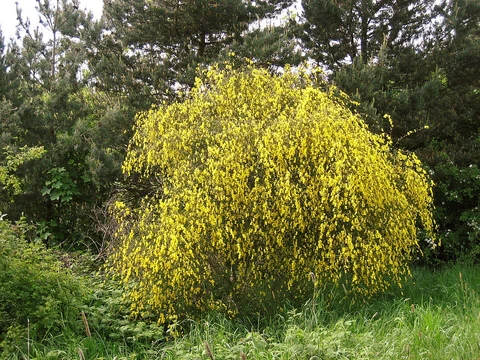
Gossypium
Genus of flowering plants that provides the world's primary natural fibre.

Gossypium is a genus of flowering plants in the tribe Gossypieae of the mallow family, Malvaceae, from which cotton is harvested. Native to tropical and subtropical regions of the Old and New Worlds, it comprises about 50 species, making it the largest genus in its tribe. Cotton, the primary natural fibre used by humans today, accounts for about 80% of world natural fibre production, and the genus is of great importance for agriculture, industry, and trade, especially in tropical and subtropical countries.
Quick Facts
- Taxon
- Gossypium
- Type Species
- Gossypium arboreum
- Type Species Authority
- L.
Facts from the source article.
Lore & Background
The genus Gossypium originated around 5–10 million years ago and is distributed in arid to semiarid regions of the tropics and subtropics. Species are generally shrubs or shrub-like plants, with extraordinary diversity in morphology and adaptation, ranging from fire-adapted herbaceous perennials in Australia to trees in Mexico. Most wild cottons are diploid, but a group of five species from America and Pacific islands are tetraploid, apparently due to a single hybridization event around 1.5 to 2 million years ago. Cultivated cottons are perennial shrubs most often grown as annuals, with broad lobed leaves and seeds contained in a capsule called a boll, each seed surrounded by fibres of two types: longer staples for high-quality textiles and shorter linters for lower-quality textiles.
Reader's Guide
Gossypium has long attracted the attention of scientists due to its immense agricultural, industrial, and trade significance. Cotton is the primary natural fibre used by humans, amounting to about 80% of world natural fibre production, and is also a major oilseed crop and protein source for animal feed. The genus has been the subject of selective breeding and hybridization to develop varieties with desirable traits such as resistance to insects and diseases and drought tolerance. A public genome sequencing effort began in 2007, focusing first on the D-genome relative G. raimondii due to its smaller size, then the A genome of G. arboreum, to eventually sequence the genomes of cultivated tetraploid cotton varieties. The genus also faces numerous pests and diseases, including the boll weevil, cotton aphid, and various fungal and bacterial diseases, which continue to challenge cultivation.
Did You Know?
- The name Gossypium is derived from the Latin word 'gossypium', which comes from the Arabic 'quṭn' (or 'qutun').
- Cotton fibres occur naturally in colours of white, brown, green, and some mixing of these.
- G. hirsutum accounts for about 90–95% of world cotton production.
Frequently Asked Questions
What exactly is Gossypium?
Gossypium is a genus of roughly 50 flowering plant species belonging to the mallow family (Malvaceae), specifically the tribe Gossypieae, where it holds the title of the largest genus. Its members are native to tropical and subtropical zones on both the Old and New World continents.
What is Gossypium's main claim to fame?
It is the botanical source of cotton, the single most widely used natural fibre on the planet, representing roughly 80 % of all natural fibre output. Without this genus, the global textile, agricultural, and trade sectors would lose their foundational raw material.
Which Gossypium species actually matter for commercial cotton?
G. hirsutum dominates, supplying 90–95 % of the world's cotton crop, while G. barbadense contributes the remaining 3–5 %. The two Old-World species, G. arboreum and G. herbaceum, together account for less than 1 % of production.
Where do Gossypium plants naturally grow?
The genus is indigenous to warm, humid climates across both hemispheres, spanning tropical and subtropical regions of Africa, Asia, the Americas, and Oceania. This broad native range is what made it possible for humans to domesticate cotton on multiple independent continents.
Why do fans and botanists consider Gossypium so important?
Beyond its sheer agricultural footprint, the genus sits at the intersection of ecology, industry, and global commerce, making it a keystone crop for millions of smallholders and large-scale operations alike. Its roughly 50 species also give researchers a rich toolkit for breeding disease-resistant and climate-adapted cotton varieties.
More in Trees & Shrubs 1-24
Spotted an error? Know more?
Reader corrections go straight into our review queue. Suggest an edit · How this site is sourced