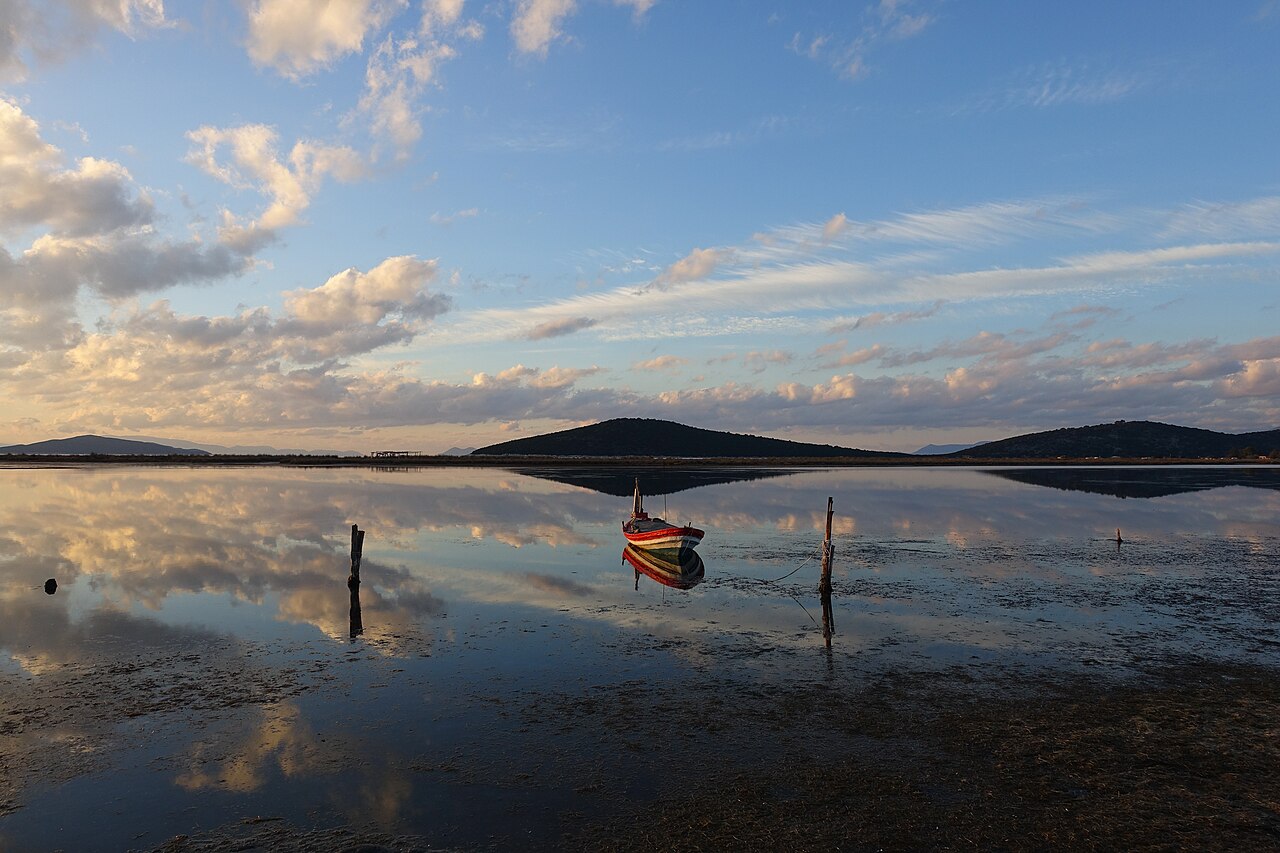
Boat
A watercraft smaller than a ship, used for transport and recreation.

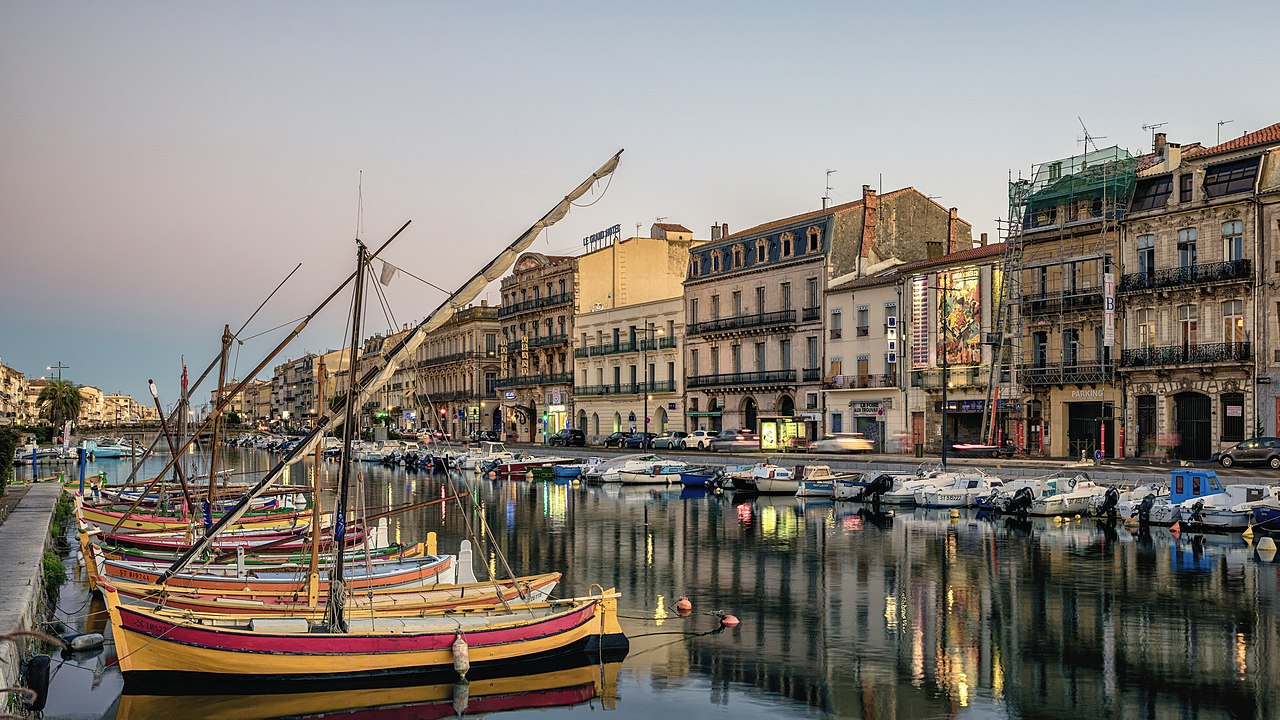
Dimitrios Tzortzis · CC BY-SA 4.0
A boat is a type of watercraft that comes in many shapes and sizes, though it is typically smaller than a ship. A ship is set apart by its larger size, greater capacity, different shape, or ability to carry boats. Small boats are often used on inland waters like rivers and lakes, or in sheltered coastal areas, but some, such as whaleboats, were built for use offshore. In modern naval terms, a boat is a vessel small enough to be carried on a ship. Submarines are always called boats, no matter their size.
Boats are built differently depending on their purpose, the materials available, and local traditions. Canoes have existed since prehistoric times and are still used worldwide for travel, fishing, and recreation. Fishing boats vary widely in design to suit local conditions. Pleasure craft for recreational boating include ski boats, pontoon boats, and sailboats. Houseboats serve as vacation homes or permanent residences. Lighters move cargo to and from large ships that cannot reach the shore. Lifeboats are used for rescue and safety. Boats can be powered by human effort (like rowboats and paddle boats), wind (sailboats), or engines (gasoline, diesel, or electric, either inboard or outboard).
The earliest watercraft were rafts, which were used for voyages like the settlement of Australia between 50,000 and 60,000 years ago. A boat differs from a raft because it gains buoyancy by keeping water out with a waterproof layer, such as wooden planks or animal hide. A raft, by contrast, stays afloat because its components—like logs, reeds, or inflated hides—are themselves buoyant, and waves can pass through it. This makes rafts impractical in cold regions, limiting their use to between roughly 40° north and 40° south latitude.
The oldest known boat is the Pesse canoe, a dugout made from a hollowed pine tree trunk, built between 8200 and 7600 BC and now in the Drents Museum in the Netherlands. Dugouts and hide boats (animal skins stretched over a frame) may be equally ancient, though hide boats rarely survive in archaeological sites. Plank-built boats likely developed from logboats, sometimes by expanding the hull with heat, adding planks to raise the sides, or splitting the log and inserting a central plank. The earliest known plank-built boats come from the Nile, dating to the third millennium BC, followed by examples from England (the Ferriby boats) from the early second millennium BC. Such construction required woodworking skills first available in the Neolithic, with more complex versions appearing in the Bronze Age.
Boats can be categorized by propulsion: unpowered (drifting with current or tide); powered by crew using oars, paddles, or poles; powered by sail; towed by humans, animals, or another vessel; or powered by machinery (internal combustion engines, steam engines, or electric motors). A single boat may use multiple methods. Some large vessels are still called boats, including submarines, Great Lakes freighters, riverboats, and ferryboats, which operate on inland or protected coastal waters.
The hull is the main structural component, providing capacity and buoyancy. The keel is the boat's backbone, a lengthwise member to which frames are attached. Some boats have a deck covering part or all of the hull; a boat rarely has more than one deck. Above the deck, lifelines, stanchions, bulwarks, and gunnels may be present. A cabin can be placed forward, aft, or along the centerline. Vertical internal walls are called bulkheads. The front of a boat is the bow, the rear is the stern. Facing forward, the right side is starboard and the left side is port.
Until the mid-19th century, most boats were made of natural materials like wood, bark, and animal skins. Early examples include birch bark canoes, kayaks and coracles covered in animal hide, and dugout canoes from single logs.
- field
- Watercraft
- known_for
- Smaller watercraft used on inland waterways, coastal areas, and offshore; includes canoes, fishing boats, pleasure craft, houseboats, lighters, and lifeboats
Lore & Background
A boat differs from a raft by obtaining its buoyancy from a waterproof layer that excludes water, whereas a raft is buoyant because it joins components that are themselves buoyant. Hide boats, made from covering a framework with animal skins, could be equally as old but are less likely to survive in archaeological contexts. Plank-built boats are considered to have developed from logboats, with the earliest known examples from the Nile dating to the third millennium BC. Outside Egypt, the next earliest are from England, such as the Ferriby boats dated to the early second millennium BC and the end of the third millennium BC. Boats can be categorized by means of propulsion: unpowered, powered by crew (oars, paddles, punting pole), sail, towed, or powered by machinery such as internal combustion engines, steam engines, or batteries and an electric motor. Until the mid-19th century, most boats were made of natural materials, primarily wood, bark, and animal skins. By the mid-19th century, some boats were built with iron or steel frames but still planked in wood. By the 1930s, boats built entirely of steel were replacing wooden boats in many industrial uses. Around the mid-1960s, fiberglass boats became popular, especially for recreational use.
Reader's Guide
Boats have played a fundamental role in human history, enabling transportation, trade, fishing, and exploration across inland waterways and coastal regions. Their significance lies in their adaptability: from prehistoric dugouts and hide boats to modern fiberglass and steel vessels, boats have been tailored to local conditions, available materials, and specific purposes. The distinction between a boat and a ship—based on size, capacity, or ability to carry boats—remains a key classification in naval terminology, with submarines always referred to as boats regardless of size. The development of boat construction reflects technological progress: the shift from rafts to waterproof hulls, the innovation of plank-built boats in the Neolithic and Bronze Age, and the introduction of iron, steel, ferro-cement, aluminum, and fiberglass in the 19th and 20th centuries. Boats continue to serve diverse functions, including fishing, recreation, cargo transfer via lighters, and rescue via lifeboats. Their legacy is evident in the ongoing use of traditional designs like canoes and kayaks alongside modern motorized and sail-powered vessels.
Did You Know?
- Submarines are referred to as boats rather than ships regardless of their size.
- The earliest known plank-built boats are from the Nile, dating to the third millennium BC.
The Core Purpose of Moving People and Goods
Transport, at its most fundamental level, is the act of carrying people or cargo from one location to another. This simple definition underpins an enormous web of activity that touches every aspect of civilization. The act of operating a motorized vehicle—whether a truck, a bus, or a private automobile—is commonly called driving, while the equivalent action on a motorcycle, a bicycle, or atop a living animal is referred to as riding. When the focus shifts to goods rather than passengers, the term becomes shipping, encompassing the movement of cargo across land, sea, and air. When the focus is on people, it is simply travel. The entire system also splits along a line of availability: private transport, where an individual or group controls the vehicle, and public transport, where shared services carry the broader community. Together these distinctions—driving versus riding, shipping versus travel, private versus public—form the conceptual skeleton on which every specific mode of transport is hung.
The Long Legacy of Animal-Powered Movement
Long before engines existed, humanity relied on domesticated animals to carry weight, pull loads, and traverse difficult terrain. The roster of species used for transport is strikingly broad: camels in both their Arabian and Bactrian forms, carabao, deer, dogs and sled dogs, elephants, a full spectrum of equines including donkeys, hinny, riding horses, packhorses, draft horses, and mules, as well as llamas, moose, ostriches, oxen, reindeer, sheep, and yaks. The vehicles they hauled or pulled were equally varied—chariots, coaches, Conestoga wagons, Hansom cabs, stagecoaches, mail coaches, broughams, phaetons, postchaises, and countless other carriages and carts. Even in more unusual roles, animals served transport needs: pigeons carried messages, dolphins helped attach markers to detected mines, and in early twentieth-century Australia, turtles were reportedly ridden as a novelty sport. The sheer diversity of animal-powered vehicles, from a simple bullock cart to an ornate vis-a-vis carriage, shows how deeply this mode of movement was woven into daily life across cultures.
The Remarkable Range of Human-Powered Vehicles
Human-powered transport is far more than just walking. The category spans an extraordinary spectrum of machines and techniques, all driven by the body's own energy. On two wheels, the bicycle family alone includes road bikes, mountain bikes, recumbent designs, tandems, unicycles, penny-farthings, fatbikes, BMX frames, and even velomobiles that enclose the rider in a streamlined shell. Hand-powered options range from wheelchairs and handcycles to the humble handcar. Foot-powered movement covers kick scooters, inline and roller skates, skateboards, longboards, snakeboards, and street luge boards. For water, humans paddle canoes, kayaks, and pedalos, or stand on paddleboards. On snow and ice, the list includes cross-country skis, alpine touring skis, snowboards, snowshoes, telemark skis, ice skates, kicksleds, and fatbikes with wide tires. Pushed or pulled vehicles like wheelbarrows, shopping carts, and stretchers round out the picture, while the ornithopter represents the most ambitious attempt to fly using human muscle alone.
From Pipelines to the Surface of Mars
The full scope of transport extends well beyond roads and runways. Aviation encompasses fixed-wing aircraft, helicopters, airships, blimps, balloons, autogyros, and even supersonic transports. Cable systems move people via aerial tramways, chairlifts, gondola lifts, funiculars, and elevators, while conveyor belts, escalators, and moving walkways handle continuous flow in industrial settings. Military transport spans armored personnel carriers, jeeps, landing craft, aircraft carriers, submarines, U-boats, and torpedo boats. Ground transport includes the full range of automobiles, buses, motorcycles, trucks, and off-road vehicles like hovercraft, snowmobiles, and tanks. Rail transport covers high-speed lines, maglev, monorails, rack railways, and rapid transit systems. Pipelines carry natural gas, petroleum, water, and even pneumatic tubes for small parcels. Ship transport ranges from narrowboats and punts to tank ships and yachts. And at the outermost edge, space transport includes rockets, the Space Shuttle, and robotic rovers like Sojourner, Spirit, and Opportunity that have rolled across the surfaces of Mars.
Gallery


Frequently Asked Questions
What is a Boat in transportation engineering?
A boat is a watercraft that is generally smaller and less capable than a ship, designed for use on inland waterways, coastal regions, or offshore areas. It encompasses a wide variety of types and sizes, from canoes and fishing vessels to pleasure craft, houseboats, lighters, and lifeboats.
How is a Boat distinguished from a Ship?
The primary distinction lies in size and capacity: a ship is larger, has greater carrying capacity, and can itself transport boats. Boats are typically smaller in scale and proportion, though the exact boundary can vary based on shape, construction, and regional conventions.
What are Boats primarily used for?
Boats serve transportation, fishing, and recreational purposes, a role they have filled since prehistoric times. Their specific design—proportions, materials, and construction methods—varies depending on the intended use, locally available resources, and traditional practices.
Why is the Boat concept important in transportation engineering?
Boats represent one of humanity's oldest and most adaptable waterborne transport technologies, bridging prehistoric dugout construction to modern specialized craft. Their diversity in form and function makes them a foundational category in the study of waterway logistics, coastal access, and maritime safety.
More in Transportation Engineering 1-17
Spotted an error? Know more?
This is a living reference — every entry is fact-audited, and reader corrections feed straight into our audit queue. Suggest an edit · See this site's audit record