
Airship
First powered, controlled aircraft; declined after high-profile accidents.

Self Scanned · Public domain
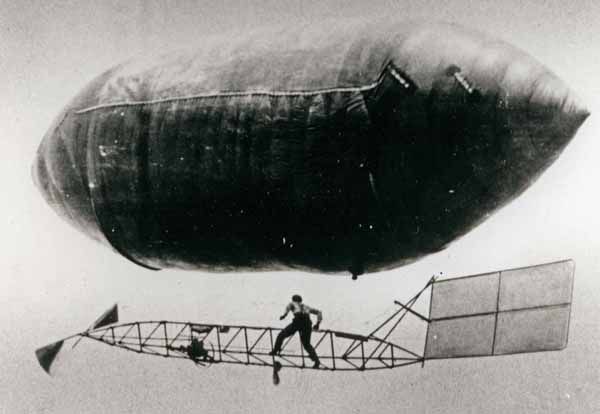
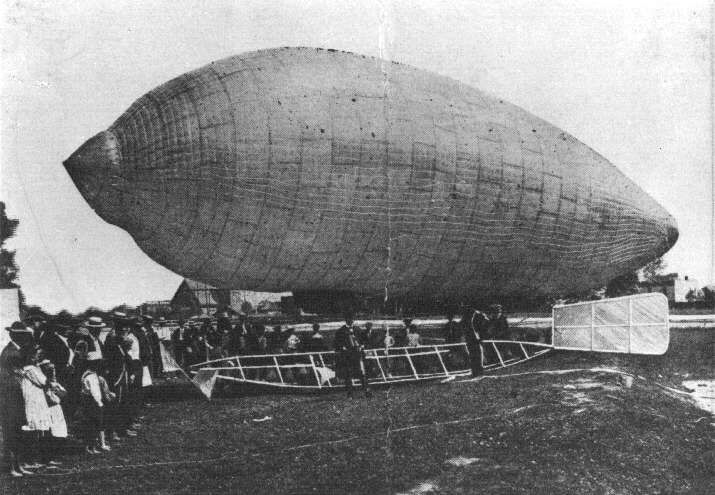
An airship, also called a dirigible or dirigible balloon, is a type of lighter-than-air aircraft that can steer itself through the sky under its own power. It belongs to the category of aerostats, which stay aloft because they use a lifting gas that is less buoyant than the air around them.
Early airships used hydrogen as their lifting gas because it provided strong lift and was easy to get. However, hydrogen is highly flammable, and several deadly accidents eventually made hydrogen airships impractical. The alternative, helium, does not burn, but it is scarce and costly. Large helium deposits were first found in the United States, and for a time helium was only available for airship use in North America. Since the 1960s, most airships have used helium, though some have relied on hot air instead.
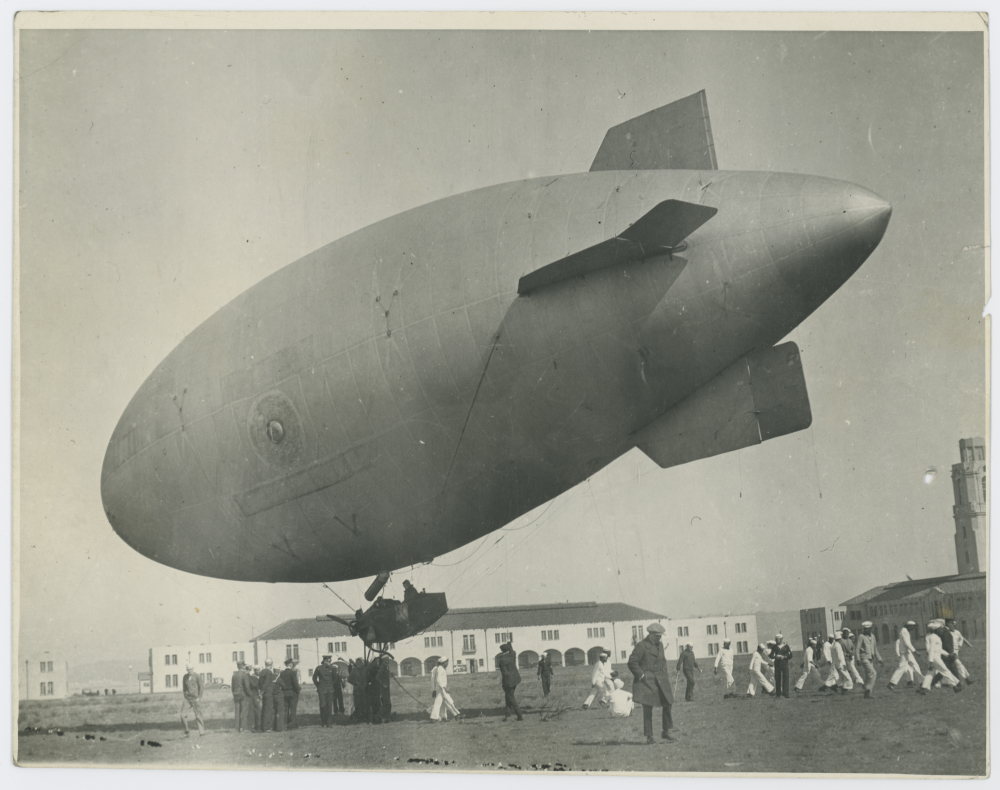
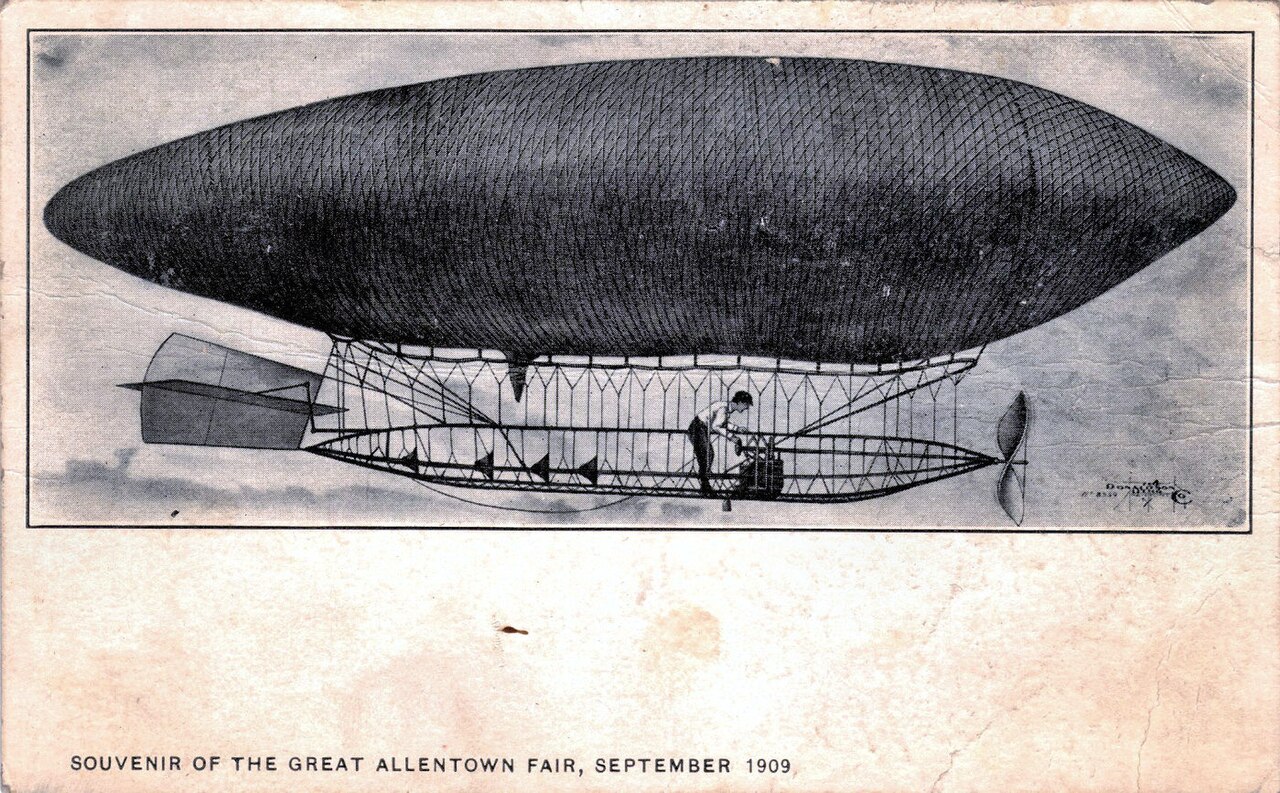
The main body of an airship is the lighter-than-air envelope, which can either be the gasbag itself or hold gas-filled cells inside it. The engines, crew, and payload are carried in the gondola, one or more enclosed platforms suspended below the envelope.
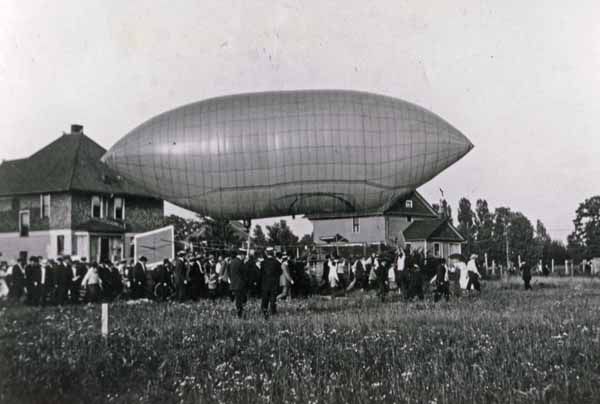
Airships come in three main types: non-rigid, semi-rigid, and rigid. Non-rigid airships, often called blimps, keep their shape solely through internal gas pressure. Semi-rigid airships also rely on internal pressure but have some supporting structure, like a fixed keel, attached to the envelope. Rigid airships have an outer framework that holds the shape and carries all structural loads, while the lifting gas is stored in one or more internal cells. The first rigid airships were flown by Count Ferdinand von Zeppelin, and most rigid airships ever built came from his company, Luftschiffbau Zeppelin. As a result, rigid airships are often called zeppelins.
Airships were the first aircraft to achieve controlled, powered flight and were most common before the 1940s. Their use dropped off as airplanes became more capable. This decline was sped up by several high-profile accidents, including the 1930 crash and fire of the British R101 in France, the 1933 and 1935 storm-related crashes of the U.S. Navy helium-filled rigids USS Akron and USS Macon, and the 1937 fire of the German hydrogen-filled Hindenburg. Since the 1960s, helium airships have been used in situations where the ability to hover for long periods is more important than speed or maneuverability, such as advertising, tourism, camera platforms, geological surveys, and aerial observation.
In the early days of aviation, the term "airship" could refer to any navigable flying machine. Today, it is used only for powered, steerable balloons, with sub-types classified as rigid, semi-rigid, or non-rigid. Semi-rigid designs are more recent, arising from advances in deformable structures and the need to reduce weight and volume; they have a minimal structure that works with gas pressure to maintain shape.
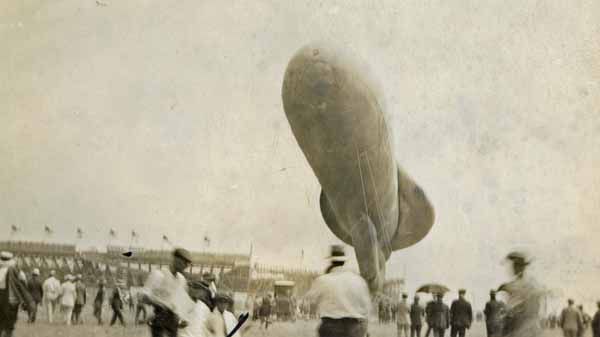
An aerostat is any aircraft that stays aloft using buoyancy rather than forward motion. Airships are a type of aerostat. The word "aerostat" can also refer to a tethered or moored balloon, as opposed to a free-floating one. Modern aerostats can lift payloads of up to 3,000 pounds to altitudes above 4.5 kilometers and can stay airborne for long periods, especially if powered by an onboard generator or through a tether with electrical conductors. This makes them useful as platforms for telecommunications. For example, in 2001, Platform Wireless International Corporation announced plans to use a tethered 1,250-pound payload to provide cell phone service to a 140-mile region in Brazil. The European Union's ABSOLUTE project also explored using tethered aerostat stations for disaster-response communications.
A blimp is a non-rigid aerostat. In British usage, it refers to any non-rigid aerostat with a streamlined shape and stabilizing tail fins, including barrage balloons. Some blimps are powered dirigibles, like early versions of the Goodyear Blimp. Later Goodyear dirigibles, though technically semi-rigid, are still called "blimps" by the company.
The term "zeppelin" originally referred to airships made by the German Zeppelin Company, which built and flew the first rigid airships in the early 1900s. Their craft were usually given serial numbers prefixed with LZ, for Luftschiff Zeppelin. Because of the company's fame and the many airships it produced, streamlined rigid or semi-rigid airships are often called zeppelins, even though an early rival was the Parseval semi-rigid design.
Hybrid airships fly with a positive aerostatic contribution, usually equal to the empty weight of the system, while the variable payload is supported by propulsion or aerodynamic lift.
Airships are classified by construction into rigid, semi-rigid, and non-rigid types. A rigid airship has a rigid framework covered by an outer skin or envelope.
- type
- Aerostat aircraft
- first_used
- Before the 1940s
- lifting_gases
- Hydrogen, helium, hot air
- main_types
- Non-rigid (blimp), semi-rigid, rigid (zeppelin)
- primary_use
- Advertising, tourism, camera platforms, geological surveys, aerial observation
- key_historical_operator
- Luftschiffbau Zeppelin
Lore & Background
Since the 1960s, helium airships have been used where hovering for extended periods outweighs speed and maneuverability.
Reader's Guide
Airships represent the first era of controlled, powered flight, pioneering technologies later adapted by aeroplanes. Their decline was driven by catastrophic accidents involving both hydrogen and helium craft, which highlighted safety and operational limitations. Despite this, airships have persisted in niche roles such as advertising, tourism, and aerial observation, where their ability to hover for long periods is valuable. The shift from hydrogen to helium after the 1960s improved safety but increased cost. The legacy of airships includes the iconic Zeppelin name, which remains synonymous with rigid airships, and the continued use of blimps for commercial purposes. Their historical significance lies in demonstrating that lighter-than-air flight could be practical, even if ultimately superseded by heavier-than-air aircraft.
Did You Know?
- The lifting gas in early dirigibles was hydrogen, due to its high lifting capacity and ready availability.
- Helium was only available for airship usage in North America for a time after its discovery in the United States.
- Rigid airships are often called zeppelins because most were built by Luftschiffbau Zeppelin.
Two Categories, One Record: Rigid Airships and Blimps
The airship accident compilation brings together incidents involving two distinct subcategories of the craft: rigid airships and blimps. The source material makes a point of specifying that these two types operated differently from one another, a note that signals the list is not simply a flat catalogue of identical events. By acknowledging the operational divergence between rigid airships and blimps, the record implicitly recognizes that the circumstances and consequences of accidents may vary significantly depending on which type of airship was involved. Yet despite these operational differences, both categories are housed within a single document, suggesting that the shared identity as airships outweighs the procedural distinctions between them for the purposes of this record. Readers encountering this list are therefore presented with a unified but internally diverse account of mishaps, spanning two subtypes that, while related, did not share the same operational profile. The deliberate inclusion of both types in one compilation underscores that the history of airship accidents cannot be told through either category alone.
What the List Leaves Out: Military Losses
A notable boundary is drawn around the scope of this airship accident record. The source explicitly states that airships shot down or otherwise lost to military action are not included in the compilation. This exclusion is significant because it means the list focuses on accidents that fall outside the context of armed conflict. The phrasing covering both being shot down and otherwise lost to military action suggests a broad category of combat-related losses that are deliberately set apart from the incidents documented here. This boundary shapes how one reads the entire list: every entry represents a loss that occurred in circumstances distinct from warfare. The deliberate omission of military losses also implies that the record serves a specific purpose, documenting the hazards of airship operation apart from the separate history of aerial combat. By drawing this line, the compilation acknowledges that wartime losses constitute their own substantial body of history, one that would overwhelm or obscure the non-combat accidents the list is designed to capture.
A Partial Record: The Limits of the Compilation
The source material describes itself as a partial list, a qualification that carries important implications for anyone consulting it. The word partial signals that the compilation does not claim to be exhaustive or definitive. There are airship accidents that occurred which are not captured in this particular document, whether due to incomplete historical records, the scope of the compilation, or other editorial decisions. This self-awareness about its own limitations distinguishes the list from a comprehensive historical survey. The partial nature of the record means that readers should approach it as one piece of a larger puzzle rather than a complete accounting of all airship disasters. It is a reference point, a starting collection of documented incidents, but it does not purport to tell the full story of airship accidents across the history of the craft. This modest framing invites further research and acknowledges that the complete history of airship mishaps extends well beyond what any single list can contain.
Beyond Airships: The Broader Lighter-Than-Air Context
The airship accident list does not exist in isolation within the broader landscape of lighter-than-air craft history. The source material includes a cross-reference to a separate list of ballooning accidents, a connection that situates airship mishaps within a wider category of incidents involving buoyant flight. This see-also link suggests that ballooning and airship accidents, while involving different types of craft, occupy a related space in the historical record of lighter-than-air aviation. The existence of a dedicated references section further indicates that the compilation draws on external sources to support its entries, grounding the listed accidents in documented evidence rather than speculation. Together, these structural elements, the cross-reference to ballooning accidents and the references section, frame the airship accident list as part of a larger documentary ecosystem, one that treats the history of lighter-than-air flight as a connected field of study rather than a collection of isolated incidents belonging to a single type of vehicle.
Gallery
Frequently Asked Questions
What exactly is an airship?
An airship is a lighter-than-air craft that steers and moves under its own power by relying on buoyancy from a gas less dense than the surrounding atmosphere. It is also called a dirigible or dirigible balloon.
What are the main types of airships?
There are three primary structural categories: non-rigid (commonly called a blimp), semi-rigid, and fully rigid (the zeppelin design). Each differs in how the internal lifting envelope is supported.
What gases power an airship's lift?
Airships have historically used hydrogen, helium, or heated air as their lifting medium. The choice of gas determines both the buoyancy achieved and the safety profile of the craft.
Why did airships fall out of mainstream use?
They were the first aircraft capable of controlled, powered flight and dominated the skies before the 1940s, but several high-profile accidents eroded public confidence. Aeroplanes eventually outpaced them in speed, range, and practicality, sealing their decline as a primary transport mode.
What are airships used for today?
Modern airships serve niche roles such as advertising, tourism flights, aerial camera platforms, geological surveys, and stationary observation. Their ability to hover in place for extended periods keeps them relevant where fixed-wing aircraft cannot easily operate.
More in Transportation Engineering 1-17
Spotted an error? Know more?
This is a living reference — every entry is fact-audited, and reader corrections feed straight into our audit queue. Suggest an edit · See this site's audit record