Aircraft carrier
Mobile seagoing airbase projecting naval air power worldwide.

Yaohua2000 · CC BY-SA 3.0
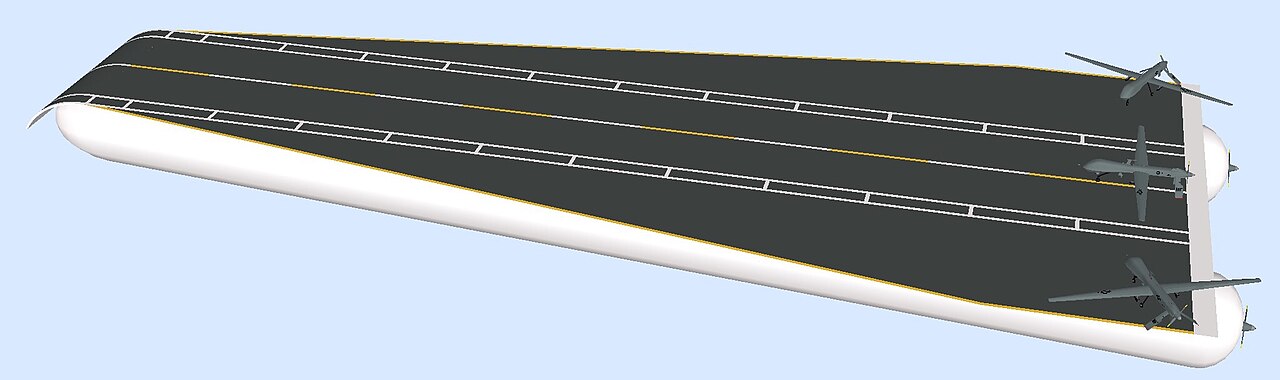
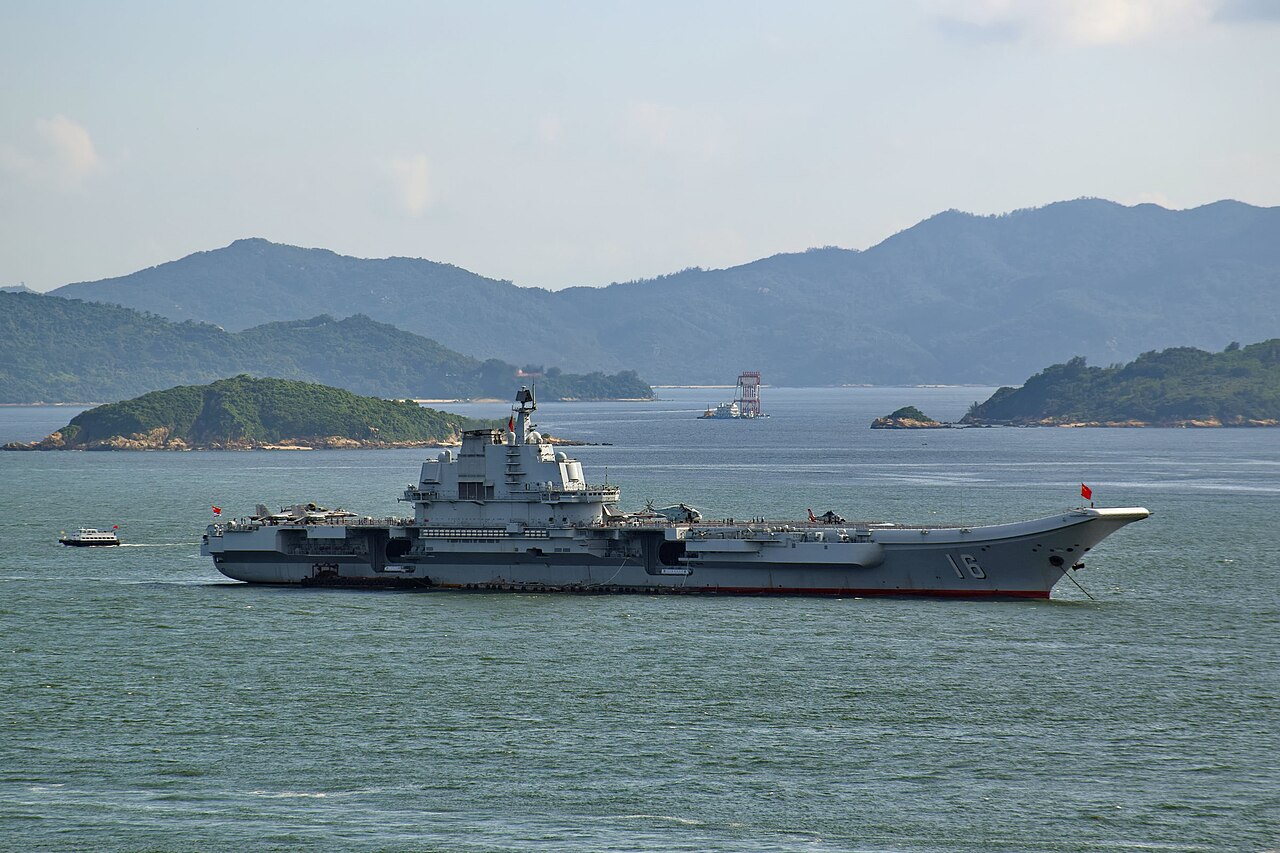
An aircraft carrier is a warship built to carry, launch, recover, and support aircraft while at sea. It features a full-length flight deck and hangar facilities, functioning as a mobile, seagoing airbase. As the capital ship of a fleet—often called a carrier battle group—it lets a naval force project air power far from its home country without needing local airfields. First developed in the early 1900s, these vessels started as wooden ships deploying tethered reconnaissance balloons and have since become nuclear-powered supercarriers carrying dozens of fighters, strike aircraft, military helicopters, airborne early warning and control planes, and unmanned combat aerial vehicles. Heavier fixed-wing aircraft like airlifters, gunships, and bombers have launched from carriers, but they rarely land due to flight deck size limits.
The aircraft carrier, along with its aircraft and defensive weapons, is the largest weapon system ever built. Its tactical strength, mobility, independence, and range of operations make it central to modern naval warfare, giving it major diplomatic weight in deterrence, sea control, and air supremacy. Since World War II, carriers have replaced battleships as fleet flagships, shifting naval battles from gunfire to beyond-visual-range air strikes. Strategically, they can sail in international waters without violating territorial sovereignty, avoiding diplomatic issues or escalation from trespassing, and they eliminate the need for land-use permissions from other countries, cutting transit times and logistics while increasing time on station.
Modern navies use several carrier variants, sometimes classed as sub-types or as distinct aviation-capable ships. They can be grouped by the aircraft they carry or their missions. Admiral Sir Mark Stanhope, former head of the Royal Navy, noted that countries aiming for strategic international influence have aircraft carriers. Henry Kissinger, as U.S. Secretary of State, called an aircraft carrier "100,000 tons of diplomacy."
As of September 2026, 15 navies operate 50 active aircraft carriers. The United States has 11 large nuclear-powered CATOBAR fleet carriers, each carrying about 80 fighters—the world’s largest—and their combined deck space in 2015 was more than double that of all other nations together.
Speed is critical for carriers, allowing quick global deployment and evasion of detection and targeting. High speed also increases "wind over the deck," boosting lift for fixed-wing aircraft to carry more fuel and ammunition. To evade nuclear submarines, carriers should exceed 30 knots (35 mph; 56 km/h). Carriers are among the largest warships due to their need for ample deck space.
A carrier must handle diverse missions: diplomacy, power projection, quick crisis response, land attack from the sea, sea basing for helicopter and amphibious forces, anti-surface warfare, defensive counter air, and humanitarian aid and disaster relief. Traditionally, it is expected to perform at least power projection and sea control. It must efficiently operate an air combat group, including fixed-wing jets and helicopters, and support short-takeoff/vertical-landing jets.
Types include aircraft cruisers, amphibious assault ships and their sub-types, anti-submarine warfare carriers, balloon carriers and tenders, escort carriers, fleet carriers, flight deck cruisers, helicopter carriers, light aircraft carriers, seaplane tenders and carriers, and utility carriers (used mainly by the U.S. Navy in the decade after World War II to ferry aircraft). Some sources do not strictly define all these as aircraft carriers.
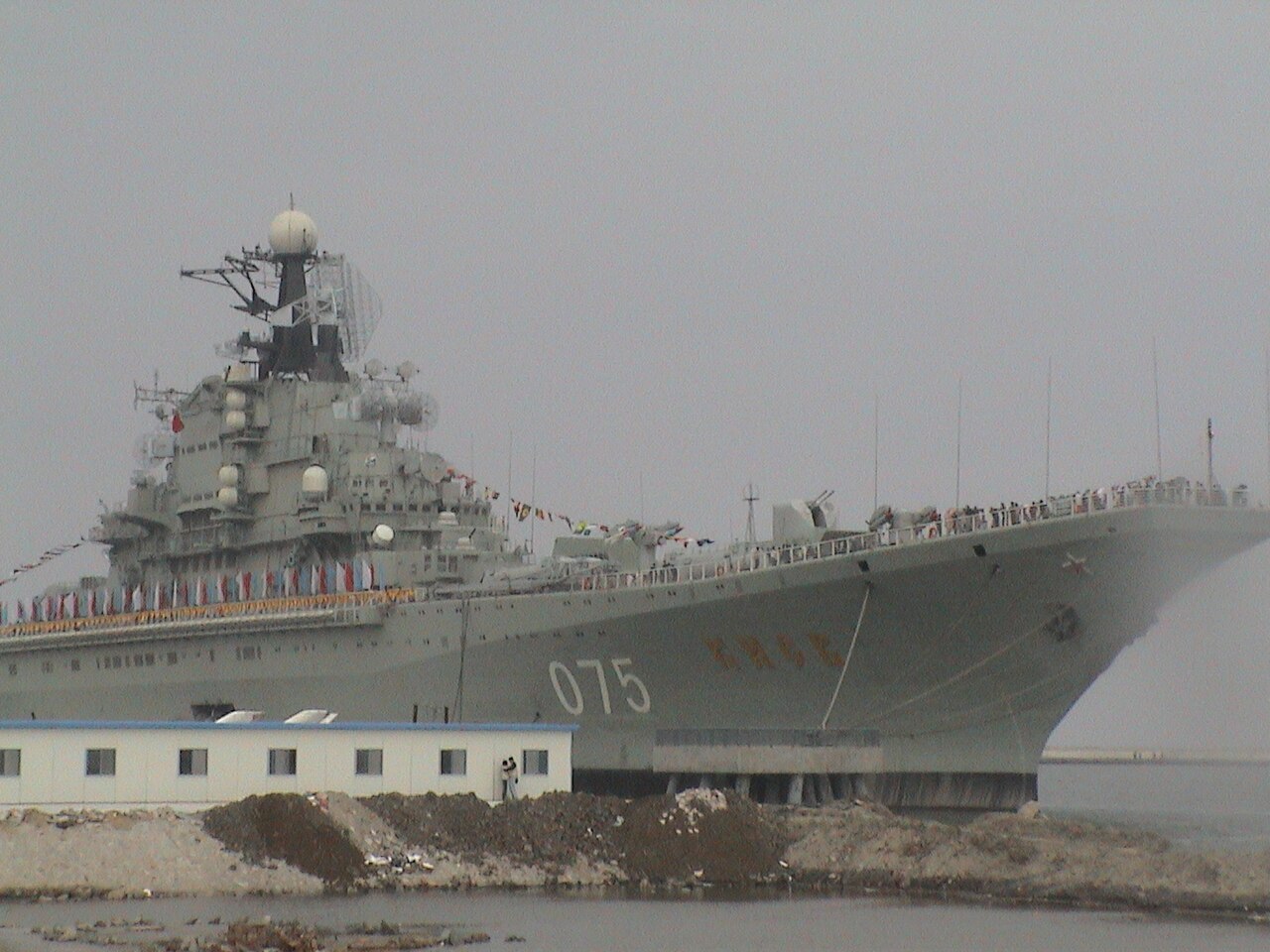
By role, a fleet carrier operates with the main fleet, providing offensive capability; these are the largest and fastest. Escort carriers, smaller and slower with fewer aircraft, defended convoys; many were built from merchant hulls or were bulk cargo ships with a flight deck added. Light aircraft carriers were fast enough for the main fleet but smaller with reduced capacity. The Soviet carrier *Admiral Kuznetsov* was called a "heavy aircraft-carrying cruiser"—a legal workaround to avoid the Montreux Convention’s ban on aircraft carriers transiting the Turkish Straits. These ships, sized like large fleet carriers, were designed to deploy alone or with escorts, carrying fighters, helicopters, strong defensive weapons, and heavy offensive missiles like a guided-missile cruiser.
- Current active count
- Varies; as of recent estimates, approximately 20–25 active carriers worldwide (exact count depends on classification and operational status)
Lore & Background
Aircraft carriers have evolved from wooden vessels deploying tethered reconnaissance balloons to nuclear-powered supercarriers. They are typically the capital ship of a fleet, allowing a naval force to project seaborne air power far from national territory without depending on local airfields. Since the Second World War, the aircraft carrier has replaced the battleship in the role of flagship of a fleet, largely transforming naval battles from gunfire to beyond-visual-range air strikes.
Reader's Guide
Aircraft carriers are among the largest types of warships and are often the centerpiece of modern naval warfare. They provide significant diplomatic influence in deterrence, command of the sea, and air supremacy. By sailing in international waters, they avoid territorial sovereignty issues and reduce transit logistics, increasing time on station. Modern navies use several variants, including CATOBAR, STOBAR, STOVL, and helicopter carriers. The aircraft carrier, along with its onboard aircraft and defensive weapons, is the largest weapon system ever created.
Did You Know?
- The United States has 11 large nuclear-powered CATOBAR fleet carriers, each carrying around 80 fighters.
- As of the most recent reliable data, there are over 20 active aircraft carriers in the world operated by multiple navies.
- The Soviet aircraft carrier Admiral Kuznetsov was termed a 'heavy aircraft-carrying cruiser' to avoid the limitations of the Montreux Convention.
Design Philosophy and the Disposable Warship Concept
The 1942 Light Fleet Carrier emerged from a wartime urgency: the Royal Navy needed additional air cover for convoys and fleets, but could not afford the time or cost of full-size carriers. The solution was a deliberately simplified vessel, positioned between the expensive Illustrious-class fleet carriers and the more limited escort carriers. To keep construction fast and accessible, the design was kept as straightforward as possible so that civilian yards with no prior naval experience could participate. The hull was essentially a scaled-down Illustrious, displacing roughly 13,190 tons at standard load and stretching 690 feet along the flight deck. The lower hull followed Lloyd's merchant-ship specifications, while propulsion drew on steam turbines salvaged from cancelled cruisers, delivering 40,000 shaft horsepower and a top speed of 25 knots. Because naval design offices were stretched thin, Vickers-Armstrong shipbuilders took the lead on the engineering. From the outset, these ships were conceived as expendable, meant to be scrapped within three years of commissioning or at the war's end. That disposability was central to the concept, yet it would prove to be the design's greatest underestimation.
Production, Modifications, and the Fate of Sixteen Ships
Sixteen Light Fleet carriers were ordered and laid down across eight British shipyards during 1942 and 1943 under the 1942 Programme. The Admiralty originally expected each vessel to be ready in 21 months, but design modifications pushed that target to 27 months, and even then only two ships met the extended deadline. Launched from late 1943 onward, the first was commissioned in December 1944. By the war's end, just four, Colossus, Glory, Venerable, and Vengeance, grouped as the 11th Aircraft Carrier Squadron, had entered service, and none participated in frontline combat. Of the sixteen ordered, only eight were finished to the original Colossus-class specification. Two of those eight were fitted with maintenance and repair facilities rather than aircraft catapults and arresting gear, entering service as aircraft maintenance carriers. The remaining six were altered during construction to accommodate larger, faster aircraft and re-designated as the Majestic class. Their building was suspended when the war ended; five were eventually completed, the last in 1961, while the sixth, Leviathan, was broken up for spare parts and scrap.
From Suez to the Falklands: A Global Operational Legacy
Although no Light Fleet carrier saw frontline action in the Second World War, their postwar careers spanned five decades and multiple continents. In Royal Navy service, they took part in the Korean War and the Suez Crisis; during the latter, two Colossus-class ships carried out the first ship-based helicopter assault in history. The carriers' influence extended far beyond British waters. Four Colossuses and all five completed Majestics were loaned or sold to seven foreign navies: Argentina, Australia, Brazil, Canada, France, India, and the Netherlands. Remarkably, three of the ships served in three different naval forces over their careers. Foreign-operated Light Fleets participated in the Korean War, the First Indochina War, the Vietnam War, the 1971 Indo-Pakistani War, and the Falklands War. This extraordinary spread of service meant that a design born from a 1942 wartime urgency ultimately shaped naval aviation doctrine across the Western Hemisphere, South Asia, and the South Atlantic, long after its creators had moved on to more advanced platforms.
Outliving the Disposable: Longevity and the Question of Preservation
The Light Fleet carriers were explicitly designed as disposable warships, expected to be scrapped within three years of entering service or at the war's conclusion. Every single completed vessel exceeded that modest expectation. The two maintenance carriers were the first to be paid off, retiring in the 1950s. By the 1960s, all Royal Navy Light Fleets had been sold to foreign operators or broken up, with the sole exception of Triumph, which was later recommissioned as a repair ship. In foreign hands, the carriers enjoyed even longer careers. Brazil's Minas Gerais remained in active service until her decommissioning in 2001, making her the oldest active aircraft carrier in the world at that time. India's Vikrant, the last surviving example of the class, was sold for scrapping in 2014 despite various attempts to preserve several of these ships as museum vessels. The fact that a vessel commissioned in 1945 could still be flying aircraft in 2001 stands as a quiet testament to the robustness of a design that was never meant to last.
Gallery
Frequently Asked Questions
What is an Aircraft carrier in transportation engineering?
An aircraft carrier is a naval warship purpose-built to house, launch, and recover aircraft at sea, featuring a full-length flight deck and hangar bays that turn the vessel into a mobile airbase. It functions as the capital ship of a fleet, enabling a navy to project air power across the globe without relying on shore-based runways.
What is the core role of an Aircraft carrier?
It operates as a seagoing aviation platform that extends air-transport infrastructure far beyond coastal boundaries. By carrying its own aircraft, crew, and support facilities, it removes the dependency on local airfields in every operational theater.
How many Aircraft carriers are currently in active service?
As of recent estimates, roughly 20 to 25 carriers remain in active service worldwide, though the precise figure fluctuates depending on how each nation classifies and deploys its vessels.
How has the Aircraft carrier design evolved over time?
The concept originated in the early 1900s with wooden ships intended to launch tethered reconnaissance balloons. Over more than a century the design has progressed to nuclear-powered supercarriers capable of operating dozens of fighter jets simultaneously.
Why is the Aircraft carrier significant to transportation engineering?
It represents one of the most complex mobile infrastructure systems ever engineered, integrating aviation, maritime, and logistics disciplines into a single seagoing platform. Its capacity to project air power independently of land-based facilities makes it a cornerstone of global naval strategy.
More in Transportation Engineering 1-17
Spotted an error? Know more?
This is a living reference — every entry is fact-audited, and reader corrections feed straight into our audit queue. Suggest an edit · See this site's audit record