Transit of Venus March
Sousa march celebrating the 1882 Transit of Venus.
Last updated
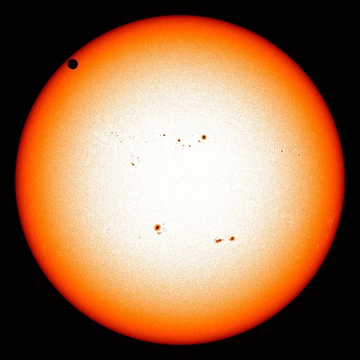
The "Transit of Venus March" is a march for military brass band composed by John Philip Sousa in 1883. It was written to celebrate the 1882 Transit of Venus and published by the J.W. Pepper Company. The work was thought lost for over a century until a piano transcription from 1896 was discovered in 2003.
Background
One year after the 1882 Transit of Venus, Sousa was commissioned to write a processional for the unveiling of a bronze statue of physicist Joseph Henry, who had died in 1878. Henry developed the first electric motor and was the first secretary of the Smithsonian Institution.
Sousa, a Freemason, was fascinated by mystical qualities in natural phenomena. This influenced the performance time and date: April 19, 1883, at 4:00 P.M. At that moment, Venus and Mars were setting in the west, while the moon, Uranus, and Virgo rose in the east; Saturn had crossed the meridian, and Jupiter was overhead. In Masonic lore, Venus was linked to copper, a component of electric motors.
2003 resurrection
The march never gained popularity in Sousa's lifetime and went unplayed for many years after his manuscript copies were destroyed in a flood. Library of Congress employee Loris J. Schissel found copies of the old sheet music in the library's files. The piece was revived in time for the 2004 Transit of Venus, and the Library of Congress partnered with NASA to celebrate that transit with the march.
More in Transit of Venus
Sources
Compiled from Wikipedia and the sources listed below. Text from Wikipedia is available under CC BY-SA 4.0; this entry is adapted from it.
- Wikipedia: Transit of Venus March (CC BY-SA 4.0).
Spotted an error? Know more?
Reader corrections go straight into our review queue. Suggest an edit · How this site is sourced