1874 Transit of Venus Expedition to Campbell Island
French expedition to observe the 1874 transit of Venus.
Last updated
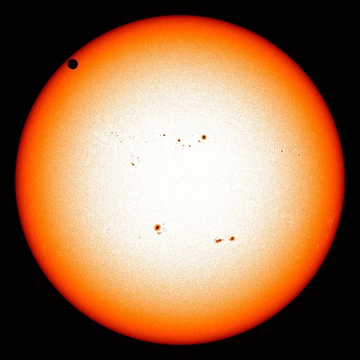
The 1874 Transit of Venus Expedition to Campbell Island was a French scientific mission to observe the transit of Venus on 9 December 1874 from subantarctic Campbell Island, about 600 km south of New Zealand. It was one of many international expeditions sent to study this rare astronomical event.
Quick Facts
- Date of transit
- 9 December 1874
- Location
- Campbell Island, Southern Ocean
- Expedition leader
- A. Bouquet de la Grye
- Ship
- FRWS Vire
- Ship commander
- Captain J. Jacquemart
- Number of french expeditions
- 6
Facts from the source article.
Preparation
The French Academy of Sciences formed a committee to plan the expedition. A year before the transit, the naval frigate FRWS Vire, commanded by Captain J. Jacquemart, visited Campbell Island from 28 November to 25 December 1873. The crew surveyed the coastline, erected a platform for astronomical equipment on the headland between Camp Cove and Garden Cove in Perseverance Harbour, and cleared a path to the beach. They also planted a garden with potatoes, cabbages and other vegetables.
The expedition leader was naval hydrographer A. Bouquet de la Grye, assisted by hydrographer P. Hatt and naval officer Th. Courrejolles, who managed photographic equipment. Naturalist and doctor Henri Filhol completed the scientific team, supported by technicians, carpenters and mechanics. The group departed Marseille in June 1874, reached Sydney on 21 August, and left for Campbell Island on 2 September, arriving on 9 September.
Campbell Island
The expedition first looked at North East Harbour but decided against it. They then moved on to Perseverance Harbour and Garden Cove, where they found the area too cramped and only a few cabbages left from an earlier garden. So they set up camp at Venus Bay instead. Throughout September, they unloaded the Vire, put up several prefabricated buildings, and built a 20-metre stone jetty.
They also constructed pens for the sheep and pigs they had brought along as food. On 22 September, technician Paul Duris died from typhoid fever and was buried on the point across from Venus Bay. The camp was ready for use by 1 October. From mid-October to mid-November, while the Vire was away, the team tested and fixed equipment that had been damaged during the voyage.
Filhol spent this time collecting natural history specimens and watching the wildlife. A series of storms hit, causing damage to the buildings. On 9 December, the sky was overcast, but the Sun broke through briefly, allowing the observers to see Venus against the Sun's corona. However, clouds hid the moment of first contact.
They also caught a twenty-second glimpse of Venus between the third and fourth contacts, when it was half off the Sun's disc. No useful measurements were obtained. It took three weeks to take down the camp and load the ship, and they left on 28 December. Even though the transit observations failed, Filhol later published a thorough account of the island's natural history, and the chart made by the naval officers became the foundation for maps and British Admiralty charts for many years.
Many geographic features were named after expedition members, Paris transit committee members, and other expedition-related items, including Courrejolles Point, De la Vire Point, Filhol Peak, Garden Cove, Jacquemart Island, Mount Azimuth, Mount Dumas, Mount Faye, Mount Fizeau, Mount Paris, Puiseux Peak, Venus Bay, and Yvon Villarceau Peak.
More in Transit of Venus
Sources
Compiled from Wikipedia and the sources listed below. Text from Wikipedia is available under CC BY-SA 4.0; this entry is adapted from it.
- Wikipedia: 1874 Transit of Venus Expedition to Campbell Island (CC BY-SA 4.0).
Spotted an error? Know more?
Reader corrections go straight into our review queue. Suggest an edit · How this site is sourced