Lelo burti
A Georgian folk sport similar to rugby, played since ancient times.
Lelo burti (ლელო ბურთი), meaning "field ball [playing]," is a Georgian folk sport and a full contact ball game closely resembling rugby. Its significance is reflected in Georgian rugby union, where the word "lelo" denotes a try, and the sport's popularity in Georgia is partly attributed to this traditional game.
Quick Facts
- Ball weight
- 2.5 kg / 5.51 lb
- Ball length
- 85–90 cm / 2.79–2.95 ft
- Pitch width
- 60–90 m / 197–295 ft
- Players per team
- 15
- Ball material
- Leather filled with grass, horsehair or sheep's wool
Facts from the source article.
Traditional varieties
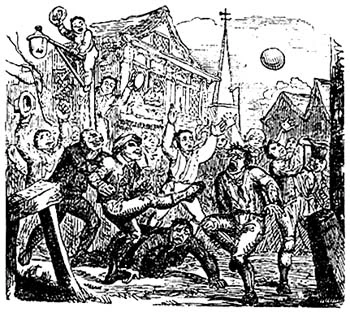
Lelo was played in Georgia from ancient times and is still played on occasions in rural areas. A field would be selected, and in earlier times teams consisted of a few dozen players each, with the field sometimes crossed by a stream that players had to ford. Sometimes the playing field was between two water courses. The two teams, usually the male population of neighbouring villages, faced each other, with no set number of players; any able men each village could summon participated. A large, heavy ball was placed in the middle, and the goal was to carry it over the river to the opposing side's half. The game took place over a wide area stretching several kilometres on rough ground, including spurs, hills, valleys, woods, cascading streams, and marshes. Players could use any means to drive the ball forward—feet or hands—and sometimes played on horseback. It was believed the winning team would secure a better harvest for their village.
Standardised version
The Soviet era brought strict rules to lelo. The ball is round, made of leather, and stuffed with grass, horsehair, or sheep’s wool. It weighs 2.5 kilograms and is 85 to 90 centimeters long. Each team has fifteen players, and forward passes are allowed, unlike in rugby. Players can knock the ball from an opponent’s hands, but blocking a player without the ball is forbidden. Pushing, tripping, and jumping on opponents are also banned. The goal is called a mak. A player may only carry the ball for five seconds before passing. Matches have two thirty-minute halves with a ten-minute break.
More in Traditional Football
Spotted an error? Know more?
Reader corrections go straight into our review queue. Suggest an edit · How this site is sourced