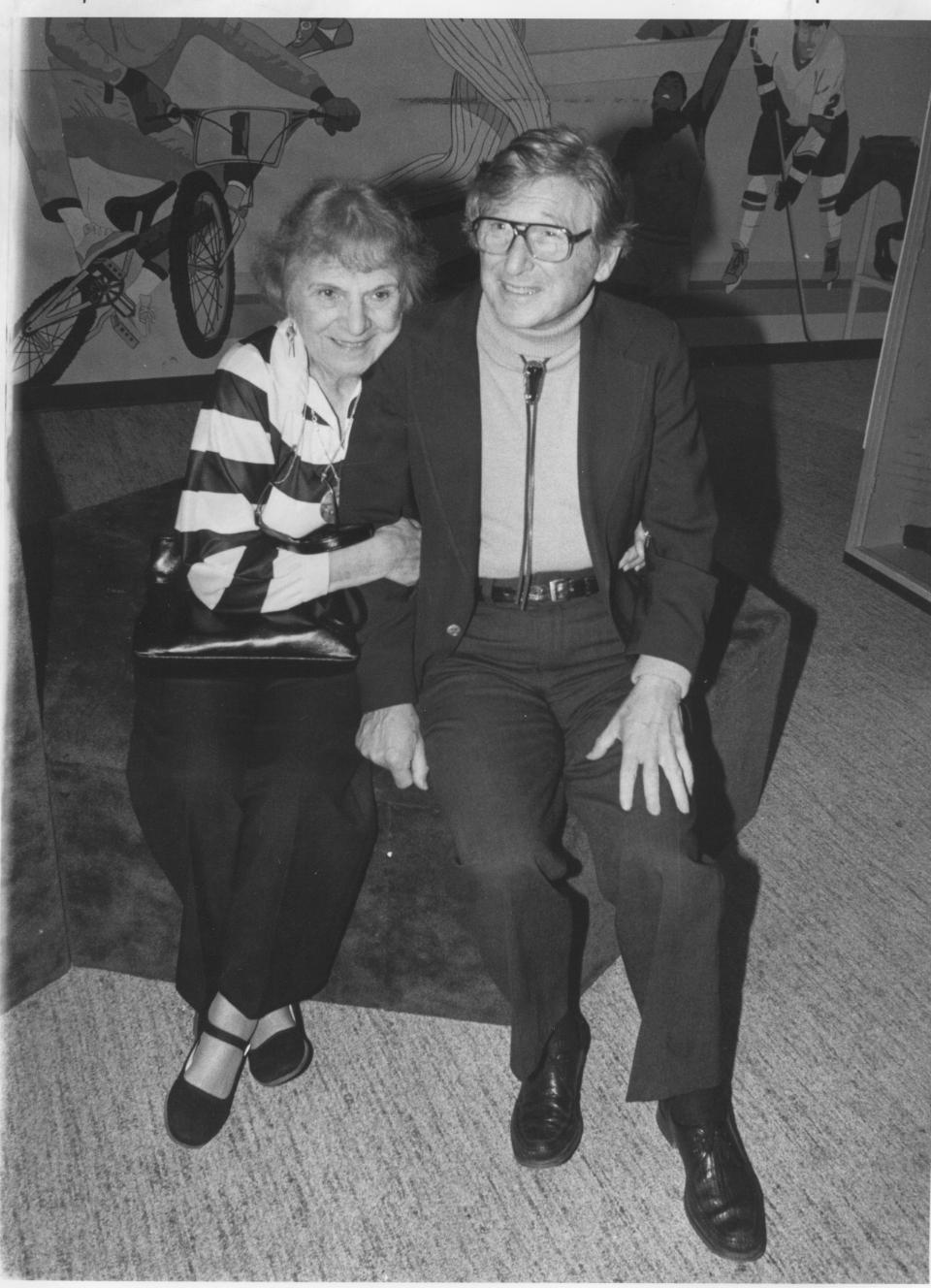
Theresa Caplan
Scholar, collector, and co-founder of Creative Playthings.

Wikimedia Commons · CC BY-SA 3.0
Theresa Caplan (1912–2010) studied early childhood development and, alongside her husband Frank, amassed a vast international toy collection that now resides in a major museum. Born June 6, 1912, she co-authored several well-regarded books examining how children play at different ages—alone or with others. One such book, *The First Twelve Months of Life*, was co-authored by Frank Caplan and focused on infants.
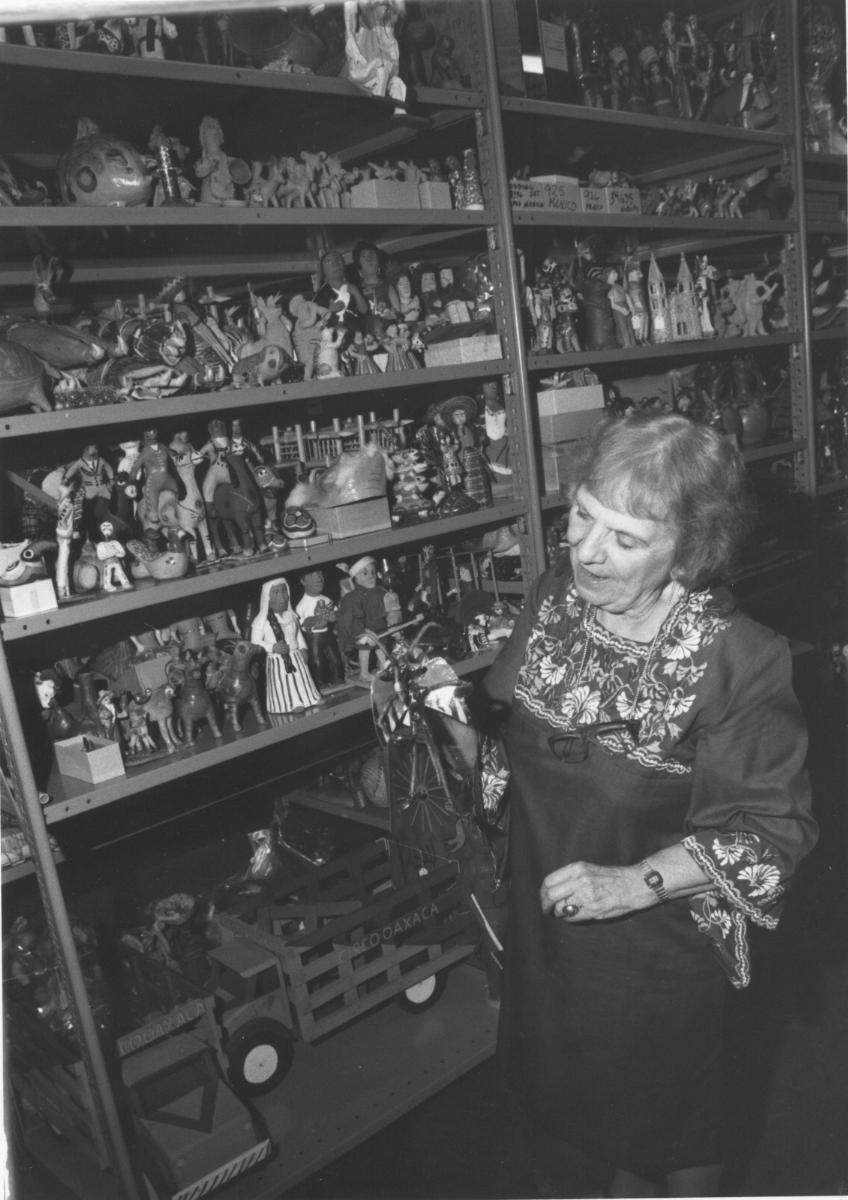
During World War II, while living in northern Manhattan, the Caplans started a workshop on 95th Street to make and sell wooden toys. From the beginning, Theresa worked with customers while Frank filled orders. Wartime shortages boosted their business: wooden toys were scarce, and the couple’s high-quality products spread by word of mouth. In 1949, they named the company Creative Playthings, which operated until its sale in 1966. As the business grew, they traveled the world for craft models, and by the 1980s had accumulated over fifty thousand toys. Their international work and collection enabled them to create a display featured at the United Nations Headquarters for the International Year of the Child in 1979.
In 1984, living in Princeton, New Jersey, the Caplans donated their collection to The Children’s Museum of Indianapolis. It was so large that thirty-two crates took nine months to unpack. After Frank died in 1988 at age seventy-seven, Theresa recalled being more active in collecting for a time, but noted the collection truly expanded after 1966, when the business sale freed Frank from financial concerns. Described as enthusiastic and extroverted, Caplan was a meticulous record-keeper: she assigned each object a unique identifier, recorded its country of origin, and separately identified every box. Her records filled twenty thousand index cards stored in twenty-eight shoeboxes by the time of the donation. Theresa died in Princeton on April 13, 2010, at age ninety-seven.
Quick Facts
- Birth Date
- 6 June 1913
- Death Date
- 2010-04-10
- Death Place
- Princeton, New Jersey, United States
- Occupation
- Founder of Creative Playthings, Toy Developer, Educator, Author, Youth Worker
- Spouse
- Frank Caplan
Facts from the source article.
Lore & Background
Theresa Caplan was born on 6 June 1912. During World War II, while living in northern Manhattan, New York City, she and her husband Frank founded a workshop on 95th Street to manufacture and sell wooden toys. War shortages increased their profits, as wooden toys were rare, and the high quality of their toys spread by word of mouth. In 1949, they named the business 'Creative Playthings', which operated until its sale in 1966.
As the business expanded, the Caplans traveled worldwide to find models for their crafts. By the 1980s, they had accumulated more than fifty thousand individual toys as models, gradually seeing themselves as collectors. Their international work and collection allowed them to produce a display featured at the United Nations Headquarters for the International Year of the Child in 1979.
In 1984, while living in Princeton, New Jersey, the Caplans donated their collection to The Children's Museum of Indianapolis. The collection was so massive that the museum needed nine months to unpack the thirty-two crates used to transport it. After Frank's death in 1988, Theresa recalled being more active in collecting for a time, but noted the collection truly expanded after 1966, when the business sale freed Frank from financial concerns. Theresa died on April 13, 2010, at age ninety-seven.
Reader's Guide
Theresa Caplan's significance lies in her dual role as a scholar of early childhood development and a pioneering collector of global toys. With her husband Frank, she authored books such as The First Twelve Months of Life, which studied children's play patterns and even compared infant behavior to adult trade unions. Their business, Creative Playthings, grew from a single small store into a notable manufacturer during World War II, capitalizing on the scarcity of wooden toys. The Caplans' collection of over 50,000 toys, built through international travel and meticulous record-keeping, was donated to The Children's Museum of Indianapolis in 1984. Theresa's detailed cataloging—using twenty thousand index cards filling twenty-eight shoe boxes—ensured each object had a unique identifier and country of origin. This collection, displayed at the United Nations in 1979, remains a lasting resource for understanding global play and childhood development.
Did You Know?
- Theresa Caplan's records for the toy collection filled twenty-eight shoe boxes with twenty thousand index cards.
- The Caplans' toy collection required thirty-two crates and nine months to unpack at The Children's Museum of Indianapolis.
- During World War II, the Caplans' wooden toy business profited from war shortages because wooden toys were rare.
The Creative Playthings Workshop
During the Second World War, Theresa and her husband Frank established a modest workshop on 95th Street in northern Manhattan, New York City, where they handcrafted and sold wooden toys for young children. From the earliest days of the venture, Theresa was deeply embedded in its daily operations—greeting customers, answering questions, and managing sales while Frank focused on completing their orders. The wartime context inadvertently worked in their favor: with wooden toys scarce across the country due to material shortages, the couple's high-quality handmade pieces became highly sought after. Word-of-mouth recommendations spread quickly, and their small shop grew into a significantly larger business. In 1949, they formalized the operation under the name Creative Playthings, which they continued to run until selling the company in 1966. As the enterprise expanded, the couple began traveling to various countries to source design models for their crafts, a practice that would gradually transform their professional identity from toy manufacturers into passionate collectors.
Building a Global Collection
What began as a practical need to source design models for their toy workshop gradually evolved into one of the most extraordinary private assemblages of children's playthings in the world. By the 1980s, Theresa and Frank had gathered more than fifty thousand individual toys representing cultures from across the globe. The international scope of both their manufacturing work and their collecting meant they could curate a display of remarkable breadth and diversity. In 1979, they independently produced an exhibition that was installed at United Nations Headquarters in New York as part of the International Year of the Child, showcasing the global richness of childhood play. In 1984, while residing in Princeton, New Jersey, the couple made the decision to donate their entire collection to The Children's Museum of Indianapolis. The sheer scale of the gift was staggering: thirty-two crates were required to transport the objects, and museum staff needed a full nine months simply to unpack and process the arrival.
Scholarship on Early Childhood Development
Beyond their hands-on work with toys, Theresa and Frank were committed scholars of early childhood development. Together they authored multiple well-regarded books that examined how children engaged in play—whether in solitary or group settings, and across different stages of growth. One notable volume, The First Twelve Months of Life, focused primarily on infant development but also incorporated observations of two-year-olds and drew comparisons with adult trade unions, reflecting the couple's interest in understanding play as a fundamental human activity across the lifespan. Their writing was grounded in direct observation and practical experience, informed by decades of watching children interact with the very toys they had helped design and manufacture. This scholarly dimension gave their work an academic rigor that distinguished them from mere toy makers or collectors, positioning them as serious contributors to the field of child development in the twentieth century.
A Meticulous Record-Keeper and Her Final Years
Those who knew Theresa described her as enthusiastic and extroverted, yet her most defining personal trait was an almost obsessive dedication to documentation. She insisted that every single object in the collection receive a unique identifier and that its country of origin be carefully recorded. Every shipping box was individually labeled and tracked. Her meticulous notes were written across twenty thousand index cards, which by the time of the donation filled twenty-eight shoe boxes. After Frank's death in 1988 at the age of seventy-seven, Theresa reflected that she had been the more active collector for a period, though she acknowledged the collection truly accelerated after 1966, when the sale of Creative Playthings freed Frank from the pressures of financial management. Theresa herself passed away in Princeton, New Jersey, on 13 April 2010, at the age of ninety-six, leaving behind a legacy that continues to serve researchers, educators, and the general public through the museum that now houses her life's work.
Gallery
Frequently Asked Questions
Who is Theresa Caplan?
Theresa Caplan (June 6, 1912 – April 13, 2010) was an early-childhood-development scholar and toy maker who, together with her husband Frank, co-founded the wooden-toy company Creative Playthings. She is also remembered for helping assemble one of the most extensive international toy collections in the world.
What is Creative Playthings and what role did Theresa Caplan play in it?
Creative Playthings was a workshop and shop on 95th Street in northern Manhattan that the Caplans opened during World War II to craft and sell wooden toys. Theresa was a co-founder and was directly involved in working with customers from the very start of the business.
What books did Theresa Caplan co-author?
She and Frank Caplan wrote several well-regarded books exploring how children engage in play at various developmental stages, whether alone or with peers. One notable title, *The First Twelve Months of Life*, focused specifically on infant development and play.
Where is the Caplan toy collection today?
The vast international toy collection that Theresa and Frank spent a lifetime gathering is now housed in a major museum. It stands as one of the most significant public collections of toys from around the world.
Why is Theresa Caplan considered important in toy history?
She bridged academic research in early childhood development with hands-on toy design, helping shape how wooden toys were made and sold in America during the 1940s and beyond. Her combined work as a scholar, collector, and entrepreneur left a lasting mark on both the toy industry and the study of children's play.
More in Toy inventors 1-24
Spotted an error? Know more?
Reader corrections go straight into our review queue. Suggest an edit · How this site is sourced