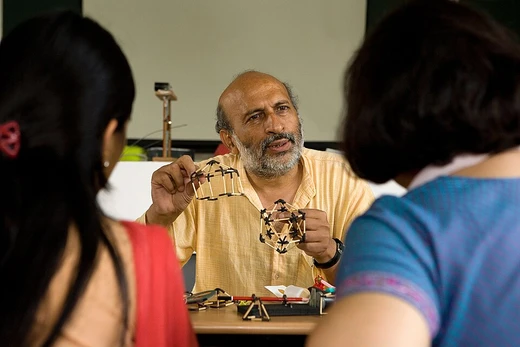
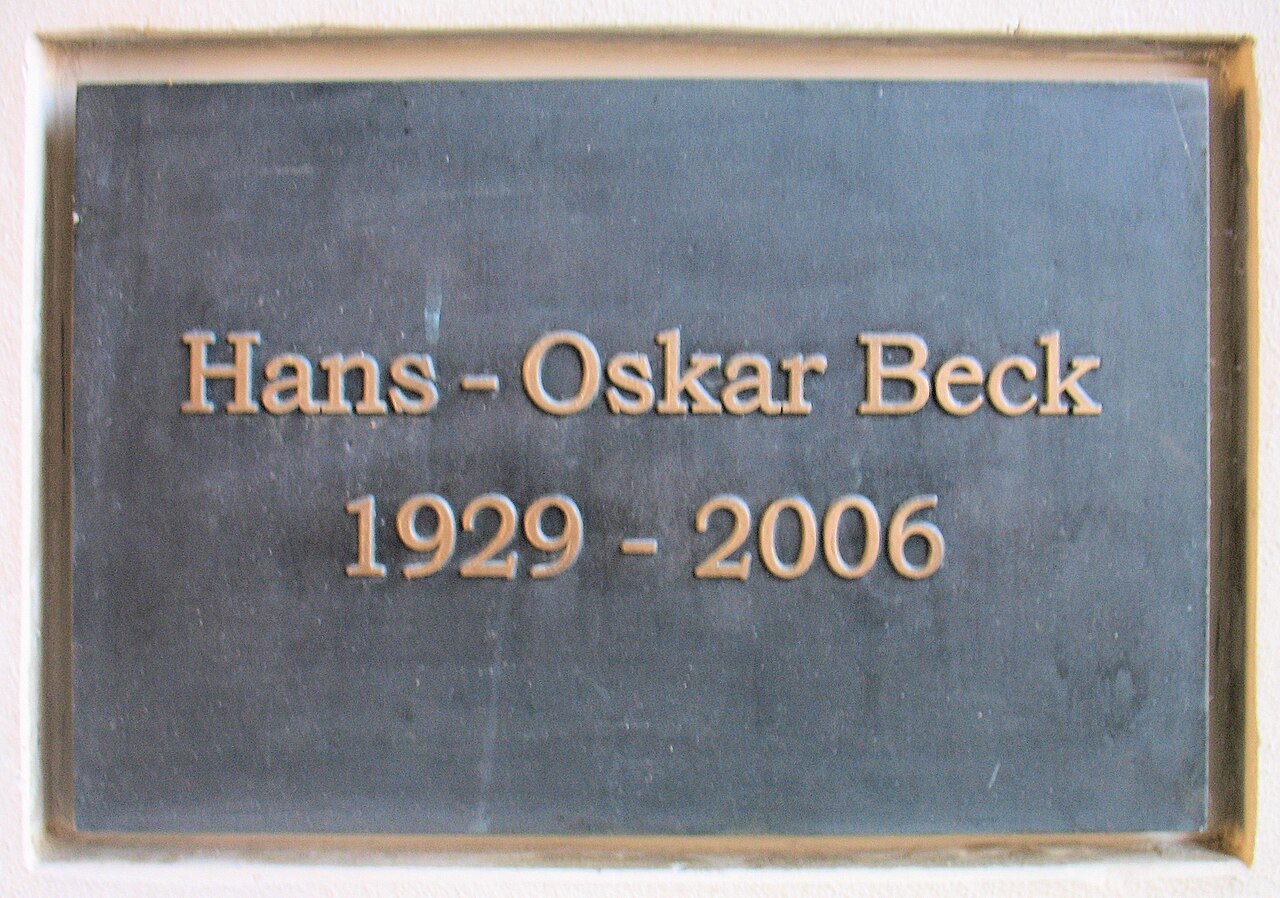
Hans Beck
German inventor of Playmobil toys.

Immanuel Giel · Public domain
Hans Beck (6 May 1929 – 30 January 2009) was the German inventor of Playmobil toys, often described as 'The Father of Playmobil'. He developed the distinctive Playmobil figure with movable parts, launched in 1974, which became a global success in 1975.
Quick Facts
- Birth Date
- 1929-05-06
- Birth Place
- Greiz, Thuringia, Germany
- Death Date
- 2009-01-30
- Death Place
- Markdorf, Baden-Württemberg, Germany
- Known For
- Inventing Playmobil toys
Facts from the source article.
Lore & Background
Hans Beck grew up in Zirndorf, a town with a history of toy manufacture. After his parents divorced and remarried, he had eight half-siblings. At about age 10, he began making toys for them, including little cars, trucks, figures, dolls, and furniture. He trained as a cabinet maker after World War II and also built model airplanes. In 1958, he presented his model airplanes to Horst Brandstätter, owner of Geobra Brandstätter, and was recruited as a product designer from 20 candidates. As a hobby, he built ultra-lightweight model aircraft and won the individual title in the F1D class at the 1966 FAI World Championships in Bilbao, Spain.
In 1971, Brandstätter asked Beck to develop toy figures for children. Beck spent three years developing figures that became Playmobil. He found only tin soldiers from the 1800s that could not move, so he created a figure under three inches with movable head, arms, and legs. He conducted research with children, who accepted the figures immediately and invented scenarios. The 1973 oil crisis led the company to focus on products that used less plastic than their existing large toys, and Beck's figurines—already in development—fit that need perfectly. The company commissioned a series with interchangeable parts and an expandable play system. Playmobil launched at the Nuremberg Toy Fair in 1974; some wholesalers initially disliked it, but a Dutch firm bought a whole year's production. Global sales began in 1975. Beck worked for Brandstätter for 40 years, retiring in 1998, and was head of research and development for 24 years. After retirement, he was in a legal battle with Brandstätter until his death, feeling he had not gained enough recognition.
Reader's Guide
Hans Beck's invention of Playmobil transformed the toy industry by introducing a simple, movable figure that encouraged imaginative play rather than prescribed scenarios. His figures, launched in 1974 and globally successful by 1975, offered a high-value product using less plastic during the 1973 oil crisis. Beck's motto—'No horror, no superficial violence, no short-lived trends'—guided the product line, though later sets included jumbo jets, aliens, and dinosaurs despite his stated opposition. His work at Geobra Brandstätter spanned 40 years, and he is credited with creating a toy that stimulated children's imagination. The legal dispute after his retirement highlights tensions over recognition, but the company acknowledged his 'outstanding services' and craftsmanship. Playmobil remains a significant chapter in toy history, making millions of children happy.
Did You Know?
- Hans Beck began making toys at age 10 for his eight half-siblings.
- He won the individual title in the F1D class at the 1966 FAI World Championships for ultra-lightweight model aircraft, held in Bilbao, Spain.
- The 1973 oil crisis led Geobra Brandstätter to focus on products using less plastic than their existing large toys; Beck's figurines, already in development, provided the perfect solution.
- Beck stated that a jumbo jet, alien figures, and dinosaurs should never be introduced as Playmobil sets, but all three were later released.
From Workshop to Toy Factory
Hans Beck was born on 6 May 1929 in Greiz, Thuringia, but his formative years unfolded in the small town of Zirndorf, a community with a long tradition of toy production. His childhood was shaped by family upheaval: his parents divorced and remarried, leaving him and his sister surrounded by eight half-siblings. It was for these younger children that a ten-year-old Beck began crafting small cars, trucks, dolls, and miniature furniture. Despite this early hands-on engagement with toy-making, he never envisioned a career as a designer. As a teenager at the close of World War II, he trained as a cabinet maker and took up model airplane construction as a passion. His dedication to ultra-lightweight indoor-flying aircraft earned him the individual F1D title at the 1966 FAI World Championships in Debrecen, Hungary. The pivotal moment came in 1958, when he brought his model airplanes to Horst Brandstätter, owner of the local Geobra Brandstätter toy company. Chosen from twenty candidates, Beck was hired as a product designer, setting him on the path that would reshape children's play worldwide.
Three Years of Quiet Innovation
In 1971, Horst Brandstätter tasked Beck with creating a new line of toy figures for children. Beck spent the next three years in development, first surveying the existing market and finding only rigid tin soldiers that had remained essentially unchanged since the nineteenth century. His breakthrough was a figure just under three inches tall whose head, arms, and legs could all be articulated. He described his design as deliberately simple, believing it gave children the space to project their own stories. To test the concept, he placed the prototypes in children's hands without explanation; the kids immediately accepted them and began inventing scenarios, never tiring of the play. Brandstätter remained skeptical but permitted Beck to continue. The 1973 oil crisis then reshaped the company's priorities: with petroleum-derived plastics surging in cost, Geobra Brandstätter needed products that yielded greater revenue per unit of raw material. Beck's compact, interchangeable-part figurines fit that brief perfectly. The company commissioned a full system of expandable play built around small, high-value pieces. Beck's guiding philosophy was that the toy should never dictate how a child plays, but instead spark their imagination.
From Nuremberg to the World
The Playmobil line debuted at the 1974 Nuremberg Toy Fair, but the reception was lukewarm. Several toy wholesalers dismissed the new figures, and Beck observed that people simply failed to grasp the breadth of play they enabled. The turning point arrived when a Dutch distributor committed to purchasing an entire year's production, validating the product's commercial potential. By 1975, Playmobil was being sold in markets around the globe. The original sets depicted Native Americans, construction workers, and medieval knights, and the range has since grown to encompass fairies, firefighters, prisoners, and airport security personnel, among many others. Throughout the expansion, Beck held fast to a personal creative code: no horror, no superficial violence, and no fleeting trends. He had publicly declared that jumbo jets, alien figures, and dinosaurs should never appear in the Playmobil catalogue. Ironically, all three categories have since been released as official sets, a testament to the line's evolution well beyond its creator's original boundaries.
A Complicated Legacy
Beck devoted four decades to Geobra Brandstätter, serving as head of research and development for twenty-four of those years before retiring in 1998. Yet his relationship with the company did not end amicably. During his retirement, he became embroiled in a legal dispute with Brandstätter, driven by a deep sense that he had not received adequate recognition for his contributions. The conflict persisted until his death. Hans Beck passed away on 30 January 2009 in Markdorf am Bodensee at the age of seventy-nine, following a serious illness. In a posthumous statement, Geobra Brandstätter acknowledged that he had rendered outstanding services to the company in a special way, praising his enormous craftsmanship talent and great qualification. The company noted that Beck and Playmobil together wrote an important chapter in toy history and made millions of children happy. Widely remembered as the Father of Playmobil, Beck's story carries the bittersweet tension of a creator whose invention became a global phenomenon while his personal recognition remained contested until the very end.
Gallery


Frequently Asked Questions
Who is Hans Beck?
Hans Beck was a German toy designer born in 1929 in Greiz, Thuringia, who is widely credited as the creator of the Playmobil line. He is commonly referred to as "The Father of Playmobil" for conceiving the iconic figurine system.
What did Hans Beck invent?
Beck designed the Playmobil figure, a small articulated toy character with movable arms and legs, which debuted in 1974. This jointed miniature became the foundation of an entire toy universe.
When did Playmobil first hit the market?
The Playmobil figure was introduced in 1974, and the product line achieved major international success the following year in 1975. It quickly grew into a globally recognized toy brand.
Where was Hans Beck born and where did he die?
He was born on 6 May 1929 in Greiz, in the Thuringia region of Germany, and passed away on 30 January 2009 in Markdorf am Bodensee. His life spanned from a small Thuringian town to the shores of Lake Constance.
Why is Hans Beck considered important in toy history?
Beck's creation of the jointed Playmobil figure gave children a versatile, affordable play system that rivaled larger action-figure brands. The line's 1975 breakout made it a worldwide phenomenon and cemented his legacy in the toy industry.
More in Toy inventors 1-24
Spotted an error? Know more?
Reader corrections go straight into our review queue. Suggest an edit · How this site is sourced