Amedeo Amadei
Another name in the granata ledger, bound to a city that never forgets its dead.
Amedeo Amadei is remembered among the many players who wore the granata shirt across Torino FC's long and storied history. In a club whose identity is inseparable from the 1949 Superga tragedy and the golden 'Grande Torino' that preceded it, every name in the squad book carries weight — a thread in a tapestry of devotion, loss, and rebuilding that stretches from the club's 1906 founding to the present day.
This entry is an unofficial, fan-written tribute. It situates Amadei within the broader narrative of Torino's identity: a club forged in working-class Turin, defined by its deep red (granata) colours, and shaped forever by the night of 4 May 1949 when the entire first team perished in a plane crash at the Superga hill.
Quick Facts
- Affiliation
- Torino FC
- Role
- Player
- Club founded
- 1906 (as Torinese FC; renamed Torino FC in 1933)
- Home ground
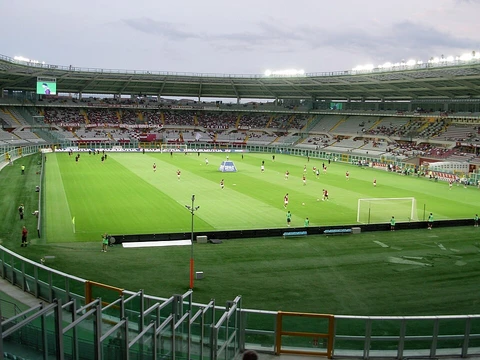
- Stadio Olimpico Grande Torino (and historically Stadio Filadelfia)
- Nickname of the club
- Il Toro; I Granata
Lore & Background
Torino FC has always been more than a football club to the people of Turin. Born in 1906 from a split in the city's football community, the Granata carried the working-class pride of the industrial capital through two world wars, a fascist-era rebranding, and the most devastating sporting tragedy in Italian football history. For players who donned the granata shirt in the decades surrounding Superga, the weight of expectation was inescapable: you were expected to honour the dead, to carry the 'Grande Torino' legacy forward, to be part of something larger than a single season's results.
In that context, a player like Amadei is understood not merely by statistics but by era, by the colour of the shirt, by the city that watched. Torino's identity is collective — the club belongs to the fans, to the neighbourhoods, to the memory of those lost on the hill. Every player who laced up the granata boots became, in the eyes of the tifosi, a custodian of that memory.
This unofficial entry honours that tradition. It does not claim exhaustive biographical detail, but it places the name within the emotional and historical architecture of a club that has always been, above all, a symbol of Turin itself.
Reader's Guide
1906–1933: The Founding Years. Torino is born from a schism in Turin's football scene, establishing itself as the city's working-class club. Key figures include the early administrators and players who built the Filadelfia ground. This era shaped the club's identity as rooted in the city's industrial soul, a 'people's team' before the word was fashionable.
1940s: The Grande Torino and Superga. Under coach Vittorio Pozzo and captain Valentino Mazzola, Torino became a dominant force, winning consecutive Scudetti. The 4 May 1949 plane crash at the Superga hill killed the entire first team and staff. This is the emotional spine of the club — the wound that defines every subsequent season. The loss of Mazzola, Sívori, and the rest made 'Grande Torino' a sacred name.
1950s–1960s: Rebuilding and Resilience. Torino rebuilt its squad from scratch, a process that took years. Players like Giuliano Sarti and Franco Ossola helped restore competitiveness. The club's identity shifted from invincibility to endurance — the story of a city that refused to let its team die.
1970s–present: The Modern Era. Torino has cycled through Serie A and B, but the granata identity persists. The rivalry with Juventus, the devotion of the Curva Sud, and the annual remembrance of Superga keep the club's soul intact. Each generation of players inherits the same unspoken contract: wear the red, honour the dead, serve the city.
Did You Know?
- Torino FC was founded in 1906 as Torinese Football Club and adopted its current name in 1933, making it one of Italy's oldest continuously operating clubs.
- The Superga disaster of 4 May 1949 remains the deadliest sporting accident in Italian football history, claiming the lives of the entire first team and several staff members.
- Torino's deep red 'granata' colour was chosen in part to distinguish the club from Juventus' black-and-white stripes, embedding the rivalry in the very fabric of the kits.
- The club's traditional home, Stadio Filadelfia, was demolished in 1990, and Torino has since played at the Stadio Olimpico Grande Torino, a move that still stirs emotion among long-time supporters.
More in Club History
Elsewhere in Torino FC
Spotted an error? Know more?
Reader corrections go straight into our review queue. Suggest an edit · How this site is sourced