Torino FC Codexery

Stadio Filadelfia

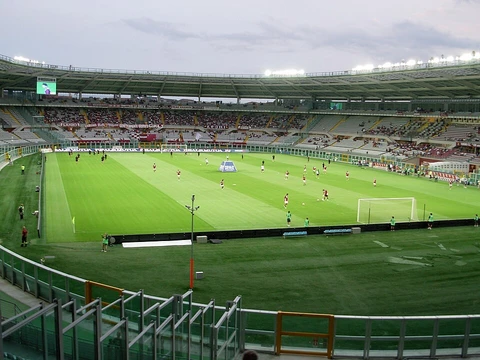
Historic home of Torino FC, rebuilt in 2017 as a 4,000-seat training and museum complex.

Stadio Filadelfia

via Wikipedia: Stadio Filadelfia · see source

The Stadio Filadelfia, originally known as Campo Torino (or simply, Il Fila) is a small multi-use stadium in Turin, Italy, situated in Borgo Filadelfia in the Lingotto district. Designed by the former President of Foot-Ball Club Torino, Count Enrico Marone Cinzano, the ground was opened in 1926 and hosted Torino's home matches until 1962–63, with the last official match on 19 May 1963. In 1963 it was abandoned in favour of the Stadio Comunale, becoming Torino's training ground for the first team, then later, the youth team. After partial degradation during the 1980s and 1990s, the ground was partially demolished in 1998. Reconstruction began in 2015 and was completed on 24 May 2017.

Location
Borgo Filadelfia in the Lingotto district, Turin, Italy
Opened
1926
Tenant
Torino FC
Approximate capacity
≈ 30,000
Status
Reconstructed and reopened 24 May 2017

Verified Timeline

192619271932194319581959196219631970197319891998201120152017

Lore & Background

The stadium was designed by Count Enrico Marone Cinzano, president of Foot-Ball Club Torino. Construction took five months and cost just under two and a half million lire. The inauguration took place on 17 October 1926 with a friendly between Torino and Fortitudo Roma, in the presence of Crown Prince Umberto II, Princess Mary Adelaide, and an audience of 15,000 spectators. The stadium hosted six of Torino's seven Serie A titles (not counting the one revoked in 1927) and was the site of 100 consecutive unbeaten matches from 17 January 1943 to the Superga air disaster, including the famous 10–0 victory over Alessandria. On 13 July 1943, during World War II, the Filadelfia was bombed; the field and stands near via Giordano Bruno were damaged. After the war, renovations were carried out by club president Ferruccio Novo. The last official match at the stadium was on 19 May 1963, a 1–1 draw against Napoli.

In Their Own Story

The stadium hosted Torino's home matches until 1962–63. It was the site of six of their seven Serie A titles (not counting the one revoked in 1927) and the stage they remained unbeaten for six years, 100 consecutive matches, from 17 January 1943 to the Superga air disaster, including the famous 10–0 victory over Alessandria (still a record in Serie A). It was here that Oreste Bolmida performed (the trumpeter fan then made famous by the movie Ora e per sempre). On 13 July 1943, in the middle of World War II, the Filadelfia was also bombed. Of the damaged parts were the field (used by the Allies to play baseball) and the stands near via Giordano Bruno. Despite the coverage the grandstand remained intact, although the metal beams were removed, probably to supply the arms industry, and replaced with wood. The Filadelfia became unusable for a long time, and the 1943–44 season was played at the Stadio Motovelodromo Umberto I. Torino would later move to the Stadio Mussolini, the future Stadio Comunale. After the war, renovations were carried out by the new club president Ferruccio Novo. After the Superga disaster, Torino's president Ferruccio Novo guaranteed the stadium to the Italian Football Federation, and even thought of possibly demolishing it. In the post-war period the Filadelfia area became residential, and it was proposed to demolish the stadium to build new buildings. In 1959 the stadium became 'public space', and the project failed. In the 1958–59 season, Torino, under the name Talmone Torino for sponsorship reasons, moved to the Stadio Comunale: the season ended with the club's first relegation to Serie B. The following year, the club returned to the Filadelfia out of superstition and the ground once again became Torino's home for several years. On 19 May 1963, the last official match was played at the stadium, a league fixture against Napoli, finishing 1–1, with goals from Enzo Bearzot and Gianni Corelli. The move to the 'Comunale,' a stadium capable of holding 65,000 people standing, was completed in 1963–64. In 1970 the first attempt was made to recover the Filadelfia when Torino's president was Orfeo Pianelli; the Società Civile Campo Torino began the renovation project. It was proposed that the first team would continue to train at the ground and allow for the construction of a gymnasium. However, in 1973 the project was cancelled because the ground was still classified as 'public space'. Pianelli's idea involved the demolition of the structure, the construction of playing fields and accommodations for the youth team. The original plan failed because Pianelli received death threats. On 18 October, a building permit was issued, but only for minor renovations, provided for an annual fee. Torino continued to train here up until 1989, when they moved to a modern structure in Orbassano, leaving the training ground to the youth team. The maintenance was abandoned, however, and in a few years the stands deteriorated. In the 1980s the degradation had an exponential growth, mainly because of the concrete used in construction, leading to a partial collapse of the structures. Under club chairman Urbano Cairo the ceremony of laying the first stone of the new Filadelfia stadium took place on 17 October 2015. The project, initiated by the Stadio Filadelfia Foundation, was established in 2011 with the aim of completely redeveloping the site. The new Filadelfia was to become the new headquarters of the club, hold 4,000 spectators, two first team training pitches, youth team facilities, and the club museum. It was inaugurated on 24 May 2017.

Reader's Guide

The original stadium covered an area of 38,000 m² enclosed by a wall, with two stands and a capacity of 15,000 (1,300 in the central grandstand, 9,500 on the bleachers, 4,000 in the parterre). In 1932 the grandstand was expanded, bringing total capacity to 30,000. The bleachers were cement; the stands were wooden and cast iron built in Art Nouveau style. The facade was red brick with columns and large windows with white frames. The field measured 110x70 meters and had a drainage system. Under the stands were the caretaker's apartment and fourteen rooms for players, referees, infirmary, club officials, and a refreshment hall. The reconstructed stadium, inaugurated on 24 May 2017, holds 4,000 spectators and includes two first team training pitches, youth team facilities, and the club museum.

Did You Know?

More in Stadium & Culture

Related in Torino FC

Links follow this subject's own source article.

Elsewhere in the Torino FC universe

Spotted an error? Know more?

This is a living reference — every entry is fact-audited, and reader corrections feed straight into our audit queue. Suggest an edit · See this site's audit record

Comments

Loading…
Open in the interactive codex →