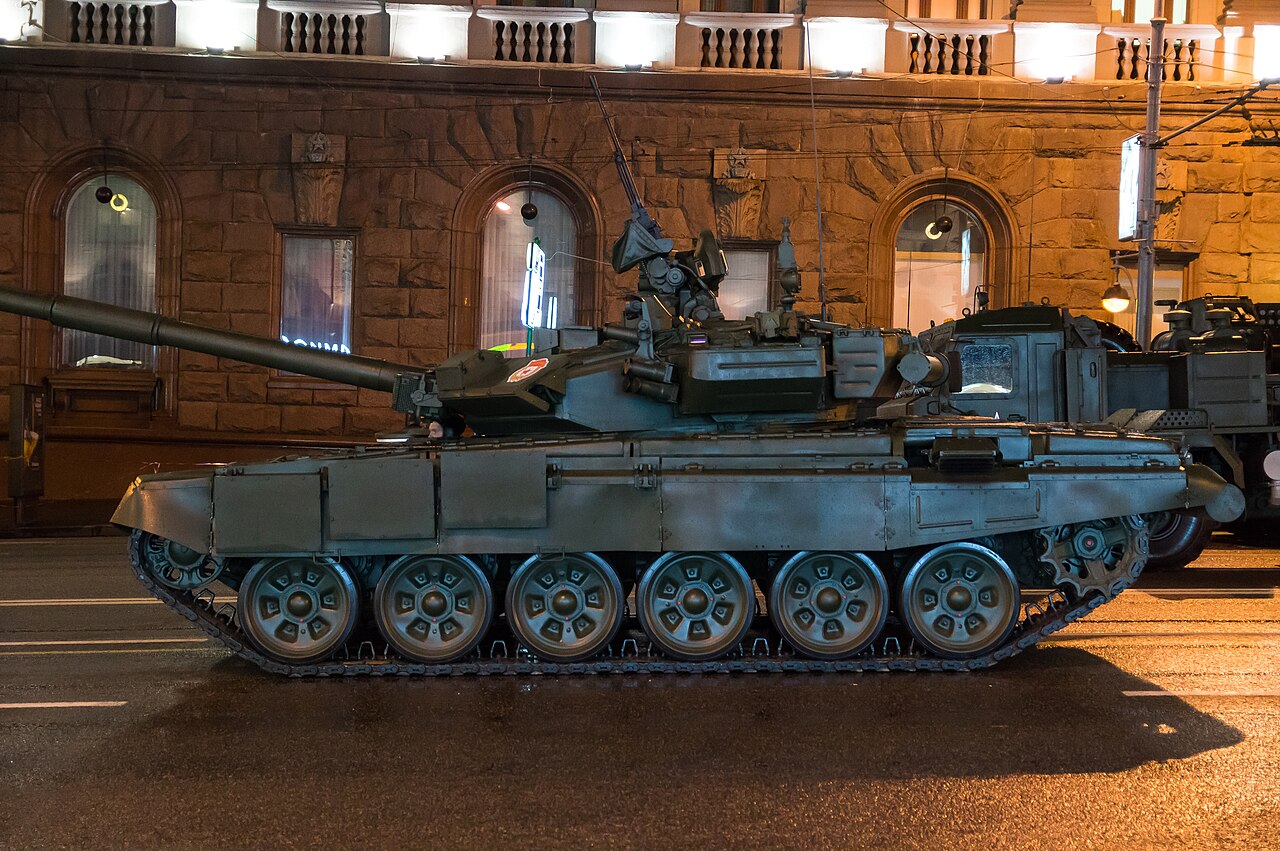
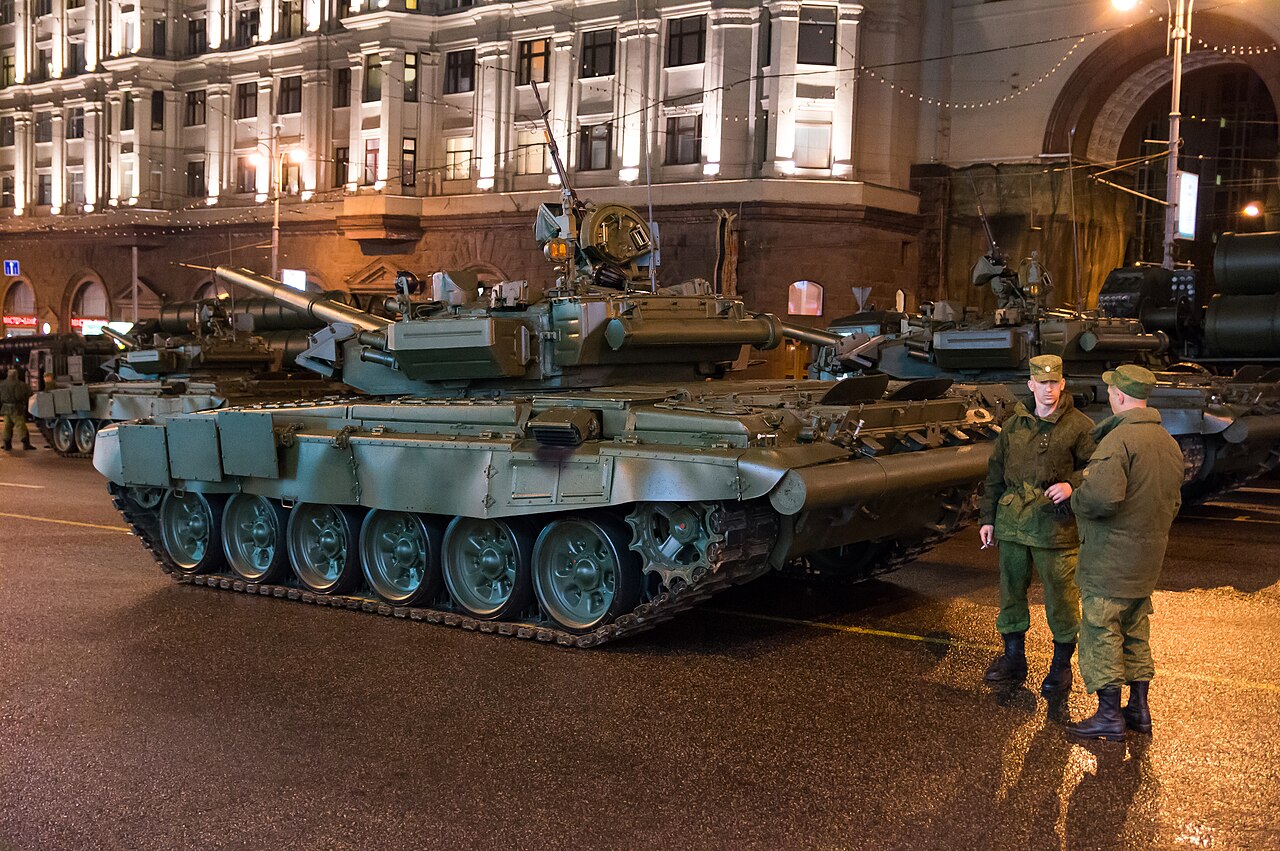
T-90
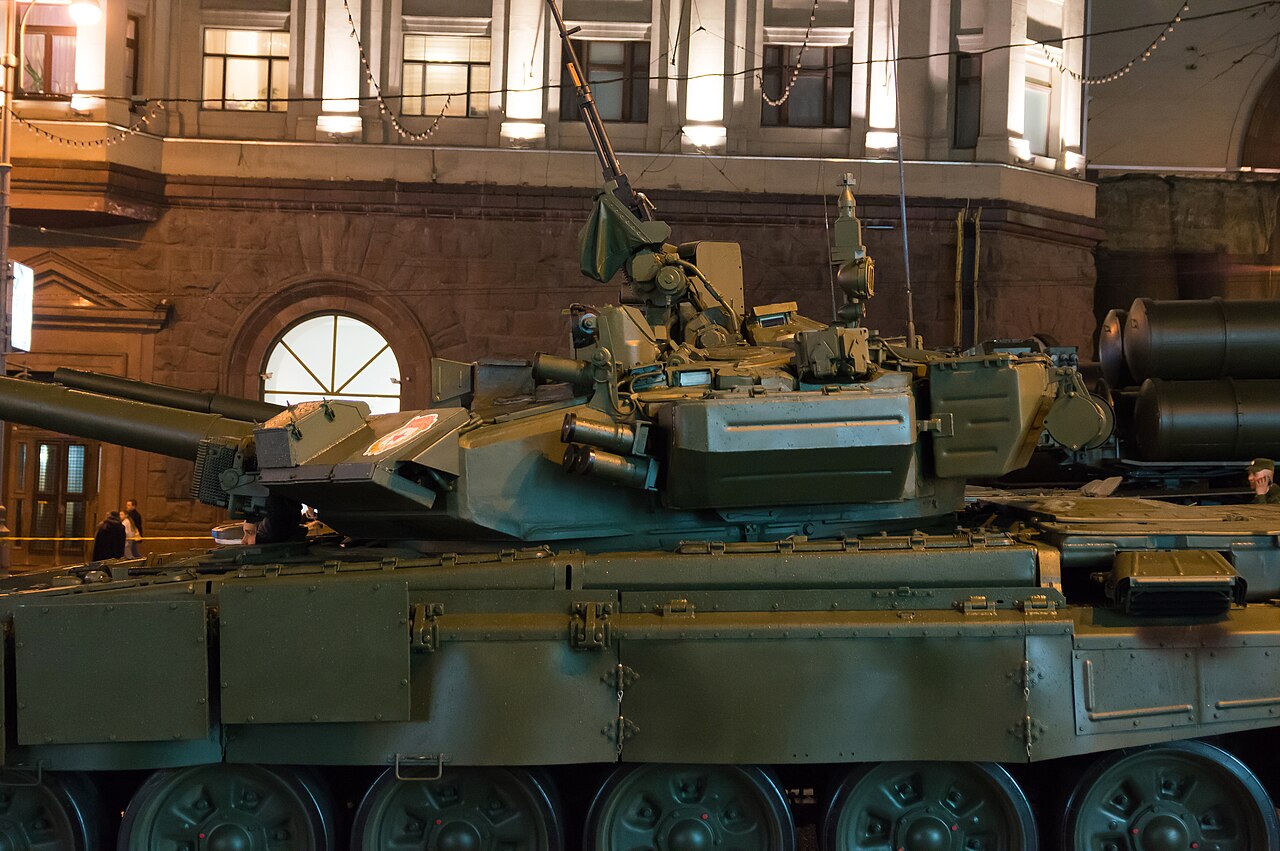
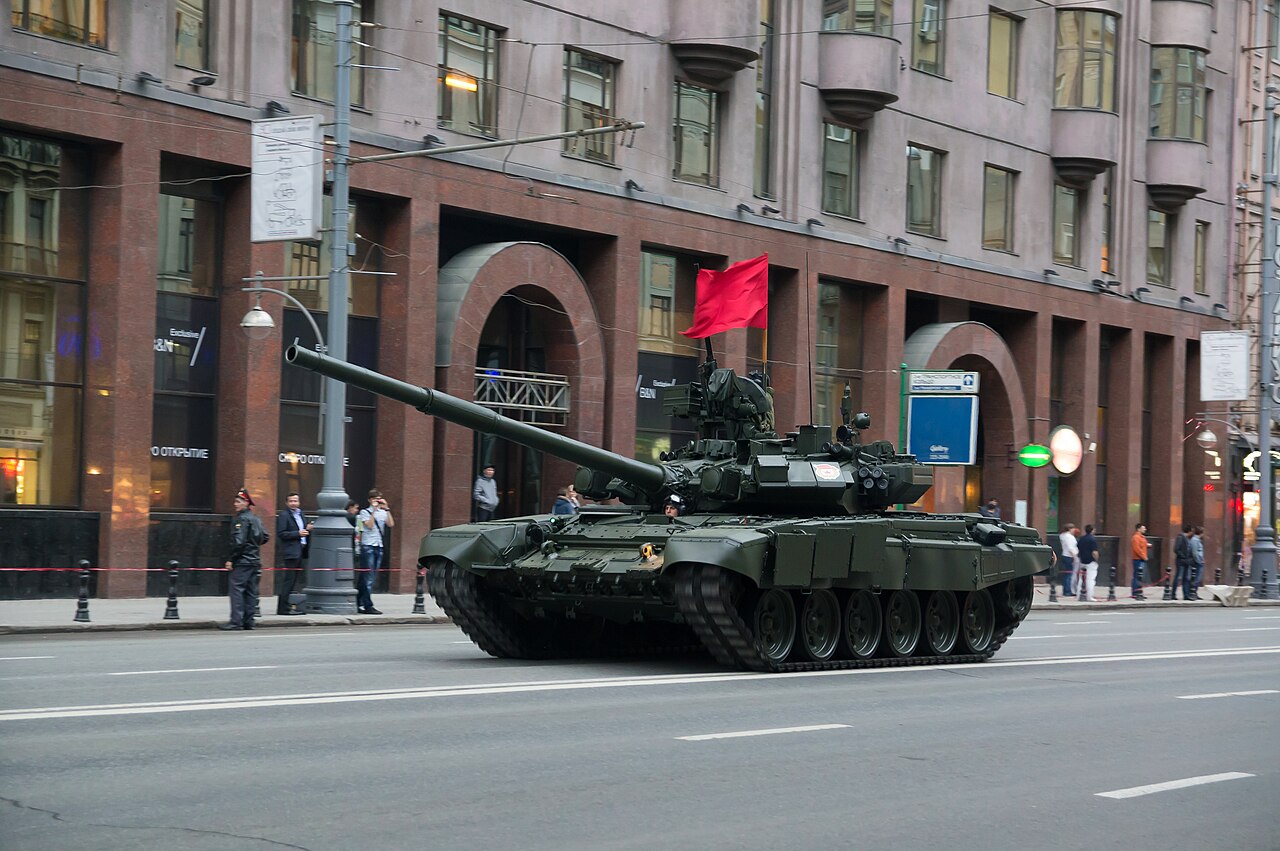
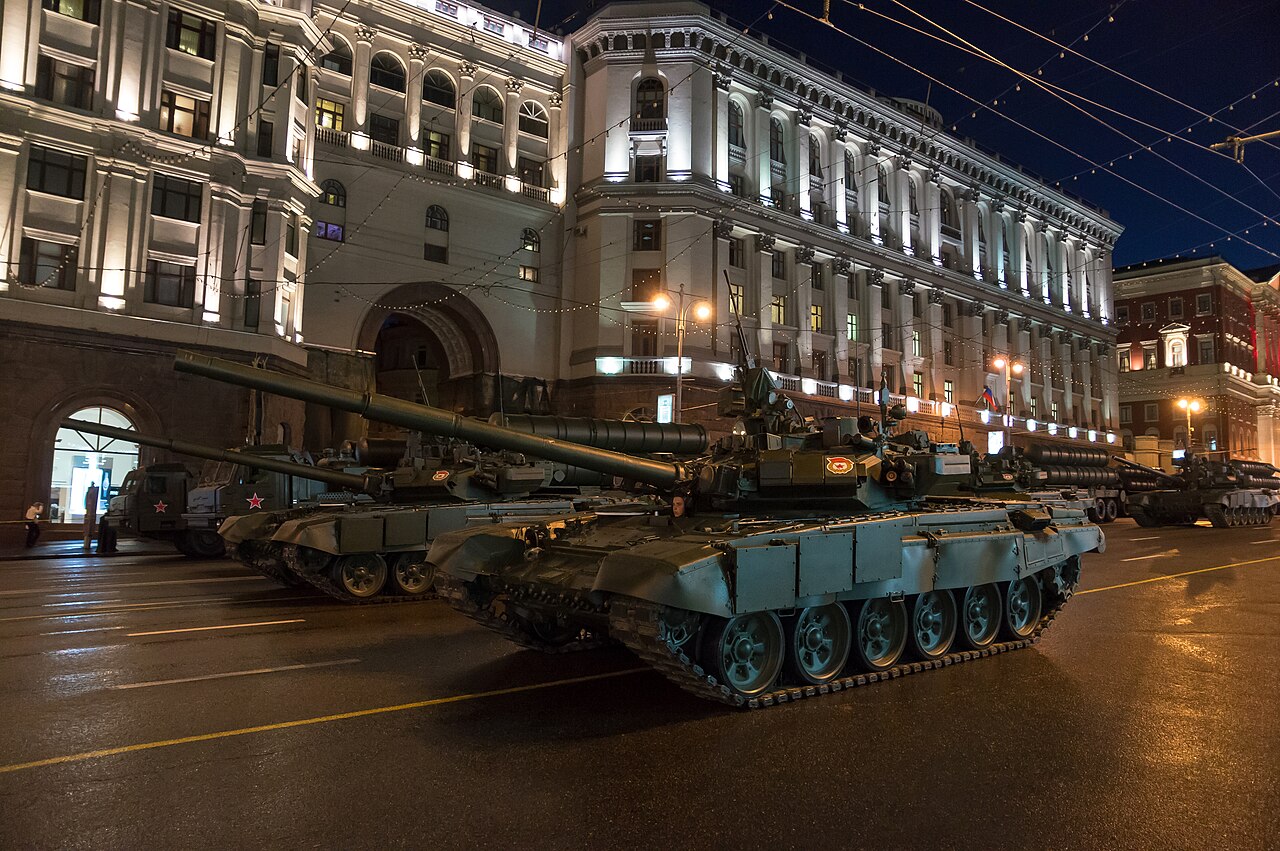
Third-generation Russian main battle tank derived from the T-72.

Vyacheslav Argenberg · CC BY 4.0
The T-90 is a third-generation Russian main battle tank developed from the T-72 platform, designed to replace the T-64, T-72, and T-80 series. Its origins lie in a Soviet program that selected the cost-effective and simple T-72 as the basis for a new generation of tank. The Kartsev-Venediktov Design Bureau in Nizhny Tagil prepared two proposals: the Object 188, a straightforward upgrade of the T-72B, and the more advanced Object 187, which featured major hull and turret redesigns. Development was approved in 1986, with prototypes completed by 1988. The Object 188, engineered under V.N. Venediktov, integrated the T-80U’s 1A45 fire-control system and was initially designated the T-72BM. After trials beginning in 1989, the Soviet Ministry of Defense recommended adoption in March 1991, and work on the Object 187 ceased. The T-90 uses a 125mm 2A46 smoothbore gun, an upgraded V-84MS engine producing 840 hp, and a gunner’s thermal sight. Protection includes steel and composite armor, Kontakt-5 explosive reactive armor, smoke grenade dischargers, and the Shtora infrared ATGM jamming system. Low-level production began at Uralvagonzavod in 1992, with around 120 tanks delivered to the Russian Ground Forces before an upgraded version resumed in 2004. The tank saw its alleged first combat in the 1999 Dagestan war, and was later used in the Syrian civil war from 2017, the Donbas war in 2014, and the full-scale Russo-Ukrainian war after 2022. The Syrian Arab Army and Azerbaijani Land Forces also operated the T-90 in their respective conflicts.
- type
- Main battle tank
- origin
- Russia
- designer
- Kartsev-Venediktov Design Bureau, Uralvagonzavod
- armor
- Steel and composite, Kontakt-5 ERA, Shtora ATGM jamming system
Lore & Background
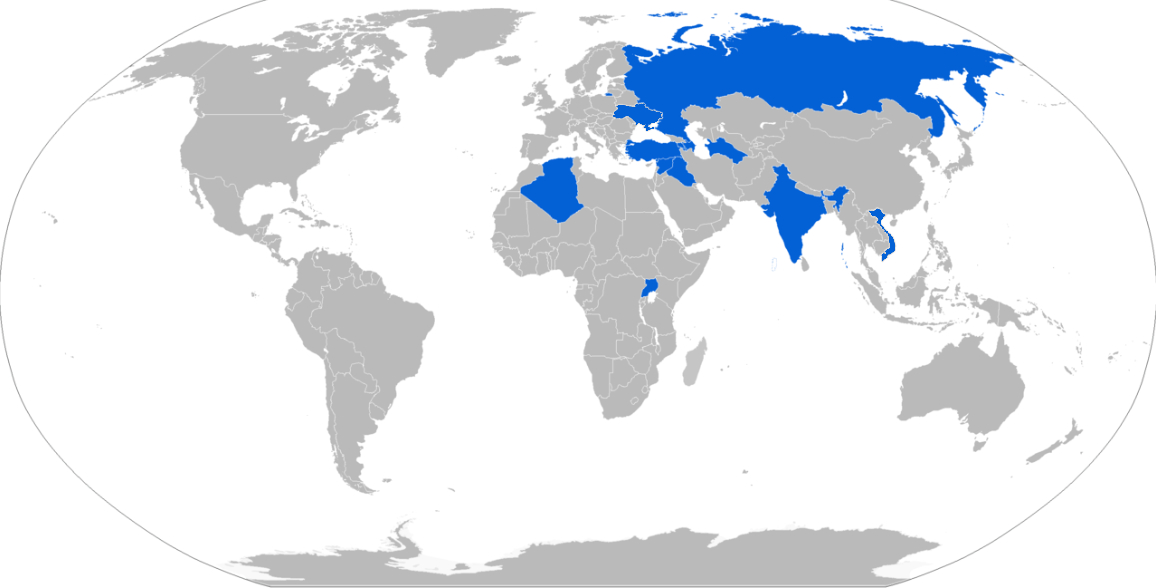
The T-90 is a third-generation Russian main battle tank developed from the T-72 platform by the Uralvagonzavod design bureau in Nizhny Tagil. It was designed to replace the T-72, T-64, and T-80 series, with the T-72 chosen as the basis for its cost-effectiveness and simplicity. The tank entered Russian service in 1992. Its armament consists of a 125mm 2A46 smoothbore main gun, paired with the 1A45T fire-control system derived from the T-80U. Protection includes steel and composite armor, Kontakt-5 explosive reactive armor, smoke grenade dischargers, and the Shtora infrared jamming system against anti-tank guided missiles. The T-90 is powered by an upgraded V-84MS multi-fuel engine producing 840 horsepower. Early production models used a cast turret, while later variants incorporated a welded turret for improved protection and internal space. The tank saw its first alleged combat in the 1999 war in Dagestan, and was later used by Russian forces in Syria from 2017, in the Donbas conflict in 2014, and during the full-scale invasion of Ukraine in 2022. Export operators include India, which began receiving T-90S models in 2001, and the Syrian Arab Army and Azerbaijani Land Forces, both of which used the tank in combat.
Reader's Guide
The T-90 represents a cost-effective evolution of the T-72 line, incorporating the fire-control system and other features from the T-80U while avoiding the T-80's problematic gas turbine engine. Its adoption was influenced by the heavy losses of T-80s in the First Chechen War and the logistical burden of maintaining multiple tank types. The T-90's export success, particularly to India, sustained production when domestic orders faltered. Upgrades over time included welded turrets, more powerful engines, and improved thermal sights, such as the Irbis-K system. The tank's significance lies in its role as Russia's primary modern main battle tank during the post-Soviet period, seeing action in multiple regional conflicts and forming the backbone of Russian armored forces alongside upgraded T-72s.
Did You Know?
- The T-90 was initially designated T-72BM before being renamed to distance it from the T-72's poor performance in Chechnya.
- The T-90 uses the Shtora infrared anti-tank guided missile jamming system as a protective measure.
- India's Heavy Vehicles Factory license-manufactures the T-90 under the name Bhishma.
Soviet Origins and the Two-Track Design Race
The T-90 traces its lineage to a broad Soviet initiative intended to supersede the T-64, T-72, and T-80 families of main battle tanks. The T-72 chassis was selected as the foundation because of its affordability, mechanical simplicity, and strong automotive performance. Venediktov, made its most significant leap by grafting the T-80U's 1A45 fire-control system onto the T-72 platform.
Production in a Fragmented Post-Soviet Landscape
The collapse of the Soviet Union dealt a severe blow to Russian tank manufacturing. The Russian Ministry of Defense responded by committing to a single tank type to relieve the logistical strain of maintaining three separate production lines. The T-80U's gas turbine engine drew criticism for its voracious fuel appetite and reliability problems, compounded by heavy losses in the First Chechen War. The T-90, which never saw action in Chechnya, escaped that media scrutiny, and its fresh designation helped distance it from the T-72's tarnished reputation.
A Combat Record Spanning Four Decades and Multiple Theaters
The tank's operational history then stretched across multiple theaters over more than two decades. Most recently, Russian T-90s featured in the full-scale Russo-Ukrainian war that followed the 2022 Russian invasion of Ukraine. Notably, the tank was absent from the First Chechen War, which shielded it from the intense public criticism that befell the T-72 and T-80 after their heavy losses in that earlier conflict. This absence allowed the T-90 to build its combat reputation in subsequent engagements rather than being defined by a single high-profile defeat.
Export Push and the Indian Bhishma Program
Facing a sharp decline in domestic orders, Uralvagonzavod secured government approval to market the T-90 abroad in the mid-1990s. India's Heavy Vehicles Factory in Avadi already held a license to produce the T-72 under the designation Ajeya, giving the country existing infrastructure for heavy armor manufacturing.
Common Misconceptions (Editorial)
Some believe the T-90 was an entirely new design, but it was initially designated T-72BM, showing it was developed directly from the T-72 platform and renamed to distance it from that tank’s poor performance in Chechnya.
Why It Matters (Editorial)
The T-90 matters not only as Russia’s primary main battle tank for export and domestic use, but also as a testament to the enduring legacy of the T-72 chassis. Its continued production and upgrade, including licensed manufacture in India as the Bhishma, highlight how a design born from necessity still shapes modern armored warfare.
Gallery
Frequently Asked Questions
What is the T-90?
The T-90 is a third-generation Russian main battle tank built as an evolution of the T-72 chassis. It was conceived to retire the older T-64, T-72, and T-80 families from Russian armored brigades.
In which conflicts has the T-90 seen combat?
It has been deployed in the Syrian civil war and the Russo-Ukrainian war, giving it real-world fire experience in at least two major post-Soviet engagements.
Why is the T-90 considered important in tank history?
As the vehicle that consolidated three earlier Soviet/Russian tank lines into a single platform, it became the backbone of Russia's third-generation armored doctrine. Its continued front-line use more than three decades after introduction marks it as a long-serving workhorse.
More in Tanks 1-21
Spotted an error? Know more?
This is a living reference — every entry is fact-audited, and reader corrections feed straight into our audit queue. Suggest an edit · See this site's audit record