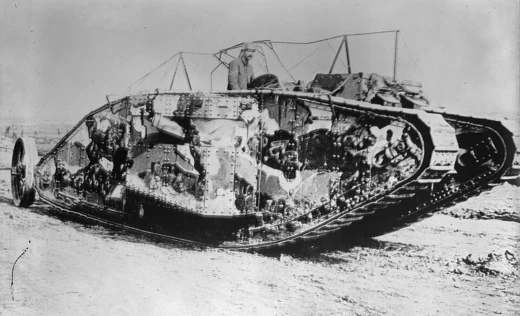
T-34
Soviet medium tank that shaped Eastern Front warfare.

Gary Lee Todd, Ph.D. · CC0
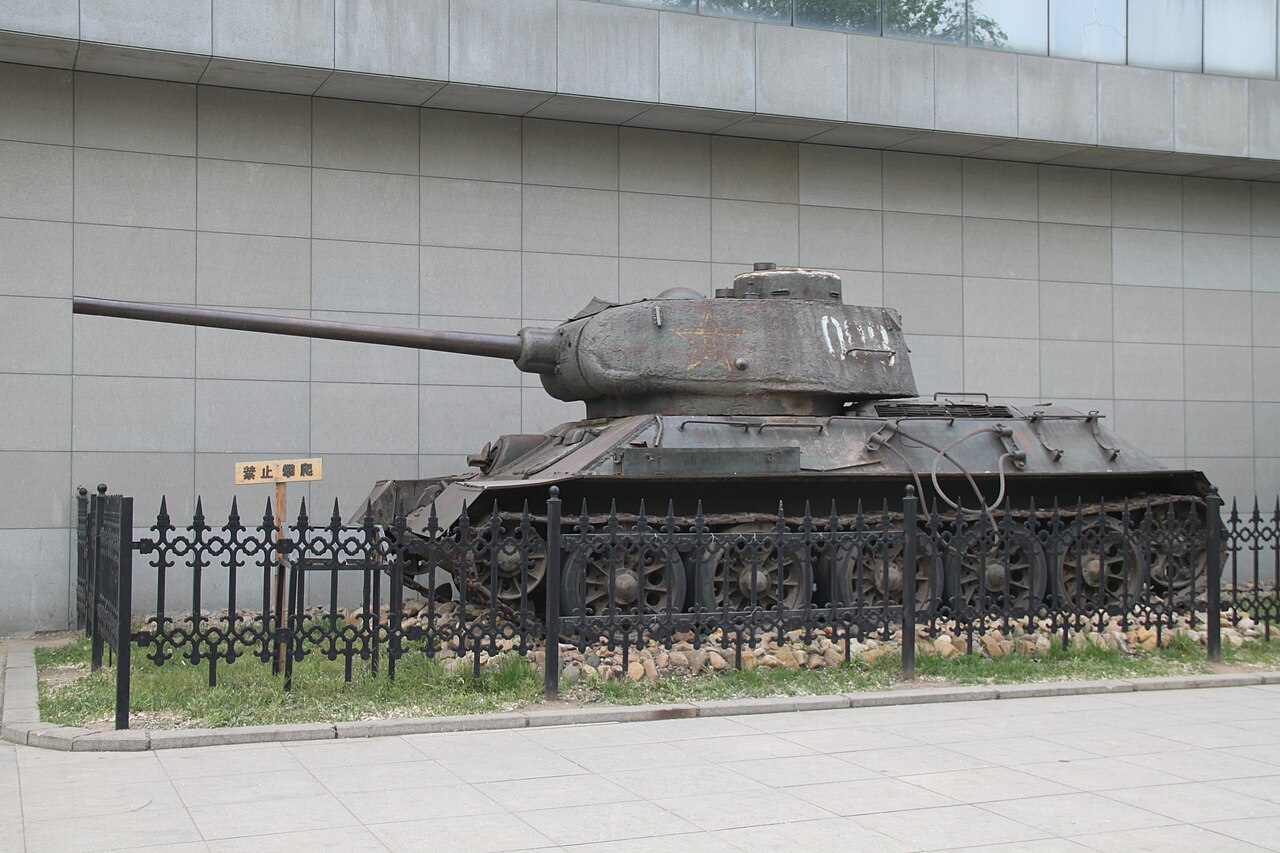
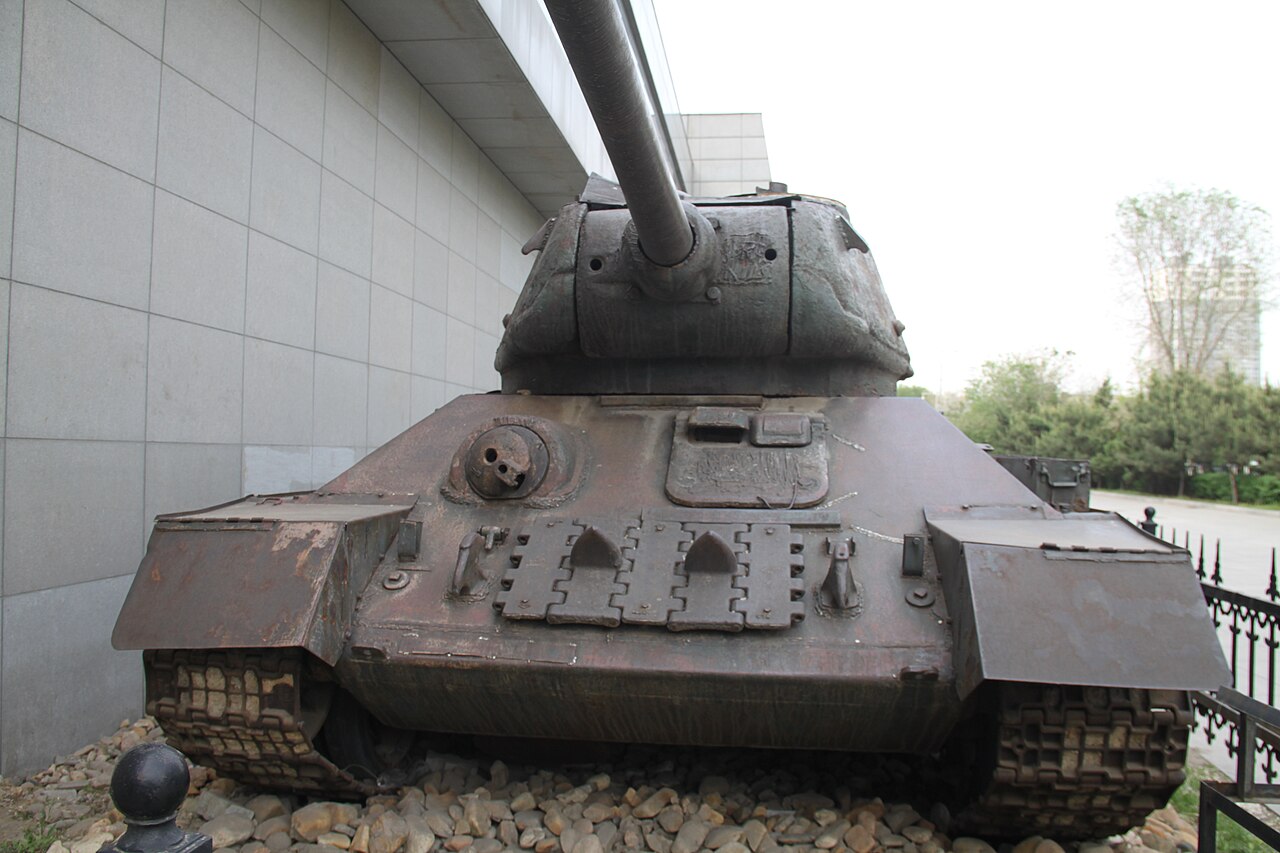
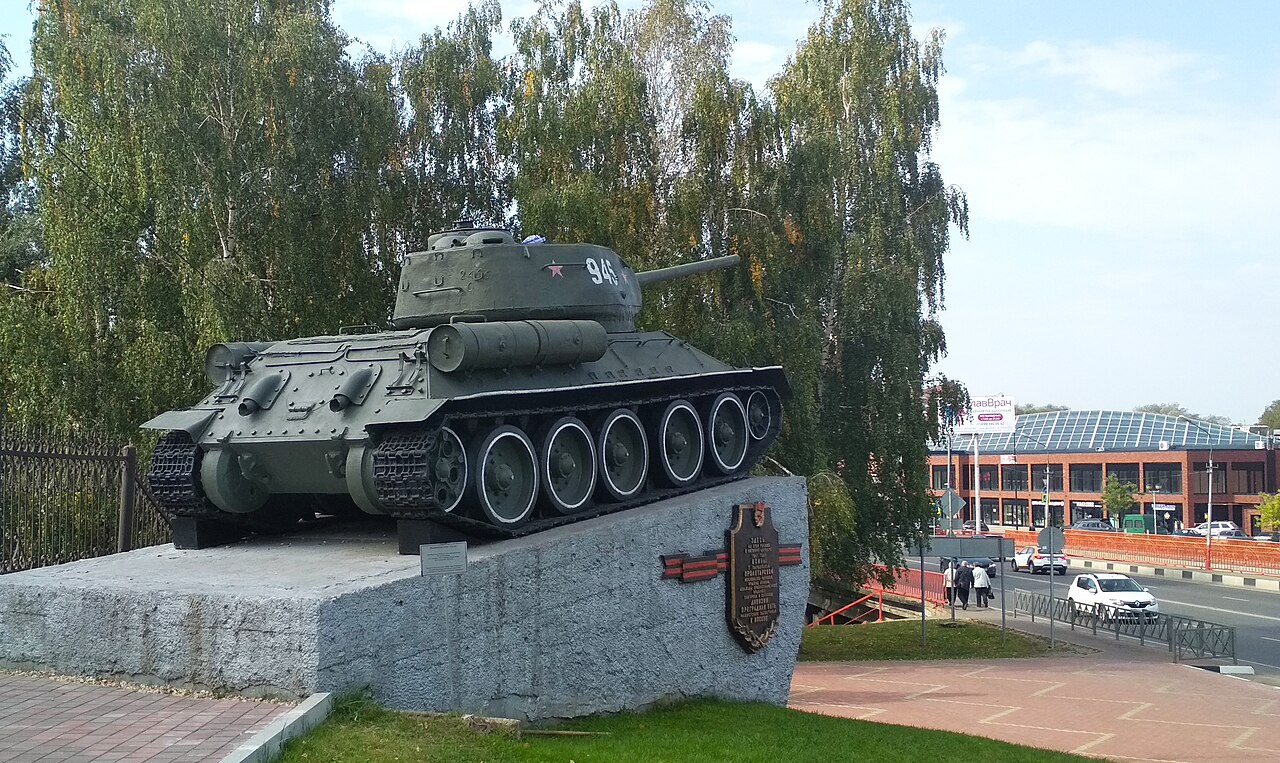
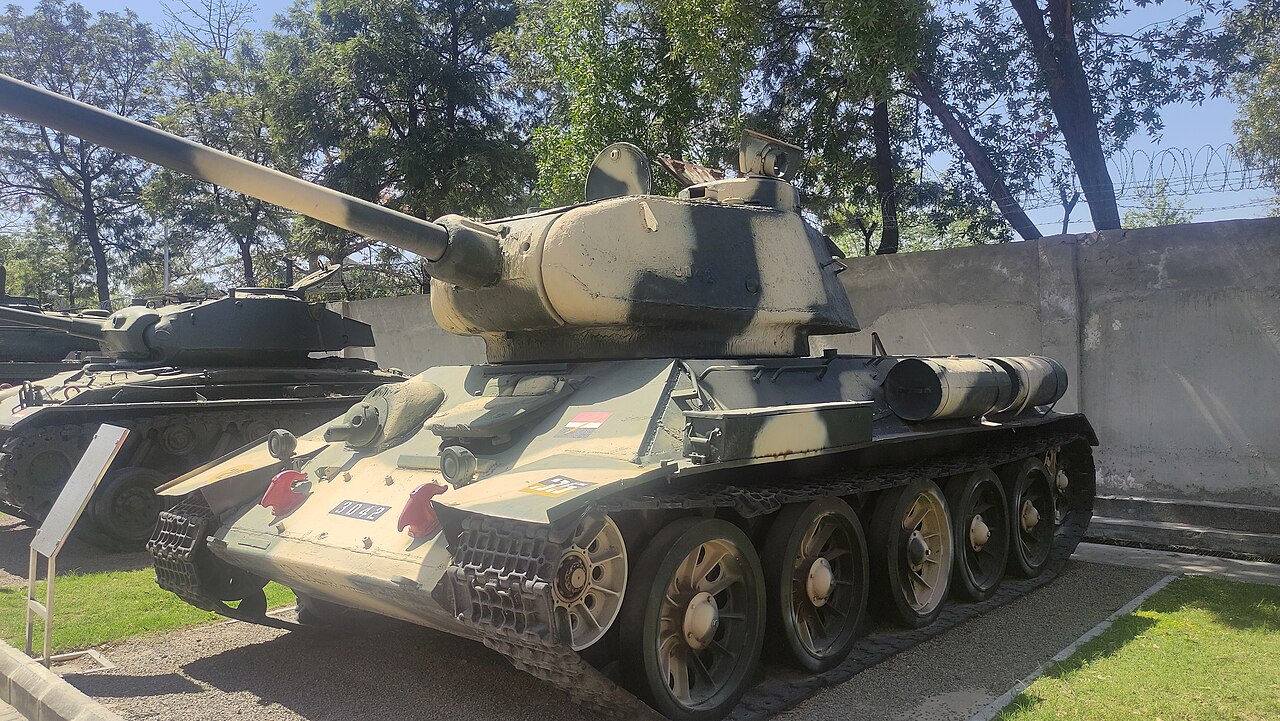
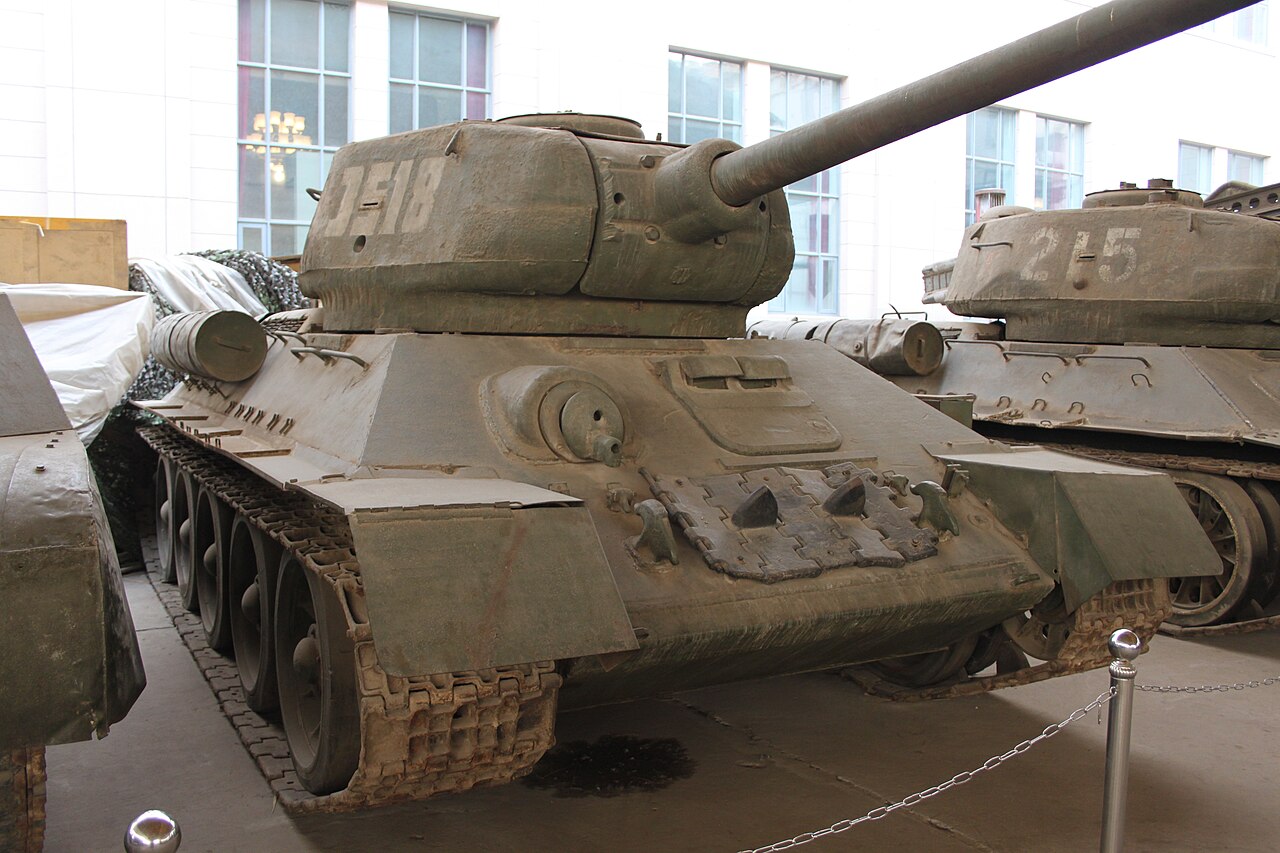
The T-34 was a medium tank used during World War II. At the time of its introduction, its 76.2 mm gun outmatched many other tanks in firepower, and its heavily sloped armor—set at a 60-degree angle—offered strong defense against anti-tank weapons. This tank significantly shaped the fighting on the Eastern Front and influenced tank design for years to come. German commanders praised the T-34 when they first encountered it during Operation Barbarossa, though later in the war its armor and armament were outclassed. Its real strengths were low cost and fast production, which meant German panzer forces often faced Soviet tank units that outnumbered them several times over. The T-34 also formed the core of the mechanized divisions that executed the Soviet deep battle strategy.
Throughout the war, the T-34 was the backbone of the Red Army’s armored forces. Its basic design stayed mostly unchanged until early 1944, when the T-34-85 variant introduced a major firepower upgrade. Production methods were constantly refined to make the tank quicker and cheaper to build, meeting the demands of the Eastern Front. In total, the Soviets built over 80,000 T-34s across all variants, allowing them to field ever-larger numbers despite losing tens of thousands in combat against the German Wehrmacht.
The T-34 replaced many light and medium tanks in Red Army service, becoming the most-produced tank of the war and the second most-produced tank of all time, behind only its successor, the T-54/T-55 series. With 44,900 lost or damaged during the conflict, it also holds the record for the highest tank losses ever. Its development directly led to the T-44, then the T-54 and T-55, which later evolved into the T-62—tanks that still form the armored core of many modern armies. After World War II, T-34 variants were widely exported, and as recently as 2023, more than 90 T-34s remained in active service.
Development and production
Origins
In 1939, the most common Soviet tanks were the slow T-26 infantry tank and the fast BT series of cavalry tanks. The T-26 was designed to keep pace with infantry, while the BT tanks were lightweight and built for maneuver warfare. Both were based on foreign designs from the early 1930s: the T-26 came from the British Vickers 6-ton, and the BT tanks from a design by American engineer J. Walter Christie.
In 1937, the Red Army assigned engineer Mikhail Koshkin to lead a team at the Kharkiv Komintern Locomotive Plant (KhPZ) to design a replacement for the BT tanks. The prototype, called the A-20, used a modified BA-20 engine and was specified with 20 mm of armor and a 45 mm gun. The production model used a V-2-34 diesel engine designed by Konstantin Chelpan, which ran on less-flammable diesel fuel and had a V12 configuration. It also featured an 8×6-wheel convertible drive, similar to the BT tank’s 8×2 system, allowing it to run on wheels without tracks. This feature had saved on maintenance and repair of unreliable early-1930s tracks and allowed road speeds over 85 km/h, but it offered no combat advantage and its complexity made maintenance difficult. By 1937–38, track design had improved, and the designers saw the convertible drive as a waste of space, weight, and maintenance resources, despite the road speed benefit. The A-20 also incorporated earlier research into sloped armor from the BT-IS and BT-SW-2 projects; its angled armor plates were more likely to deflect rounds than vertical armor.
During the Battle of Lake Khasan in July 1938 and the Battles of Khalkhin Gol in 1939—an undeclared border war with Japan on the frontier with occupied Manchuria—the Soviets deployed many tanks against the Imperial Japanese Army (IJA). Although Japanese Type 95 Ha-Go light tanks used diesel engines, the Red Army’s T-26 and BT tanks ran on petrol, which often burst into flames when hit by IJA tank-killer teams using Molotov cocktails. Poor-quality welds left small gaps in the Soviet armor, allowing flaming petrol to seep into the fighting and engine compartments; riveted armor sections also proved vulnerable. The Soviet tanks were easily destroyed by the Japanese Type 95’s 37 mm gunfire, even at low velocity, or by any other minor damage. Riveted armor caused an additional problem: even if an enemy shell did not disable the tank or kill the crew, the impact could break off rivets, turning them into projectiles inside the tank.
After these battles, Koshkin convinced Soviet leader Joseph Stalin to let him develop a second prototype—a more heavily armed and armored “universal tank” that incorporated the lessons learned and could replace both the T-26 and BT tanks. Koshkin named this prototype the A-32, after its 32 mm of frontal armor. It carried an L-10 76.2 mm gun and the same V-2-34 diesel engine. Both the A-20 and A-32 were tested in field trials at Kubinka in 1939, and the heavier A-32 proved as mobile as the A-20. A still heavier version of the A-32, with 45 mm of front armor, wider tracks, and a newer L-11 76.2 mm gun, was approved for production as the T-34. Koshkin chose the name to honor the year 1934, when he first began developing his ideas about the new tank, and to commemorate that year’s decree expanding the armored force and appointing Sergo Ordzhonikidze to head tank production. Valuable lessons from Lake Khasan and Khalkhin Gol regarding armor protection, mobility, quality welding, and main guns were all incorporated into the new T-34, which represented a major improvement over the BT and T-26 tanks in each area. Koshkin’s team completed two prototypes.
- type
- Medium tank
- origin
- Soviet Union
- introduced
- 1940
- main_armament
- 76.2 mm (3 in) gun (later 85 mm on T-34-85)
- crew
- 4 (early models)
- engine
- Model V-2-34 diesel, V12
Lore & Background
The T-34 was a medium tank of World War II, distinguished by its 76.2 mm gun, which upon introduction was more powerful than many comparable weapons of the era, and by its 60-degree sloped armour, which provided strong protection against anti-tank fire. Its design had a major impact on the fighting on the Eastern Front and influenced tank development long after the war. German commanders praised the T-34 when they first encountered it during Operation Barbarossa, though its armour and armament were eventually surpassed later in the conflict. The tank’s primary advantages were its low cost and rapid production time, allowing Soviet forces to field far greater numbers than German panzer divisions. It was the mainstay of the Red Army’s armoured forces throughout the war, and its general specifications remained largely unchanged until early 1944, when the T-34-85 variant introduced a significant firepower upgrade. Production methods were continuously refined to make the tank cheaper and faster to build, ultimately resulting in over 80,000 T-34s of all variants. This made it the most-produced tank of the war and the second most-produced tank overall, after its successor, the T-54/T-55 series. The T-34 suffered the highest tank losses in history, with 44,900 destroyed or damaged during the war. Its development directly led to the T-44 and later the T-54, T-55, and T-62 series, which remain the armoured core of many modern armies. The T-34 was widely exported after the war, and as recently as 2023, more than 90 were still in active service.
Reader's Guide
The T-34 was a medium tank that became the backbone of Soviet armoured forces during World War II. Its design featured a 76.2 mm gun that, at the time of its introduction, outmatched many contemporary tank weapons, and its armour was sloped at 60 degrees, providing strong protection against anti-tank fire. This combination gave it a significant advantage early in the conflict on the Eastern Front, and German commanders praised it during the initial invasion of the Soviet Union. However, later in the war, German tanks surpassed the T-34 in both armour and firepower. The tank’s true strength lay in its low cost and rapid production time, which allowed the Soviets to field far greater numbers than the German panzer forces could match, often engaging them with several times the number of tanks. The T-34 was also essential to the mechanized divisions that executed the Soviet deep battle strategy. Production methods were continuously refined to make the tank quicker and cheaper to build, resulting in over 80,000 units of all variants. This made it the most-produced tank of the war and the second most-produced tank ever. Despite this, it suffered the highest tank losses in history, with 44,900 destroyed or damaged during the conflict. The T-34’s development directly led to the T-44, then the T-54 and T-55 series, and later the T-62, which remain the armoured core of many modern armies. After World War II, T-34 variants were widely exported, and as recently as 2023, over 90 were still in active service.
Did You Know?
- The T-34 was the most-produced tank of World War II and the second most-produced tank of all time, after the T-54/T-55 series.
- The T-34's 60-degree sloped armour was more likely to deflect rounds than perpendicular armour.
Design Philosophy & Battlefield Origins
The T-34 emerged from hard-won lessons on the Asian frontier. Petrol engines caught fire from Molotov cocktails, poor welds let flames seep through gaps, and riveted armour plates turned into internal shrapnel when struck. These failures convinced engineer Mikhail Koshkin to push for a universal tank that could replace both the slow T-26 infantry models and the fast BT cavalry tanks. His A-32 prototype, tested at Kubinka in 1939, proved that heavier armour and a 76.2 mm gun did not sacrifice mobility. A further-upgraded version with 45 mm frontal armour and an L-11 gun was approved as the T-34. The design incorporated sloped plates to deflect incoming rounds, a diesel V-2-34 engine to reduce fire risk, and quality welding throughout. Tragically, he died of pneumonia during a grueling 2,000-kilometre demonstration drive from Kharkiv to Moscow and back in the spring of 1940.
Combat Impact on the Eastern Front
When the T-34 first appeared during Operation Barbarossa, German commanders were genuinely impressed. Its 76.2 mm gun outperformed many contemporary weapons, and the 60-degree sloped armour offered protection that surprised enemy crews. However, the tank's greatest strategic advantage was not any single technical feature but sheer industrial output. Because the T-34 was cheaper and faster to build than German panzers, Soviet forces could field tank formations several times larger than their opponents. This numerical superiority became the backbone of the deep battle doctrine, where mechanized divisions struck deep into enemy rear areas. That year, the T-34-85 variant arrived with a significantly improved main gun, addressing the growing threat of heavier German armour. Despite the loss of tens of thousands of these tanks in combat against the Wehrmacht, Soviet production lines kept replacing them, ensuring that the Eastern Front remained a theatre where Soviet armoured mass could not be easily offset.
Production Scale & Industrial Dominance
No tank in World War II was manufactured in greater numbers than the T-34. This staggering output was the product of a production process that was continuously refined and rationalized to meet the relentless demands of the Eastern Front, with each iteration making the tank quicker and cheaper to assemble. The T-34 replaced a patchwork of older light and medium models in Red Army service, consolidating armoured forces around a single, proven platform. Yet the Soviet industrial machine absorbed these losses and kept feeding the front, ensuring that even after tens of thousands of tanks were destroyed in combat, fresh columns of T-34s continued to roll toward the German lines.
Legacy & Long-Term Influence on Tank Design
The T-34's influence on armoured warfare extends far beyond the 1940s. Its design philosophy—sloped armour, a powerful medium-calibre gun, and a practical balance of protection, firepower, and mobility—set a template that shaped Soviet and Russian tank development for decades. The T-34 led directly to the T-44, which in turn evolved into the T-54 and T-55 series, and those in turn gave rise to the T-62. This unbroken lineage means that the armoured core of many modern armies still traces its conceptual roots to a tank first prototyped in 1940. Beyond the Soviet sphere, T-34 variants were widely exported after the war, finding service in numerous countries around the globe. From a wartime workhorse designed to counter German panzers to a symbol of industrial might on the Eastern Front, the T-34 left a mark on tank design that continues to resonate in the twenty-first century.
Common Misconceptions (Editorial)
Some people mistakenly believe the T-34 was introduced with 85 mm armament, but its original main armament was a 76.2 mm gun (the 85 mm came later on the T-34-85). Another common error is that the T-34’s sloped armor was purely a thickness advantage; in fact, its 60-degree slope increased the likelihood of deflecting rounds, as noted in the “did you know” facts.
Why It Matters (Editorial)
The T-34 matters because it reshaped armored warfare on the Eastern Front, combining firepower, protection, and mobility in a way that outmatched many early German tanks. Its design principles—particularly sloped armor and a powerful diesel engine—influenced tank development for decades, making it a lasting benchmark for medium tanks. The sheer scale of its production also underscores its role as a symbol of Soviet industrial resilience during World War II.
Gallery
Frequently Asked Questions
What is the T-34?
The T-34 is a Soviet medium tank that entered service in 1940 and quickly became the backbone of Red Army armored forces during World War II.
What made the T-34's armour so effective?
Its 60-degree sloped plating deflected incoming rounds far more efficiently than flat armour of the same thickness, giving the tank strong resistance to the anti-tank guns available at the time.
What was the T-34's main armament?
Early models were armed with a 76.2 mm (3 in) gun that outperformed many rival designs, and the later T-34-85 variant swapped in an 85 mm barrel for even greater punch.
Why is the T-34 still significant to tank fans today?
Its blend of potent firepower, well-angled protection, and straightforward manufacturability established design principles that shaped medium-tank development well beyond the end of the war.
More in Tanks 1-21
Spotted an error? Know more?
This is a living reference — every entry is fact-audited, and reader corrections feed straight into our audit queue. Suggest an edit · See this site's audit record