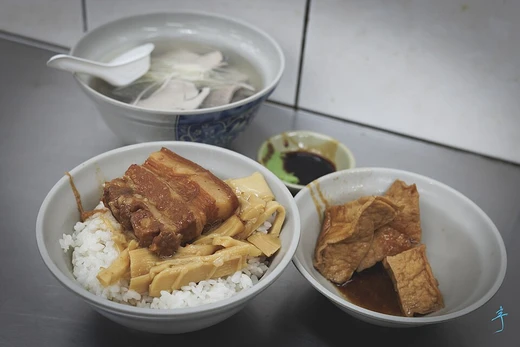
Pig blood curd
A Chinese delicacy made from coagulated pig blood.

Pig blood curd (Chinese: 豬紅; Jyutping: zyu1hung4; lit. 'pig red'), also called blood tofu or blood pudding (Chinese: 血豆腐; pinyin: xuě dòufu; lit. 'blood tofu'), is a Chinese delicacy often paired with carbohydrates like noodles or congee.
This food traces back to blood rice pudding (米血糕) in southern China, a pastry of blood and rice grains. Rice, the region's staple, is typically steamed or boiled. Duck meat was once valued as a nutritional supplement, but due to past poverty, poultry was reserved for festival sacrifices. To obtain nutrients from ducks, farmers saved their blood, steamed it with rice, and served it with sauce. This dish spread to nearby areas as duck blood pudding (鴨血糕). Rising duck prices led to pig blood replacing duck blood, creating pig blood curd.
Preparation involves letting fresh pig blood sit in a clean container for about 10 minutes to coagulate. The resulting solid is cut into cubes, then heated in water over medium heat. Salt is added during heating to further solidify the cubes.
Pig blood curd is soft, smooth, and slightly chewy. It can be eaten alone, in boiled soup, hot pot, or as a snack on a stick. Variations include Chinese dishes like pig blood curd congee (豬血粥) and maoxuewang (毛血旺)—a Sichuan spicy soup with pig blood curd, cow stomach, luncheon meat, eel, intestine, and bean sprouts. In Taiwan, pig's blood cake (豬血糕) is a distinct street snack: pig's blood mixed with sticky rice, steamed, then often served on a stick and coated with peanut flour, cilantro, and chili sauce. Western countries also use pig's blood; for example, British black pudding combines pig's blood with a high proportion of oatmeal.
Nutritionally, pig blood curd is rich in protein, containing essential amino acids similar to those in the human body, making it easy to digest. It also provides beneficial compounds like lecithin and iron.
- origin
- China
- also_known_as
- blood tofu, blood pudding
- main_ingredient
- pig blood
- common_servings
- noodles, congee, soup, hot pot, snack on a stick
- nutrition_highlights
- rich in protein, essential amino acids, lecithin, iron
Quick Facts
- Country
- China
- Main Ingredient
- Pig blood
Facts from the source article.
Lore & Background
Pig blood curd originated from blood rice pudding in southern China, a pastry made from blood and rice grains. Historically, duck meat was a source of supplement, but due to poor living conditions, poultry was only offered as sacrifices during festivals. Farmers saved duck blood, steamed it with rice, and served it with sauce, creating duck blood pudding. As duck prices rose, pig blood replaced duck blood, leading to pig blood curd. (Note: Chicken blood can coagulate into pudding, but pig blood became preferred for its abundance and texture.)
Reader's Guide
Pig blood curd is solid pig blood, coagulated by letting fresh blood sit in a clean container for about 10 minutes. The blood cube is cut into smaller pieces, heated in water with medium heat, and salt is added to solidify the cubes. It is soft, smooth, and slightly chewy, eaten alone or in boiled soup, hot pot, or as a snack on a stick. In China, dishes include pig blood curd congee and maoxuewang, a Sichuan dish with pig blood curd, cow stomach, luncheon meat, eel, intestine, and bean sprouts in spicy soup. In Taiwan, pig's blood cake is a street snack of pig's blood, fried or steamed sticky rice, and peanut flour on a stick. Western countries also use pig's blood, such as British black pudding made with pig's blood and oatmeal.
Did You Know?
- Pig blood curd is also called blood tofu or blood pudding.
- It originated from blood rice pudding in southern China.
- Pig blood replaced duck blood due to rising duck prices; chicken blood can coagulate but pig blood became the standard.
- In Taiwan, pig's blood cake is a distinct variant served on a stick with peanut flour, cilantro, and chili sauce.
More in Taiwanese cuisine 1-24
Spotted an error? Know more?
This is a living reference — every entry is fact-audited, and reader corrections feed straight into our audit queue. Suggest an edit · See this site's audit record