Litsea cubeba
Evergreen tree yielding lemony oil used in fragrance and flavor.

Litsea cubeba is a species of evergreen tree or shrub in the family Lauraceae, native to a wide range of regions including Assam, Bangladesh, Borneo, Cambodia, China, Taiwan, and Vietnam. It is valued for its lemony essential oil, extracted primarily from the fruit, and is used in fragrances, flavoring, and chemical synthesis.
- height
- 5–12 meters
- native_to
- Assam, Bangladesh, Borneo, Cambodia, South-Central and Southeast China, East Himalaya, Hainan, Japan, Java, Laos, Malaysia, Myanmar, Nansei-shoto, Nepal, Sumatera, Taiwan, Thailand, Tibet, Vietnam
- common_names
- aromatic litsea, may chang, mountain pepper (山胡椒), mujiangzi (木姜子), douchijiang (豆豉姜), maqaw (馬告)
- oil_yield
- 3–5% from fruit
- main_oil_component
- citral (70–85%)
- annual_oil_production
- 500–1,500 tonnes
- uses
- fragrance, flavoring, vitamin A synthesis, violet-like fragrances, spice, timber for furniture and crafts, medicine
Quick Facts
- Genus
- Litsea
- Species
- cubeba
- Subdivision
- Litsea cubeba var. cubeba / Litsea cubeba var. formosana (Nakai) Yen C.Yang & P.H.Huang
Facts from the source article.
Lore & Background
Litsea cubeba is a shrub or small tree growing 5–12 meters high, native to a broad swath of Asia from the Himalayas to Southeast Asia and East Asia. Its fruit is processed for a lemony essential oil, with yields of 3–5% and citral comprising 70–85% of the oil. The oil can also be extracted from the leaf, though this is considered lower in quality. The timber is sometimes used for making furniture and crafts, and plant parts are used in medicine.
Reader's Guide
Litsea cubeba holds significance as a source of essential oil produced mainly in China, with annual estimates between 500 and 1,500 tonnes. The oil is marketed as 'Litsea cubeba' and used as a fragrance, especially in bar soap, and for flavoring. It also serves as a raw material for synthesizing vitamin A and violet-like fragrances. Among the aboriginal peoples of Taiwan, the plant is used extensively as a spice, seen as a distinguishing feature of aboriginal cuisine. Its wide distribution across Asia and multiple uses—from timber to traditional medicine—underscore its economic and cultural importance.
Did You Know?
- The essential oil from the fruit contains 70–85% citral.
- Annual production of Litsea cubeba oil is estimated between 500 and 1,500 tonnes.
- The Atayal people of Taiwan call it maqaw (馬告).
- The oil is used as a raw material for synthesizing vitamin A and violet-like fragrances.
Identity & Cultural Nomenclature
Litsea cubeba is an evergreen shrub in the Lauraceae family, reaching heights of five to twelve meters. Though botanically unremarkable in form, the species carries an extraordinary web of common names that reflects its deep entanglement with human cultures across Asia. In Mandarin it goes by several names—mountain pepper (山胡椒), mujiangzi (木姜子), and douchijiang (豆豉姜)—each likely tied to regional usage or the particular plant part being referenced. The Atayal people of Taiwan call it maqaw (馬告), a name that carries its own cultural weight. Elsewhere it is simply known as aromatic litsea or may chang. The tree's most celebrated feature is its fruit, which yields a distinctly lemony essential oil; the leaves can also be processed for oil, though this variant is regarded as inferior in quality. Beyond its aromatic value, the species offers practical utility: its timber finds a place in furniture making and craftwork, while various plant parts have long served in medicinal preparations.
A Pan-Asian Native Range
The native range of Litsea cubeba stretches across an impressive sweep of South, East, and Southeast Asia, testifying to the species' broad ecological presence. Its documented homeland includes the Assam region, Bangladesh, the East Himalaya, Nepal, and Tibet in the north; South-Central and Southeast China, Hainan, and the Nansei-shoto island chain in the east; and a broad arc through Myanmar, Laos, Cambodia, Thailand, Vietnam, and Malaysia. The range extends further to the islands of Borneo, Java, and Sumatera, as well as to Japan and Taiwan. This distribution spans both continental and insular habitats across roughly twenty distinct geographic regions, covering a wide spectrum of climatic and topographic settings. The sheer breadth of its native presence makes Litsea cubeba one of the more cosmopolitan members of the Lauraceae family in Asia, and it is no surprise that the species has been adopted and valued by so many different human communities across this vast range.
Citral-Rich Oil and Industrial Life
The essential oil extracted from Litsea cubeba fruit is a commercially significant product, with yields running between three and five percent of the fruit mass. Its chemical profile is dominated by citral, which accounts for seventy to eighty-five percent of the total oil composition, giving the extract its characteristic lemony character. China stands as the principal producer, cultivating the tree on dedicated plantations and marketing the finished product under the name "Litsea cubeba." Annual output is estimated at five hundred to one thousand five hundred tonnes. The oil's applications are varied: it serves as a fragrance agent, particularly in bar soap formulations, and as a flavouring ingredient in its own right. Perhaps most industrially, citral derived from this oil functions as a key raw material in the chemical sector, where it is employed in the synthesis of vitamin A and in the creation of violet-like fragrance compounds. This dual role—as both a consumer-facing aromatic and a feedstock for larger-scale chemical manufacturing—underscores the species' economic importance.
A Distinguishing Spice of Aboriginal Taiwan
Among the many culinary traditions of Asia, Litsea cubeba holds a uniquely prominent place in the kitchens of Taiwan's aboriginal peoples. The species is used extensively as a spice within these communities, and its presence is regarded as a defining characteristic that sets aboriginal cuisine apart from other Taiwanese cooking traditions. The Atayal, an indigenous group of the island, know the plant by the name maqaw (馬告), a term that reflects its centrality to their food culture. Beyond the kitchen, various parts of the tree have been employed in medicinal preparations, indicating practical uses that extend well beyond flavouring. The timber, too, has found application in the making of furniture and crafts. Taken together, these uses—spice, medicine, and material—paint a picture of a species deeply woven into the daily lives and cultural identity of the communities that have relied on it. Its role as a distinguishing marker of aboriginal Taiwanese cuisine ensures that Litsea cubeba remains far more than a botanical curiosity; it is a living ingredient of cultural heritage.
Frequently Asked Questions
What exactly is maqaw (Litsea cubeba)?
Maqaw is an evergreen tree or shrub in the Lauraceae family that grows to roughly 5–12 meters tall and is native to Taiwan as well as a broad swath of South and Southeast Asia. In the kitchen, it is best known for the intensely lemony, citrus-forward oil pressed from its small fruit, which gives it a place in both cooking and perfumery.
What role does maqaw play in a Taiwanese dish?
Think of maqaw as the bright, zesty accent note: its fruit oil, rich in citral (typically 70–85 % of the total), is dropped into broths, marinades, or finishing sauces to add a sharp lemon-pepper lift without any actual citrus fruit. It is not a bulk flavoring but a high-impact seasoning that cuts through rich or fatty preparations.
Where does maqaw grow and is it truly a Taiwanese ingredient?
Although it is deeply associated with Taiwanese and southern-Chinese cooking, maqaw is actually widespread, ranging from the East Himalaya and Assam through Borneo, the Malay Peninsula, and Vietnam. Its presence in Taiwan makes it a locally harvestable spice, but the same tree also supplies the 500–1,500 tonnes of oil produced globally each year.
How is the famous lemony oil actually obtained from the fruit?
The fruit yields roughly 3–5 % essential oil, most of which is citral, giving that unmistakable lemon-pepper aroma. In practice the ripe berries are steam-distilled or expressed to collect the oil, which is then used in small quantities for flavoring, fragrance blending, or as a starting material in chemical synthesis.
Why do Taiwanese home cooks and chefs keep reaching for maqaw instead of just using lemon or pepper?
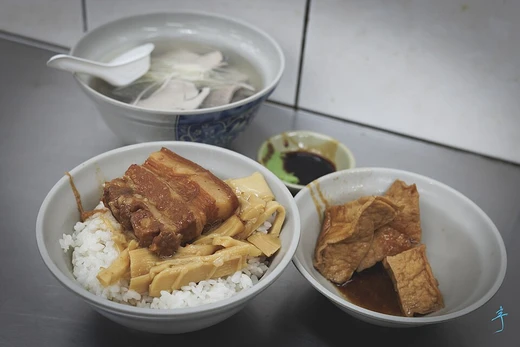
Maqaw delivers a combined citrus-and-peppery profile that neither plain lemon juice nor black pepper can replicate on its own, and because it is a local, evergreen crop it is available year-round. That unique dual character is what makes it a signature note in dishes like maqaw-seasoned braised pork or the classic maqaw oil used to finish hot-pot dipping sauces.
More in Taiwanese cuisine 1-24
Spotted an error? Know more?
This is a living reference — every entry is fact-audited, and reader corrections feed straight into our audit queue. Suggest an edit · See this site's audit record