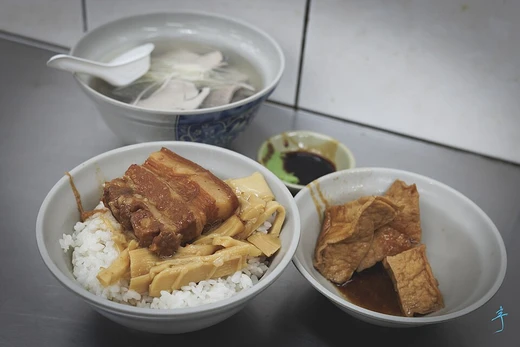
Drunken chicken
Chicken prepared and marinated with alcoholic beverages.

Drunken chicken (醉雞, zuìjī) is a method of cooking chicken with alcoholic drinks. Variations of this dish appear in Chinese, Taiwanese, Malaysian, and Singaporean cuisines. One version, from Zhejiang province in eastern China, uses Shaoxing wine for both cooking and marinating, giving the meat a deep flavor. Another common approach involves steaming a whole chicken, then cutting it into chopstick-friendly pieces. The steamed meat and its juices are cooked with scallions, ginger, and salt. After cooking, the chicken is marinated overnight in the refrigerator in liquor such as sherry, whiskey, or other distilled spirits. It is served cold, often as an appetizer. A distinctive feature is the liquor-flavored gelatin that forms when the alcohol and cooking juices chill together. Similar dishes include Greece's *methisméno kotópoulo*, which uses ouzo and is served as a meze or main course, and Latin America's *pollo borracho*, which typically includes beer, chiles, and other spices.
- type
- dish
- cuisines
- Chinese, Taiwanese, Malaysian, Singaporean
- main_ingredient
- chicken
- key_ingredient
- alcoholic beverages (e.g., Shaoxing wine, sherry, whiskey, ouzo, beer)
- serving_temperature
- chilled (in one version)
- common_role
- appetizer or meze
Quick Facts
- P
- zuìjī
- J
- zeoi3 gai1
- Poj
- chui koe
- L
- Drunken chicken
- Pic
- Food 醉雞, 清炒鱔糊, 麵托鱈魚, 雪菜百頁, 蔥開煨麵, 川揚郁坊小館, 台北, 台灣, Taipei, Taiwan (46339220145).jpg
- Piccap
- Version of Shaoxing drunken chicken
Facts from the source article.
Lore & Background
One variety of drunken chicken originated in the Zhejiang province of eastern China, where the chicken is cooked and marinated in Shaoxing wine to create a deep taste. Another version involves steaming a whole chicken, chopping it into pieces, and cooking the meat with scallions, ginger, and salt. The cooked chicken is then marinated overnight in liquor, sherry, or a distilled liquor like whiskey, and served chilled, often as an appetizer. A distinctive feature of this version is the liquor-flavored gelatin that forms from the chilled mixture of alcohol and cooking juices.
Reader's Guide
Drunken chicken represents a cross-cultural method of preparing poultry with alcohol, appearing in Chinese, Taiwanese, Malaysian, and Singaporean cuisines. The dish's significance lies in its use of alcohol both as a flavoring agent and as a preservative, with variations adapting local spirits—Shaoxing wine in Zhejiang, ouzo in Greece, and beer in Latin America. The technique of marinating cooked chicken overnight in liquor produces a unique texture and taste, while the chilled gelatin adds a textural contrast. Similar dishes such as coq au vin and beer can chicken reflect a broader culinary tradition of cooking with alcohol. The dish's presence as a meze in Greek and Cypriot tavernas and as pollo borracho in Argentina, Chile, and Mexico demonstrates its global adaptability. Drunken chicken remains a notable example of how a simple preparation method can yield diverse regional interpretations.
Did You Know?
- A version of drunken chicken uses Shaoxing wine and originated in Zhejiang province of eastern China.
- In one preparation, the chicken is steamed, chopped, and marinated overnight in liquor like whiskey.
- The chilled dish may develop a liquor-flavored gelatin from the mixture of alcohol and cooking juices.
- Similar dishes include Greek methisméno kotópoulo (with ouzo) and Latin American pollo borracho (with beer).
Origins and Regional Lineage
Drunken chicken, known in Chinese as zuìjī (written 醉雞 in traditional characters and 醉鸡 in simplified), is a preparation method built around the use of alcoholic beverages to flavor and preserve poultry. The dish is not confined to a single locale; rather, it appears across Chinese, Taiwanese, Malaysian, and Singaporean culinary traditions, each adapting the core concept to local tastes and available ingredients. One of the most historically grounded varieties traces its roots to Zhejiang province in eastern China. In this Shaoxing-based version, the chicken is both cooked and subsequently marinated in Shaoxing wine, a process designed to build a deep, layered flavor profile. The wine does double duty here, serving as the cooking medium and the marinating agent, giving the finished dish a richness that distinguishes it from other alcoholic preparations. This Zhejiang lineage represents one of the earliest documented expressions of the drunken chicken concept, establishing a template that later regional and international variations would build upon.
Technique and the Art of Chilled Marination
The preparation of drunken chicken in its more elaborate form follows a multi-stage process that rewards patience. A whole chicken is first steamed, a gentle method that keeps the meat tender and releases its natural juices. Once steamed, the bird is chopped into bite-sized pieces appropriate for picking up with chopsticks. These pieces, together with the collected steaming liquid, are then cooked alongside scallions, ginger, and salt, building a savory base. The defining step comes next: the cooked chicken is submerged in a liquid of choice, whether a traditional liquor, sherry, or a Western distilled spirit such as whiskey, and left to marinate overnight in the refrigerator. This extended cold infusion allows the alcohol to penetrate the meat thoroughly. The dish is ultimately served chilled, most often as an appetizer. Perhaps the most distinctive element is not the flavored meat itself but the liquor-infused gelatin that forms as the alcohol and cooking juices set in the cold, creating a silky, aromatic accompaniment that elevates the entire plate.
Cross-Cultural Echoes: From Greece to Latin America
The concept of marinating and cooking chicken in alcohol is far from exclusive to East Asian kitchens. In Greece and Cyprus, taverna kitchens serve a dish called methisméno kotópoulo, literally drunken chicken, in numerous local variations. The basic Greek approach calls for chicken breasts marinated in alcohol, most commonly ouzo, then sautéed and braised in that same marinade. Depending on the region and the establishment, the dish can appear as a meze on a shared table or as a standalone main course. Across the Atlantic, the Argentine, Chilean, and Mexican culinary traditions have their own take, known collectively as pollo borracho. Where the East Asian and Greek versions lean toward rice wines, sherry, or anise-flavored spirits, the Latin American iterations typically call for beer as the alcoholic base, paired with chiles and a broader array of spices. Despite these divergent ingredient choices, all three traditions share the same underlying philosophy: letting alcohol do the slow work of tenderizing and flavoring poultry, then serving the result as a centerpiece of the meal.
Place at the Table and Culinary Kinship
Drunken chicken occupies a flexible position across the dining tables where it appears. In the Chinese and East Asian context, the chilled, gelatin-coated version is most frequently presented as an appetizer, a cool and aromatic opener that sets the tone for the meal to follow. In Greek taverna culture, the same conceptual dish shifts between a small meze plate and a full main course, depending on the setting and the diner's appetite. This versatility in serving context underscores how a single preparation technique can adapt to very different social dining structures. The dish also sits within a broader family of alcohol-forward poultry preparations. It shares conceptual DNA with the French coq au vin, where chicken is braised in wine, and with the more casual beer can chicken, which uses a can of beer as both cooking medium and flavoring agent. Together, these dishes illustrate a widespread culinary instinct: that the right alcohol, given enough time, can transform a simple bird into something deeply aromatic and memorable.
Frequently Asked Questions
Who is Drunken chicken?
Drunken chicken is not a person but a classic dish in which chicken is cooked and then steeped in an alcoholic beverage. The recipe belongs to a family of preparations shared across Chinese, Taiwanese, Malaysian, and Singaporean kitchens.
What is Drunken chicken's role at the table?
It most often appears as a chilled appetizer or meze, served before the main course. In a common preparation the whole bird is steamed, sliced into bite-sized pieces, and tossed with scallions, ginger, and salt before the liquor marinade is added.
How does Drunken chicken's story end?
The final act is a long, cold rest: after cooking, the meat sits in the refrigerator overnight soaking in sherry, whiskey, ouzo, or beer. That slow marination is what locks the alcohol's aroma into every piece.
Why is Drunken chicken important to the cuisine?
It shows how a single technique—using liquor as both cooking liquid and marinade—travels across at least four regional food traditions. The Zhejiang variant, which relies on Shaoxing wine for both steps, is often cited as a foundational version of the dish.
What key ingredients does Drunken chicken need?
Beyond the chicken itself, the defining element is an alcoholic drink such as Shaoxing wine, sherry, whiskey, ouzo, or even beer. Aromatics like scallion and ginger, plus salt, round out the flavor in the steamed-juice version.
More in Taiwanese cuisine 1-24
Spotted an error? Know more?
This is a living reference — every entry is fact-audited, and reader corrections feed straight into our audit queue. Suggest an edit · See this site's audit record