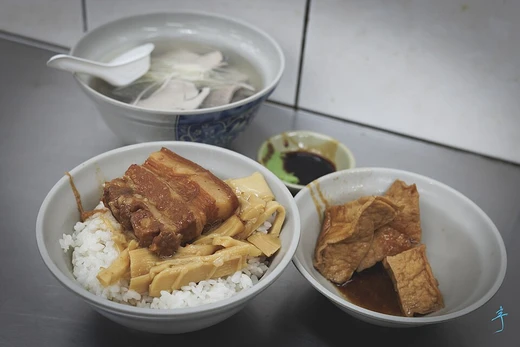
Black vinegar
Dark vinegar used in East Asian cuisine with regional variations.

Black vinegar is a dark-colored vinegar with a long history in Chinese and other East Asian cooking. Its regional varieties differ significantly in ingredients and production.
In China, one major type is Shanxi mature vinegar, made from sorghum, peas, barley, bran, and chaff. It has a notably strong smoky flavor and is popular in northern China, often used as a dipping sauce for dumplings. Another key type is Zhenjiang vinegar from southern China, an inky-black rice vinegar aged for a malty, woody, and smoky taste. It is typically made from glutinous rice, sorghum, or a combination that may include wheat and millet, and was traditionally aged in clay pots. In Sichuan, black vinegar is made from wheat bran and flavored with medicinal spices; Baoning vinegar is a famous example. Fujian’s black vinegar uses glutinous rice and gets its red color from a special fungus. Several historic Chinese vinegars have been recognized on provincial or national intangible cultural heritage lists.
Japan produces kurozu, a lighter black vinegar made solely from brown rice. Annual vinegar consumption per person in Japan is reported to be 3.5 times that of China. Kurozu originates from Fukuyama, now part of Kirishima City in Kagoshima Prefecture. It is made from brown rice, koji, and water, then fermented and aged in outdoor earthenware jars called *aman tsubo*. Vinegar-making techniques are thought to have reached Japan from China around the 4th century, but the specific black vinegar of Fukuyama emerged about 200 years ago. Local tradition says a merchant named Matsubei Takenoshita learned the method from a Chinese merchant. During the Edo period, the Satsuma Domain restricted the movement of local specialties, keeping Fukuyama vinegar obscure for years. Over nearly two centuries, the town’s brewing culture fostered natural yeasts and acetic acid bacteria. In 1975, with the development of the current aging method using *aman tsubo* jars, Fukuyama vinegar became known as kurozu.
Kurozu production relies on natural fermentation and long aging. High-quality Japanese brown rice provides amino acids, minerals, and other nutrients. Water from Fukuyama’s volcanic soil and natural springs contributes to a mild, smooth character. Handmade koji supports fermentation. The defining feature is outdoor fermentation in *aman tsubo* jars, which absorb sunlight, regulate temperature through
- origin
- China (at least 3,000 years of documented history)
- first_written_mention
- Zhou dynasty (earliest known written mention, though no specific year is reliably documented)
- key_types
- Shanxi mature vinegar, Zhenjiang vinegar, Baoning vinegar, Fujian black vinegar, Japanese kurozu, Korean black vinegar, Taiwanese black vinegar
- common_ingredients
- Sorghum, rice, glutinous rice, brown rice, wheat bran, barley, peas, chaff, koji
- notable_region
- Fukuyama, Kagoshima Prefecture, Japan (for kurozu)
- aging_period
- Varies for Japanese kurozu; traditional aging can range from several months to over a year, with some producers aging longer
Lore & Background
Black vinegar has a long history in East Asia, with Chinese techniques for making rice vinegar imported into Japan around the 4th century. In China, the first written mention of vinegar dates to the Zhou dynasty, though no specific year is reliably documented as the first mention. By the Northern and Southern dynasty era (around 500 AD), a book featured 23 different methods for vinegar-making. During the Ming and Qing dynasties, the process for creating 'smoked vinegar' was developed.
In Japan, the origin of vinegar-making in Fukuyama dates back approximately 200 years, when a merchant named Matsubei Takenoshita learned the method from a Chinese merchant. Kurozu aging periods vary by producer, with traditional methods ranging from several months to over a year, and some premium varieties aged longer.
Reader's Guide
Black vinegar holds significance as a traditional fermented condiment across East Asia, with each region developing distinct varieties. In China, types like Shanxi mature vinegar (made from sorghum, peas, barley, bran, and chaff) and Zhenjiang vinegar (an inky-black rice vinegar aged for malty, woody, and smoky flavor) are used in northern and southern cuisines respectively, often as dipping sauces. Japanese kurozu, made from brown rice, koji, and water, is fermented and aged in outdoor earthenware jars for at least two years, contributing to its rich amino acid profile and use as a health drink. Korean black vinegar is also made with brown rice. Taiwanese black vinegar, high in sodium, is used in dishes like wūcù miàn (black vinegar noodles). The production methods—from clay pot aging in China to aman tsubo jars in Japan—reflect local environmental conditions and craftsmanship. A number of historic Chinese vinegars were considered among China's first list of intangible cultural heritage. The nutritional profile of kurozu includes amino acids, organic acids, minerals, and polyphenols, and it is traditionally consumed for wellness support, though no disease-treatment claims are made.
Did You Know?
- The first written mention of vinegar dates to 1058 BC during the Zhou dynasty.
- Japanese kurozu is aged for at least two years in outdoor earthenware jars called aman tsubo.
- Taiwanese black vinegar is very high in sodium and has more in common with worcestershire sauce than other black vinegars.
- A number of historic Chinese vinegars were considered among China's first list of intangible cultural heritage.
Regional Diversity Across China
Black vinegar in China is far from a single product. In the northern Shanxi province, the celebrated mature vinegar—known as lǎo chéncù—is crafted from sorghum, peas, barley, bran, and chaff, yielding a notably smoky profile that sets it apart from rice-based counterparts. It has become a staple dipping sauce for dumplings across northern regions. Moving south, Zhenjiang vinegar presents a different character: an inky-black condiment aged to develop malty, woody, and smoky notes, typically made from glutinous rice, sorghum, or blends that may include wheat and millet, traditionally matured in clay pots. In Sichuan, the approach shifts again—wheat bran serves as the base, and traditional medicinal spices lend distinctive flavor, as seen in the well-known Baoning vinegar. Fujian offers yet another variation, where glutinous rice is infused with a special fungus that gives the vinegar a reddish hue. Several of these historic vinegars have earned recognition on China's intangible cultural heritage lists, underscoring their deep cultural significance.
The Origins of Fukuyama Kurozu
The story of Japanese black vinegar, or kurozu, traces back to a specific place and a specific moment. While rice vinegar production in Japan dates to roughly the fourth century—introduced alongside sake-brewing techniques from China—the particular black vinegar tradition of Fukuyama is a more recent development, with local origins estimated at around two centuries. According to regional tradition, a merchant named Matsubei Takenoshita acquired knowledge of vinegar production from a Chinese counterpart and carried that expertise back to the area. For decades, the product remained relatively obscure. During the Edo period, the Satsuma Domain enforced strict restrictions on the movement of certain crops, techniques, and local specialties beyond its borders, effectively walling off Fukuyama vinegar from wider Japanese awareness. Yet production continued to evolve quietly. It was not until 1975, when the current aging method using outdoor earthenware jars was formalized, that the product gained its widely recognized name: kurozu, the black vinegar of Fukuyama.
Fermentation in Earthenware Jars
What distinguishes Fukuyama kurozu from other vinegars is its production method, rooted in natural fermentation and extended aging. The recipe is deceptively simple: high-quality Japanese brown rice, water drawn from the volcanic springs of the Kirishima region, and handmade koji that drives the conversion of rice nutrients into vinegar components. The defining step, however, is the use of outdoor earthenware jars called aman tsubo. Once the ingredients are sealed inside, much of the transformation occurs naturally. The jars absorb sunlight and regulate internal temperature through convection, while over years of repeated use they cultivate their own microbial ecosystem of yeasts and acetic acid bacteria. This living environment imparts a character that cannot be replicated in controlled industrial settings. Kurozu is typically aged for at least two years, with longer periods producing deeper flavor, greater complexity, and elevated amino acid levels. The mild local climate—cool summers, warm winters—further supports this slow, patient process.
Nutrition and Traditional Wellness
Because kurozu is made from unpolished brown rice rather than refined white rice, it carries a notably richer nutritional composition. Its naturally occurring components include a range of amino acids, branched-chain amino acids (BCAAs), organic acids such as acetic and citric acid, various minerals, polyphenols, and other nutrients generated through fermentation. In Japan, black vinegar has long been woven into daily wellness routines. It is commonly consumed as a regular food ingredient or diluted as a drink, valued for its perceived support of daily nutrition, healthy metabolism, and active lifestyles. Some also associate it with beauty and skin-care routines. The broader Japanese relationship with vinegar is striking: reports indicate that annual per capita vinegar consumption in Japan is roughly 3.5 times that of China, suggesting a cultural depth of use that extends well beyond simple seasoning. This sustained, everyday integration reflects a tradition where a fermented condiment is regarded as both a flavoring agent and a nourishing element of daily life.
Frequently Asked Questions
Who is Black vinegar?
Black vinegar is a dark, fermented condiment with at least 3,000 years of documented history in China, first mentioned in writing during the Zhou dynasty. It has since branched into regional lineages across East Asia, including a distinct Taiwanese black vinegar variety.
What are Black vinegar's powers/role in the kitchen?
It delivers a sharp, tangy acidity that cuts through fatty and rich dishes, while its smoky, malty, or woody undertones add a depth plain rice vinegar simply cannot match. Fans rely on it as a dumpling dipping sauce, a finishing acid for noodle broths, and a balancing agent in braised meats.
How does Black vinegar's story end?
It has no final chapter; black vinegar remains a living, continuously produced staple across East Asian pantries. Its legacy lives on in regional specialties—Shanxi mature vinegar, Zhenjiang vinegar, Fujian black vinegar, Japanese kurozu, Korean black vinegar, and Taiwanese black vinegar—each still crafted with traditional fermentation and aging methods today.
Why is Black vinegar important to the cuisine?
As one of the oldest acidifiers in Chinese and East Asian cooking, it predates many other condiments by millennia and underpins the flavor balance of countless dishes. Its ability to counter salt, sweetness, and fat makes it foundational to everything from dumpling dips to slow-braised pork.
What are Black vinegar's key family members (regional types)?
Major varieties include sorghum-based Shanxi mature vinegar (strongly smoky, northern China), rice-based Zhenjiang vinegar (malty and woody, southern China), Baoning vinegar, Fujian black vinegar, Japanese kurozu, Korean black vinegar, and Taiwanese black vinegar. Each differs in base grain, koji use, fermentation style, and aging duration, producing a distinct flavor fingerprint.
More in Taiwanese cuisine 1-24
Spotted an error? Know more?
This is a living reference — every entry is fact-audited, and reader corrections feed straight into our audit queue. Suggest an edit · See this site's audit record