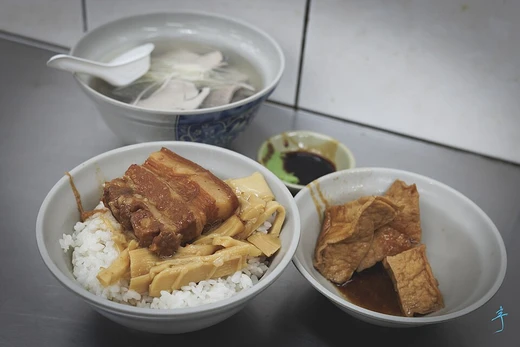
Lou mei
Cantonese braised dishes in master stock sauce.

Lou mei refers to Cantonese dishes simmered in a master stock, also called lou sauce. In Taiwan, the same dish is known as lǔ wèi. The ingredients can include meat, offal, and other trimmings; common choices are beef, pork, duck, and chicken, along with meat-free options like zaai lou mei, which uses wheat gluten and is popular in Hong Kong. This style of cooking is a key element of Hokkien and Teochew cuisine, and it is commonly found in areas where these communities live. Lou mei may be served either cold or hot. Cold lou mei often comes with a side of hot braising liquid to be mixed in just before eating, while hot lou mei is typically served straight from the pot of stock.
- field
- Cuisine
- known_for
- Braising in master stock (lou sauce)
- varieties
- Beef, pork, duck, chicken, offal, tofu, vegetarian options
- serving
- Cold or hot
Quick Facts
- Country
- China
- Course
- Hors d'oeuvre
- Main Ingredient
- Offal
Facts from the source article.
Lore & Background
Lou mei is prepared by braising ingredients in a master stock, or lou sauce, which is a seasoned liquid used repeatedly and replenished over time. The dish is known as lǔ wèi in Taiwan. Common varieties include Chinese stewed chicken, Chinese stewed duck, chicken wings, duck flippers, chicken claw, tofu, pig's ear, beef entrails, beef brisket, duck gizzard, pig tongue, pork hock, pig's blood, spiced corned egg, kelp, and vegetarian options. A notable meat alternative is zaai lou mei, made with wheat gluten, commonly found in Hong Kong.
Reader's Guide
Lou mei holds significance as a core element of Hokkien and Teochew cuisine, reflecting the culinary traditions of these Chinese diaspora communities. Its versatility is demonstrated by the wide range of ingredients used, from meats and offal to tofu and kelp, and by the inclusion of vegetarian versions. The dish can be served cold, often with a side of hot braising liquid for immediate mixing, or hot, served directly from the pot. This adaptability has made lou mei widely available in regions with Hokkien and Teochew populations, where it remains a staple comfort food. The master stock itself is a key feature, as its continuous reuse and replenishment builds complex flavors over time, though the source article does not detail this process. Lou mei's legacy lies in its enduring presence in everyday meals and its representation of Cantonese and Taiwanese braising techniques.
Did You Know?
- Lou mei is known as lǔ wèi in Taiwan.
- Zaai lou mei, made with wheat gluten, is commonly found in Hong Kong.
- Cold lou mei is often served with a side of hot braising liquid for immediate mixing.
- Common varieties include duck flippers, chicken claw, pig's blood, and spiced corned egg.
Frequently Asked Questions
What is Lou mei?
Lou mei is a Cantonese-style braised dish in which various ingredients are simmered in a rich master stock often called lou sauce. In Taiwan, the same preparation is referred to as lǔ wèi.
What kinds of ingredients go into Lou mei?
Classic versions feature beef, pork, duck, chicken, and assorted offal or trimmings. Meat-free alternatives also exist, such as zaai lou mei, which uses wheat gluten as the base.
How is Lou mei typically served?
It can be enjoyed either cold or hot. The cold version often arrives with a small side of hot braising liquid that diners stir in just before eating.
Which culinary traditions does Lou mei belong to?
This braising-in-stock technique is a cornerstone of both Hokkien and Teochew cooking. You will most commonly encounter it in neighborhoods where those communities have long-standing cultural roots.
Are Lou mei and lǔ wèi the same dish?
Yes, they are simply two names for the identical preparation. Lou mei is the term used in Cantonese-speaking contexts, while lǔ wèi is the name most people in Taiwan use for it.
More in Taiwanese cuisine 1-24
Spotted an error? Know more?
This is a living reference — every entry is fact-audited, and reader corrections feed straight into our audit queue. Suggest an edit · See this site's audit record