
Asperger syndrome
Former diagnosis merged into autism spectrum disorder.

Yuasan · CC0
Asperger syndrome, also called Asperger's, was a diagnosis used for people who had major challenges with social interaction and nonverbal communication, along with restricted, repetitive behaviors and interests. It was considered a milder form of autism. The diagnosis was removed when it was folded into autism spectrum disorder (ASD) in the DSM-5 in 2013 and the ICD-11 in 2022. Before that, it was classified as a pervasive developmental disorder. The term was introduced in 1976 by British psychiatrist Lorna Wing, who named it after Austrian pediatrician Hans Asperger. In 1944, Asperger had described children in his care who had trouble making friends, couldn't read others' gestures or emotions, talked at length about their own narrow interests, and were physically clumsy.
The change to a unified ASD diagnosis reflected a shift toward seeing autism-related conditions as a single spectrum, not a judgment on people who had previously been diagnosed with Asperger's. Even after the diagnostic change, many people continued to use the term because it had been part of their identity and personal history for so long. However, self-identification with the label dropped sharply—from 51 percent in 2018 to 19 percent in 2022, according to one set of polls—after the 2018 book *Asperger's Children* by Edith Sheffer revealed that Hans Asperger had been complicit in the Nazis' murder of disabled children.
The diagnosis was added to the World Health Organization's ICD-10 in 1990 (taking effect in 1993) and to the American Psychiatric Association's DSM-4 in 1994. With the DSM-5 in 2013, the symptoms were reclassified as part of autism spectrum disorder, alongside classic autism and pervasive developmental disorder not otherwise specified. The ICD-11 followed suit in 2018 (effective 2022).
The cause of autism, including what used to be called Asperger syndrome, is not well understood. It has high heritability, but the specific genetic factors are not conclusively known. Environmental factors are also thought to play a role, and brain imaging has not found a common underlying condition. There is no single treatment. The UK's National Health Service states that "treatment" of autism should not be a goal, since autism is not a disease that can be removed or cured.
Quick Facts
- Pronounce
- ˈ · æ · s · . · p · ɜːr · . · ɡ · ər · z, - · . · dʒ · ər · z
- Field
- Clinical psychology, psychiatry, pediatrics, occupational medicine
- Symptoms
- Problems with social interaction, verbal and nonverbal communication, and the presence of repetitive behavior and restricted interests
- Complications
- Social isolation, employment problems, family stress, bullying, self-harm
- Onset
- Before two years old
- Duration
- Lifelong
- Causes
- Inconclusive
- Diagnosis
- Based on the symptoms
- Management
- Social skills training, cognitive behavioral therapy, physical therapy, speech therapy, parent training
- Medication
- For associated conditions
- Frequency
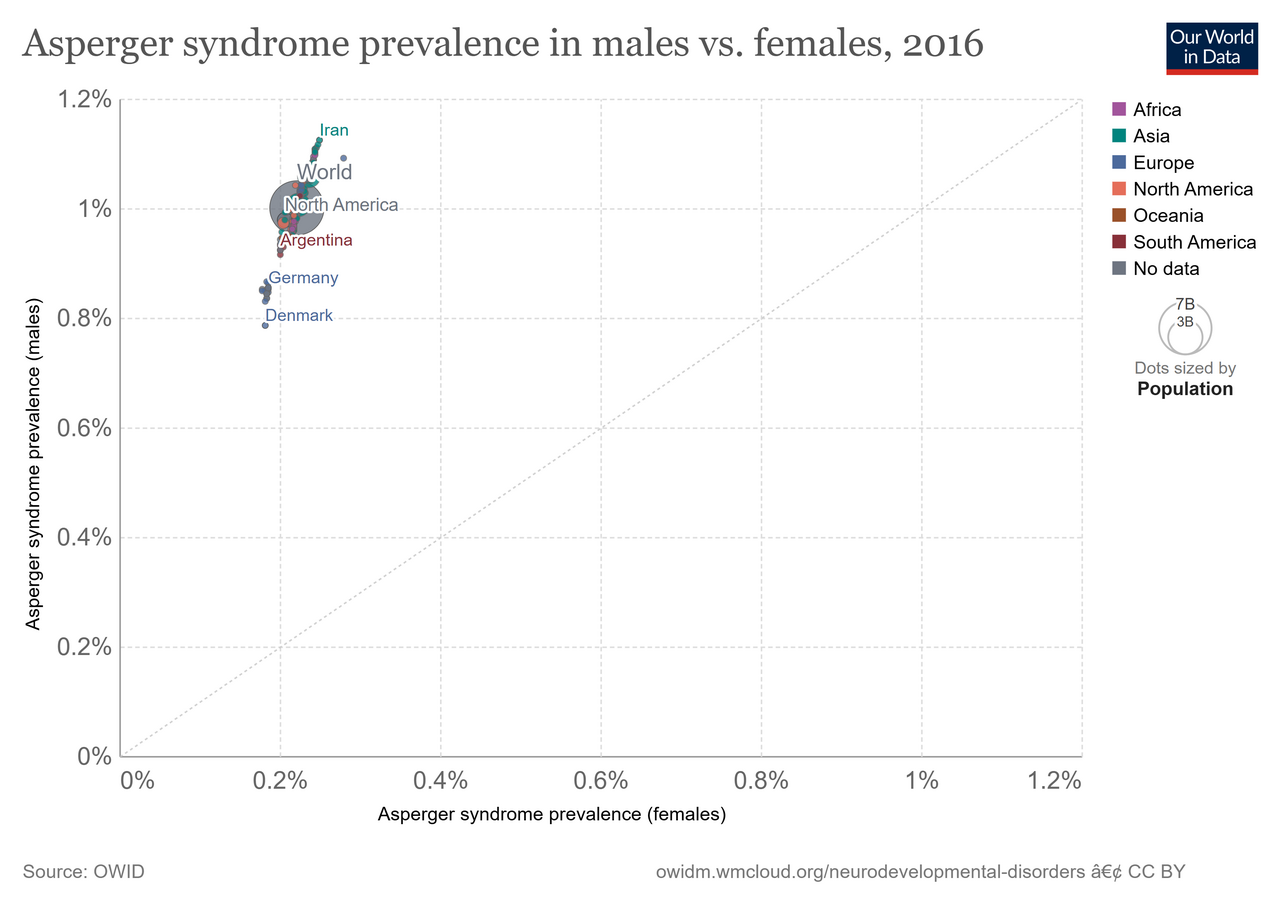
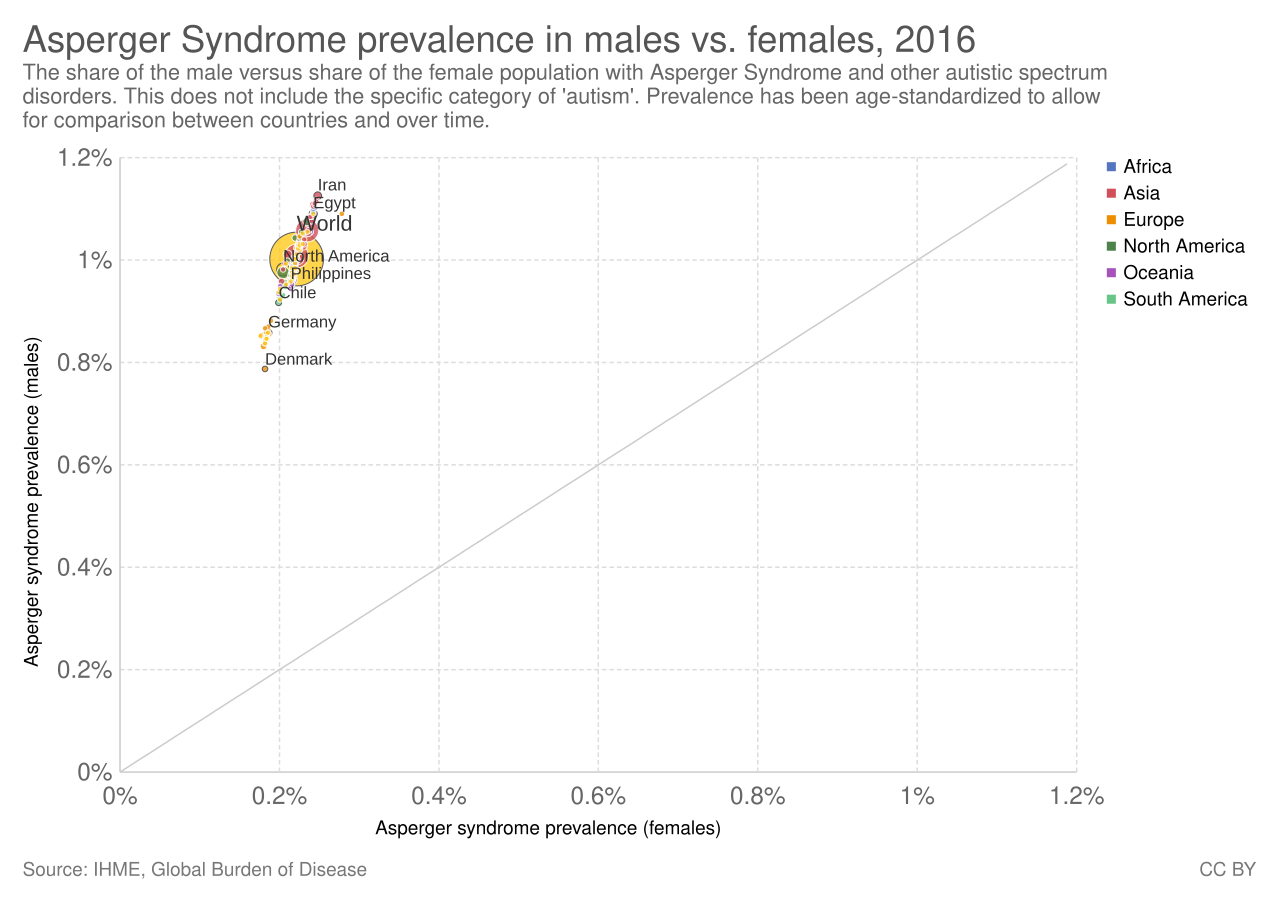
- 37.2 million globally (0.51%) (2015)
- Named After
- Hans Asperger
Facts from the source article.
Lore & Background
Asperger syndrome was named in 1976 by English psychiatrist Lorna Wing after the Austrian pediatrician Hans Asperger, who in 1944 described children in his care who struggled to form friendships, did not understand others' gestures or feelings, engaged in one-sided conversations about their favorite interests, and were clumsy. The diagnosis was included in the tenth edition of the World Health Organization's International Classification of Diseases (ICD-10) in 1990 (coming into effect in 1993), and in the fourth edition of the American Psychiatric Association's Diagnostic and Statistical Manual of Mental Disorders (DSM-4) in 1994. With the publication of DSM-5 in 2013, the symptoms were reclassified as part of autism spectrum disorder. The ICD-11 was adopted by the World Health Assembly in May 2019 and came into effect in 2022, similarly folding Asperger syndrome into the broader autism spectrum disorder diagnosis.
Reader's Guide
Asperger syndrome was considered milder than other autism diagnoses, but its removal from contemporary medical classification systems reflected a shift toward a unified understanding of autism-related conditions rather than a judgment about individuals previously diagnosed with AS. Despite its removal, many people continued to identify with the term Asperger's because of its long-standing use, personal relevance, and the way it shaped their diagnostic history and community identity. However, self-identification using the Asperger label became much rarer (going from 51 percent in 2018 to 19 percent in 2022, according to one set of polls) following the publication of the 2018 Edith Sheffer book Asperger's Children, which revealed that the label's namesake was complicit in the Nazis' murder of disabled children. The change was controversial. The cause of autism, including what was formerly called Asperger syndrome, is not well understood. There is no single treatment, and the UK's National Health Service (NHS) guidelines suggest that 'treatment' of any form of autism should not be a goal, since autism is not 'a disease that can be removed or cured'. Autistic characteristics tend to become less obvious in adulthood, but social and communication difficulties usually persist.
Did You Know?
- Asperger syndrome was estimated to affect 37.2 million people globally in 2015, or about 0.5% of the population.
- Adults with Asperger syndrome exhibited suicidal thoughts at 9 times the rate of the general population, according to one study.
- Self-identification using the Asperger label dropped from 51% in 2018 to 19% in 2022 after a book revealed Hans Asperger's complicity in Nazi crimes.
Origins and the Birth of a Diagnosis
The condition now recognized as part of the autism spectrum traces its clinical lineage to 1944, when Austrian pediatrician Hans Asperger described a group of children in his care. These young patients struggled to make friends, misread others' gestures and emotions, spoke at length in one direction about topics they loved, and moved with noticeable physical awkwardness. For nearly three decades, that description remained largely confined to the medical literature. It was not until 1976 that English psychiatrist Lorna Wing formally attached Asperger's name to the syndrome, giving the condition a recognizable label in the broader psychiatric world. The modern framework crystallized around 1981, and by the 1990s the diagnosis had achieved standardized status: the World Health Organization's ICD-10 incorporated it in 1990, effective 1993, and the American Psychiatric Association's DSM-4 followed in 1994. What had begun as one clinician's observations of a handful of children became a globally recognized diagnostic category.
The 2013 Merger and the Question of Identity
When the DSM-5 was published in 2013, Asperger syndrome disappeared as a standalone diagnosis, its symptoms absorbed into the broader autism spectrum disorder umbrella alongside classic autism and pervasive developmental disorder not otherwise specified. The ICD-11 followed suit, with the change taking effect in 2022. Proponents framed the shift as a move toward a more unified, less hierarchical understanding of autism-related conditions, rejecting the old notion that one form was simply milder than another. Yet the change was genuinely controversial. For many individuals, the Asperger label was not just a medical code; it was the vocabulary of their diagnostic history, their community, and their sense of self. Polling data captured the tension: in 2018, roughly half of those surveyed still chose to identify with the term. The diagnosis had long been classified as a pervasive developmental disorder, a category that shaped how people understood their place in the world, and its removal felt, to some, like an erasure rather than a reorganization.
The Sheffer Revelation and a Fractured Legacy
In 2018, journalist Edith Sheffer published Asperger's Children, a work that upended the comfortable narrative surrounding the syndrome's namesake. Her research revealed that Hans Asperger had been complicit in the Nazi regime's systematic killing of disabled children, a fact that had been largely obscured for decades. The book's impact on the community was swift and measurable. Polls that had shown 51 percent of respondents still identifying with the Asperger label in 2018 recorded a sharp drop to just 19 percent by 2022. For many, the revelation transformed a term that had felt like a neutral medical descriptor into a name inextricably linked to institutional violence against the very people it was meant to describe. The decline in self-identification did not, however, erase the condition's clinical history or the lived experience of those diagnosed under that label for years. It did, though, force a reckoning with how medical history gets sanitized and how a name can carry weight far beyond its clinical utility.
What We Know and What We Don't About the Condition
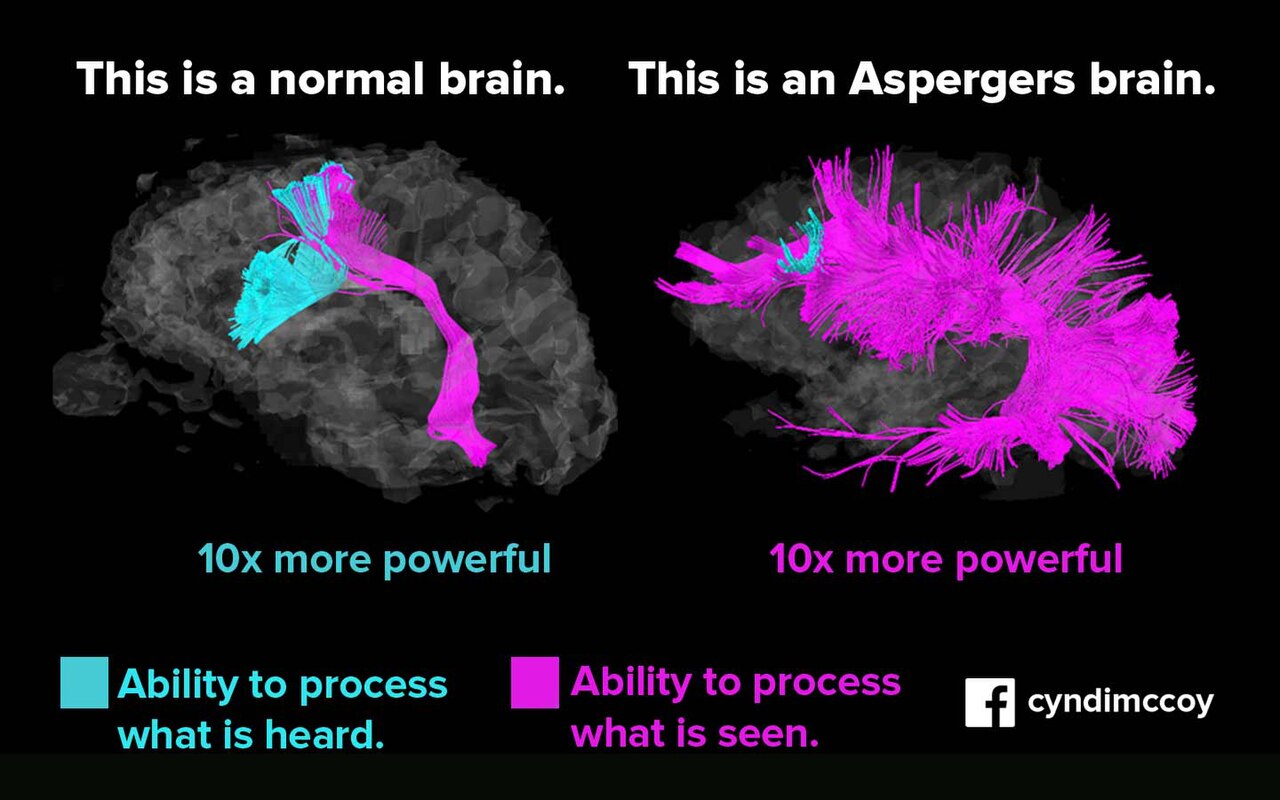
Asperger syndrome was never defined by a single symptom but by a constellation of traits: qualitative difficulties in social interaction, stereotyped and restricted patterns of behavior and interest, and the notable absence of clinically significant delays in cognitive development or general language acquisition. Intense focus on narrow subjects, one-sided speech, limited vocal variety, and physical clumsiness were common but not mandatory for a diagnosis. The underlying causes remain elusive. The condition shows high heritability, yet no specific genetic mechanism has been conclusively identified, and brain imaging studies have failed to pinpoint a shared structural abnormality. Environmental factors are suspected to contribute. Treatment philosophy reflects this uncertainty. The UK's NHS guidelines explicitly state that autism is not a disease to be cured, and the Royal College of Psychiatrists emphasizes that management centers on education, training, and social support to improve everyday functioning. Interventions such as social skills training, cognitive behavioral therapy, speech therapy, and parent coaching exist, but the evidence base for any single approach remains limited.
Gallery


Frequently Asked Questions
Who is Asperger syndrome?
Asperger syndrome was a psychiatric diagnosis describing individuals who struggled significantly with social interaction and nonverbal communication while also displaying narrow, repetitive patterns of behavior and interest. It was historically viewed as a less severe presentation within the autism spectrum.
What was Asperger syndrome's role in medical classification?
It was categorized as a pervasive developmental disorder in major psychiatric manuals, appearing in the ICD-10 in 1993 and the DSM-IV in 1994. It served as a distinct diagnostic label separate from classic autism for roughly two decades.
Why is Asperger syndrome important to the canon?
It shaped how millions of individuals and their families understood their neurological differences for over twenty years as a recognized clinical entity. Its existence and eventual removal reflect shifting views on how to categorize neurodevelopmental conditions.
Who named Asperger syndrome and when did it first appear?
Austrian pediatrician Hans Asperger first described the condition in 1944, and British psychiatrist Lorna Wing coined the eponymous term in 1976. The label then entered mainstream diagnostic manuals in the early-to-mid 1990s.
More in Syndromes 1-24
Spotted an error? Know more?
Reader corrections go straight into our review queue. Suggest an edit · How this site is sourced