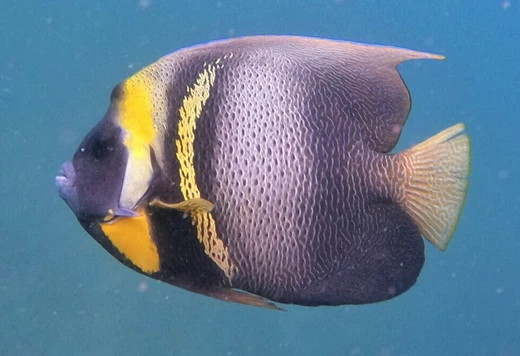
Cortez angelfish (Pomacanthus zonipectus)
Source-cited species reference: taxonomy from WoRMS, biology from FishBase, occurrence map from GBIF, conservation from IUCN Red List, description from Wikipedia.

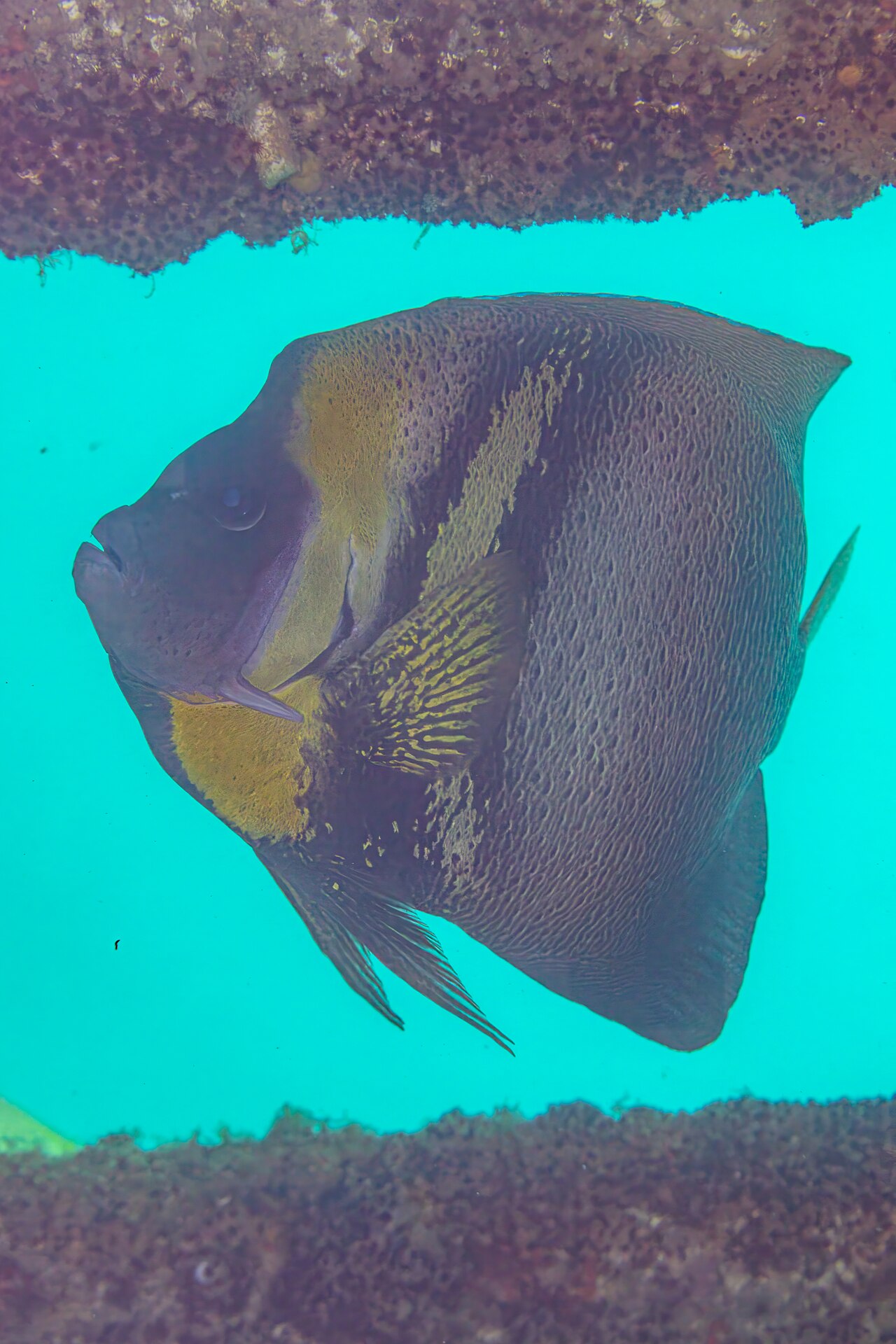
Diego Delso · CC BY-SA 4.0
Pomacanthus zonipectus, the Cortez angelfish, is a species of marine ray-finned fish, a marine angelfish belonging to the family Pomacanthidae. It is from the Eastern Pacific. It occasionally makes its way into the aquarium trade.
- Scientific name
- Pomacanthus zonipectus
- Authority
- (Gill, 1862)
- Family
- Pomacanthidae
- Order
- Acanthuriformes
- Maximum length
- 46 cm
- Depth range
- 6–12 m
- Habitat zone
- reef-associated
- Iucn red list
- Least Concern
- Gbif occurrence records
- 1,016
Taxonomy & the Story Behind the Name
The Cortez angelfish was first formally described in 1862 by the American ichthyologist Theodore Nicholas Gill (1837–1914), who assigned it the binomial Pomacanthodes zonipectus and designated San Salvador in El Salvador as the type locality. Over time, taxonomic placement has shifted somewhat; while the species is now generally recognised within the family Pomacanthidae as a member of the genus Pomacanthus, some authorities still slot it into the subgenus Pomacanthus. The specific epithet zonipectus is a Latin compound: zona means "belt" and pectus means "breast." Together they point to a distinctive dark-brown girdle that wraps around the breast region just behind the pelvic and pectoral fins, a marking that evidently stood out to Gill when he first examined a specimen. As a marine ray-finned fish, the Cortez angelfish sits firmly within the angelfish lineage, yet its particular combination of features and its restricted eastern Pacific range set it apart from more widely known relatives in the same family.
Two Fishes in One: Juvenile and Adult Forms
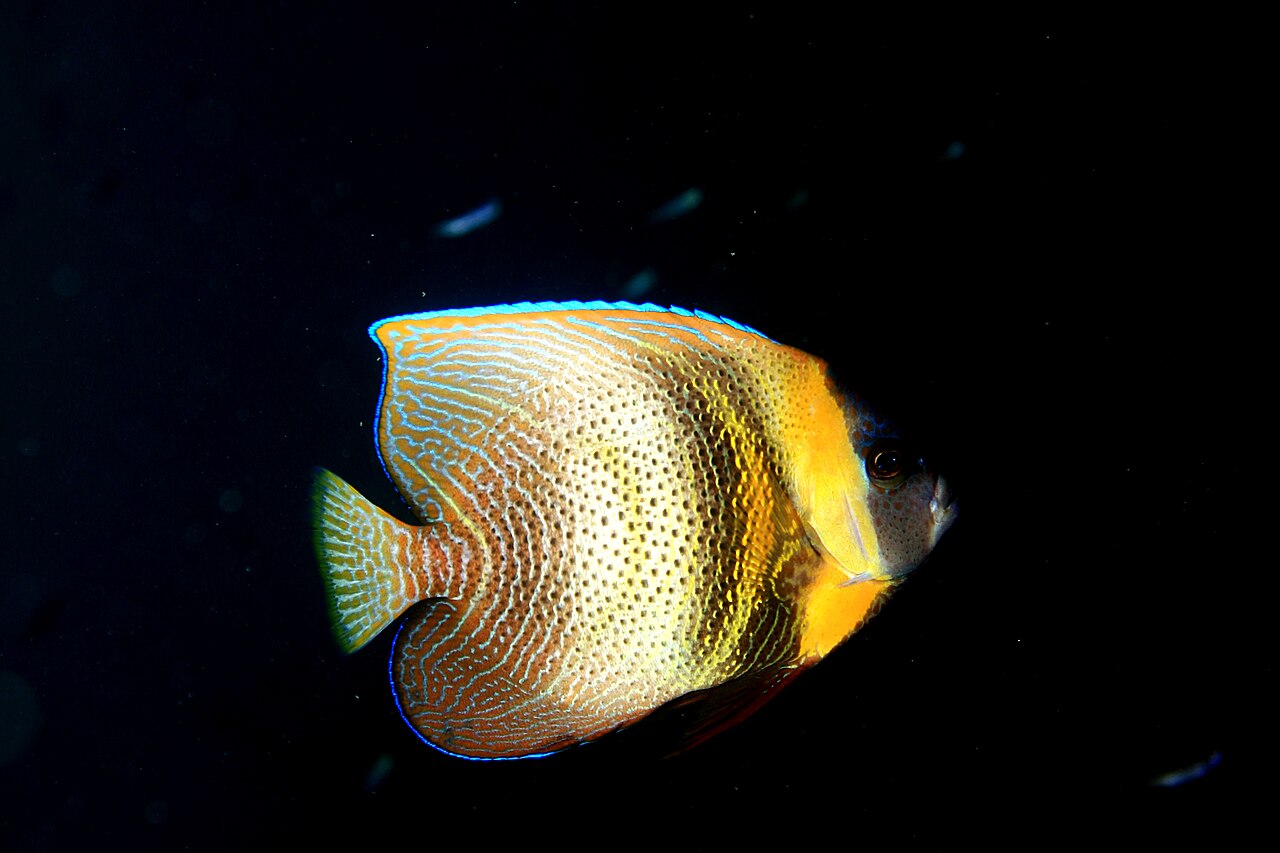
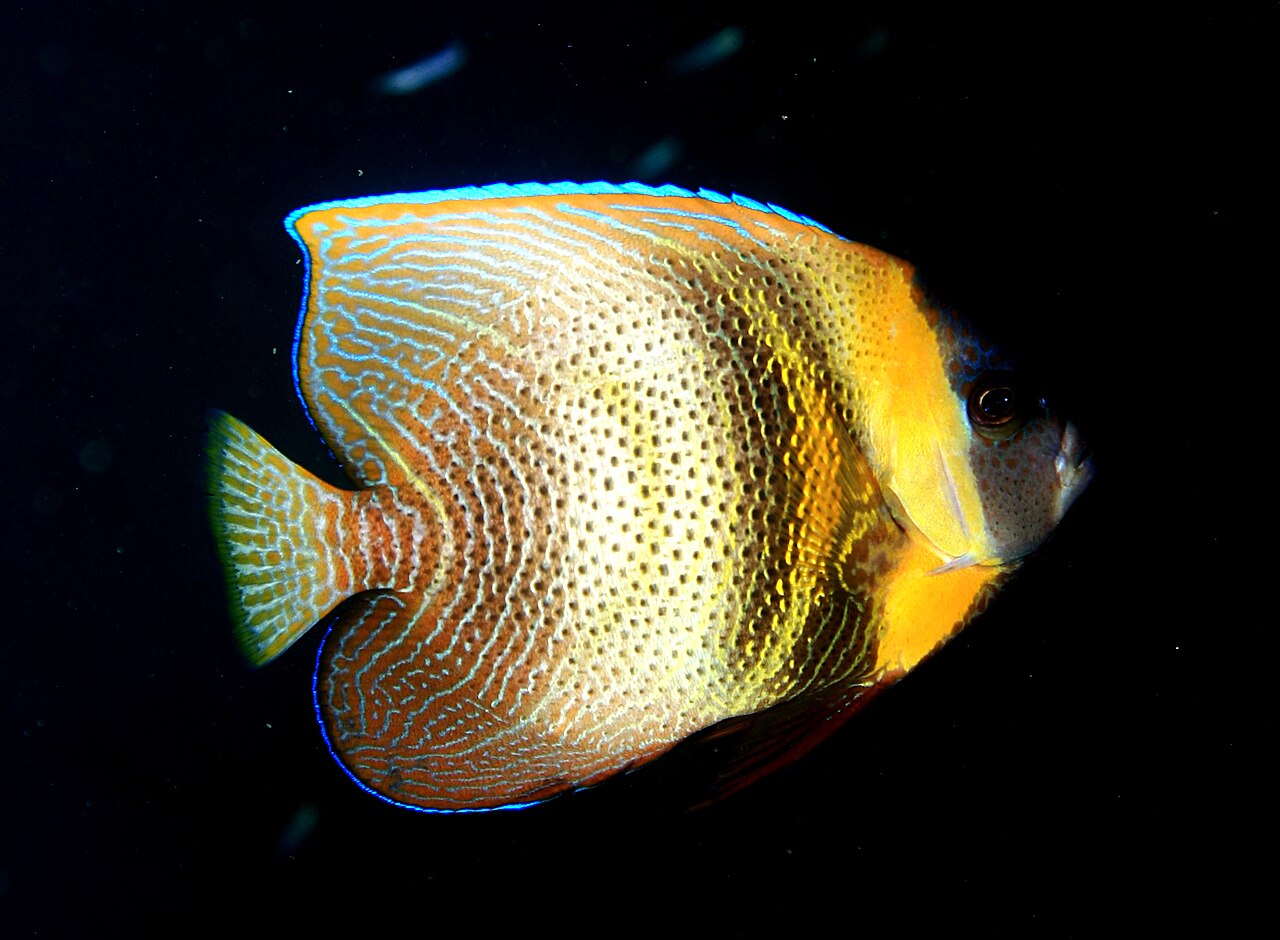
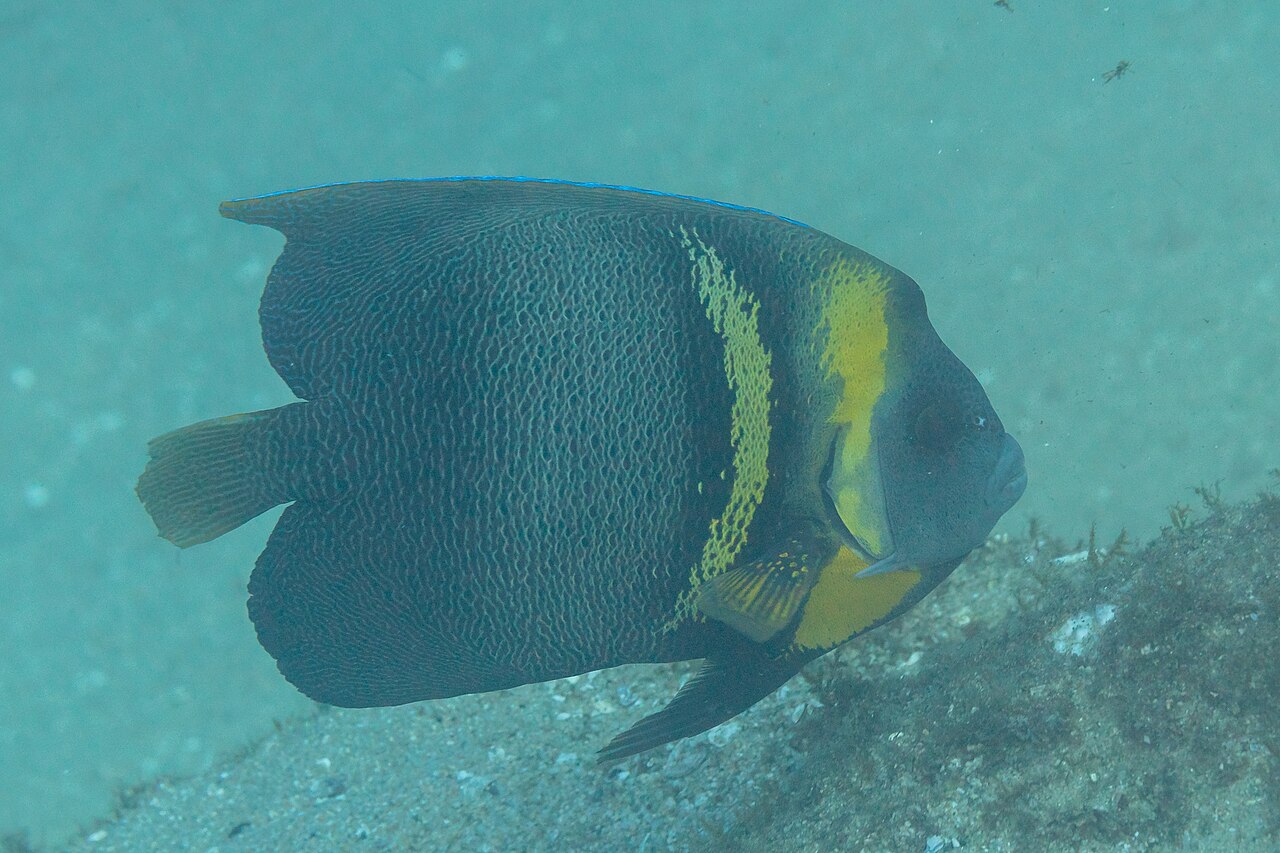
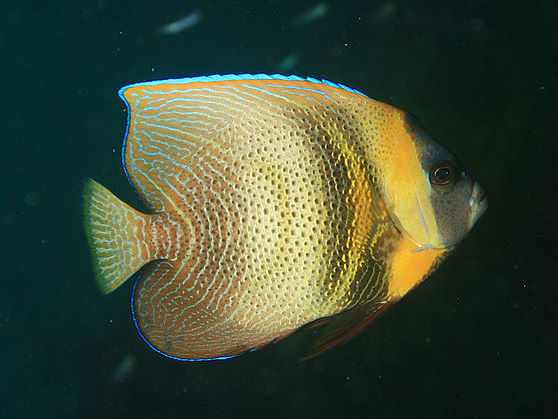
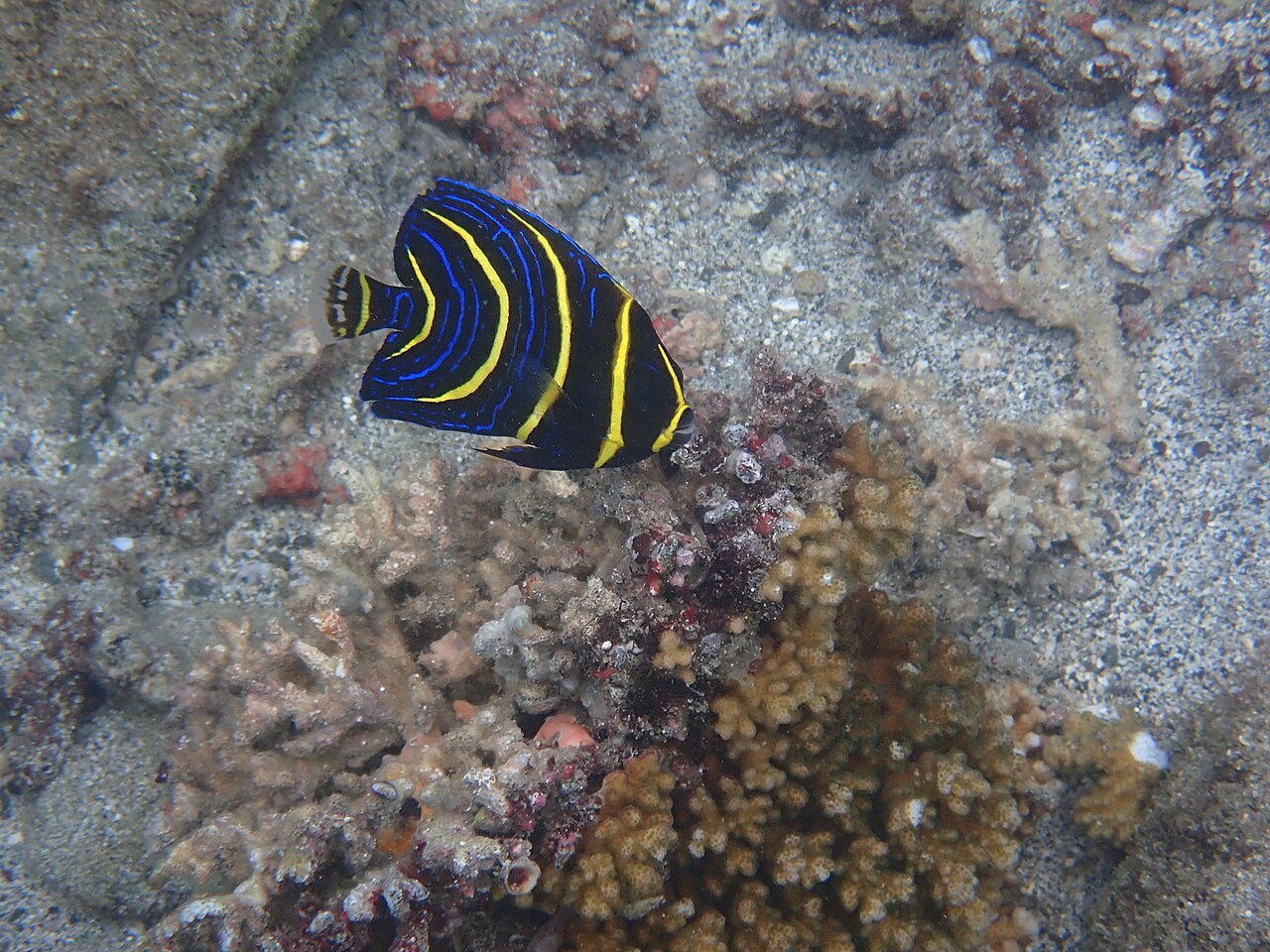
One of the most striking aspects of the Cortez angelfish is how dramatically its appearance changes between life stages. Adults display a deep, compressed body with a short, blunt snout and a small mouth lined with numerous tiny bristle-like teeth. The posterior half of the body is draped in a matrix of crisscrossing lines that fade into a yellowish-green toward the tail. A bold yellow arc sweeps behind the pectoral fins, a bright yellow saddle sits across the nape, and a pale grey patch occupies the middle of the flanks. By contrast, juveniles present a completely different palette: a brownish-black base broken by six vivid vertical yellow bands running from the face to the caudal peduncle, with parallel blue bars filling the spaces between. The dorsal and pelvic fins carry bright blue margins. In fin structure, the species has eleven spines and twenty-four to twenty-five soft rays in the dorsal fin, plus three spines and twenty to twenty-two soft rays in the anal fin. The preoperculum bears a prominent spine at its corner with a smooth vertical edge, while the area beneath the eye and the operculum remain spine-free. Adults can reach roughly forty-six centimetres in total length.
Range Across the Eastern Pacific
The Cortez angelfish is a creature of the eastern Pacific Ocean, with its core distribution stretching from Puerto Peñasco in the northern Gulf of California, Mexico, all the way south to the coast of Peru. This represents a considerable north-south span along the continental margin. Beyond its established range, the species has been recorded as a vagrant in several scattered locations: southern California, the Galapagos Islands, Cocos Island, and Malpelo Island. Notably, despite the proximity of these other Pacific locales, it has not been reported from Clipperton Island. In terms of depth, the Cortez angelfish inhabits waters between six and fifty metres (roughly twenty to one hundred and sixty-four feet), placing it in the shallow to mid-depth zone of the continental shelf. Juveniles have also been found in tidal pools, indicating that the youngest members of the population exploit very shallow, intertidal habitats before the broader reef and rocky-substrate environment where adults are typically encountered.
Daily Life, Feeding, and Pair Bonds
The Cortez angelfish is a diurnal species, carrying out its primary activities during daylight hours. Its feeding strategy is substrate-oriented: it forages on items taken directly from the seafloor, with sponges forming the main component of its diet. It also consumes tunicates, algae, bryozoans, hydroids, and the eggs of other fish. Socially, the species presents a clear contrast between life stages. Adults tend to form pairs and range widely over their territory, and they appear to be monogamous, maintaining a stable partnership. Juveniles, by contrast, are solitary and territorial, defending small areas against other individuals of the same species. Reproduction follows a seasonal pattern, with spawning occurring from midsummer through early autumn. The resulting young are most abundant in the water from August to November, a window that aligns with the timing of successful spawning events. In the aquarium trade, the Cortez angelfish appears only occasionally, a relative rarity that likely reflects both its limited geographic range and the specific substrate-based feeding conditions it requires.
Gallery
Related in Cortez angelfish
Links follow this subject's own source article.
Elsewhere in Cortez angelfish
Spotted an error? Know more?
Reader corrections go straight into our review queue. Suggest an edit · How this site is sourced