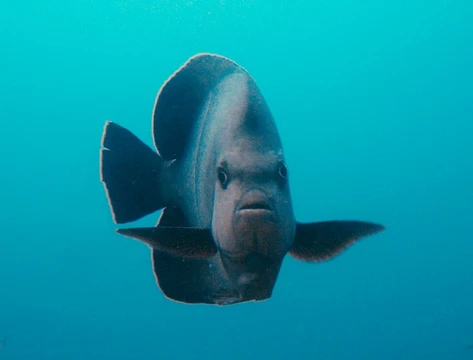
Old woman angelfish (Pomacanthus rhomboides)
Source-cited species reference: taxonomy from WoRMS, biology from FishBase, occurrence map from GBIF, conservation from IUCN Red List, description from Wikipedia.

Bjoertvedt · CC BY-SA 3.0
The old woman angelfish (Pomacanthus rhomboides) is a species of marine ray-finned fish, a marine angelfish belonging to the family Pomacanthidae. It is found in the western Indian Ocean.
- Scientific name
- Pomacanthus rhomboides
- Authority
- (Gilchrist & Thompson, 1908)
- Family
- Pomacanthidae
- Order
- Acanthuriformes
- Maximum length
- 46 cm
- Habitat zone
- reef-associated
- Iucn red list
- Least Concern
- Gbif occurrence records
- 217
Physical Appearance and Coloration
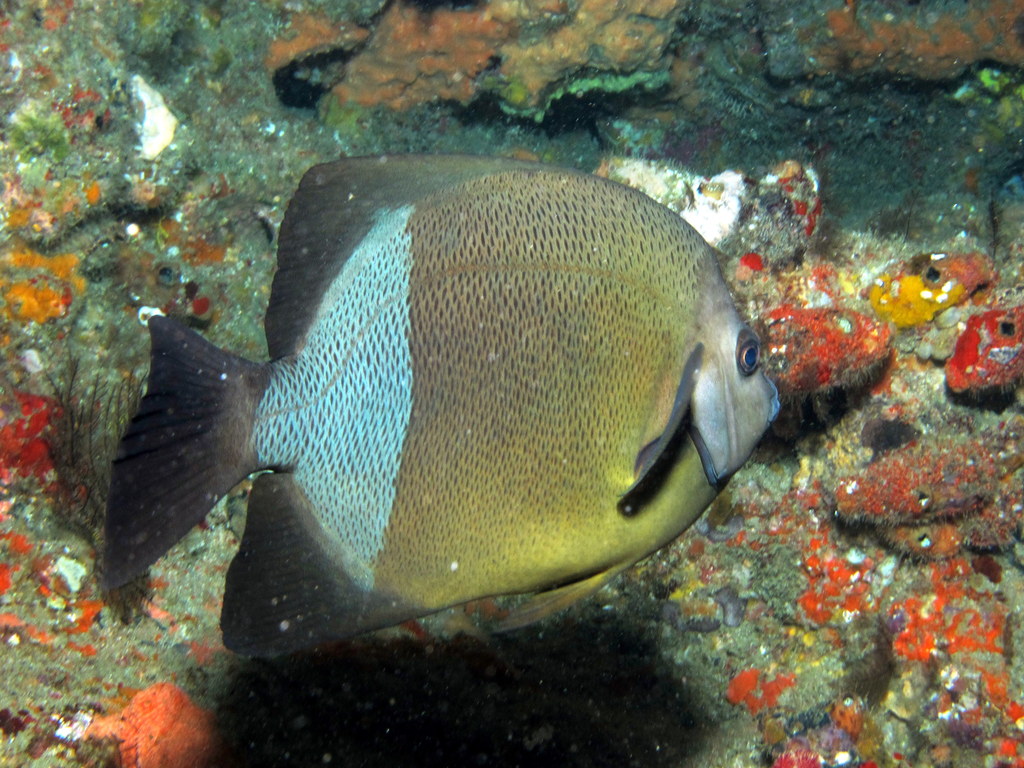
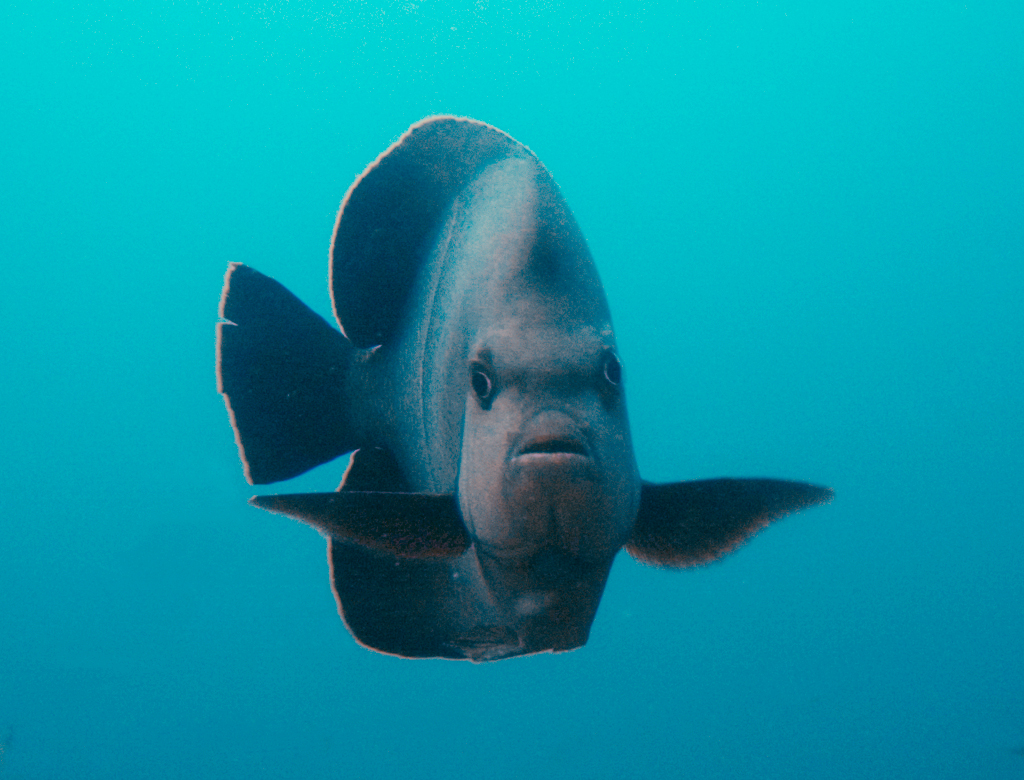
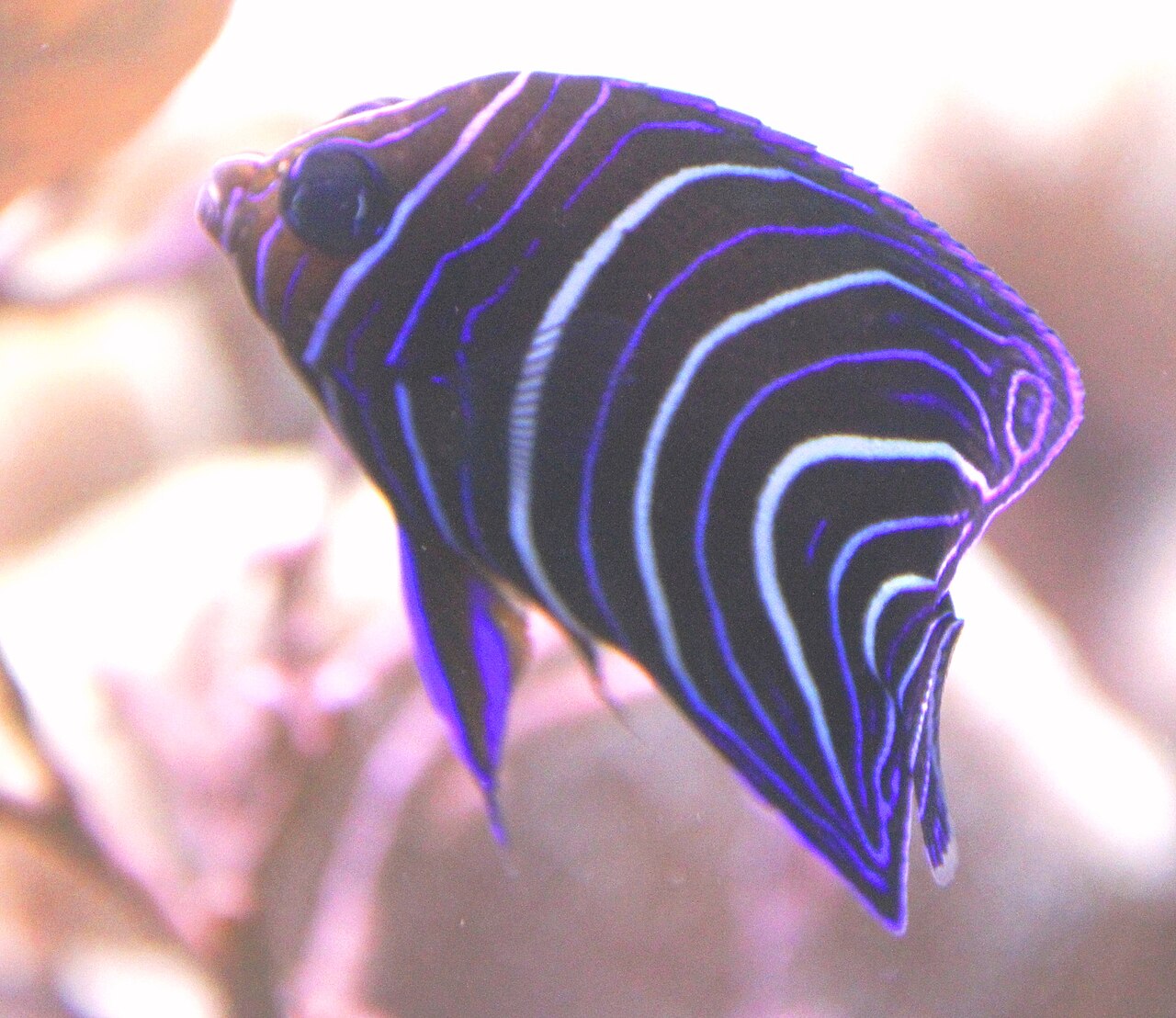
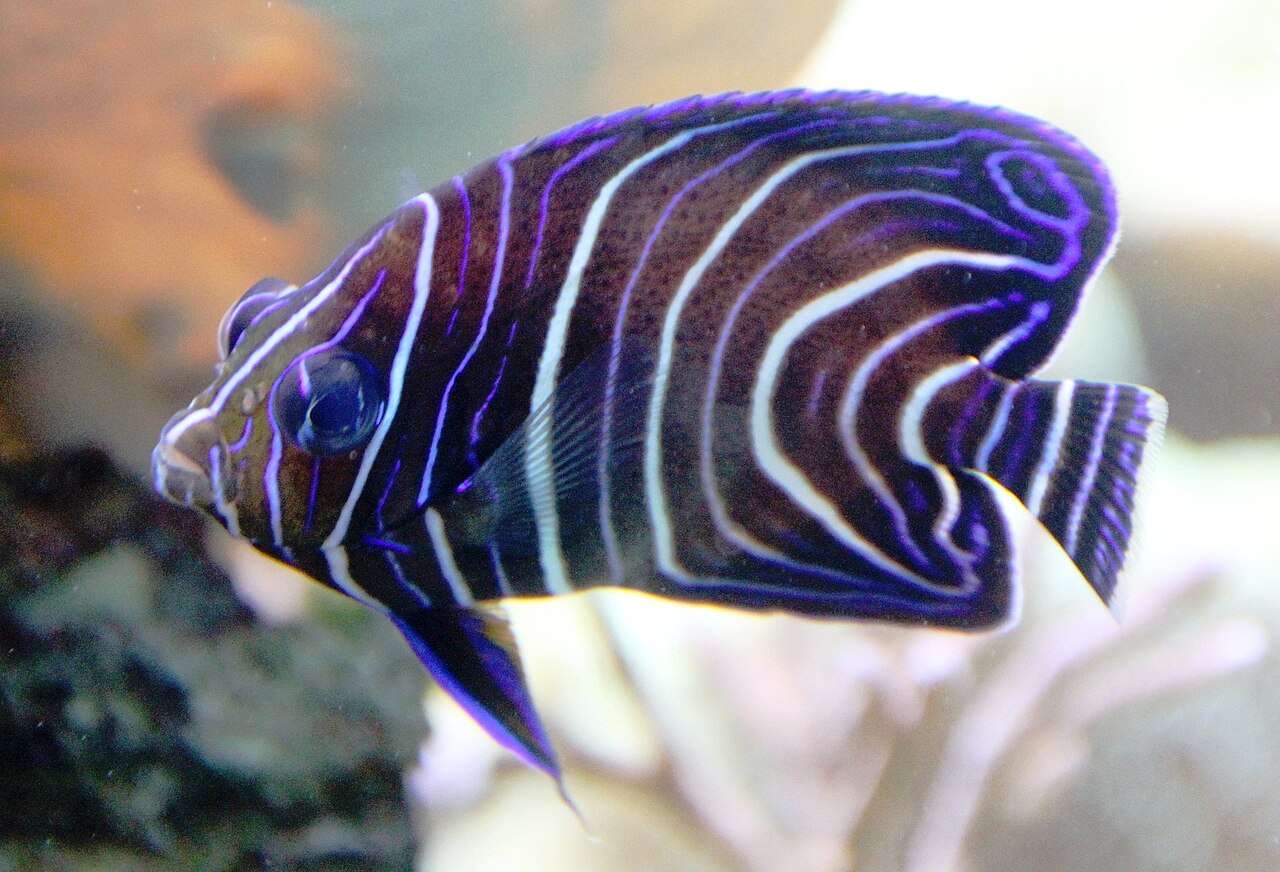
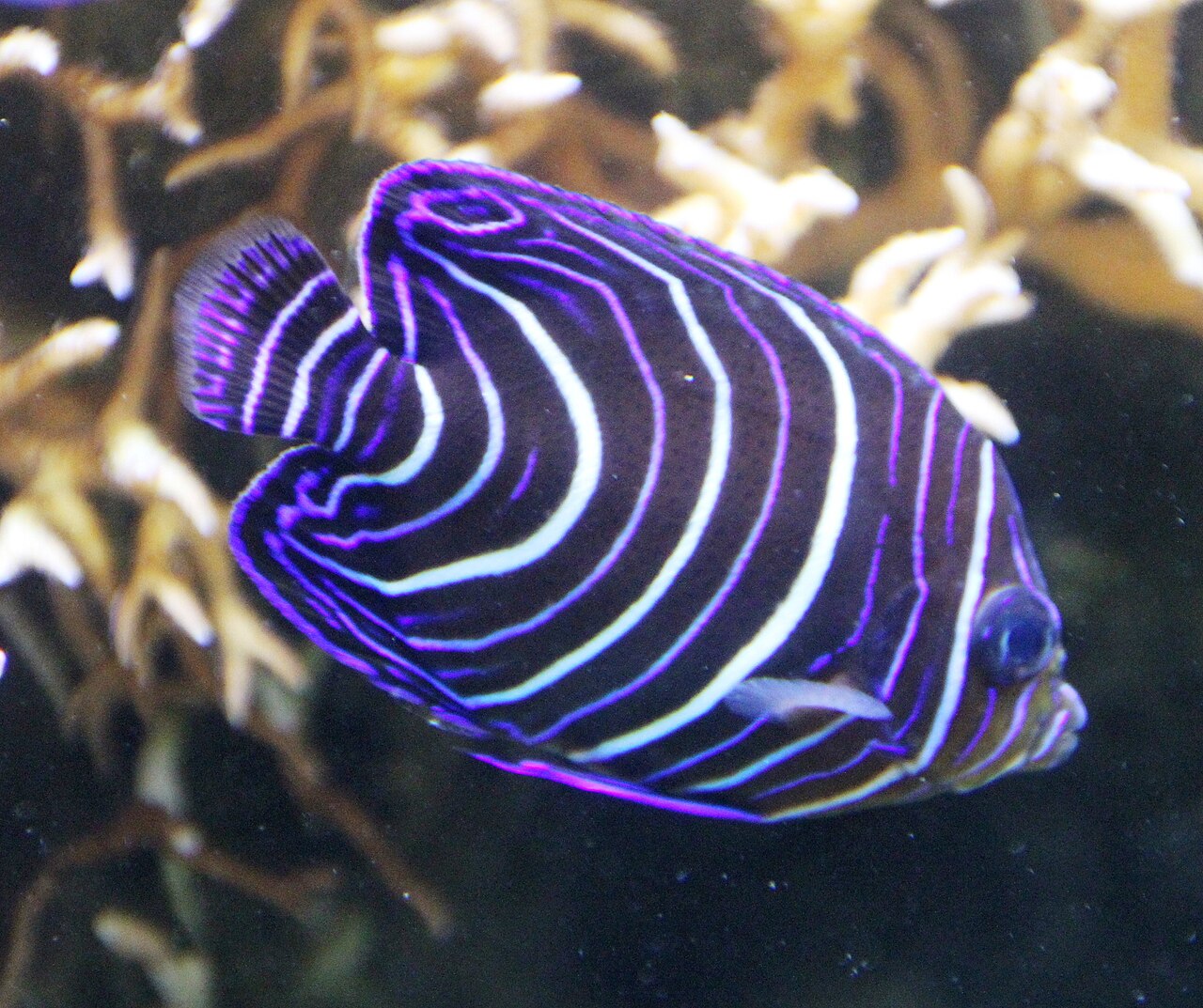
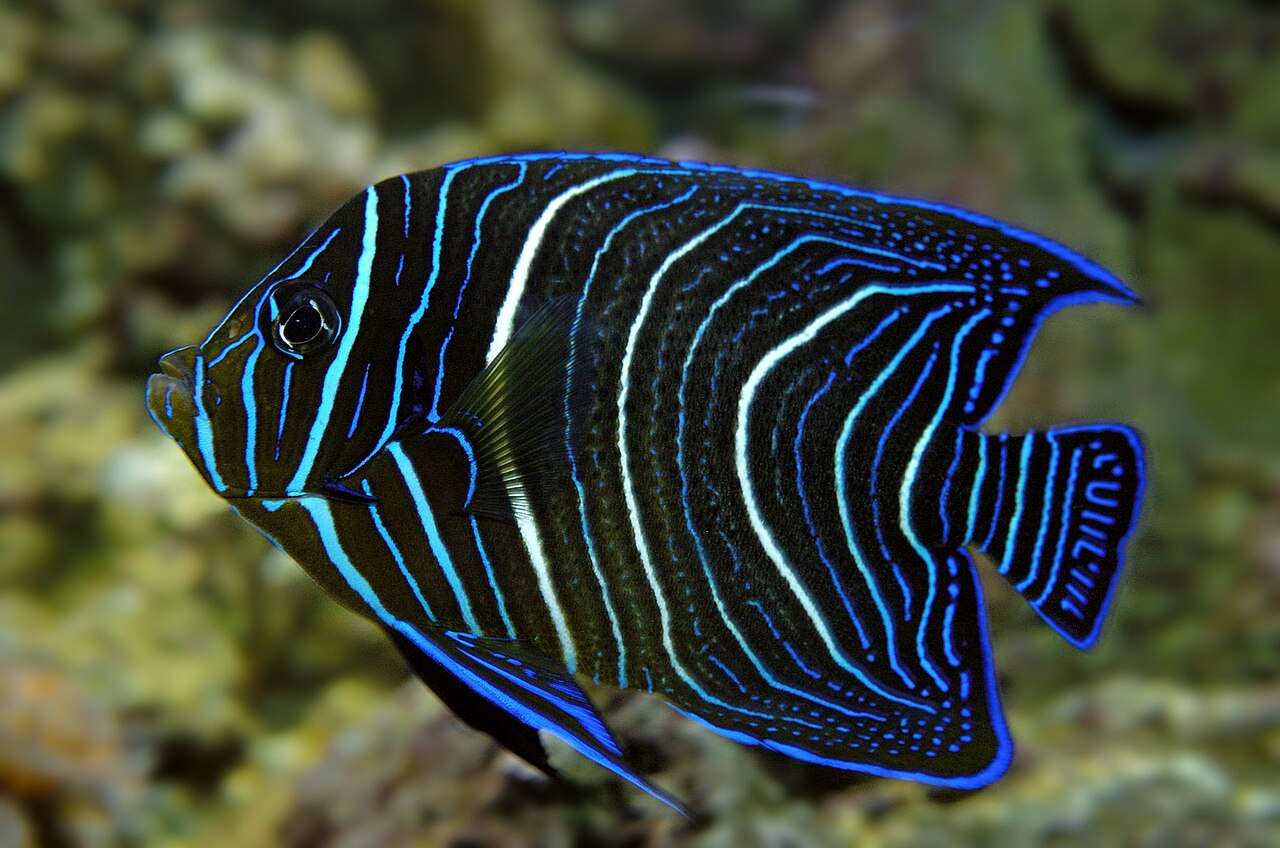
The old woman angelfish stands out among its relatives in the genus Pomacanthus for being, as an adult, possibly the least colourful member of the group. Rather than displaying the vivid hues typical of marine angelfish, mature individuals present a subdued palette: the front two-thirds of the body are a bronze brown, while the rear third shifts to a pale bluish grey. This drab appearance contrasts sharply with the juvenile stage, when the fish is actually more vibrant than the adult. Young old woman angelfish are predominantly black, streaked with thin, wavy lines of blue and white, a pattern shared with juveniles of other Pomacanthus species. In terms of body plan, the fish has a deep, almost quadrangular shape, a geometric quality so distinctive that it inspired the species name. The dorsal fin bears between eleven and thirteen spines alongside twenty-two to twenty-five soft rays, while the anal fin carries three spines and twenty-one to twenty-three soft rays. At full size, the species reaches a maximum total length of forty-six centimetres, or roughly eighteen inches.
Range and Habitat
The old woman angelfish is restricted to a relatively narrow stretch of the western Indian Ocean. Its known range extends from Maputo Bay in Mozambique southward along the South African coastline, reaching as far as Knysna in the Western Cape. Within this corridor, the species inhabits shorelines and rocky reefs at depths ranging from five to thirty metres. The life stages show a clear spatial separation: juveniles occupy shallow tidal pools, while adults form small groups that remain close to the coast. Their diet is primarily composed of algae and benthic invertebrates found on the reef substrate, though they will occasionally rise toward the surface to feed on plankton. This combination of a limited geographic footprint, a preference for nearshore rocky habitats, and a diet tied to both benthic and pelagic food sources gives the species a fairly specialised ecological niche within the western Indian Ocean reef system.
Taxonomy and Discovery
The old woman angelfish was first formally described in 1908 under the name Holacanthus rhomboides by two ichthyologists working in collaboration: the Scots naturalist John Dow Fisher Gilchrist, who lived from 1866 to 1926, and his South African colleague William Wardlaw Thompson, who died in 1917. The type locality they recorded was KwaZulu-Natal, anchoring the species to the eastern coast of South Africa. Over time, taxonomic placement has shifted somewhat; while the species now sits in the genus Pomacanthus within the family Pomacanthidae, some authorities still assign it to the subgenus Acanthochaetodon. The specific epithet rhomboides, meaning rhombus-like, was likely chosen to capture the fish's deep, almost quadrangular body shape, a geometric quality that distinguishes it from the more laterally compressed profiles of many other marine angelfish. As a ray-finned fish, it belongs to the broader group of marine angelfishes, a family known for their reef-dwelling habits.
Rarity in the Aquarium Trade
One of the most distinctive features of the old woman angelfish's relationship with the human world is its near-total absence from the aquarium trade. The species' geographic range, confined to the stretch of coast from Mozambique to the Western Cape of South Africa, does not overlap with the principal areas along Africa's coastline where marine fish are collected for the ornamental fish market. Consequently, the old woman angelfish is extremely rare in the aquarium trade, a status that distinguishes it from many of its more widely distributed Pomacanthus relatives. This limited commercial visibility means the species remains largely a feature of the local reef ecosystem rather than a commodity for hobbyists. Its restricted distribution to a single coastal corridor, combined with its preference for nearshore rocky reefs and shallow tidal pools, further limits the practical accessibility of wild populations to collectors operating in the main trade hubs. The result is a species whose primary significance lies in its ecological role within the western Indian Ocean rather than in any commercial or ornamental context.
Gallery
Spotted an error? Know more?
Reader corrections go straight into our review queue. Suggest an edit · How this site is sourced