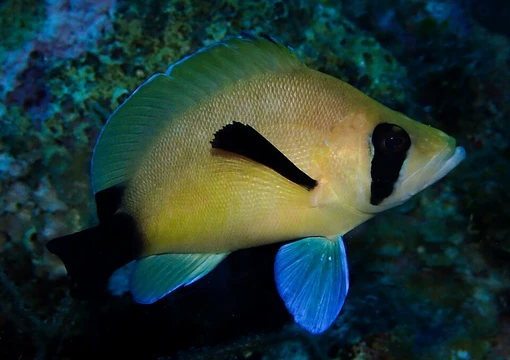
The Puffer
A beak-toothed reef sentinel armed with the ocean's most lethal natural toxin.

The Puffer (family Tetraodontidae) is a group of small, globular bony fishes inhabiting warm tropical and subtropical waters worldwide. They are best known for two defining traits: the ability to rapidly distend their bodies by ingesting water or air as a defensive inflation, and the presence of tetrodotoxin (TTX), a non-protein neurotoxin among the most potent natural compounds described in the biomedical literature (Wikipedia: Tetraodontidae; Wikipedia: Tetrodotoxin). The family contains roughly 120 described species spanning genera such as *Tetraodon*, *Lagocephalus*, *Arothron*, and *Takifugu* (FishBase: Tetraodontidae).
Ecologically, puffers occupy a broad niche from shallow coral reefs to deeper pelagic and even freshwater habitats. Their fused, beak-like dentition—formed from modified jaw bones rather than true teeth—allows them to crush hard-shelled invertebrates, making them significant predators on sea urchins, bivalves, and crustaceans on reef systems (Wikipedia: Tetraodontidae). In Japanese culinary tradition, certain species are prepared as *fugu*, a dish restricted to specially licensed chefs owing to the lethal risk of TTX (Wikipedia: Fugu).
- Family
- Tetraodontidae (Wikipedia: Tetraodontidae)
- Defense mechanism
- Rapid body inflation via water/air ingestion (Wikipedia: Tetraodontidae)
- Toxin
- Tetrodotoxin (TTX) – potent non-protein neurotoxin (Wikipedia: Tetrodotoxin)
- Dentition
- Fused jaw-bone plates forming a beak-like structure (Wikipedia: Tetraodontidae)
- Distribution
- Warm tropical and subtropical marine and some brackish/freshwater systems worldwide (FishBase: Tetraodontidae)
- Swim bladder
- Absent – buoyancy regulated by gut gas (Wikipedia: Tetraodontidae)
Lore & Background
Pufferfish lack a swim bladder, a trait shared with only a handful of teleost lineages. Instead they modulate buoyancy by adjusting the volume of gas held in their digestive tract, a mechanism that also underpins their famous inflation response: when threatened, a puffer rapidly engulfs water (or, at the surface, air) into its elastic stomach, ballooning into a spiny sphere that deters most predators (Wikipedia: Tetraodontidae). The skin, normally smooth, is studded with small dermal spines that erect as the body expands, turning the fish into a near-impenetrable ball.
The chemical payload is no less remarkable. Tetrodotoxin, a small tricyclic guanidinium compound, binds with extreme affinity to voltage-gated sodium channels, blocking nerve and muscle conduction. It is produced not by the fish's own genome but by symbiotic bacteria (principally *Vibrio* and *Pseudoalteromonas* spp.) residing in the puffer's gut and organs; the fish acts as a host vector (Wikipedia: Tetrodotoxin). Toxicity varies by species, season, and diet, which is why no universal 'safe' portion exists without laboratory assay.
On healthy coral reefs, puffers function as keystone invertebrate predators. By grazing on sea urchins and bivalves, they help regulate algal and invertebrate biomass and free up substrate for coral recruitment (Wikipedia: Coral reef). Their beak-like jaws—formed by the fusion of the premaxilla and dentary into a single, continuously growing plate—can crack shells that would defeat most other reef fish of comparable size (Wikipedia: Tetraodontidae).
Reader's Guide
Species Dossier – Tetraodontidae (commonly 'The Puffer')
Ring name: The Puffer. Real name: Family Tetraodontidae (~120 species; no single 'real name' beyond the taxonomic authority). Mask design: A smooth, globular body studded with short dermal spines that erect when inflated; large, forward-set eyes; a beak formed by fused jaw-bone plates replacing individual teeth (Wikipedia: Tetraodontidae).
Signature move: Rapid inflation – the puffer engulfs water or air into its elastic stomach, ballooning to two or three times its resting volume and presenting a spiny, inedible sphere to any predator (Wikipedia: Tetraodontidae).
Faction allegiance: Coral-reef invertebrate-predator guild; keystone grazer on urchins, bivalves, and crustaceans (Wikipedia: Coral reef).
Narrative hook: In the Shakespearean framing of the reef as a court, the puffer is the Fool who speaks the one truth no one else will name—that the king's (the reef's) power rests on a single, invisible toxin no blade can cut. It is the character who, in the final act, swallows the poison and becomes the poison, turning the court's own weapon back upon itself (Wikipedia: Tetrodotoxin).
Did You Know?
- Pufferfish have no swim bladder; they control buoyancy by adjusting the volume of gas in their gut, the same organ they use for defensive inflation (Wikipedia: Tetraodontidae).
- Tetrodotoxin is produced by symbiotic gut bacteria, not by the puffer's own genes; the fish is a host, not a synthesizer (Wikipedia: Tetrodotoxin).
- The 'teeth' of a puffer are actually fused plates of the premaxilla and dentary bones, not true teeth, and they grow continuously throughout the fish's life (Wikipedia: Tetraodontidae).
- In Japan, only chefs holding a government-issued *fugu-shō* licence may serve pufferfish, a regulation in place because TTX has no known antidote (Wikipedia: Fugu).
More in Fish
Elsewhere in Masked Hamlet
Spotted an error? Know more?
Reader corrections go straight into our review queue. Suggest an edit · How this site is sourced