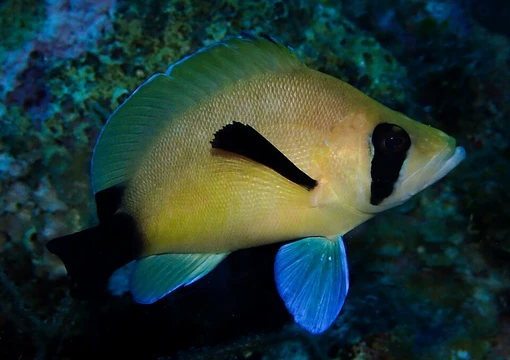
Blowfish
A globular guardian of the reef that turns threat into a swollen, toxin-laced fortress.

Blowfish, more formally known as pufferfish, comprise the family Tetraodontidae within the order Tetraodontiformes (Wikipedia: Tetraodontidae; FishBase: Tetraodontidae). They are small-to-medium bony fishes found in tropical and subtropical marine waters across all major ocean basins, with a few genera extending into brackish and even freshwater habitats (ITIS: Tetraodontidae). The family contains roughly 120 described species across several genera, including *Tetraodon*, *Arothron*, *Lagocephalus*, and *Dichotomycterus* (Wikipedia: Pufferfish).
Their most celebrated trait is hydrostatic inflation: when threatened, a blowfish rapidly ingests water (not air) into a highly elastic stomach, expanding its globular body to a size that deters most predators (Wikipedia: Pufferfish, §Defense). Compounding this mechanical defense, the skin and viscera of many species accumulate tetrodotoxin (TTX), a potent neurotoxin that renders them unpalatable or lethal to would-be predators and to humans who consume them (Wikipedia: Tetrodotoxin; NOAA Fisheries: Pufferfish). Ecologically, blowfish occupy mid-water and benthic foraging niches, feeding on small invertebrates, sea urchins, and crustaceans, and they play a measurable role in controlling urchin populations on coral reefs (Wikipedia: Tetraodontidae, §Ecology).
- Taxonomic rank
- Family (Tetraodontidae), Order Tetraodontiformes
- Common names
- Blowfish, pufferfish, toadfish
- Habitat
- Tropical and subtropical marine waters; a few species in brackish/freshwater
- Primary defense
- Hydrostatic inflation (ingestion of water into elastic stomach)
- Toxin (many spp.)
- Tetrodotoxin (TTX) in skin, liver, and gonads
- Dentition
- Fused, beak-like teeth (no separate jaw bones)
- Approximate species count
- ~120 described species (Wikipedia: Tetraodontidae)
Lore & Background
The blowfish's defensive strategy is a two-layered evolutionary adaptation documented across the family. The first layer is mechanical: the stomach wall is composed of a highly extensible, collagen-rich membrane that can expand to several times the fish's resting volume. The fish draws water in through its mouth and holds it in the stomach, inflating the body into a near-sphere studded with dermal spines or tubercles, making it physically difficult for a predator to swallow (Wikipedia: Pufferfish, §Inflation). The second layer is chemical. Tetrodotoxin, a non-protein neurotoxin that blocks voltage-gated sodium channels, is synthesized by symbiotic bacteria (e.g., *Vibrio* sp., *Pseudomonas* sp.) living in the fish's gut and deposited in the skin, liver, and gonads (Wikipedia: Tetrodotoxin, §Biosynthesis). A single medium-sized *Takifugu* specimen can carry enough TTX to kill tens of adult humans, making the fish one of the most toxic vertebrates known (NOAA Fisheries: Pufferfish).
Reproductively, most marine tetraodontids are broadcast spawners: the female releases a large clutch of buoyant eggs into the water column, and the male fertilizes them externally before the pair disperse (Wikipedia: Pufferfish, §Reproduction). Larvae are planktonic for the first several weeks, drifting with currents before settling onto reefs or seagrass beds. Juveniles of many species are notably spiny and brightly colored, a trait that diminishes as they mature into the more subdued, globular adults familiar to divers (Wikipedia: Tetraodontidae, §Life cycle).
In reef ecosystems, blowfish are significant consumers of sea urchins and small crustaceans. By preying on urchins, they help moderate algal overgrowth on coral substrates, indirectly supporting coral recruitment (Wikipedia: Tetraodontidae, §Ecology). Their relatively slow, undulating swimming style—powered by small pectoral and pelvic fins rather than a powerful caudal fin—makes them vulnerable to fast predators, which is precisely the selective pressure that favored the inflation-and-toxin defense system (Wikipedia: Pufferfish, §Locomotion).
Reader's Guide
Ring name: The Globular Sovereign Real name (taxonomic): *Lagocephalus* sp. (representative genus, Tetraodontidae) Mask design: A seamless, mottled brown-and-cream carapace of fused dermal tubercles; when the 'mask' activates, the entire body swells into a rigid sphere studded with short, forward-pointing spines, the eyes reduced to two dark pinpricks. No visible gill slits. The 'mask' is the fish itself—there is no separation between performer and costume. Signature move: 'The Swell'—a single, explosive inhalation of water that triples the body's volume in under two seconds, ending the exchange before the opponent can land a second strike. Faction allegiance: The Reef's Quiet Order (benthic mid-water guild; neither aggressor nor prey, but regulator)
Narrative hook: In the promotion's Shakespearean lore, the Globular Sovereign is cast as the 'Nurse' of *Hamlet*—the one who, when cornered, does not fight but *becomes* an immovable, toxic wall. Like the Nurse who shelters Ophelia's secrets, the Sovereign shields the reef's urchin populations from overgrazing, and shields itself from every predator that mistakes stillness for vulnerability. Its soliloquy is silent: a slow, undulating drift, a beak cracking open a sea urchin's case, and then the sudden, wordless 'To be or not to be' of the Swell, when the answer is always *to be*—swollen, spiked, and untouchable. The audience in the shallows watches, and no one strikes.
Did You Know?
- Blowfish inflate by ingesting water, not air; the elastic stomach wall can expand to several times the fish's resting volume (Wikipedia: Pufferfish, §Inflation).
- Tetrodotoxin, the toxin in many pufferfish species, is estimated to be 1,200–2,000 times more toxic than cyanide by weight, and has no known antivenom (Wikipedia: Tetrodotoxin).
- Blowfish teeth are not true teeth in the usual sense: the jaw bones fuse into beak-like structures that grow continuously, much like a rodent's incisors (Wikipedia: Tetraodontidae, §Morphology).
- The tetrodotoxin in pufferfish is not produced by the fish itself but is synthesized by symbiotic bacteria in its gut and deposited in the skin and organs (Wikipedia: Tetrodotoxin, §Biosynthesis).
More in Fish
Elsewhere in Masked Hamlet
Spotted an error? Know more?
Reader corrections go straight into our review queue. Suggest an edit · How this site is sourced