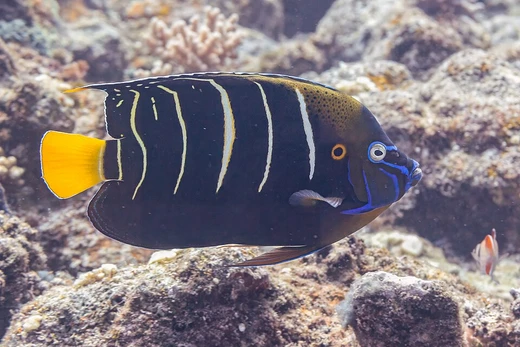
Goldtail angelfish (Pomacanthus chrysurus)
Source-cited species reference: taxonomy from WoRMS, biology from FishBase, occurrence map from GBIF, conservation from IUCN Red List, description from Wikipedia.

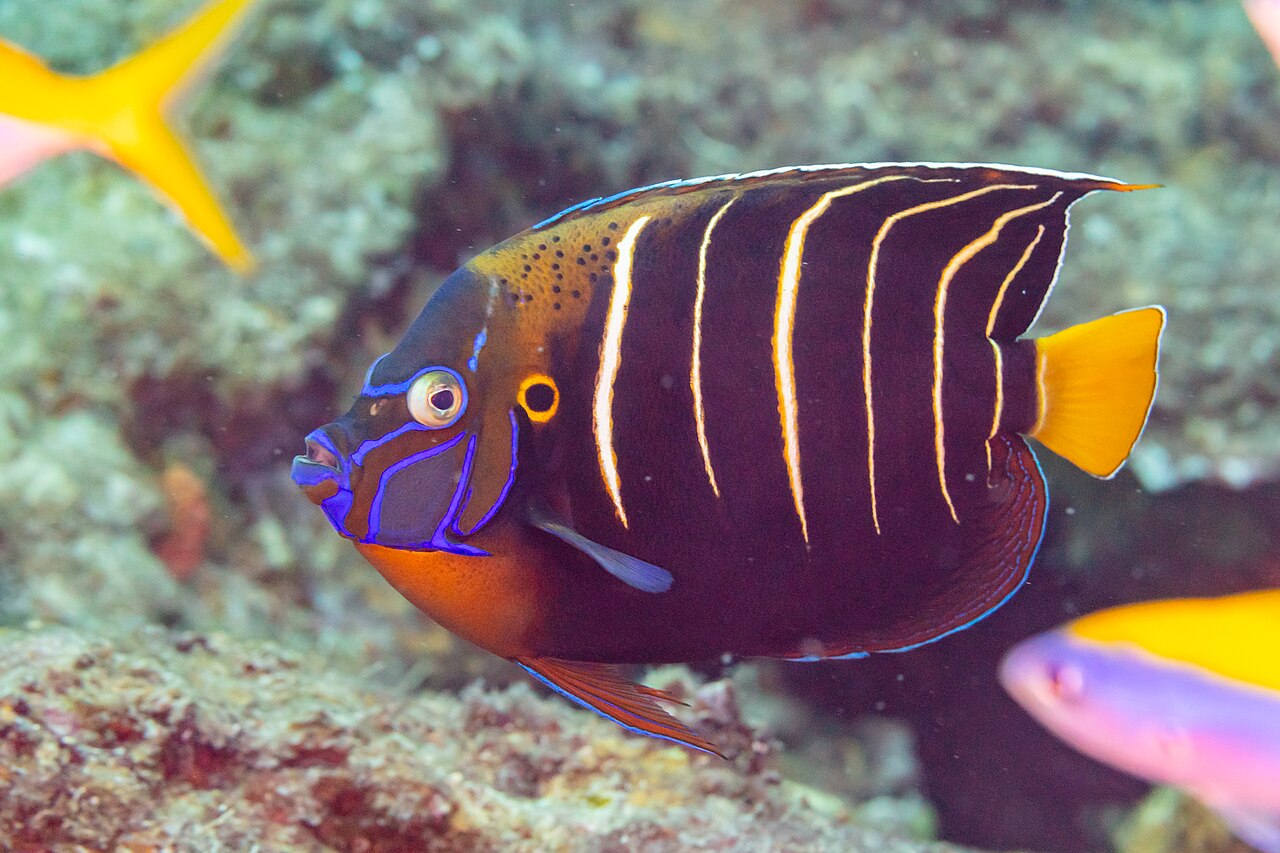
Diego Delso · CC BY-SA 4.0
The goldtail angelfish (Pomacanthus chrysurus), also known as the earspot angelfish, is a species of marine ray-finned fish, a marine angelfish belonging to the family Pomacanthidae. It is found in the western Indian Ocean.
- Scientific name
- Pomacanthus chrysurus
- Authority
- (Cuvier, 1831)
- Family
- Pomacanthidae
- Order
- Acanthuriformes
- Maximum length
- 33 cm
- Depth range
- 1–25 m
- Habitat zone
- reef-associated
- Iucn red list
- Least Concern
- Gbif occurrence records
- 73
Physical Form and Growth
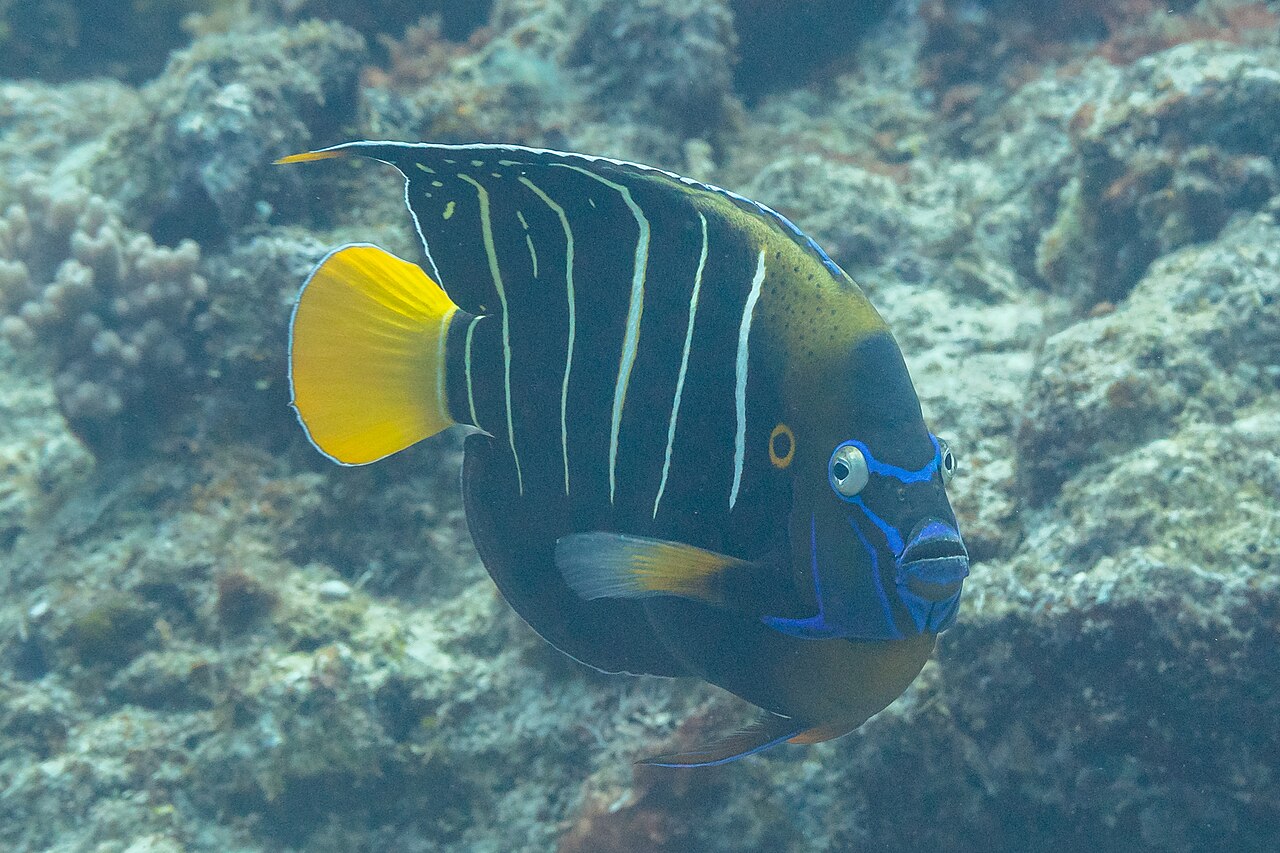
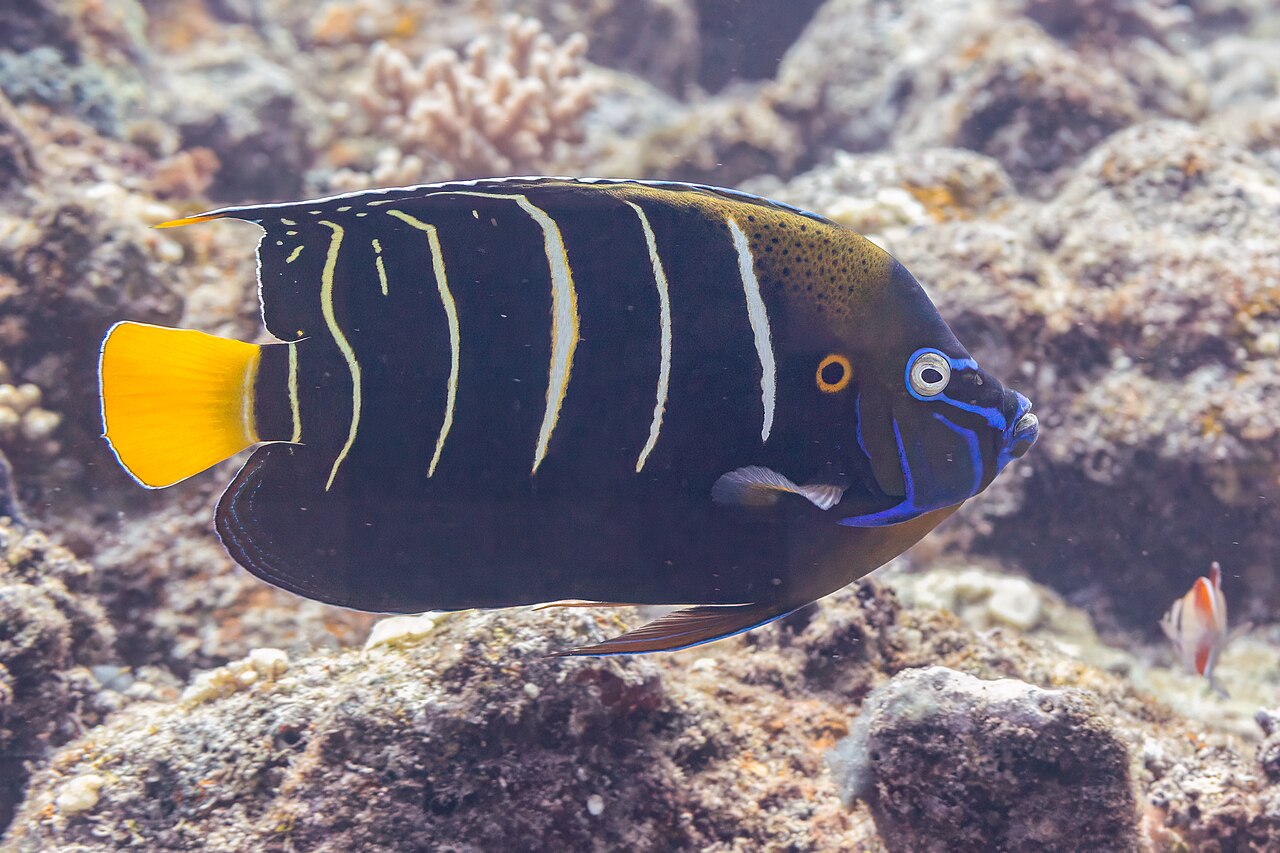
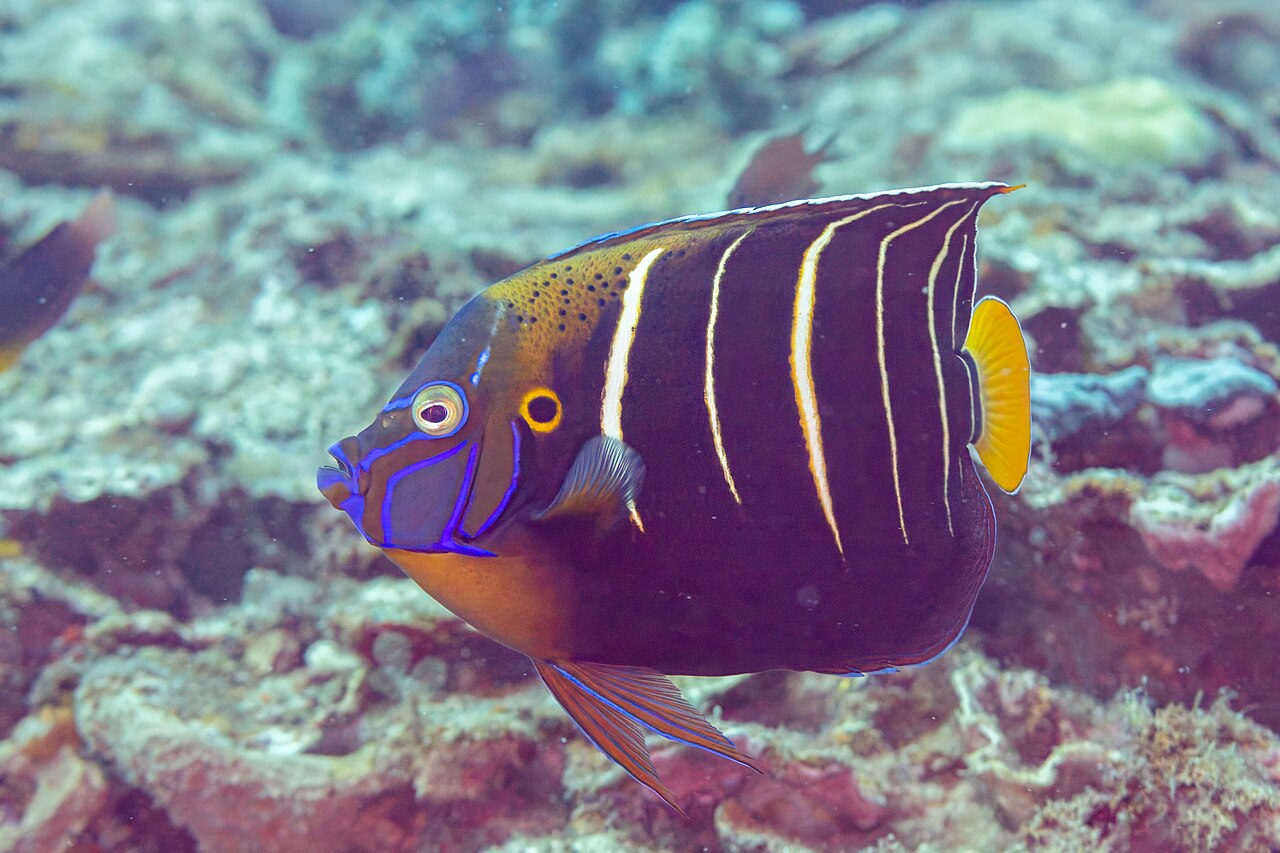
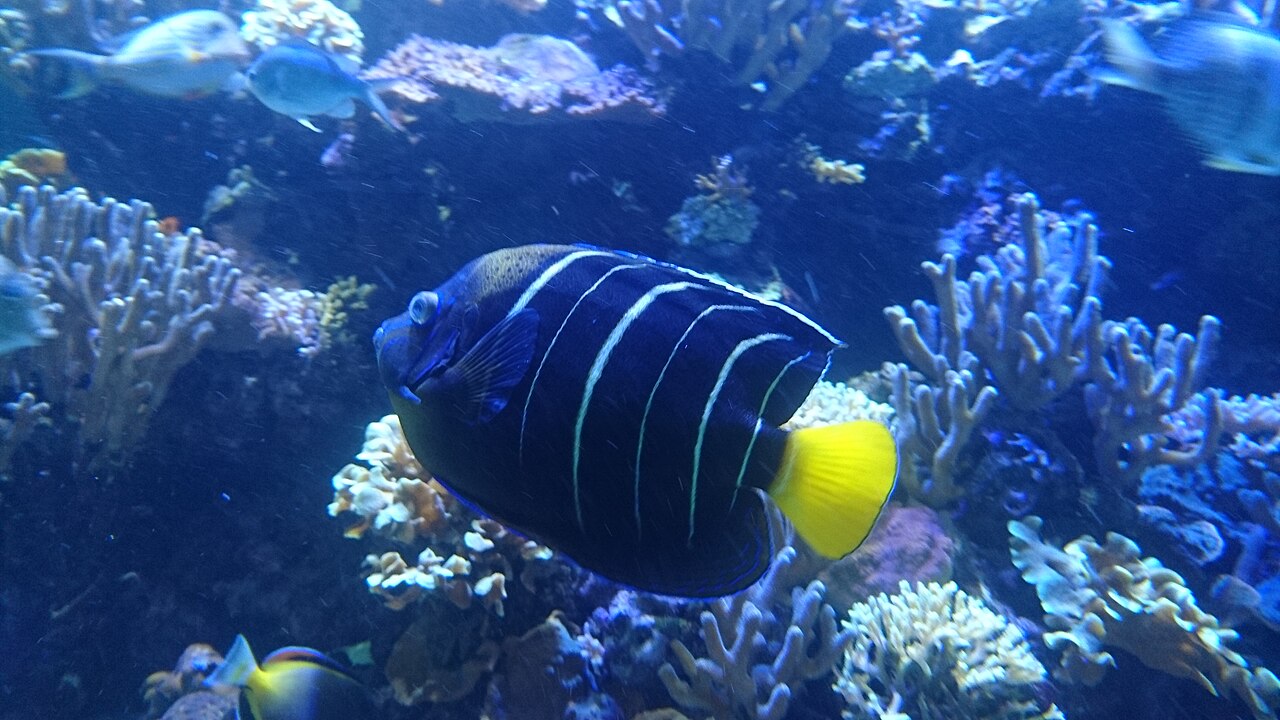
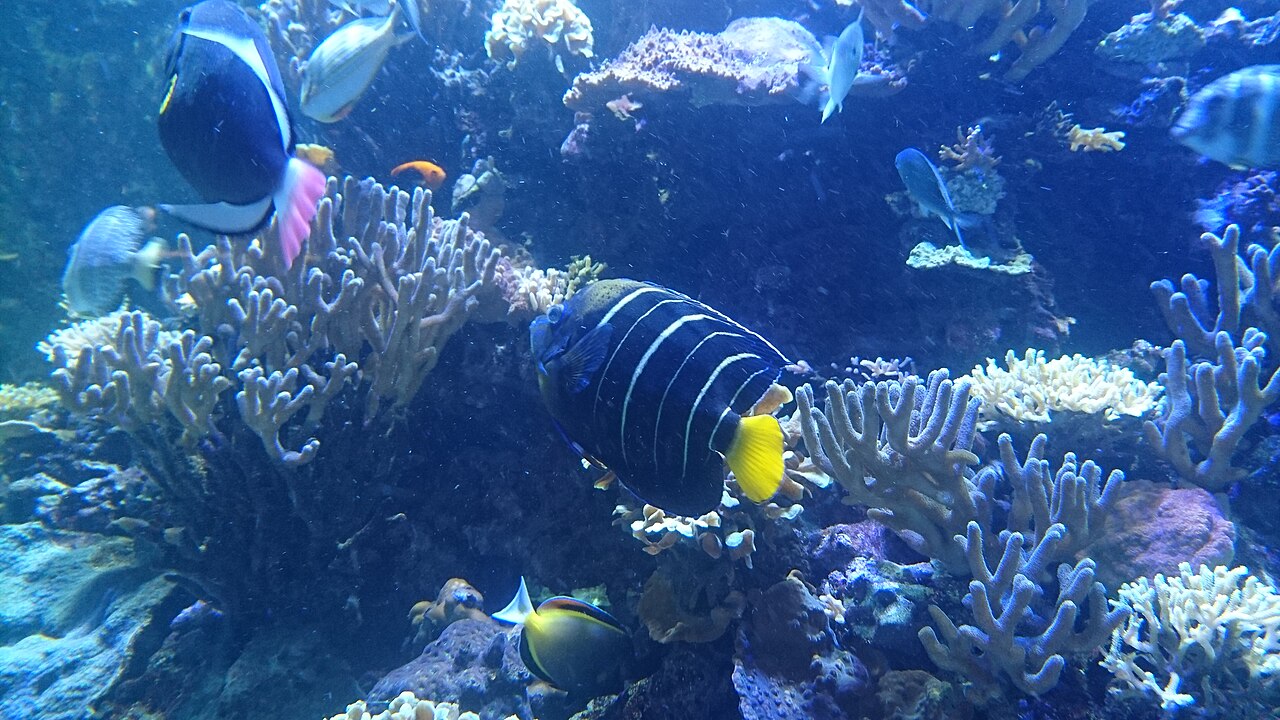
The goldtail angelfish stands apart from its close relatives in the genus Pomacanthus because its young and mature forms look remarkably alike — a rarity among marine angelfishes. Young specimens display a dark brownish body crossed by numerous white vertical stripes, while their faces appear noticeably lighter, tinged orange and streaked with irregular blue markings. A distinctive yellow tail fin is present from an early stage, and once the fish reaches roughly four centimetres in length, a white band appears on the caudal peduncle. Both life stages share a bold black spot on the upper front of the body. As the fish matures, the face darkens considerably and that white peduncle band disappears, yet the overall pattern remains recognizably the same. The species grows to a maximum of about thirty-three centimetres. Fin structure is fairly consistent: the dorsal fin carries thirteen to fourteen spines alongside seventeen to nineteen soft rays, while the anal fin bears three spines and eighteen to nineteen soft rays.
Range and Reef Environment
The goldtail angelfish is a resident of the western Indian Ocean, with its distribution stretching from the Gulf of Aden in the north, running southward along the eastern African coastline all the way to KwaZulu Natal. The range also encompasses the island nations of Madagascar, the Comoro Islands, and the Seychelles. Within this broad region, the species occupies depths ranging from just one metre down to about thirty metres, favouring shallow reef environments. It is most commonly associated with reefs that support abundant coral growth, though it will also be found on rocky reef substrates. Juvenile fish tend to inhabit even shallower water than their adult counterparts. Beyond these general habitat preferences, the detailed biology of the species remains poorly understood, leaving much of its daily ecology, reproductive behaviour, and population dynamics still unexplored by researchers.
Taxonomic History and Naming
The formal scientific description of this species dates back to 1831, when the French anatomist Georges Cuvier, working under the name Holocanthus flavissimus, first documented the fish. Cuvier, who lived from 1769 to 1832, listed the type locality as Dorey Harbor in New Guinea — a designation that may well be an error, as the species is actually found in the western Indian Ocean, and Madagascar is a more plausible origin. Over time, taxonomic placement has shifted; some authorities now assign the goldtail angelfish to the subgenus Acanthochaetodon within Pomacanthidae. The current specific epithet, chrysurus, is a Greek compound: chrysis meaning "gold" and urus meaning "tail," a direct nod to the species' striking yellow caudal fin. The common name "earspot angelfish" is also used, likely referencing the distinctive black spot on the upper anterior body region that is visible in both juveniles and adults.
Diet and Aquarium Trade
Dietary habits of the goldtail angelfish shift noticeably between life stages. Adults feed primarily on sponges, tunicates, crustaceans, and zooplankton, reflecting a more varied and animal-rich diet. Juveniles, which are encountered in considerably shallower water, consume large quantities of algae, suggesting a more herbivorous or detritivorous phase early in life. Despite these observations, the broader biology of the species remains poorly documented, and much about its reproductive cycle, growth rates, and social structure is still unknown. In terms of human interaction, the goldtail angelfish is only occasionally collected for the ornamental aquarium trade. Even when caught, it does not frequently appear on the commercial market. Of the specimens that do reach trade channels, the majority are sourced from Kenyan waters, making that region the primary point of collection for this relatively uncommon aquarium species.
Gallery
Spotted an error? Know more?
Reader corrections go straight into our review queue. Suggest an edit · How this site is sourced